RUMAH: BRIGHTON’S MODERN $11M MARVEL
Blending brutalist strength with warm, refined interiors, Rumah is a bold architectural statement in Brighton’s coastal enclave — a designer family home where luxury meets liveability.
 2 min
2 min


Rumah means “home” in Indonesian and Malay, and it’s clear this designer property in Melbourne’s coveted beachside enclave of Brighton is a dream house in any language.
The uber-contemporary residence is a collaboration between builders Belot Property, Seidler Group architects, and the interiors team at Golden.
The result is a modern marvel that combines a brutalist concrete exterior ready to weather its coastal setting with inviting interiors using a mix of textures, from French oak to metal and brick finishes.
Just listed with Kay & Burton Bayside agents, Rae Mano, Matthew Pillios and Jamie Mi, the prestige property is on the market via a private treaty campaign with price expectations of between $10.5 million and $11.5 million.
Created to be a great entertainer while maintaining a level of discreet privacy, Rumah is, at its heart, a warm, family-friendly home that ticks all the boxes for detail-oriented design connoisseurs.
A palette of contradictions, Rumah blends angular and rounded forms, features hard steel and glass, and effortlessly incorporates the earthy finishes of brick and timber for a holistic sensory experience.
Beyond the oversized pivot door sits a large structural column wrapped in gold leaf, setting the tone for the rest of the residence. The three-storey layout offers a choice of multigenerational spaces, from the ground-floor everyday living level to the accommodation wing on the top floor and the large basement “clubhouse.”
At the heart of the home, a gourmet kitchen features a dramatic island bench, high-end appliances, and a full butler’s pantry. Multiple spaces feed off the kitchen, including a vast dining area and a large living room, which both spill out through full-height glazed doors to either a side barbecue terrace or the poolside deck to the rear.
Even the downstairs entertainer’s room – also known as the club – is effectively poolside thanks to an innovative glass viewing window framing swimmers and cleverly connecting the subterranean level to the rest of the home. This games room also houses a sophisticated bar, a wine cellar, integrated night club style lounge seating and a full bathroom.
Additionally, the lower floor features a hidden laundry room, two store rooms, direct access to a huge five-car garage with a convenient turning circle, and an extra bedroom or home office.
Via the private elevator, the top floor is dedicated to after-hours living. It has four spacious bedrooms, each with its own ensuite and walk-in wardrobes. In the luxurious primary suite, there is a hotel-inspired ensuite with a unique kidney-shaped freestanding bath and a dressing room.
Rumah’s added extras include warming indoor and outdoor fireplaces, automatic blinds, feature lighting, marble accents, bespoke wallpaper, built-in bedheads, an external spa and low-maintenance landscaped gardens.
Positioned on the corner of William and Halifax Sts, the 21st-century beach house is opposite William St Reserve, close to Brighton Primary School.
Rumah at 91 William St, Brighton is on the market via private sale with Kay & Burton Bayside and has a sales guide of $10.5 million and $11.5 million.

From making unpopular decisions to learning when to listen, leaders from five businesses reveal what nobody prepared them for — and how running a company has challenged their expectations.

Technology and semiconductor shares fell sharply as investors questioned the debt financing the AI infrastructure boom and confronted higher rates and Chinese competition.

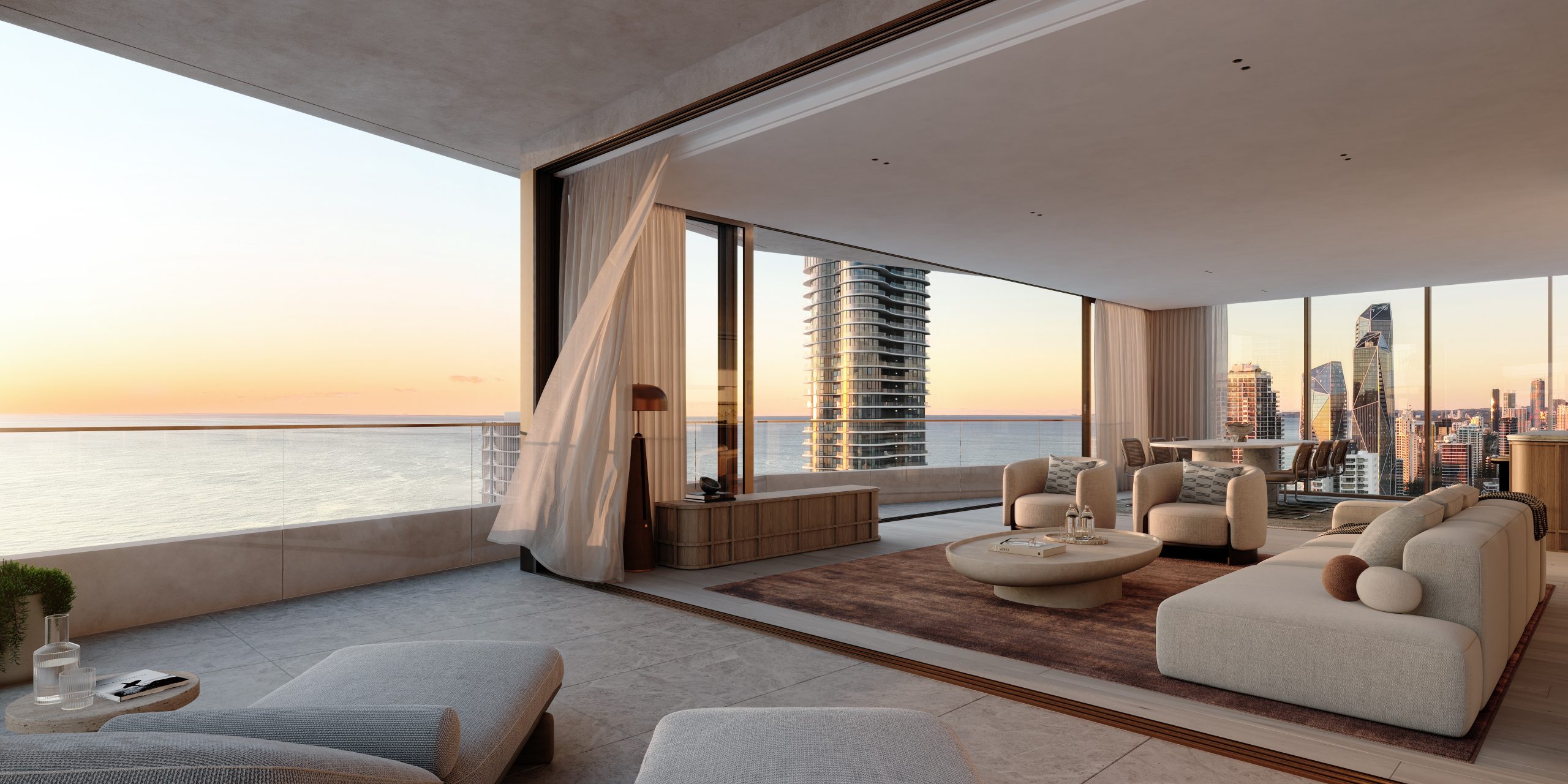
Mirvac’s 45-level Trielle has topped out at Yarra’s Edge, pairing riverfront apartments with wellness facilities, private dining and resident services.
3 min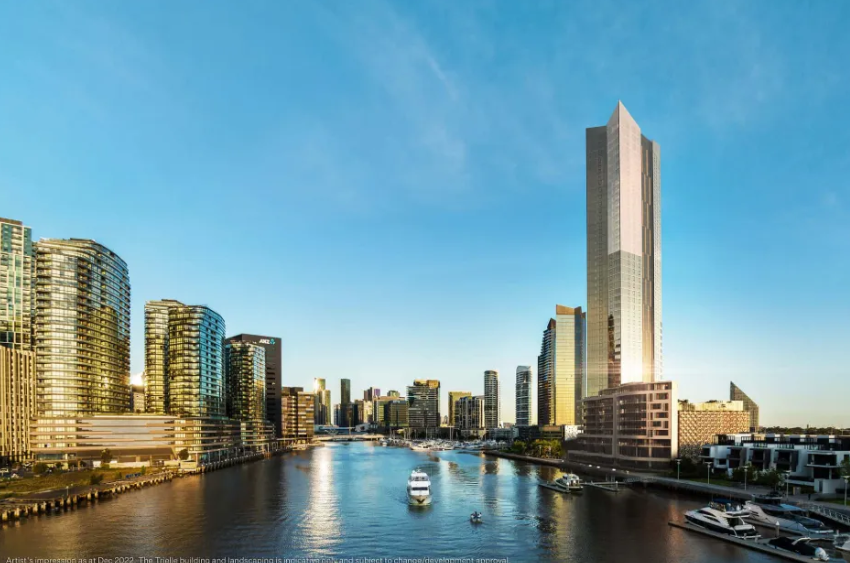
Mirvac has topped out Trielle at Melbourne’s Yarra’s Edge, with more than 70 per cent of the riverfront development sold and approximately 80 per cent of purchasers intending to make their apartment a home.
The figures, released on September 22, point to an owner-occupier audience for one of the precinct’s final residential towers. Mirvac began developing Yarra’s Edge in 2003, and its latest addition occupies one of the remaining absolute riverfront sites.
Mirvac CEO of Development Stuart Penklis said existing residents were among those moving up within the neighbourhood.
“Many purchasers already have a connection to Yarra’s Edge,” Mr Penklis said, describing buyers whose changing needs were encouraging an upgrade within the precinct.
“As one of the final residential towers within Yarra’s Edge, Trielle represents the culmination of more than two decades of creating one of Melbourne’s most established and sought-after waterfront communities,” Penklis said.
“Positioned on the Collins Street axis with absolute river frontage, Trielle offers residents a rare opportunity to enjoy sweeping views across the Yarra River, Melbourne skyline and Port Phillip Bay, while remaining seamlessly connected to the CBD. With Trielle now more than 70 per cent sold, we’re continuing to see strong demand from buyers seeking quality homes in established locations.”
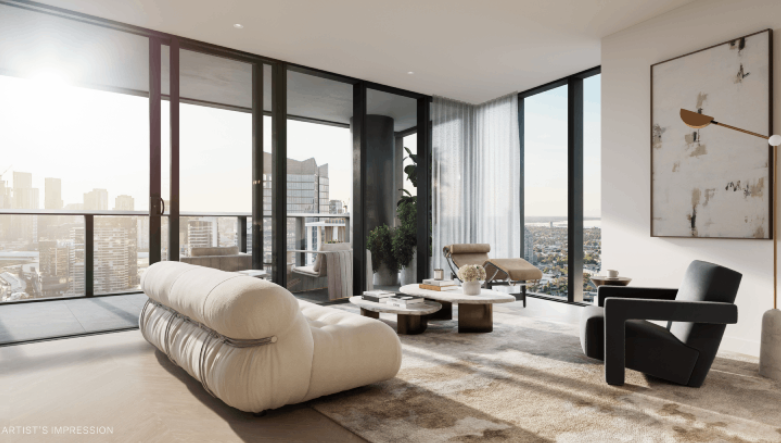
The developer also flagged a penthouse and sub-penthouse collection with larger layouts, premium finishes and broad outlooks. The planned wellness centrepiece, The Oasis, encompasses a 900-square-metre elevated urban rainforest.
Mirvac General Manager Residential Development Victoria Elysa Anderson said Trielle had resonated strongly with buyers seeking a rare lifestyle offering in Melbourne.
“Opportunities to secure a new luxury residence on a riverfront site of this calibre are incredibly rare, particularly within a community like Yarra’s Edge,” Anderson said.
“What makes Trielle unique is the combination of exceptional views, world-class residential facilities and the lifestyle that already exists around it. Residents are buying into a mature waterfront community with parks, promenades, dining, wellness and strong community connections already in place.”
The 45-level tower brings a substantial new presence to that waterfront. Its residential offering spans one-, two-, three- and four-bedroom apartments, with Signature, Prestige and Sub-Penthouse collections accommodating different household sizes. The north-facing position connects the apartments visually to the river and city beyond.
Seven storeys above the promenade, the planned Oasis combines planting and a running stream with a Scandinavian-inspired wellness club developed with spa specialist Naomi Gregory. Facilities include a 25-metre lap pool, hot magnesium pool, sauna, hydrotherapy, a gym, yoga and Pilates room, and treatment spaces.
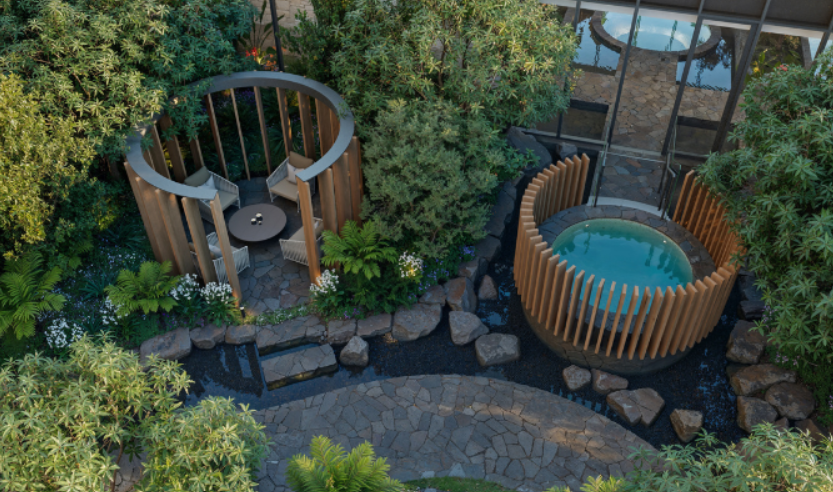
The amenity extends beyond exercise. Residents will have access to The Biblioteca library and workspaces, ground-floor work pods, and The Salone piano lounge. A private Chef’s Table dining room offers a setting for larger gatherings, while a cinema, games room and sports lounge broaden the entertaining options. Concierge services and a dog-wash area support everyday routines.
Trielle comprises a collection of one, two, three and four-bedroom residences. Reflecting strong demand from owner occupiers, approximately 80 per cent of purchasers to date intend to live in their homes, highlighting the project’s appeal to those seeking a long-term waterfront lifestyle.
Mirvac has recently delivered The Albertine, a premium apartment development on the edge of Melbourne’s CBD, and is nearing completion of Prince & Parade in Brunswick, further strengthening its portfolio of thoughtfully designed apartment communities in some of Melbourne’s most sought-after urban locations.

A long-standing cultural cruise and a new expedition-style offering will soon operate side by side in French Polynesia.

Hand-built in Melbourne and limited to just 10 cars a year, the Zeigler/Bailey Z/B 4.4 is reshaping what a modern collector car can be.