He Wasn’t Thinking About Renting His Arizona Home. Then Rihanna Came Knocking.

Spyro Malaspinas wasn’t looking to rent out his home for Super Bowl LVII in Arizona in February 2023.

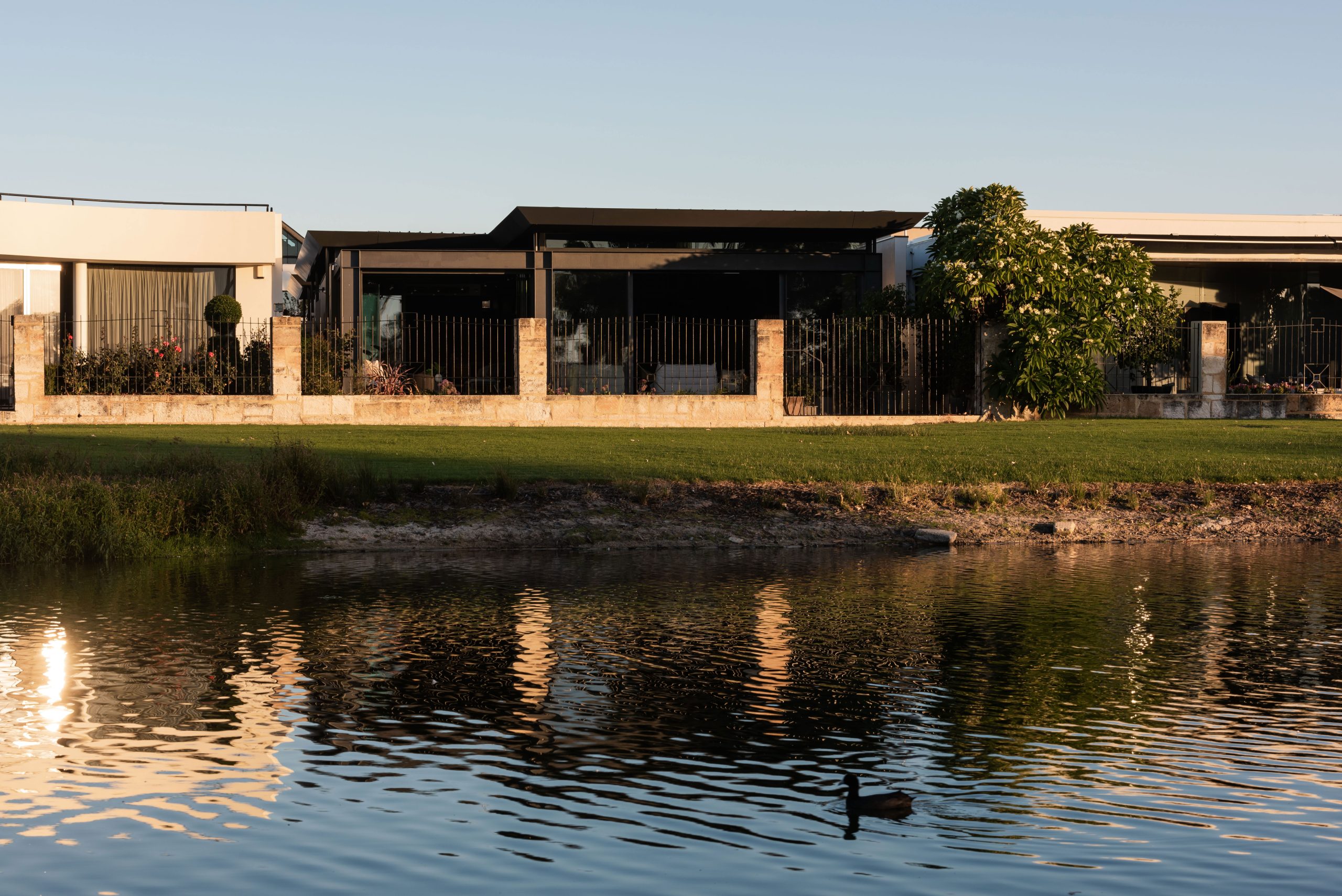
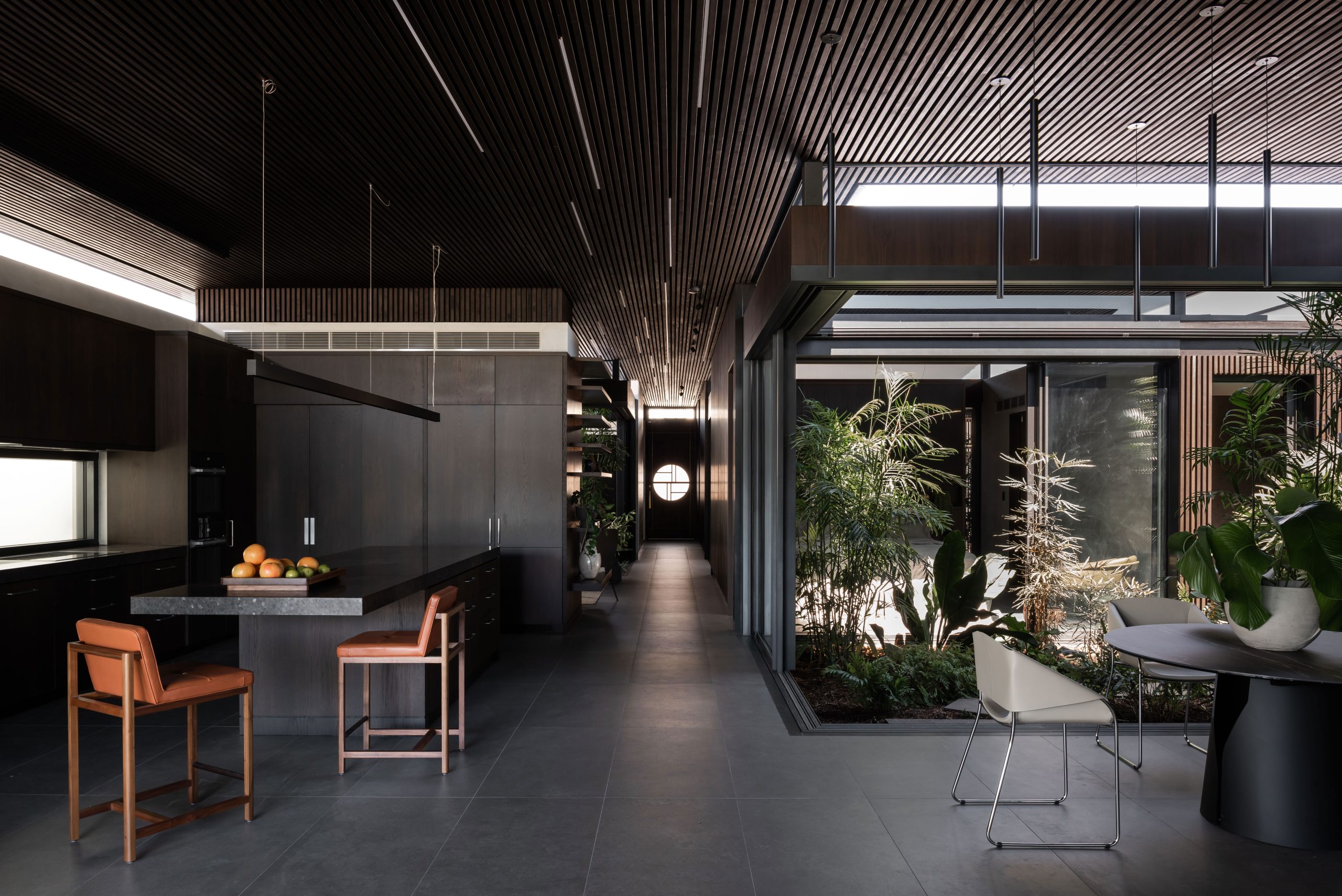
The 48-year-old cybersecurity expert initially balked at the idea of leasing his 6,400-square-foot, five-bedroom house on about an acre of land in Paradise Valley, an affluent town between Phoenix and Scottsdale, which he bought for $7.3 million in 2022. Then a property management firm he hired to manage a smaller investment property he owns called and offered Mr. Malaspinas a number that sent him packing.

Mr. Malaspinas didn’t plan to rent out the house but said he was offered $500,000 for the week. PHOTO: STEVE CRAFT FOR THE WALL STREET JOURNAL

“The last thing I am is a real estate baron,” said Mr. Malaspinas. But, he said, “My pride’s not that big. I don’t mind moving out for $500,000 a week.” Mr. Malaspinas, who said the rental income for that week will cover his mortgage payments for two years, later learned his tenant was Rihanna.

“My [13-year-old] daughter was absolutely thrilled,” he said. Rihanna didn’t respond to requests for comment.

When celebrities, sports stars and titans of industry come to town for vacation—or in Rihanna’s case, to headline the Super Bowl halftime show—they are often willing to shell out tens of thousands of dollars or more to stay at a private residence with more space, security and privacy than even the best five-star hotels. Finding properties that meet their criteria typically falls to travel coordinators and assistants, along with business managers and local real-estate agents who tap into closely held networks of clients with luxury homes.

The process is an extremely quiet exercise in matchmaking. “You need to know who to call,” said real-estate agent Carl Gambino of Compass. “Sometimes you know your client went to France for the year and their house is sitting there,” he said. Vacant homes that are listed for sale can be a win-win for everyone involved. And sometimes, homeowners can be persuaded to move for the right price—or person.

Before President Barack Obama and first lady Michelle Obama’s summer vacation on Martha’s Vineyard in 2013, for example, real-estate agent Tom Wallace of Wallace & Co. Sotheby’s International Realty said he got a call around mid fall from a White House planner who shared specific criteria for a presidential rental, including privacy and security. As the son of a U.S. Naval Rear Admiral, Mr. Wallace said he advocated strongly that the first family stay at a compound in Chilmark, Mass., owned by Chicago investment banker David Schulte and his wife, Patricia Schulte, even though the property wasn’t on the rental market at the time.

Set on about 9.5 acres with ocean views, the property has a four-bedroom main residence, a separate two-bedroom guesthouse, a private driveway and ample space to set up security areas. “It wasn’t until we politely stepped on [Mr. Schulte’s] left toe and said, ‘Would you consider a particular guest?’ that he was polite enough to help us orchestrate making that happen,” recalled Mr. Wallace, who declined to say whether there was a nondisclosure agreement. He also wouldn’t disclose the price but said the tenants paid a fair-market rate at the time.

For his part, Mr. Schulte said it was never his intention to rent the house, which he described as a “labor of love,” but he did so out of pride and patriotism. “It’s often said, ‘Nobody can say no to the president.’ That’s pretty true,” said Mr. Schulte, who donated to Mr. Obama’s 2004 Senate campaign. The property has an infinity-edged pool, half-court basketball and access to a private beach. The Schultes, who rented to the Obamas several times, sold the property for $15 million in 2018, records show. The Obamas declined to comment.

In New York, former financial executive Jay Dweck said his house in Bedford Corners had been on and off the market for between $6.895 million and $9.975 million when Mariah Carey’s team reached out to his real-estate agent in June 2020. They asked if Mr. Dweck would consider renting it to her for the summer. “They wanted to be in on July 1,” said Mr. Dweck, who said the singer’s team indicated she might be interested in purchasing the home. Mr. Dweck agreed to the $125,000-a-month rental, and then went onto Airbnb and found himself a house in Greenwich, Conn., for $6,000 a month.

Built around 2006, the roughly 10,500-square-foot house has six bedrooms, a theatre, a 900-gallon aquarium and a violin-shaped swimming pool flanked by koi ponds. Mr. Dweck said terms of the rental agreement stipulated he would not disclose the terms or parties to the rental, meaning the entity that rented the home on the singer’s behalf. But he said Ms. Carey stayed at the house full time with her boyfriend, children and a nanny, while a chef, housekeeper and assistant came daily. The singer’s tour manager and recording engineer were occasionally present, too, and Mr. Dweck said the entire team operated like a well-oiled machine. He said the staff stocked the fridge, unpacked closets and cranked up the pool heater to 91 degrees before Ms. Carey’s arrival. “You could boil lobsters in the pool,” Mr. Dweck said. The only real collateral damage from the experience was the home’s wooden floors, which had pock marks from the singer’s high heels, and ultimately needed to be replaced for $90,000, which was taken out of the security deposit. “She’s not the kind of person where someone says, ‘Mariah, take your shoes off,’” he said. Ms. Carey didn’t respond to requests for comment.

Celebrities, athletes and business titans rent for any number of reasons, said Tomer Fridman of Compass. Summer rentals in the Hamptons and Malibu, for example, are highly-sought after with properties commanding prices from $100,000 to $1 million or more. Artists and entertainers may rent while they are renovating, filming a movie or participating in a show. Some lease luxury estates for recording projects.

In Joshua Tree, Calif., movie producer and artist Chris Hanley said his Invisible House, currently listed for $18 million, became a kind of “cultural icon” that he and his wife, Roberta Hanley, rented out to singers Diplo and Demi Lovato. Diplo did not respond to requests for comment. Ms. Lovato declined to comment.

Completed in 2019, the 5,500-square-foot house is 225 feet long with a reflective glass exterior that mirrors the landscape. Mr. Hanley said at first, the couple opened up the house to family and friends from the art and entertainment world. They also rented it out for music and fashion productions, starting at $10,000 a day. “It started to add up,” he said.

In 2020, the Hanleys put the home on Airbnb for $2,500 a night. In 2021, Airbnb CEO Brian Chesky stayed there, said Mr. Hanley, adding, “We threw in champagne.” Mr. Chesky didn’t respond to a request for comment.

In Palm Desert, Calif., real-estate investor Glen Heggstad said he got into the rental business after a location scout left her business card at his front gate. Since then, Mr. Heggstad, a Brazilian jujitsu instructor and former member of the Hells Angels motorcycle club, has rented his 4,300-square-foot contemporary villa for up to $20,000 a night during Coachella. Set on nearly 2 acres, with an infinity-edged pool and helicopter landing pad, the house has been used by singers Billie Eilish and Lizzo, who posted photos of herself by the pool on social media. Neither singer responded to a request for comment.

Mr. Heggstad said he’s also rented the house for brunches, car photo shoots and cannabis industry events. Recently, he decided to pull back from short-term rentals and weddings. “They get drunk and the in-laws fight,” he said, and because he has been burned too many times. A few years ago, he said, a guest left the house in disarray after a party and he had to fish 100 cigarette butts out of the pool.

Glen Heggstad has rented out his home in Palm Desert, Calif. PHOTO: LUIS GARCIA FOR THE WALL STREET JOURNAL

Short of property damage, short-term rentals at the highest price points come with other quirks, including secrecy around the client’s identity, said Neal Norman of Hawai’i Life. “Typically you don’t get a straight call from those guys. It’s an assistant or travel agent. They open with, ‘I have a VIP,’ ” he said.

There is also typically very little lead time involved. “Sometimes it’s a Thursday and they want to be there for the weekend,” said Chris Cortazzo of Compass. That leaves little time to show the house, run security checks, clean the property and clear out personal belongings. “People don’t want to move in and have someone’s toothbrush there so everything has to be cleared out,” he said.

These VIPs are known to bring their preferred brand of bottled water and linens, along with flowers, air purifiers and home scents, said Mr. Norman, who said he once had a client who had their bed shipped to Hawaii for vacation.

In general, the ultra luxury rental market is as strong as it has ever been, said Tal Alexander of real-estate brokerage Official, which has agents in New York, Florida and California. In the past few months, Mr. Alexander said he’s rented five homes in New York City for $50,000 a month or more. Wealthy renters are willing to pay up for furnished homes in prime buildings and locations, he said.

Some property owners like to know their investments are generating income if they have moved or left town. “They don’t need the apartment sitting empty. It does them no good,” Mr. Alexander said.

During the 2017 Super Bowl, for example, pop star Lady Gaga stayed in a custom home in Houston after the owners relocated, said Marie Sims, whose family company, Sims Luxury Builders, completed the home around 2007. The roughly 9,700-square-foot house has five bedrooms and lots of outdoor space, Ms. Sims said. Last asking $6.5 million, the house sold in 2018, records show. Lady Gaga didn’t respond to requests for comment.

In addition to the Super Bowl, marquee events such as Art Basel and Coachella drive demand for ultra-luxe rentals, and in some cities boutique property managers and rental firms cater to the periodic influx of renters.

In Las Vegas, Bryan Ercolano, founder of vacation rental firm TurnKey Pads, said he and his business partners own a $12.5 million penthouse that they rent out for $5,000 a night during the week and $10,000 a night on weekends when there are big fights or football games. In the past, Mr. Ercolano said they have rented the 7,000-square-foot residence with four bedrooms and 10,000 square feet of terrace space to players from the Kansas City Chiefs and to Usher, who hosted an afterparty for his birthday party in the penthouse one year. The singer didn’t respond to a request for comment. Mr. Ercolano said his business is largely word-of-mouth, with referrals from casino hosts, club promoters and others. “Vegas is a very networky town,” he said. “It’s kind of who you know.”
In Georgia, the Augusta National Golf Club and Augusta Metro Chamber of Commerce partnered 50 years ago to form a rental agency—the Masters Housing Bureau—to facilitate home rentals during the Masters tournament. This year’s suggested rate for a five-bedroom house is $18,000 to $22,000 for four nights and $20,000 to $25,000 or more for seven nights, according to the bureau’s website.
For the past few years, golfer Jordan Spieth has had two houses at the Masters. He rents a “sleeping house” for himself and his family, said his agent, Jay Danzi of WME Sports, and WME rents a second “entertainment house” close by where a chef cooks meals daily. In the entertainment house, “there’s no golf on the television” said Mr. Danzi, who said his team works with the Masters Housing Bureau or WME’s internal partners to find housing. Other than the Masters, Mr. Danzi said Mr. Spieth has been traveling with his wife, baby and dog in an RV.

Patrick Michael, founder and CEO of LA Estate Rentals and Brokerage, said he got into the luxury rental business in 2008 to help real-estate developers lease unsold spec homes. His company also provides concierge services such as car rentals, personal training, restaurant reservations or even tickets to Disneyland. “Very wealthy people want to pick up the phone and say, ‘I need a masseuse at 5 p.m.,’ or ‘Can you send a cleaner tomorrow at 2 p.m.’” he said. His company currently has about 85 listings on the market, and Mr. Michael said a chunk of his business comes from athletes, who rent homes when they are in town for training or after being recently traded.

In Paradise Valley, Mr. Malaspinas said he hasn’t moved back into the house where Rihanna stayed because he’s not sure what his plans are. Since the Super Bowl, people have offered him “crazy amounts of money” to sell.

In retrospect, Mr. Malaspinas thinks he could have rented the home for even more money, though at the time he said he didn’t want to push it. “The last thing you want to be is too greedy,” he said, “and then you miss the whole thing.”

Companies Urged to Take Stock of Their Impact on Nature and Related Risks

Companies should consider the natural world as core to their business and report their effect on it in much more detail, according to a U.N.-funded group that promotes sustainable business practices. But assessing environmental impact remains tricky.

The latest draft framework published by the Taskforce on Nature-Related Financial Disclosures aims to help big businesses and financial institutions report and act on nature-related risks, covering issues including deforestation, pollution, water stress and overfarming. It follows previous drafts, with a final version slated to be published in September.

Depletion of resources and damage to rivers and forests should be seen as integral to firms’ operations, and not merely a matter of corporate responsibility, said Tony Goldner, the TNFD’s executive director. “We used to think of nature as an endless supplier of resources into our business practices,” he said. “We’re trying to shift the conversation around the nature of the relationship between nature and business.”

The final framework should give priority to the end result in natural areas, said Kat Bruce, founder and director of environmental-DNA startup NatureMetrics.

“Creating a baseline on the state of nature in…priority areas and then ongoing monitoring to track progress over time is key,” she said, noting that new technology allowed for collection of much more solid biodiversity data.

“We also need to focus on how effective company actions are to mitigate risks,” Ms. Bruce said. The current guidance is a “solid step,” she said. “But we must not stop there.”

The TNFD is a market-led initiative but funded by the United Nations. It brings together 40 corporate executives, including Deputy Environment Director Alexandre Capelli of French luxury-goods group LVMH Moët Hennessy Louis Vuitton SE; GSK PLC head of corporate responsibility Sarah Dyson; Renata Pollini, head of nature at Swiss cement maker Holcim Ltd.; and Koushik Chatterjee, chief financial officer at India’s Tata Steel Ltd.

Some $44 trillion of global economic value is moderately or highly dependent on nature, according to the World Economic Forum. The collapse of natural systems could wipe $2.7 trillion a year from the global economy by 2030, according to the World Bank.

Companies and shareholders should pay more attention to the material risk of natural degradation, Mr. Goldner said. “Dependency is the pathway to risk,” he said. “If you’re investing in a fast-growing agricultural company in an area where there is water stress, that should trigger questions,” he said.

“What does that tell the investor about the ability to keep growing at that same rate?”

The draft framework covers three areas that should be assessed by large companies and financial institutions: the use of land, freshwater and oceans; pollution and pollution removal; and resource use and replenishment. The framework highlights the potential use of bidirectional metrics, that is to say, positive effects as well as negative, Mr. Goldner said.
A fourth indicator, on climate change, is covered by a separate framework set out by the Taskforce on Climate-Related Financial Disclosures, or TCFD.

Companies’ effect on climate change is relatively simple to measure. Emissions can be calculated in metric tons, and companies use shared rules that enable comparisons between one business and another, even if reporting remains patchy and partly based on estimates.

But reaching “nature positive”—as the TNFD aims to achieve—is a more nebulous concept, Mr. Goldner acknowledged. “There’s some work to do reaching a consensus on what nature positive looks like,” he said. It would likely encompass a basket of metrics, rather than a single indicator, he added.

The TNFD’s draft comes after nations agreed on a new international framework that will oblige large corporations to show they are reducing their impact on the world’s natural life.

Public subsidies seen as harmful for biodiversity will be cut by $500 billion a year under the Global Biodiversity Framework, or GBF, reached at the United Nations’ COP15 conference on biodiversity in Montreal in December.

Under the GBF, governments between now and 2030 will introduce laws and policy measures requiring large companies to disclose and reduce the damage done to ecosystems from their operations, supply chains and portfolios. They will also be required to provide information to the public needed for more sustainable consumption.

A previous draft requirement for businesses to reduce their negative impact on the environment by at least half wasn’t included in the final agreement, which doesn’t specify the extent of the required actions. Nearly 200 countries signed on to the final agreement. The U.S. wasn’t an official participant.
The TNFD’s framework aims to help businesses align their reporting and actions to global policy goals, such as the GBF, the task force said. The draft framework includes sector-specific guidance for areas including agriculture, mining, energy and financial services.
Guidance for other industries, including textiles, will be released on a rolling basis over the coming months, the TNFD said.

The hidden parking spots nobody uses

Australians are paying for $6 billion worth of parking spaces they don’t need, a new study has found.

Research from RMIT University found that 20 percent of households in apartment blocks were not using all the parking allocated to them, while 14 percent found their allocation inadequate.

Based on earlier estimates by Committee for Sydney that each parking spot has a value of $100,000, the team concluded that’s $6 billion worth of unused space. 

The study conducted in collaboration with the University of Western Australia surveyed more than 1,300 apartment residents in Sydney, Melbourne and Perth. Lead researcher Dr Chris De Gruyter from RMIT’s Centre for Urban Research said the study shows regulations mandating parking allowances according to apartment size needed review. 

In Victoria, for example, every two-bedroom apartment must be allocated at least one parking spot while apartments with three or more bedrooms are required to have at least two parking spaces.

“We found in our study that people living in larger apartments tend to have an oversupply of parking because of this policy, which means they’re paying for a space they’re not using,” Dr De Gruyter said. “This oversupply is not just an inefficient use of space, it is exacerbating housing affordability issues.  

“Meanwhile, apartment households with an undersupply of parking are forced to park on the street, competing with visitors in the area.” 

Dr De Gruyter says the solution is to ‘unbundle’ parking spaces to give residents the flexibility to choose as little, or as much, parking space as they need.

“We can choose the number of bedrooms we want in our homes, yet we have no say in how much parking we need,” he said. “We want people to have the option to choose not to have parking instead of it being imposed on them. Similarly, those who wish to have additional parking can have this.” 

Allowing residents to choose more or less parking space as required has flow-on effects, Dr De Gruyter said.

“Unbundled parking is going to help with housing affordability, reduce car use and on-street parking issues,” he said. “We’re also going to see better health for residents as there will be more physical activity due to more public transport use, and better air quality from less car use.” 

Worldwise: Famed French Fashion Designer Christian Louboutin’s Favourite Things

As the founder of an eponymous fashion brand that counts legions of women and celebrities as ardent fans, Christian Louboutin has amassed a following that has garnered him fame in his own right. Most known for his stilettos with their unmistakable red-lacquered soles—the accessory that gave him his start—the Paris-born designer has since expanded beyond footwear with handbags, fragrances, makeup, and shoes for men.

Now comes a new venture all together: this April, Louboutin, 60, will open Vermelho Melides, a 13-room hotel in Melides, a small town in Portugal’s Alentejo region. It’s a rural, unspoiled destination of pine forests, rice lagoons, and beaches where he owns a restored former fisherman’s shack and visits every chance he gets.

Named after the Portuguese word for red, Vermelho Melides is meant to evoke the feeling of a friend’s home more than a hotel and features a litany of colors, materials, and styles from various eras. Art plays into the design, too, while dining and imbibing will unfold at XTian, a restaurant offering upscale Portuguese cuisine.

Louboutin, who was expelled from school three times and began designing shoes when he was a teenager, spoke to Penta about his favorite things from Rio de Janeiro, where he was attending Carnival and also has a home.

I first discovered Portugal… as a teenager on a backpacking trip. I traveled to Lisbon and Porto and instantly loved both. I went again eight years later—this time to Comporta, a small town about an hour south of Lisbon. It was idyllic and had the most beautiful stretch of beach. I didn’t visit again until almost a decade later. I had already started my company, and my friend, the designer Jacques Grange, invited me to stay with him at his home there. I ended up visiting for the next two summers and eventually bought a home in Comporta and then Melides.

My ideal day in Melides… begins by waking up at 7 a.m., going for a jog and jumping into the ocean for a swim. Then it’s breakfast with my friends and family. The rest of the day is very relaxed. I have a beautiful garden and might spend a few hours tending to my flowers and vegetables. Or it’s reading, sketching my next round of shoe designs, and visiting local markets. But really, being in Melides is about not doing much. In the evening, it’s a long dinner with friends at home or at a local restaurant.

A favourite souvenir from Melides is… a ceramic piece from the store Vida Dura in town. Everything is handmade in Portugal, and the owner has a fantastic eye for great finds. The dinnerware, jugs, glasses, and more are colourful and will remind you of your trip.

My most memorable hotel stay… was at Umaid Bhawan Palace in Jodhpur, India, in the Maharani suite. It’s a sprawling palace and gorgeous with Art Deco decor. My bed was huge, and so was the bathroom. More recently, it’s the Le Grand Controle on the grounds of Versailles. I went for Valentine’s Day with my boyfriend, and the property transported us to the world of French royalty. Alain Ducasse is behind the cuisine, and we had the most decadent multi-course with lots of French wine.

The destination on my bucket list is… the Azores Islands in Portugal. The architecture looks stunning, and it’s very much about appreciating nature like Melides. I want to visit Tasmania for the same reason.

My go-to vacation destination is… Bhutan. I visit every year. It’s a very spiritual place and again, nature dominates. I also love hiking, and the country has incredibly scenic hikes.

The shoes I wear for sightseeing are… loafers or flip-flops. I find them to be comfortable and easy to take on and off. Never sneakers, which I wear only when I’m running.

My travel essentials are… a great book and auction catalogs from Christie’s, Sotheby’s, and Bonhams—they’re my secret vice.

This interview has been edited for length and clarity.

A $140,000-a-Month Apartment Lets You Live Like a Rich New Yorker—for 30 Days at a Time, at Least

The owners of New York private members club Fasano Fifth Avenue opened in spring 2021 with 12 fully furnished luxury rental residences on Manhattan’s Upper East Side, aiming to meet a demand for bookings of 30 to 60 days.

The new business didn’t turn out as planned. Some guests checked in for a stay of a month or two but ended up staying for a year to 18 months and more. “The demand has been delightfully surprising,” says Gero Fasano, founder of upscale Brazilian lodging and dining company Fasano Group.

The higher demand comes despite rents of $140,000 a month for one of the five, three-bedroom duplexes. Rents are $40,000 a month for one of the seven smaller clubhouse suites. Meanwhile, the rental process has been simplified. Bookings are secured with a credit card. Guests stay for as long as they need, and when they are ready to go, they simply announce they are leaving.

For the fee, renters get a sophisticated home with furnishings selected by French architect Thierry W. Despont, in cooperation with Mr. Fasano. They also get a host of luxury amenities, including access to a restaurant and bar, a gym and services that include a 24-hour doorman, 24-hour room service, housekeeping and a concierge.

Fasano Fifth Avenue is part of a new trend in New York: flexible luxury rentals, where move-in-ready apartments can be booked for short to not-so-short periods with hassle-free extensions. Renters pay six-figure monthly rents to live like rich New Yorkers, minus the responsibility of second-home ownership, or being tied down by a lease, or the limited experience of high-end tourism.

By contrast, luxury hotel rooms often lack full kitchens, and luxury hotel apartments typically are purchased outright, and those homeowners and hotel brands tend to have booking restrictions for sublets. Other renters would rather not live in other people’s homes via an Airbnb or Vrbo, while corporate housing can lack a homey feel. None of these options are known for seamless month-to-month living with easy extensions.

Today, a number of companies are experimenting with high-end rental flexibility. Fasano Group, whose parent company is real-estate developer JHSF, along with the French residential hospitality brand the Collection, have small, bespoke residential hotels that specialize in stays longer than a month. Blueground, with more than 800 rentals in New York and 14,000 rentals globally, has translated the month-to-month concept to a larger scale. Related Cos., like other global residential real-estate concerns, has a new flagship brand, the Set, that offers flexibility as an amenity.

“The whole thesis is luxury rental meets five-star hotel,” says Hailey Sarage, senior vice president of development at Related, which has properties globally and operates more than 20 buildings in Manhattan.

The Set resident Jessica Dang, 41, an American living in Copenhagen, was looking for quick, turnkey housing when she moved to New York in 2022 to launch her wellness business, the Essentialist Method.

“I didn’t have the time to do the broker thing and look at apartments, pay a broker’s fee and buy furniture, especially because I didn’t know how long I was going to stay in New York,” says Ms. Dang, adding, “at 41 years old, crashing on a couch isn’t that cute anymore.” She previously lived in New York from 2000 to 2013, having found unfurnished apartments, and roommates.

Her online search led her to the Set, which opened in New York’s Hudson Yards in September 2022. The Set’s 270 units—mostly studios and one-bedrooms—come fully furnished or not. Furnished choices include several design styles meant to appeal to a range of demographic types. Those rentals start at $5,200 a month, and apartment dwellers have access to the complex’s food and beverage services, housekeeping, dry cleaning, laundry and concierge help overseen by so-called directors of experience.

“In the future, every residential building will be its own city, like ‘Melrose Place’ on steroids,” says Ms. Dang, comparing her new lifestyle with the 1990s prime-time soap opera about the goings on at a Los Angeles residential complex.

Ms. Sarage says the demand for furnished rentals at the Set has been higher than the company initially expected. Most residents, she adds, have opted for 12-month leases. The Set also offers stays for six, seven or eight months. Its rental-leasing process requires an application, a background check and financial information. No broker is necessary.

Jessica Dang moved into the Set in Manhattan in October 2022. Zack DeZon for The Wall Street Journal

When Ms. Dang first considered the Set, it was out of her price range—she had been targeting $3,500 a month—but she went to look anyway. “Right away, I was ready to move in,” she says. She points to the sea grass wallpaper, Matouk linens, Williams Sonoma kitchen gear and even the Diptyque dishwashing liquid. Her king studio with a king bed is $5,300 a month. She says she feels like she belongs to a private club.

Erin Boisson Aries, who works for Douglas Elliman, is the marketing and sales agent for Fasano Group and the Collection’s New York property, Maison Hudson, set to open in New York’s West Village this fall. She says today’s New York clients are looking for ease and convenience.

“They aren’t looking to go through an arduous application process or hire designers to set up their house,” she says, noting that flexible agreements are especially appealing to those who consider New York only as a second- or third-homeownership city, not a primary residence.

Prepandemic, she says, the demand for medium-term, fully furnished rentals in New York came from corporate relocations, temporary work assignments, medical procedure recoveries or displacement during home renovations. Now, renters are also experimenting with new ways of living.

Maison Hudson, is a private property that plans to offer 10 fully furnished luxury residences—one-, two- and three-bedroom—available to rent month-by-month for a one-month minimum. Prices range from $40,000 to $150,000 a month. Guests will have the flexibility to extend their stay once they are living there.

Maison Hudson is planning a restaurant, wine bar, cafe, courtyard, and spa and wellness facility that nonresidents can access via a private-club membership. Services include a concierge, housekeeping and maintenance. The interiors are high-end, with Giorgetti furniture, Rivolta Carmignani linens and Mühldorfer pillows and duvets.

“The devil is in the details,” says Jacques Oudinot, chief operating officer of the Collection, Maison Hudson’s parent company. The Collection has luxury rentals in France and in London.

“A lot of hotel brands have residences,” he adds. “Our residences are different. They aren’t attached to a hotel. We create small properties that are focused on residential living.”

Blueground operates a global network of move-in-ready apartments for month-to-month rentals. Blueground was founded by Alex Chatzieleftheriou, 42, who, as a business consultant out of college, got tired of living out of a hotel in 15 cities over more than six years. “I wanted to create a company that would make it super easy to book a flexible place to live and you’d know the design would always be great,” Mr. Chatzieleftheriou says.

He founded Blueground in Athens in 2013 and gradually expanded regionally, landing in New York in 2017. New York is the biggest and fastest-growing market of the 11 large U.S. cities where Blueground has properties. The average Blueground one-bedroom apartment in the city is $7,000 a month, though prices fluctuate seasonally, and the average stay is four months. The New York units rent for up to $17,000 a month for three bedrooms.

“The main difference we are seeing after the pandemic is that more and more people want to live a flexible lifestyle,” he says. “Someone might want to spend seven or eight months in New York, but then spend three or four months in Austin.” He adds that some of his renters don’t even have a primary address.

Today, 20% of Blueground guests stay in multiple locations in one year, Mr. Chatzieleftheriou says, and that number continues to grow. In New York City, the furnished-rental supply is 2% to 3% of all rentals, he says, and he predicts the percentage will reach 15% to 20% in the next 10 years.

Sannyu Harris, 45, lives in North Carolina in a house she owns, but she and her daughter are renting a Blueground apartment in Midtown Manhattan because her daughter got a job in the city. “We needed something with no strings attached, so when we were ready we could pack up and leave,” says Ms. Harris, who doesn’t know how long they will stay. She likes that Blueground provides them the opportunity to extend their rental rather than having a set period.

Ms. Harris wanted to stay somewhere more relaxed than a big, transient hotel, but she also wasn’t interested in living in someone else’s space via an Airbnb or Vrbo. She describes her one-bedroom Blueground apartment as “a home away from home” with kind and consistently responsive service. “You are home, per se, but you have the comfort of being able to ask for things you need,” she says.

Inflation continues to ease ahead of April RBA board meeting

Inflation has dropped for the second time in as many months, new data from the Australian Bureau of Statistics reveals.

In the strongest indication yet that the RBA will keep interest rate rises on hold when the board meets next week, ABS figures show that the Consumer Price Index rose 6.8 percent in February, following on from 7.4 percent in January.

ABS head of prices statistics, Michelle Marquardt, said inflation is down from its peak in December last year. 

“This month’s annual increase of 6.8 percent is lower than the 7.4 percent annual rise reported in January 2023,” she said in a statement. “This marks the second consecutive month of lower annual inflation, also known as ‘disinflation’, from the peak of 8.4 percent in December 2022.”

The Reserve Bank of Australia board is under increasing pressure to halt further rises amid growing concerns over the serviceability of loans for mortgage holders. If the board decides not to increase the cash rate, it will mark the first time they have done so since May 2022. The board is due to meet next Tuesday, April 4.

Future Returns: Why Women Need to Participate in Financial Planning

It sounds hopelessly antiquated: A female spouse cedes control of the family’s finances, either willingly or unwillingly, to her male partner, only to be caught by surprise when her husband dies.

Yet financial advisors say it’s true—and problematic. Data is spotty, but a 2019 UBS survey of high-net-worth women found that 56% of American women aged 20-34 deferred long-term financial decisions to their spouse, as did 54% of women 51 and older.

Vance Barse is the founder of Your Dedicated Fiduciary, an investment advisor firm based in San Diego, Calif., that has made centring women a bedrock of its practice: two-thirds of its clients are female-headed households.

In a conversation with Penta, Barse says that if women aren’t part of the financial-planning conversation already, they should be. And if they lose their spouse before that can happen, they should be deliberate, not hasty, in finding a trusted advisor.

‘A Little Resentful’

No one wants to think about losing a spouse, but it will happen at some point—and as all the statistics show, it’s far more likely for a woman to outlive her male partner. That’s why Barse tries to centre female-headed households in his business model, but also why it’s wise for couples to make sure the wife has a say in the family finances before she’s all alone.

Barse describes the scenario he and other advisors see far too often with new widows: “After that initial shock, there is acceptance of the reality, which is that she is the one in charge of estate administration, she is the one who receives the estate, and now she is front and centre in her own financial life. There’s a transition where these women may become a little resentful or realise that they don’t have a trusting relationship with the person who was the husband’s—not the family’s—advisor.”

That’s when many widows fire the family’s existing advisor, and go in search of someone they can trust, Barse says.

But Barse says women usually turn to friends and family members for recommendations. Far too often those people aren’t right for the new widow, and may even take advantage of her.

High-net-worth women don’t need a retail advisor selling them whatever mutual fund the home office is hawking, Barse points out—they need what he calls an “in-house, right-hand person” to manage all aspects of the household’s financial life, even if that’s not what the husband’s expectations were while he was alive.

Look Before It’s Too Late

Women with male spouses—even happily married ones—may want to take a more active role in the family’s finances sooner rather than later, even if their husbands are content with the way things have always been, and especially if they feel left out of the conversation.

“When a new client couple first comes in, I ask, in a social situation, which one of you typically talks first,” Barse says. “Whichever of the spouses raises the hand and says I do, I turn to the other spouse. That means we’re giving the less-vocal spouse more of a voice right out of the gate.”

That’s critical, he says, not only because both voices should be heard, but because men and women often bring different perspectives to financial planning. With high-net-worth women, Barse says, “the conversation focuses more on how to make an impact and how to keep as much money in the estate as possible and prevent the heirs from fighting over the assets.”

For Widows

Women who have lost a spouse are in a difficult position. The recent loss may make it difficult to think about vetting someone analytically. Still, Barse offers a few considerations, starting with approaching the existing advisor as if he or she were any other candidate for the job.

“It’s highly appropriate to interview different financial advisors and their firms to determine which one feels like the best long-term fit,” he says. “There is no such thing as too much due diligence.”

  • Ask the advisor to detail in writing what products and strategies are in your best interest, what value they will bring to your estate, and how much that will cost you
  • Ask the advisor to outline any potential conflicts of interest in writing. Barse recalls one client whose family advisor had put almost 100% of the household assets in expensive financial products such as mutual funds managed by the advisor’s parent company—but one that just happened to have a different name.
  • Ask the financial advisor to outline how he or she will work alongside other estate advisors such as the CPA, the estate planner, the insurance agent, the realtor, and so on. You need someone to be sure all the professionals are communicating with each other and that there are no gaps.

The Jobs Most Exposed to ChatGPT

Accountants are among the professionals whose careers are most exposed to the capabilities of generative artificial intelligence, according to a new study. The researchers found that at least half of accounting tasks could be completed much faster with the technology.

The same was true for mathematicians, interpreters, writers and nearly 20% of the U.S. workforce, according to the study by researchers at the University of Pennsylvania and OpenAI, the company that makes the popular AI tool ChatGPT.

The tool has provoked excitement and anxiety in companies, schools, governments and the general public for its ability to process massive amounts of information and generate sophisticated—though not necessarily accurate or unbiased—content in response to prompts from users.

The researchers, who published their working paper online this month, examined occupations’ exposure to the new technology, which is powered by software called large language models that can analyse and generate text. They analysed the share of a job’s tasks where GPTs—generative pre-trained transformers—and software that incorporates them can reduce the time it takes to complete a task by at least 50%. Research has found that state-of-the-art GPTs excel in tasks such as translation, classification, creative writing and generating computer code.

They found that most jobs will be changed in some form by GPTs, with 80% of workers in occupations where at least one job task can be performed more quickly by generative AI. Information-processing roles—including public relations specialists, court reporters and blockchain engineers—are highly exposed, they found. The jobs that will be least affected by the technology include short-order cooks, motorcycle mechanics and oil-and-gas roustabouts.

To reach their conclusions, the authors used a government database of occupations and their associated activities and tasks, and had both people and artificial intelligence models assign exposure levels to the activities and tasks.

The researchers didn’t predict whether jobs will be lost or whose jobs will be lost, said Matt Beane, an assistant professor at the University of California, Santa Barbara, who studies the impact of technology on the labor market and wasn’t involved in the study.

“Exposure predicts nothing in terms of what will change and how fast it will change,” he said. “Human beings reject change that compromises their interests” and the process of implementing new technologies is often fraught with negotiation, resistance, “terror and hope,” he said.

The real challenge, Mr. Beane said, is for companies, schools and policy makers to help people adapt. “That’s a multi-trillion dollar problem,” he said, and can include, among other things, training workers to collaborate effectively with the technology and redesigning jobs to enhance the autonomy, wages and career prospects of many roles.

Individuals have already begun using generative AI to work more quickly, though many employers worry about security and accuracy.

Michael Quash, a 32-year-old Richmond, Va.-based broadcast engineer, said he has found greater efficiency when he uses ChatGPT for monotonous tasks or to work through complex coding problems. “ChatGPT can be a force multiplier,” he said.

His employer, Audacy Inc., said it is letting employees experiment with the tool. “Like many media companies, we believe that there is value in ChatGPT for certain processes,” said Sarah Foss, Audacy’s chief technology officer.

Other recent studies have also found that generative AI can save significant time and produce better results than humans can. In a Massachusetts Institute of Technology experiment focused on college-educated professionals, researchers divided 444 grant writers, marketers, consultants, human-resources professionals and other workers in half. Both groups were asked to complete short written tasks, and one group could use ChatGPT to do so.

Those with access to ChatGPT finished their tasks 10 minutes faster. And outside readers who assessed the quality of these assignments said the AI-assisted workers did better than the other group, according to the study, which was released in March and hasn’t been peer-reviewed.

Another paper published last week by researchers at Microsoft Corp., which is investing billions into OpenAI, analysed the capabilities of GPT-4, the latest version of OpenAI’s tool, and found that it could solve “novel and difficult tasks” with “human-level performance” in fields such as mathematics, coding, medicine, law and psychology.

Amanda Richardson, chief executive of the technical interview platform CoderPad, said she’s used ChatGPT to write slides when she presents about her field. The tool creates a basic outline, and from there she tracks down specific details to make a more compelling presentation, she said.

CoderPad’s customers are businesses looking to hire. They ask job candidates to demonstrate their technical skills using CoderPad, and Ms. Richardson has recommended that customers explicitly make ChatGPT part of their interview process: Ask applicants to use ChatGPT to solve a problem, and then have them critique the answer it spits out. Does the code have any security vulnerabilities? Is it scalable? What’s good or bad?

“It leans into embracing developer efficiency,” she said.

The Queensland hinterland property making waves across the Pacific

It has only been on the market for a few days but this spectacular property south of the Gold Coast is already turning heads.

Director at PRD Real Estate Burleigh Heads, John Fischer, said he has been fielding calls from as far away as the United States about the Jayson Pate designed Dahlia Estate at 53 Gibsonville Street, Tallebudgera. 

The boomerang-shaped, two-storey property includes four bedrooms, four bathrooms and space for five cars across the 940sqm floorplan designed to capitalise on the views of bushland and the abundant natural light.

Fully completed just last year, the property is being offered for sale by the owners, who are licensed builders.

Set within a 5.4ha estate in the Coolangatta hinterland with views to Springbrook and The Cougals, the house wraps around a Palm Springs-style heated magnesium swimming pool with a tennis court and viewing platform to the side. There’s even room to land a helicopter.

As might be expected from a property like this, all the extras have been included, from a four-person sauna and outdoor gym area to a spacious home theatre, a wine cellar and light-filled home office big enough for two. The entertainer’s kitchen has dual Miele ovens, induction cooktop, integrated dishwasher and microwave and steamer ovens. The butler’s pantry is equipped with a Zip tap for hot, cold or sparkling water as well as an InSinkErator.

The home is fully automated with Control4 smart home technology and nine music zones. Robotic mowers maintain the lawns. 

The home’s electricity needs are offset by a 26kW solar system with 52 panels and 16kW battery back up. A 50,000L rainwater tank is in addition to the 10,000L firefighting storage and 10,000L irrigation tank. The guest house also has a 2,000L rainwater tank.

Designed for resort-style living, the property is still little more than a 30 minute drive from the main action on the Gold Coast.

While Fischer would not be drawn on price, he pointed to Buddy Franklin’s purchase late last year of a $9 million property at nearby Reedy Creek as a guide.

“And this is a far superior property,” Fischer said.


Address: 53 Gibsonville Street, Tallebudgera

For sale: Expressions of interest close 5pm April 17

Agent: John Fischer, director PRD Real Estate Burleigh Heads 0478 071 623

Property clearance rates moving in the right direction for vendors

In signs that confidence is returning to the Australian property market, the combined capitals recorded their highest preliminary clearance rates since April last year, CoreLogic reports.

More than 2,290 homes went to market across capital cities last weekend with early data revealing a 71 percent clearance rate. This compares with a revised clearance rate of 64.2 percent last week. It marks the second busiest auction week to date this year.

Melbourne led the way, with 1,122 homes taken to auction. Of the 916 results collected so far, 73.5 percent were successful. It was a similar story in Sydney, with 791 homes to go under the hammer. Preliminary results indicate a clearance rate of 71.5 percent.

The smaller capitals including Brisbane, Adelaide and Canberra all experienced higher clearance rates week on week, with Adelaide out in front at 78.6 percent. It was a less spectacular result in Canberra, with a 59 percent clearance rate and in Brisbane at 56 percent.

In Perth, just three of the 13 auctions tallied so far were successful.

A Mansion in Hong Kong’s Exclusive Peak Neighbourhood Poised to Set a Price Record

A new mansion in an exclusive Hong Kong neighbourhood known as The Peak is said to have an offer for HK$1.2 billion (US$153 million) from a mainland Chinese buyer. If the deal goes through, the sale will translate to HK$255,000 per square foot, a record for a residential property in Asia.

The mansion, located on Barker Road, the same street as Alibaba founder Jack Ma’s HK$1.5 billion mansion, has 4,700 square feet of living space across four levels and features sweeping views of Victoria Harbour and city skylines, according to Chinese-language daily Hong Kong Economic Times (HKET).

The mansion was built on the site of a Grade II-listed, Spanish-style villa, known as Villa Blanca. The villa was owned by Hong Kong businessman Haking Wong, most famous for his commercial optical products, for nearly two decades from 1978 to 1998.

CSI Properties acquired the villa in 2011 for HK$200 million, and paid another HK$103.2 million four years later to expand the site, according to the public filings.

The developer began marketing the mansion earlier this year. A buyer from mainland China has offered HK$1.2 billion and the deal is expected to close soon, HKET reported, citing market sources.

CSI Properties did not immediately respond to a request for comment, and Mansion Global could not independently confirm details about the potential buyer or sale.

READ MOREThe Window Is Closing to Get a Deal as Hong Kong’s Home Market Perks Up

The current unit price record for a residential property in Asia was set in 2021, when an apartment at a development called Mount Nicholson sold for HK$140,800 per square foot, or a total of HK$639.8 million.

Hong Kong, where prime properties on average cost more than HK$34,700 per square foot, was ranked as the world’s second most expensive market following Monaco, according to a recent report by Knight Frank.

Bloomberg was the first global media to report the sale.

This article originally appeared in Mansion Global.

Why It’s Now Easier to Underestimate Your Expenses and Overspend

Many people have a gap between what they think they spend and what they actually spend. This gap has widened recently as the financial and psychological effects of higher prices further strain people’s budgets.

Elevated inflation has rippled through American’s wallets for more than a year now. Some have cut back, while others have increased their spending to keep up. Credit-card balances were staying relatively flat for a while, but have jumped higher recently.

In the fourth quarter of 2022, the average household’s credit-card balance was $9,990, up 9% from in the fourth quarter of 2021, according to WalletHub, a consumer-finance website. Meanwhile, the average credit-card interest rate rose to a record high of about 20% last week, according to Bankrate.

Financial advisers say the larger amount of credit-card debt while rates are higher is one indication that some Americans are spending more than they think they are. This type of spending can reduce people’s ability to pay for important items down the road, such as college for a child or even fund their own retirement. More immediately, it will put people in costlier debt.

“If people spend too much on credit, they could end up trapped in a cycle of debt,” said Courtney Alev, consumer financial advocate at Credit Karma.

Spending less isn’t always possible when everything from groceries to travel is generally more expensive. Still, people can find ways to cut back if they understand more about why they are overspending and take a closer look at their finances.

Inflation on top of inflation

The power of compounding is a boon to investors, but not to shoppers.

Money grows much faster than most people expect because interest is earned on interest, said Michael Liersch, head of Wells Fargo & Co.’s advice and planning centre. A similar concept applies to inflation: Prices rise, and if inflation remains high, prices continue to grow on top of already-inflated prices, leaving people off guard.

“People get constantly surprised that their money isn’t going as far as they thought it would,” he said.

The cost of eating out and going for drinks continues to take Dina Lyon aback. Even though the 36-year-old married mother of one is dining out and ordering in far less than she did a year ago, some prices still give her sticker shock.

“The difference between cooking at home—about $10 for nice pasta and quick sauce from canned tomatoes—versus Italian takeout of $50 is astronomical,” said Ms. Lyon, who lives in Brooklyn, N.Y.

Outdated budgets

People tend to underestimate their future spending in large part because they base their predictions on typical expenses that come to mind easily, said Abigail Sussman, a professor of marketing at the University of Chicago Booth School of Business.

She and other researchers found that when people are coming up with predictions, they tend to think about what they usually spend money on—such as groceries, rent and gas—and base their predictions primarily on these expenses. They are less likely to consider atypical expenses, such as car repairs or birthday presents, the researchers found.

This pattern is particularly problematic when inflation is high, said Prof. Sussman. When the price of the same basket of items rises, people might not account for these price increases in their future budgets, she said.

Further, times of stress cause people to be less intentional about tracking their money, said Mr. Liersch. They might also spend more than they know they can afford to soothe feelings including anxiety and depression.

According to a recent survey by Credit Karma, 39% of Americans identify as emotional spenders (defined by the study as someone who spends money to cope with emotional highs and lows.)

Take control

You have a better chance of staying under budget if you become more aware of your spending instead of sticking your head in the sand, financial advisers said.

One thing Adam Alter, a professor of marketing at New York University’s Stern School of Business, does is create a line item in his monthly budget for one-off expenses, such as an unexpected medical bill. This gives him a cushion in his budget and enables him to more fully examine how much he is spending each month, said Prof. Alter, who has studied overspending.

People might also wish to include an escalating buffer into their budgets of say, 2% to 5% a year, to account for inflation, he said.

Jay Zigmont, a financial planner in Water Valley, Miss., looks at clients’ total take-home income from the year, subtracts everything they must spend money on such as their mortgage and how much they saved. The remaining number is how much they spent on discretionary spending.

In most cases, clients are surprised they spent so much, he said.

Once people know how much they spend, Britta Koepf, a financial planner in Independence, Ohio, suggests they practice mindful spending. Before any purchase, ask yourself if you really want or need what you are buying. Frequently, the answer is yes, but sometimes waiting five seconds will prevent you from overspending, she said.

You can also practice mindfulness by delaying purchases further.

“A lot of the time, if I tell myself that I will purchase it next week, I find that I am no longer interested a week later,” she said.

The wealth creation guide, no matter what your age

Whether you’re starting your wealth creation journey in your 20s, 30s, 40s, 50s or beyond, the core principles remain consistent. Create more income, manage your savings, and invest intelligently. 

We look at the best wealth creation strategies depending on which decade you’re in right now. 

In your 20s 

The key to wealth creation is to start early. So if you’re reading this and you’re in your 20s, you’re well ahead of the game. 

Accept that the greatest investment you can make is in yourself and your ability to earn an income. 

“If you want to build wealth in Australia, you need to have a plan to be earning more than $100,000 per annum either now or within the next five years,” financial planner Chris Carlin says. “Most finance experts focus on ways to reduce your expenses, which is important, but for sustainable long-term wealth creation, we believe that you should be focusing on ways to increase your income rather than just focus on reducing your expenses. 

For more stories like this, order your copy of the latest issue of Kanebridge Quarterly magazine here.

“If you need to change careers, study, start a business or ask for a pay rise, do whatever it takes to get your income above that level while you’ve got time on your side. Next step is to buy a house, because the sooner you get your foot in the door of the property market, the easier it will be for you to build wealth over the long term.” 

Bear in mind that your first home doesn’t need to be your forever home. Think of it as your foot in the door to build wealth. 

“If you’re accessing a first home buyers grant, you only need to live in it for 12 months and then you can consider converting it into an investment property or selling it,” Carlin says. 

In your 30s 

This is the time in life to establish a regular investment strategy. Consider long-term investments that you can lock up for five to 10 years. You can take on more risk at this time of your life, which can generate higher returns. 

Set your priorities for life, and don’t take on more debt than you can afford to pay back. 

Also, keep track of expenses and income with budget planners — a great habit to get into now. 

There are many other things you should be considering too, such as topping up your super above the Super Guarantee and reviewing your personal insurance and investments. 

In your 40s 

This can be an expensive time of life, particularly if you’re supporting a family. But you’re probably in a more stable financial position by now, giving you a good springboard into investments such as a diversified portfolio of shares. 

Investing in property is the best option at this age, whether it’s the family home or an additional property that can be utilised for an Airbnb. Also, make sure you rein in your debt. A bank loan for a mortgage is one thing, but debt on credit cards is hard to justify by this stage of your life. 

Invest in your retirement by topping up your superannuation. Even an additional $50 a month will benefit from the wonders of compound interest. 

Generally speaking, shares outperform other investments over the longer term. And if you invest in companies that pay dividends, you’ll benefit from being paid part of the company’s profits, generally twice a year. While dividends are less common in a downturn like we’re having now, they are likely to increase once company profits recover. 

In your 50s (and beyond)

If you’re in your 50s or older, traditional financial planning tends to encourage less aggressive asset classes as people near retirement. 

If you’re in a low asset position due to divorce and having to start again or you’ve missed the real estate boom and are still renting, the main focus should be on controlling spending and pumping money into super and savings and then investing aggressively, advises financial adviser and money coach Max Phelps.

“Property investing is either an option through super, or outside of super if the deposit can be raised,” he says. “Outside of super, properties with scope to improve, extend or subdivide will help build capital faster than normal market growth, to help catch up.”

Share investing could also be an option, with particular focus on high growth funds, such as international securities. 

“Controlling spending at a level just above the aged pension should be a key focus, otherwise it’ll be a big step down when you finally stop work. Use a good budgeting and planning app,” Phelps says.

However, if you own your own home, and have a standard super balance, focus on the home and perhaps look at downsizing opportunities in the future. 

“Maximising super contributions is likely to be beneficial to get the tax savings, potentially using a transition to retirement strategy,” he says. “For those looking for a sea or tree change, we would always recommend keeping the family home until a year or two after moving to a new area to make sure it really suits. 

“For those wanting to stay in the same home forever, releasing equity to buy a couple of high yielding investment properties could be a good option, with the time to pay down the mortgages and keep them for additional income for retirement,” Phelps says. 

If your own home is paid off and you have a high super balance and a strong asset position, the focus will likely be on asset protection and less risky asset allocation for investments, he says. 

Whatever age you are, consider getting help now. The right financial advice early can set you on the right track. 

The Strongest Protection for Your Online Accounts? This Little Key

Strong passwords are very important, but they’re not enough to protect you from cybercriminals.

Passwords can be leaked or guessed. The key to online security is protecting your account with a strong secondary measure, typically a single-use code. This is referred to as “two-factor authentication,” or 2FA, as the nerds know it.

I’ve written about all the different types of 2FA, such as getting those codes sent via text message or generated in an authenticator app. Having any kind of second factor is better than none at all, but physical security keys—little dongles that you plug into a USB port or tap on your phone during account logins—offer the highest level of protection.

Security keys have been around for over a decade, but now they’re in the spotlight: Apple recently introduced support for them as an optional, added protection for Apple ID accounts. Last month, Twitter removed text-message-based authentication as an option for nonpaying users, recommending instead an authenticator app or security key.

Some people are hesitant to use security keys because carrying around a physical object seems burdensome and they come with a $30-and-up added cost. Plus, what happens if they get lost?

I’ve used security keys since 2016 and think they are actually easier to manage than codes—especially with accounts that don’t require frequent logins. They’re not only convenient, but they can’t be copied or faked by hackers, so they’re safer, too.

Here’s how to weigh the benefits and common concerns of adding one or two of these to your keychain.

Which security key should I use?

Many internet services support the use of security keys, and you can use the same security key to unlock accounts on many different services. I recommend two from industry leader Yubico:

  • YubiKey 5C NFC ($US55) if you have a USB-C laptop or tablet
  • YubiKey 5 NFC ($US50) for devices with older USB ports

Other options include Google’s Titan security keys ($30 and up). In addition to working with laptops and tablets with USB ports, these keys are compatible with smartphones that have NFC wireless. Most smartphones these days have that, since it’s the technology behind wireless payments such as Apple Pay.

Adam Marrè, chief information security officer at cybersecurity firm Arctic Wolf, recommends that your chosen key is certified by the FIDO Alliance, which governs the standards of these devices.

How do security keys work?

To add a key, look in the security settings of your major accounts (Facebook, Twitter, Google, etc.). During setup, it will prompt you to insert the key into your laptop or tablet’s port or hold the key close to your phone for wireless contact.

Apple requires you to add two security keys to your Apple ID account, in case you lose one.

Typically, when you log in, you just go to the app or website where you’ve set up a key, enter your username and password as usual, then once again insert the key into the device or hold it close. (Some keys have a metal tab you have to press to activate.) At that point, the service should let you right in.

Why are they so secure?

Getting those two-factor login codes via text message is convenient, but if you are someone criminals are targeting, you could be the victim of SIM swapping. That’s where thieves convince carriers to port your number to a new phone in their possession, and they use it along with your stolen password to hack your accounts.

Even if they don’t go to all that trouble, criminals might try to trick you to hand them your codes, by calling you or spoofing a website you typically visit. At that point they can use the code for about 60 seconds to try to break in, said Ryan Noon, chief executive at security firm Material Security.

Security keys protect you in two ways: First, there’s no code to steal, and second, they use a security protocol to verify the website’s domain during login, so they won’t work on fake sites.

You can also add an authenticator app such as Authy to your most important accounts, to use only as a backup. But once you add these secure methods, you should consider removing the text-message code option.

In the rare case that someone snoops your passcode then steals your iPhone, beware: The perpetrator could still make Apple ID account changes using only the passcode, and even remove security keys from your account.

What happens if you lose your key?

The most important rule of security keys is to buy an extra one (or two).

“Think of your security key as you would a house or car key,” said Derek Hanson, Yubico’s vice president of solutions architecture. “It’s always recommended that you have a spare.”

If you lose a security key, remove it from your accounts immediately. You should have already registered your spare or an authenticator app as a backup to use in the meantime.

Where can you use a security key?

Start with your most valuable accounts: Google, Apple, Microsoft, your password manager, your social–media accounts and your government accounts.

When it comes to financial institutions, many banks don’t offer security-key protection as an option, though most leading crypto exchanges do.

What comes after security keys?

Security professionals and tech companies widely agree that passkeys are the future. They’re a new type of software option that combines the high security of a physical key with the convenience of biometrics such as your face or fingerprints. Passkeys are supported across the Android, iOS, Mac and Windows platforms, and some of your favourite sites already let you use them.

You can create a passkey on Facebook in security settings by following the app’s instructions under the security-key option. Dropbox has a similar passkey setup. Once you’re done, you’ll use your face or fingerprint as a second factor, instead of a code or key.

Eventually, physical security keys could be what we keep safe in strong boxes, as backups for our biometric-enabled passkeys. Even then, you’re probably going to want to have spares.

Victorian-Style Houses, Hi-Tech Feeders and 10-Foot-Wide Reflecting Pools: Backyard Birding Goes Extreme

Luxury home builder Charlie Bostwick can pinpoint the exact moment he became a bird guy.

As a teenager in Georgia in the 1980s, Mr. Bostwick, now 55, was on the second day of a canoe trip in the Okefenokee Swamp when a rare raptor—a swallow-tailed kite, to be exact—flew overhead.

“That was my ‘spark bird,’ the one that starts the flame that envelops you for the rest of your life,” said Mr. Bostwick, founder of Brightwater, an architecture and building firm. “At the time, everyone I knew who loved birds were little old ladies,” he said. Eventually, he embraced birds and birding as a way to connect to nature. “There’s a bit of a game in it—like Where’s Waldo? on a much larger and moving scale,” he said.

In addition to traveling the world on birding expeditions, Mr. Bostwick has also embraced backyard birding and designs homes with flock-friendly features like native landscaping and windows to maximise views of the outdoors. At his home near Atlanta, an 8,000-square-foot English Tudor on 2.3 acres, he added a ¼-mile mulched walking trail and planted a cross vine on the front of the house with tubular flowers to attract hummingbirds. The circa-2006 house, which he plans to list for $3.2 million, has six bedrooms, a billiards room and a climbing room. Outside, there is a pool, putting green, several bird feeders and a bird bath. “Birds will drink from the swimming pool,” he said, “but most people probably don’t like to think about that.”

Birding has long been a hobby for nature lovers, but the pursuit has recently gone more mainstream—boosted by the rise of ecotourism and the surging interest in a safe and relaxing pastime during the pandemic, along with user-friendly apps that bird lovers can use to record and track different species. Now, some enthusiastic hobbyists are springing for landscape redesigns, specialty bird food and high-tech bird feeders to attract and photograph feathered visitors.

In addition to his own home, Mr. Bostwick recently designed and built a $4 million house in Palmetto Bluff, a luxury gated community in Bluffton, S.C., with bird watching in mind. Although there was space on the 0.4-acre lot for a larger home, Mr. Bostwick built a relatively modest, 2,700-square-foot house with four bedrooms to avoid cutting down trees, a natural bird habitat. The house is also long and narrow to accommodate more windows, and there is a long porch that faces a marsh, an environment that attracts sandpipers, herons and egrets. “One of the things that attracted me [to the project] was the variety of potential birds that could be on that site,” he said.

In 2016, there were about 45 million bird watchers nationwide, according to the most recent data available from the U.S. Fish and Wildlife Service. Birders spent nearly $29 billion on birding equipment that year, the data showed. Since then, some anecdotal evidence indicates that the number of birders has skyrocketed, especially since the pandemic. In the months after the initial lockdowns, downloads of the National Audubon Society’s bird identification app doubled compared with the same period a year earlier, the group said. In 2022, the American Birding Association’s podcast was downloaded more than 605,000 times, up more than 75% from 2020.

“It’s been a crazy ride,” said Michelle Mohilef, who, in 2011 launched Pacific Bird and Supply Co., a Los Angeles-based bird-food manufacturer, with her sister, Danielle Mohilef. “It sounds like this obscure hobby—but it’s really not,” she said. Backyard birders are known to spend anywhere from $5 for a bag of bird seed to hundreds of dollars on high-quality food, feeders and other accessories, said Danielle Mohilef, who has 10 to 12 feeders in her own yard. “People treat their backyard birds like pets,” she said.

John Looser, 58, a former home builder in Ontario, Canada, said he has been building “extreme birdhouses” for about 20 years—some with hundreds of rooms and Victorian-style architectural flourishes. He started building birdhouses after injuries forced him to retire from construction but found it was a relaxing pastime. Using reclaimed barn wood and new cedar, he estimated that he has completed around 5,000 houses, the biggest of which are 9-feet wide by 9-feet tall and weigh 500 pounds.

Mr. Looser, who has sold his biggest birdhouses for $2,200 each, said he uses a friend’s tractor to mount his largest creations onto thick wooden posts in his yard. He currently has 30 birdhouses that attract throngs of birds—and busloads of tourists. “When you drive by you can’t mistake what you see. It just doesn’t look like everybody else’s property,” said Mr. Looser, who lives in a renovated 1894 farmhouse on about ½ acre of land. He said he goes through about 100 pounds of bird food a week, which costs him $145 to $220 a month.

In the Hamptons, landscape architect Melissa Reavis of Hollander Design said she’s installed luxurious water features for clients who want to attract more birds to their property. “Migrating birds are attracted to the sound of water,” she said. “The birds will drop down out of the sky if they hear the sound of water.”

Ms. Reavis said two of her clients, actor Neil Patrick Harris and his husband, chef David Burtka, who have a home in East Hampton, N.Y., installed a 10-foot-wide circular reflecting pool for birds, which were already drawn to their property by an existing vegetable garden and orchard. “It’s teeming with birds,” she said of the reflecting pool. “So much so that we originally put fish in it, and they were all immediately eaten.” Ms. Reavis said the cost of adding a water feature can vary wildly, and Hollander has done projects for $25,000 to $250,000, which could include LED light strips, custom welded-steel fabrication and filtration systems. “Depending on the size, it’s almost like building a swimming pool,” she said.

Besides water, Ms. Reavis touts ecologically sustainable gardens with native plants and insects as the best way to attract birds. “It’s a hard sell,” she said. “A lot of people have a real hard time swallowing that, when they pay so much for a landscape that is then devoured” by bugs.

For Beverly Hills environmentalist Susan Gottlieb, native plants, insects and birds have become a virtuous cycle. Ms. Gottlieb, 81, said she grew up without running water in Canada’s mining country and had always been mindful of her water usage. When she and her husband, Dan Gottlieb, 82, a real-estate investor, bought a Midcentury Modern house in Beverly Hills in 1985, Ms. Gottlieb said she began planting drought-tolerant and native plants on the 1-acre property to conserve water. Because native plants harbour insects, they attracted birds and Ms. Gottlieb—who watched her mother feed birds as a child—said she added one bird feeder after another to entice them further.

Steps through Susan Gottlieb’s garden PHOTO: JENNELLE FONG FOR THE WALL STREET JOURNAL

Now, the Gottliebs’ garden is a local landmark with close to 20 bird boxes, three seed feeders, four mealworm feeders and around 15 hummingbird feeders. Ms. Gottlieb said she goes through about 70 pounds of sugar a month making hummingbird nectar. At roughly $6.50 for a 10-pound bag, that adds up to $546 a year. Over the years, the Gottliebs have opened their garden to visitors and hummingbird researchers from the University of California Davis. Ms. Gottlieb has also published four coffee table books about the couple’s native garden.

“I’m on a mission to get people to understand the importance of native plants and conserving our heritage and our wildlife,” she said. In 2019, the Gottliebs—who bought their 3,400-square-foot home for $750,000 nearly four decades ago—paid $18 million for a roughly 11,000-square-foot house across the street, records show. Ms. Gottlieb said they currently rent it out.

Scott Logan, a naturalist and photographer who works with Ms. Gottlieb to document birds and other wildlife in her garden, said he uses broadcast-quality video and digital SLR camera traps, which are triggered by movement to take pictures. He installed them throughout the garden, mounted on tripods camouflaged by branches that are secured with zip ties. Each camera is also covered with wood painted to blend in with the environment.

In Los Angeles, anaesthesiologist Carole Turek found she could get a direct shot of her 16 hummingbird feeders by mounting a security camera to the wall of her 1,200-square-foot balcony, which overlooks Laurel Canyon. “Hummingbirds a mile away can see my feeders,” said Dr. Turek, 75, who paid $680,000 for her three-bedroom condo in 2009, records show.

Dr. Turek, who streams video footage of her birds on YouTube, said she goes through about 100 pounds of sugar a week during the busy season, storing bins of sugar and 8 gallons of nectar in an outdoor kitchen on her terrace. She typically buys 200 to 250 pounds of sugar at a time, paying about $1 per pound in 50-pound bags. “Those feeders never run dry,” she said.

Since she first started feeding hummingbirds more than 30 years ago, Dr. Turek said her obsession with birds has only grown, and she now travels to Central and South America to photograph different hummingbird species. “I would say that I’m semiretired but I still work to support this obsession,” she said. “Once you’re hooked, you’re hooked.”

Dr. Turek estimated that she’s spent several hundred thousand dollars on birding, including travel. Her YouTube channel offsets some of that cost with about $20,000 a year in advertising revenue; one of her best-performing videos, of baby birds hatching, has yielded $17,000 to date, she said.

Short of fancy SLR or surveillance cameras, amateur birders have gotten into bird watching thanks to smart feeders with cameras that are compatible with their cellphones, said Kecia Cole, who owns three Wild Birds Unlimited stores in Washington with her husband, Greg Cole. The Bird Buddy, which costs $199.99, sends users notifications and photos when the bird feeder is in use, according to the company website. A model with a solar roof is available for $269. Ms. Cole said customers often get excited about birds after getting a Bird Buddy for Christmas.

The Coles, who live in Buckley, Wash., about 25 miles southeast of Tacoma, are avid birders themselves. Ms. Cole, 54, said she started birding in middle school after someone gave her a list of birds she could see in her yard. Mr. Cole, 50, married into the hobby. After buying their home for $437,000 in 2005, the Coles planted apple and cherry trees to attract birds, and they breed mason bees to boost pollination. Set on 5 acres, with views of Mount Rainier, the property has a 2,400-square-foot house with four bedrooms, a separate workshop and multiple sheds. They have multiple bird feeders suspended from a pulley that Mr. Cole designed to keep them away from a local bear.

Scott Keller, a former insurance agent in Akron, Ohio, said he has parlayed demand for bird videos into a business.

Mr. Keller, 38, who was a biology major in college and likes birds because they are “consistent and diverse,” started a bird-focused website several years ago with reviews of binoculars and other birding accessories. Later, he installed two high-definition security cameras on his property and began to stream 24/7 footage of his backyard feeders on his YouTube channel, Bird Watching HQ. Mr. Keller lives in a four-bedroom Colonial-style house on 1.5 acres that he bought for $310,000 in 2016. Last year, he spent $5,614 on bird food, up from $3,722 in 2021. “You get addicted,” he said.

Mr. Keller said Bird Watching HQ’s “hockey stick moment” came during Covid when people were stuck at home. The YouTube channel currently has more than 90,000 followers, and last year, his business generated $300,000 in revenue from ads and affiliate purchases, Mr. Keller said. Teachers and nursing homes regularly tune in to the live feed, and he has a live feed displayed on a TV screen above his desk. “It’s great background noise,” he said. Not all his viewers are human. “A lot of people use these for their cats,” he said.