WATERFRONT ICON RETURNS TO MARKET

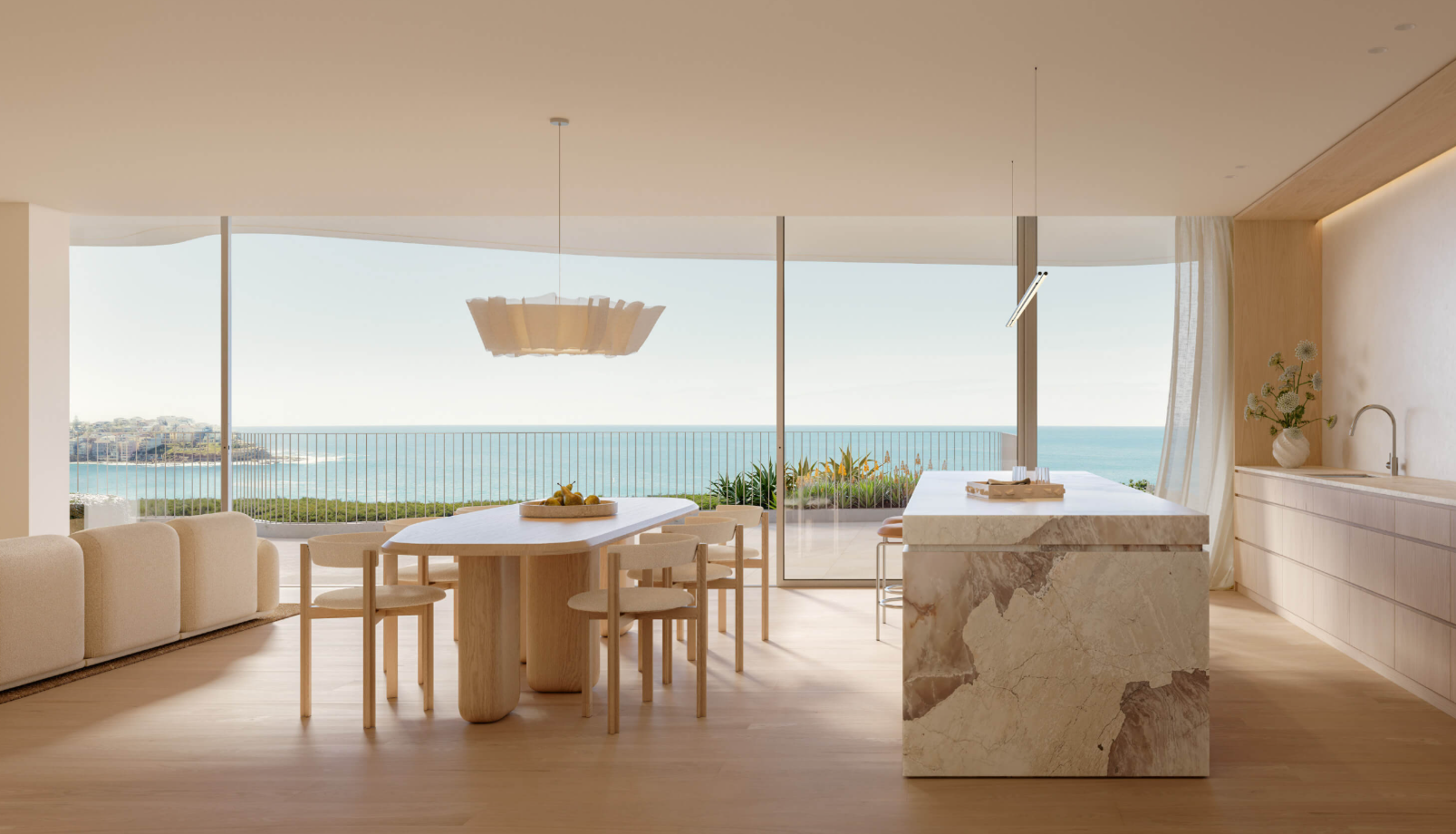
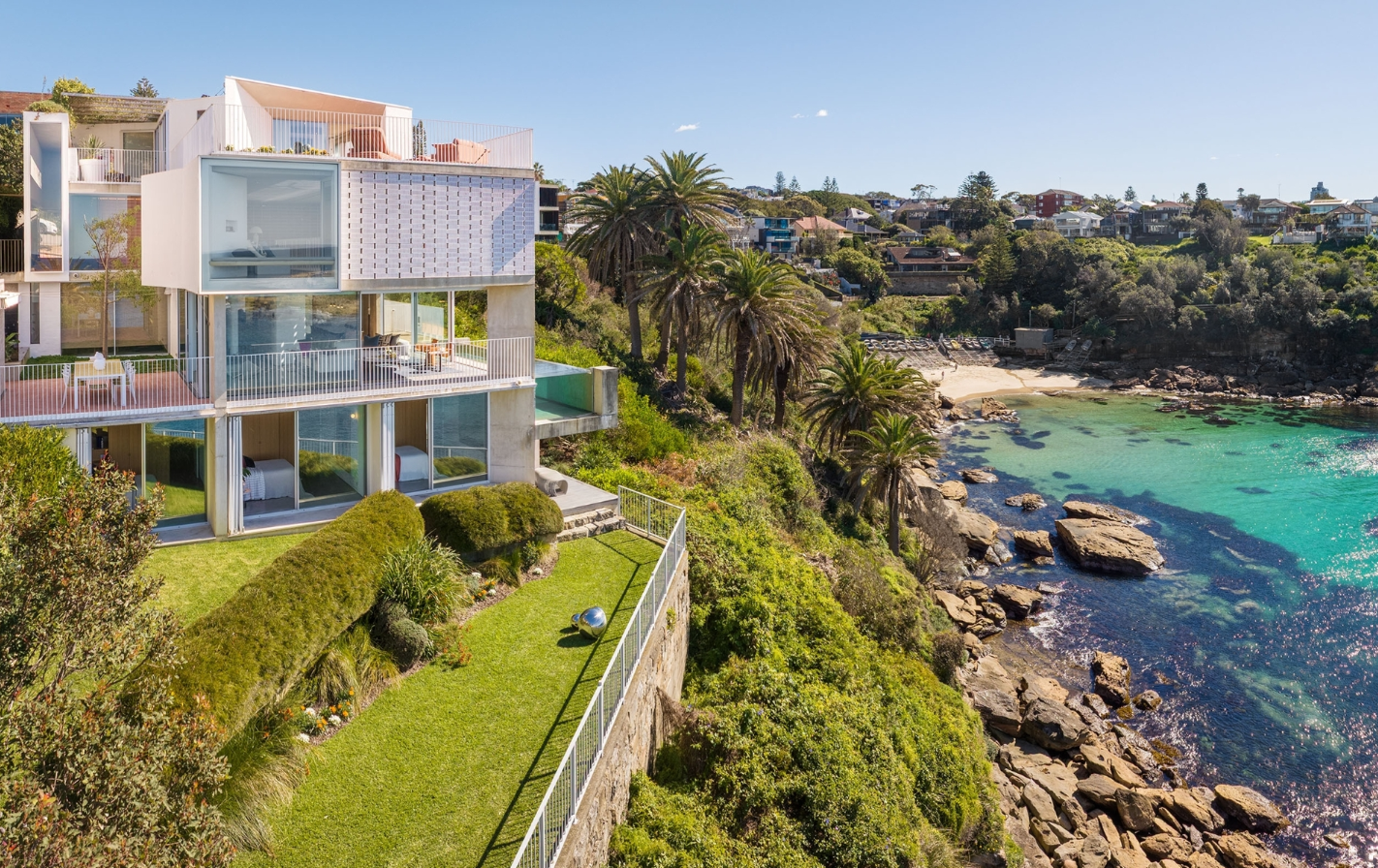
Anyone familiar with Port Phillip Bay knows the eclectic mix of prime properties along the popular waterfront strip of Beaconsfield Parade. Now one of the coveted residences has come to market for the first time in more than 20 years.

Carnane is an address with the best of both worlds – art deco charm blended with contemporary sophistication.

Originally built around 1915 as four smaller flats, the property has been transformed behind its period facade to reveal a modern designer interior crafted for family living.

Reimagined by Buro Architects and interiors, the five-bedroom, four-bathroom house was shortlisted back in 2008 for an Australian Interior Design Award and subsequently appeared in multiple design magazines.

Last sold in 2005 for $2.32 million, Carnane is now listed with a price guide of $14 million to $15 million. The expressions of interest campaign, via Ben Manolitsas, Melissa Turner, and Thomas Wilson of Marshall White Port Phillip, closes on April 9.

What anchors the historic bayside home in the 21st century is the moody, cantilevered steel staircase set just inside the entry foyer. Sculptural in every sense of the word, the “floating” stairs make a bold statement at first sight and even discreetly conceal a refrigerated wine cellar and bar.

The long 580 sq m footprint and three-story layout allow for a convenient separation between entertainment and accommodation zones. In the shell of the original Art Deco facade, there are two sitting areas framed by deep bay windows.

Beyond the iconic stairs, a gallery walkway leads through to the dining room and show-stopping kitchen. A design statement in itself, the sleek black kitchen has Gaggenau appliances, hidden storage, a grand island bench, a casual meals area, and a vast butler’s pantry with a second entry to cater for any sized soirée.

This ground level has marble floors, Venetian-plastered walls, and full-height glazing, as well as the mammoth rear extension. The stylish addition dishes up another large living room, warmed by an ethanol fireplace, and enormous timber-framed sliding doors that open onto the private north-facing pool deck and lush landscaped gardens.

An internal courtyard offers homeowners a bonus green space, separating the formal and informal dining zones.

Upstairs, there is yet another living area and an adjoining study that mirror the bay windows below and capture sweeping views of the bay. There are two bedrooms with built-ins sharing a palatial family bathroom, as well as the main bedroom with a walk-in Polyform wardrobe, extra built-ins, motorised blinds, and an ensuite with a shower.

One more floor up, a top-level guest or teenager retreat with a bathroom, kitchenette, living area, and a huge water-facing terrace. Additionally, the triple garage, accessed via Ashworth St, has its own fully independent studio.

The Beaconsfield Pde home also has spotted gum floors, a video intercom, an alarm, an integrated sound system, abundant storage, and zoned heating and cooling, all within walking distance of Middle Park village, Albert Park Lake, and city-bound transport.

Carnane at 245 Beaconsfield Pde, Middle Park is listed with a price guide of $14 million to $15 million through Marshall White Port Phillip via an expressions of interest campaign closing on April 9.

SPRING’S MOST PLAYFUL LUXURY ACCESSORIES ARRIVE

Luxury accessories brand  MAISON de SABRÉ is welcoming the new season with a whimsical yet meticulously crafted release, unveiling its Spring Harvest Collection.  

The global launch introduces a series of collectible SABRÉMOJI Vegetable Charms alongside two new interpretations of the label’s popular Bucket bag silhouette. 

Inspired by the changing rhythm of the seasons, the collection reimagines everyday produce as sculptural leather miniatures designed to be attached, stacked and styled. 

Crafted entirely from upcycled leather offcuts generated during handbag production, the charms blend playful personalisation with a considered approach to sustainability. 

“The new Vegetable Charms reflect our renewed focus on seasonal storytelling – capturing the optimism of spring through an expression of craft,” said Omar Sabré, Co-Founder and Creative Director of MAISON de SABRÉ.  

“The SABRÉMOJ platform allows us to push the playful boundaries of our savoir-faire on the smallest and most intricate scale. The charms are contemporary art for your handbag.” 

Available in four designs – Carrot, Mushroom, Snap Pea and Chilli – each piece showcases intricate leather marquetry techniques including bombé onlay and underlay panels, hand knotting and detailed tack stitching.  

Select styles also feature miniature zipper compartments capable of housing small essentials or even an Apple AirTag, merging decorative craft with everyday practicality. 

“For us, vegetables felt like the perfect symbols of the season,” said Sabré.  

“They represent growth, abundance and nature – but translating them into leather with this level of detail required incredible craftsmanship from our artisans.” 

Complementing the charm launch are two new additions to the brand’s Bucket bag family.  

The Mini Bucket Soft Tote offers a petite, fluid interpretation of the original design, crafted from resin-backed full-grain leather and featuring a reinforced base, magnetic closure and detachable strap.  

A new dual-tone top handle introduces a fresh design signature while maintaining the relaxed slouch that defines the silhouette. 

Meanwhile, the Zipped Bucket Crossbody presents a more structured take on the cult shape.  

Designed with a trapezoid profile, full-length brass zipper and crescent silhouette that moulds comfortably to the body, the bag arrives in new seasonal hues intended to complement everyday wardrobes. 

Gen X Is Stuck in the Middle and Financially Squeezed. How One Financial Adviser Is Helping.

Gen X families, including affluent ones, face a hornet’s nest of financial challenges, from helping out their adult children to providing care for ageing parents to managing careers in a perilous job market.

Zach Mangels, a senior vice president at Wealthspire Advisors in San Rafael, Calif., estimates a quarter of his clients are in the Gen X demographic.

“Mortgage rates are higher, carrying costs are higher, educational costs are higher, groceries are higher, eldercare is higher—all of that stuff eats into cash flow. And even people with higher incomes are feeling that,” says Mangels, 40.

Barron’s Advisor spoke with Mangels about the financial challenges facing his Gen X clients, people between the ages of 46 and 61.

Mangels touched on how he creates short-term plans for clients concerned about career setbacks, why he recommends boundaries for Gen X parents who want to financially support adult kids, and how he guides clients with ageing parents.

How has financial planning for Gen X clients changed?

Typically, when you create a financial plan, you’re looking at long-range goals.

But now I look at more immediate needs because of the pressures Gen X families are dealing with.

For example, I see more clients whose children are coming back home after graduating from college, needing financial support for a much longer period of time than previous generations expected to receive.

How should help for adult children be structured?

If they need to support their child, I want to understand the nature of what the support will look like.

I have a client whose kids just graduated and whose majors don’t lend themselves to a high income right now.

They knew their kids would be coming back home after graduation and we talked about what the nature of their help would look like.

First we looked at their financial plan to see what kind of support they could provide and we defined the maximum amount.

Then we designed the support in a way that would be planned, explicit, and with purposeful boundaries.

That’s very important for the younger generation. Parents need to know how to help their kids without them becoming dependent.

The children need to have agency and to know they don’t have access to an unlimited piggy bank.

What was the plan?

The clients had a conversation with their kids about what to expect.

The kids could live rent-free for three years, with a small stipend, an amount that didn’t disincentivise them from looking for a job.

In this environment, entry-level jobs are increasingly hard to come by, but any job that moves you closer to a career you want is worth looking at. In this case, their daughter got a job as an assistant to a personal shopper, which was related to the direction she wanted to follow.

Do you help the parents practice what to say?

I didn’t provide a ton of details to the parents with what exactly to say. But I coached them on the basics—having a clear, purposeful, intentional conversation and getting buy-in from their kids.

How do you advise clients with ageing parents?

The cost of long-term care for seniors has increased dramatically.

One of the conversations I have with my clients is how they perceive their parents’ financial circumstances and to what degree they might have to provide a layer of financial support. My dad was in memory care for a few years and we paid maybe 15 grand a month.

My clients’ parents are usually relatively stable financially. But the most important issue is the use of the family residence to help provide support. A lot of people in California who have owned homes a long time have a lot of equity in those homes. That’s the ultimate backstop, the last line of defence.

What about the job market?

Gen X is also dealing with career and income volatility. We’ve seen all the headlines about tech layoffs and the rise of AI. A lot of my clients work in the tech industry.

The conversations I have more frequently focus on clients’ concerns about their ability to continue earning at the same level.

We look at diversifying their equity component more quickly, getting it out of company stock, especially for those in tech.

For example, some clients at Amazon have restricted stock units they can sell periodically. But now they’re selling those (Amazon) stocks and then deploying the [cash into other equities] more slowly.

We’re hearing about how quickly AI is going to change things. For people in software on the front lines, they’re pretty anxious about it.

Can you provide an example?

One client who works at Google told me he expected a lot of change with AI as the disruptive force.

A few companies will benefit, he feels. A lot won’t. So he’s actively selling his company shares.

Historically we would reinvest the proceeds as they’ve come in. But now he wants to slow that down. Hold cash a little bit longer and slowly deploy it.

His perception is that change is coming quickly. He doesn’t know what that will look like but it probably won’t be good.

In behavioural finance, we know you feel a loss much more significantly than you feel a gain. And he’s trying to avoid putting money in the market right before there is a big correction.

It sounds stressful.

It’s super stressful. And as we go into 2026, especially in the tech sector and among those with high incomes, I see a lot of anxiety.

I have another client who works in finance, but the nature of his job moves with economic cycles.

He was laid off at the start of Covid and he’s getting nervous again. It’s a “vibecession” that a lot of people are feeling right now.

How do you help someone worried about a job loss?

Over a year ago, we restructured where his investments are held, so that if he gets laid off and ends up spending his emergency fund, the next thing he’ll tap is a more conservative account we created.

It’s not that we took his overall asset allocation and made it more conservative. We just put more investments in this other account. It’s a matter of asset location and it gives him peace of mind knowing he has a fallback he can tap.

That strategy would be helpful for anybody today. The challenge is if you have accounts with a lot of capital gains.

Does multigenerational planning help?

My work with baby boomer clients often involves conversations about supporting their Gen X and older millennial children.

I’ve seen a lot of parents and grandparents of Gen Xers looking for ways to accelerate their generational wealth transfer, trying to provide assistance now when it’s more impactful on their kids’ lives.

For example, a baby boomer client was looking for ways to help her Gen X son, who is married with a child in middle school, but had started accumulating a lot of debt after he was laid off.

We worked together to model the level of support she could provide and how to structure the assistance so it wouldn’t impact her son’s sense of independence.

Ultimately, she decided on a one-time gift that would cover about six months of living expenses. I call this indirect Gen X planning.

Inside The Craft-Led Luxury Dog Brand Changing Pet Style

For many luxury consumers, the idea of premium pet accessories has long been synonymous with designer logos and glossy marketing.  

But in Melbourne, professional dog trainer Chris Loverseed is quietly reshaping the conversation around what true luxury dog gear should look and feel like. 

As founder of PK9 Gear, Loverseed sits at the intersection of functional performance and traditional craftsmanship, creating handcrafted collars, leads and harnesses designed first and foremost with the dog in mind. 

“As trainers, we work with dogs in real-world environments every day, so that experience directly influences how we design every piece of gear,” he told Kanebridge News. 

Unlike many mass-produced pet accessories, PK9 Gear products are developed through hands-on training rather than driven by aesthetic trends. 

“One of our core principles is that we only design and sell products that we genuinely use ourselves in training,” he said. 

“Unfortunately, many brands create products simply to look trendy or appealing on social media, with very little consideration for how they actually function for the dog or the handler in the real world.” 

For Loverseed, product development begins with performance, ergonomics and canine wellbeing. 

“When I design a product, I always start with a dog-first perspective, and then consider the handler.  

“That might mean looking at how a collar sits on a dog’s neck, how a lead feels in the handler’s hand, or whether a tug toy gives the dog the right grip and satisfaction when they bite. 

“If a product doesn’t improve the dog’s experience and make handling easier, we simply don’t make it. That philosophy sits at the centre of everything we create at PK9 Gear.” 

Defining luxury beyond logos 

In a crowded market of designer-inspired pet accessories, Loverseed believes true luxury is less about branding and more about authenticity. 

“Standing out from mass-produced pet accessories is actually quite simple. Using ethical labour, quality materials, and genuine craftsmanship already sets you apart from much of the market.  

“But defining luxury is more complex, because luxury can mean different things to different people.” 

He sees a broader shift taking place among consumers who are increasingly questioning what luxury really represents. 

“I believe there is also a noticeable shift happening in the market.  

“With USA tariffs and those viral videos showing how many “luxury” handbags are actually manufactured, consumers are starting to question whether luxury is simply a price tag or something more meaningful.” 

Instead, he points to a growing appreciation for understated design and meticulous detail. 

“For me, it is twofold. First, I believe quiet luxury is becoming the new flex, where quality and craftsmanship speak louder than visible branding.” 

His work with high-net-worth dog owners has reinforced this belief. 

“As a professional dog trainer in Melbourne, I work with several VIP clients who live in $40 million plus homes. 

“One thing I have noticed is that people at that level are rarely trying to impress others with logos. They value craftsmanship, authenticity and products that are simply made well.” 

Materials also play a defining role in the brand’s positioning. 

“At PK9 Gear, we take the opposite approach. We use premium vegetable-tanned leathers from Italy, sourced from tanneries that are part of the Pelle Conciata al Vegetale consortium.” 

These traditional tanning methods prioritise durability, natural finishes and longevity. Hardware choices are equally considered, with solid brass, stainless steel and 24-carat gold PVD stainless steel used across the range, alongside hand-stitched construction techniques. 

“For us, luxury is not about logos. It is about craftsmanship, integrity in materials and creating gear that is functional, beautiful and built to last for both the dog and the handler.” 

The rise of Australian craftsmanship 

As global consumers move away from fast fashion and disposable purchases, Australian artisans are finding renewed recognition. 

“Australian craftsmanship is definitely gaining global attention, and I think part of that comes from consumers moving away from fast fashion and mass production,” Chris said. 

“People are beginning to value products that are made properly, with care and attention to detail.” 

PK9 Gear reflects this shift by offering both accessible performance-driven products and highly bespoke pieces that showcase traditional leatherworking techniques. 

“Traditional handmade products naturally come at a higher cost because of the time, skill and materials involved. 

“That alone places them in a more premium or luxury category, but many consumers are now willing to pay for something that will last longer and has genuine craftsmanship behind it. 

A trainer’s favourite companion 

Despite working with a wide range of breeds, Loverseed has a clear personal favourite. 

“If I could have only one dog breed it would be a Rottweiler,” he says. 

In a luxury market increasingly driven by authenticity, longevity and meaningful design, PK9 Gear represents a new kind of status symbol.  

One that values quiet excellence over overt display and performance over perception. 

These Are the Priciest Streets in All of Great Britain

Winnington Road, lined in red-brick mansions, some set behind tall hedges and many with gated entries, spans a leafy stretch of the North London borough of Barnet. 

 It’s also the most expensive street in Great Britain, according to a report Monday from Rightmove.  

A home on the well-to-do street, which is close to Highgate Golf Club and Hampstead Heath, has an average asking price of £12.5 million (US$17.7 million), the online property portal said. 

The most expensive home for sale on the street is a 10-bedroom house asking £17.95 million.  

London lays claim to many of the most expensive streets in the U.K.  

Chester Square in London’s Westminster ranked as the second-priciest street, with an average asking price of £11.5 million. The Bishops Avenue, also in Barnet, rounded out the top three, with an average price tag of £8.9 million.  

“This year’s top 20 [most expensive] is taken up almost entirely by London addresses, showing the city still reigns supreme when it comes to ultra-prime property,” Colleen Babcock, Rightmove’s property expert, said in the report.  

“For buyers looking for prestigious roads outside of the hustle and bustle of London, Elmbridge in Surrey is flying the flag for the rest of the country as the only area outside the capital to make the top 20 list,” Babcock said.  

Homes on East Road in Elmbridge—about 20 miles southwest of central London—have an average asking price of £8.8 million.  

Outside of England, Drumsheugh Gardens in Edinburgh is the most expensive street in Scotland with an average asking price of £560,000. Hollybush Road in Cardiff, where homes ask an average of £1.2 million, is the most expensive in Wales.  

Las Vegas Power Couple Lists Home in the Nevada Desert for $19.5 Million

Jenna and Michael Morton have created some of the best-known nightclubs and restaurants in Las Vegas.  

But when building a home in the area for their family, they veered away from the glitzy excess of the Strip in favour of a calming, desert retreat.  

That’s not to say entertainment was an afterthought: The roughly 2-acre property in the Summerlin neighbourhood has a 60-foot outdoor slide and a DJ booth.  

“We are in Las Vegas,” Jenna said. “It’s part of what we do in this town. We do fun.”  

Now, after about 20 years of fun, the Mortons’ three children are out of the house, and they are listing the home for $19.5 million.  

Michael is a son of Chicago restaurateur Arnie Morton, who founded Morton’s The Steakhouse, which has more than 50 locations nationwide.  

His brother Peter Morton co-founded the Hard Rock Cafe, and Michael and Jenna operate restaurants including Crush at the MGM Grand and La Cave Wine and Food Hideaway at Wynn Resorts . 

The couple paid $1.25 million for the vacant Summerlin site in 2003. At the time, they were living in Chicago but planning to move to Las Vegas to be closer to their work.  

Located in the Ridges, a gated community about 15 minutes from the Strip, the property is at the end of a cul-de-sac abutting the Red Rock Canyon National Conservation Area.  

“The first time we were there, there were wild burros behind us,” Michael said. 

The single-story house spans about 9,400 square feet and curves toward the canyon for privacy and mountain views.  

Photo: JPM Studios.

“The curve is an embrace of the mountains,” said Jenna during a video call as she walked outside, the vista framing her face. 

In contrast to the over-the-top vibe of Las Vegas hotels and casinos, the couple’s aesthetic at home is what Jenna described as “Japan meets desert,” with clean lines and neutral colours. 

The house has seven bedrooms; the primary bath has a soaking tub made out of a boulder. 

A wine room has colour-changing Lucite pegs that hold hundreds of bottles. A separate, roughly 530-square-foot guesthouse has a roof deck. 

The property is mostly flat, with the exception of a sloped section where the Mortons built the tiled slide, which drops into the pool.  

“I looked at it and said, ‘There will be a slide on that hill,’” Michael recalled. It isn’t just children who have enjoyed it—he and Jenna and many of their friends have taken a turn. “A lot of adults hit that slide,” he said. 

Photo: JPM Studios.

The Mortons said they entertained frequently, from fundraisers to a birthday party where their son filled an outdoor trampoline with bubbles.  

For Jenna’s 40th birthday, the couple hosted a 1960s-themed party that began with a 200-person sit-down dinner, followed by toasts and karaoke.  

Michael enlisted the rock band Cheap Trick to make a surprise appearance during karaoke.  

As Jenna took the microphone and started belting out their song “I Want You to Want Me,” the band began playing behind her. “We took the rods out of the reactor that night,” he said. undefined 

Although selling is bittersweet, the Mortons said they want something smaller now that their children are grown.  

The couple—he is 61, she is 59—have a second home in Manhattan Beach, Calif., and they plan to build a smaller house in Las Vegas.  

The luxury market in Las Vegas has exploded over the past few years, said listing agent Kristen Routh-Silberman of Douglas Elliman.  

There were 76 sales in the Las Vegas area above $10 million in 2025, up from 59 a year prior, she said. The record is held by a home at the Summit Club that traded for $35 million in 2024.  

A recent building boom means inventory is finally catching up to demand, according to Routh-Silberman.  

The spring market has started early this year, and there seems to be more activity thanks to demand from California and Washington transplants seeking tax advantages, she said. 

Below 40? You Should Already Be Getting Screened for Cholesterol, Heart Attack Risks

Adults should be screened and treated for high cholesterol starting at age 30, if not sooner, according to new clinical guidelines, lowering the age by at least a decade at a time when heart attacks are becoming more common in younger adults. 

The goal is to shift to a more proactive approach to head off problems in younger years, rather than starting lifestyle changes and medical treatment in middle age when a patient may already have damage in their arteries, said Dr Roger Blumenthal, chair of the committee of cardiologists that wrote the new guidelines.  

Growing research shows how much damage can be done when levels of LDL, or “bad,” cholesterol stay high in the blood for years, he said.  

At the same time, more medicines have become available to lower cholesterol, along with screening tests and a new online tool that allows people 30 and older to calculate their risk of cardiovascular disease. 

“We need to pay attention much earlier,” said Blumenthal, director of preventive cardiology at Johns Hopkins Medicine.   

The guidelines, published Friday in two leading cardiology journals, were issued by 11 medical associations, including the American College of Cardiology and American Heart Association.  

These organisations set standards for medical professionals from family doctors to cardiologists. 

Approximately 25% of U.S. adults—and 20% of adolescents—have high LDL cholesterol. 

For adults, especially, that increases their risk of heart attacks and strokes because it causes plaque-forming particles to build up in their arteries over time, hardening and narrowing them.  

Doctors are being urged to counsel children and adolescents on diet and exercise, avoiding tobacco and other healthy lifestyle habits.  

More young people are being diagnosed with diabetes and other conditions that put them at higher risk of cardiovascular events. 

“If we want to talk about eliminating heart disease and heart attacks, treating cholesterol is one of the most important things,” said Dr Sadiya Khan, professor of cardiovascular epidemiology at Northwestern University Feinberg School of Medicine. She wasn’t involved in writing the recommendations. 

The new guidelines offer a number of different ways doctors can determine whether a person’s at risk. 

Everyone should get a blood test once to measure their levels of lipoprotein(a), another type of “bad” cholesterol linked to heart disease.  

Researchers say Lp(a), which is genetic, significantly increases the risk of cardiovascular disease, and a test can identify risks for people who are otherwise healthy.   

Testing for another protein, apolipoprotein B, can also be performed for those with high triglycerides, diabetes or other conditions, the guidelines say.  

Research suggests it is a better predictor of heart disease risk than LDL cholesterol. undefined undefined Men aged 40 and older and women aged 45 and older with a borderline risk of heart attack or stroke may also get a coronary artery calcium scan to check for plaque buildup in arterial walls.  

Children should be screened for cholesterol and other lipids once between ages 9 and 11, backing an existing recommendation by the American Academy of Pediatrics.  

As part of the new guidelines, young adults should be screened beginning at age 19 and every five years after that.  

People should be screened for their risk of cardiovascular disease starting at age 30, using an AHA online calculator called  

Prevent that measures risk based on a person’s cholesterol, blood pressure, and other indicators. Screening was previously recommended beginning at age 40, using a different tool. 

Young adults should be offered cholesterol-lowering medications if their LDL cholesterol is 160 milligrams per deciliter, according to the guidelines.  

The same is true if they have a family history of atherosclerotic disease at an early age or a high risk of developing it over the next three decades as measured by the Prevent calculator.  

Adults with genetically high cholesterol should also be put on medication. undefined undefined  

While the end result of additional screening may mean more people end up on cholesterol-lowering drugs, younger people may be able to avoid high doses. 

“If you identify someone at risk earlier in life, you may not need to treat them with as intensive a statin regimen because you have time on your side,” said Dr Steven Nissen, a preventive cardiologist at the Cleveland Clinic, who wasn’t involved in writing the new guidelines. 

Record-breaking US luxury agents to lead high-level real estate summit

Some of the world’s most recognisable names in luxury real estate will headline this year’s Australasian Real Estate Conference (AREC), as organisers sharpen the event’s focus on practical skills, performance and long-term growth. 

Scheduled for May 24 and 25 at the Gold Coast Convention and Exhibition Centre, AREC 2026 will bring together high-profile agents, business leaders and performance mentors at a time organisers describe as one of its most complex market environments in recent memory. 

Izzy Savva, Head of Total Real Estate Training, says the program has been shaped by feedback from agents seeking guidance on how to stay competitive amid ongoing change. 

“After listening closely to agents in this current market, it became clear that now is the time to focus on the fundamentals — the core skills that build sustainable careers,” she said. 

“AREC is designed to focus on what really drives success in real estate: client relationships, negotiation, listing mastery, and personal growth.” 

Among the headline speakers are internationally renowned US agents Josh Altman and Josh Flagg, known globally through Million Dollar Listing Los Angeles.  

Both have built careers representing some of California’s most prestigious homes and have collectively transacted billions of dollars in property. 

Flagg will appear in a Q&A session with AREC founder John McGrath, offering insights into reputation-driven business, marketing and client relationships.  

Altman, who has sold more than $9 billion in real estate during his career, is recognised for consistently achieving record-setting results in highly competitive luxury markets. 

They will be joined by Tim Smith of Coldwell Banker’s Tim Smith Real Estate Group, who has achieved more than $6 billion in sales and built a reputation for strategic marketing and negotiation expertise across Orange County’s sought-after coastal communities. 

Beyond sales performance, AREC 2026 will also explore the mindset and leadership skills required to succeed at the top end of the market.  

Performance strategist Phill Nosworthy, leadership expert Holly Ransom and high-performance mentor Ben Crowe are among the confirmed speakers, alongside Harvard Business School professor Alison Wood Brooks, whose research focuses on negotiation and communication in high-stakes environments. 

Harvard Business School Professor Alison Wood Brooks

Entrepreneur and endurance athlete Jesse Itzler will also join the program virtually, bringing insights from his experience building and scaling global businesses. 

According to John McGrath, the event is designed to deliver more than inspiration. 

“The real estate industry is facing challenges like never before, and agents need to sharpen the fundamentals while embracing new growth opportunities,” he said. 

“AREC is exactly the kind of event that helps our industry step back, reflect, and come away with strategies they can implement immediately.” 

How to build a portfolio that generates passive income without over-leveraging

Property prices are rising, and buyer confidence is improving, making it an appealing time to start building a property portfolio.

But while the idea of owning multiple properties is attractive, many investors chase passive income without a clear strategy.

This can lead to over-leveraging and financial stress when interest rates rise or market conditions shift.

A smarter approach is to build a balanced portfolio that considers income, capital growth and risk.

Here are six key factors to weigh up before you begin.

Start with your current position

The foundation of any successful portfolio is understanding where you stand.

Before buying your first or next property, be clear on how much capital you have, your borrowing capacity and the level of risk you can comfortably manage.

Too many investors rush into high-yield assets without considering whether they suit their circumstances.

The result can be properties that look good on paper but prove difficult to hold.

Knowing your financial position helps determine whether to focus on cash-flow-positive properties, growth assets or a balanced mix of both.

Target assets that deliver real value

Not all properties are equal. When building a portfolio designed to generate income, quality matters more than headline yield.

In the commercial sector, smaller retail assets can offer a practical entry point.

They are often more affordable than large industrial properties while still delivering solid rental returns and value-add potential.

A tenancy leased below market rates, for example, can become a strategic purchase. When the lease is reviewed, bringing rent in line with market levels can lift both income and capital value.

Simple improvements such as updated fit-outs, better amenities or modest refurbishments can also increase tenant demand and justify higher rents.

Focusing on assets where you can influence performance helps create sustainable income and build equity for future investments.

Residential properties still play an important role

Residential property remains a core component of a balanced portfolio, offering stability to complement commercial holdings.

Long-term capital growth is largely driven by land value, so buying in areas with limited supply and strong demand can support future appreciation.

Dual-income strategies can also strengthen returns.

Adding a granny flat or secondary dwelling to a house can increase rental income without the need to purchase another property.

This approach can boost cash flow while keeping debt exposure manageable.

Use leverage carefully

Leverage can accelerate portfolio growth, but it also increases risk.

Before taking on additional debt, stress-test each purchase.

Consider whether you could comfortably hold the property if interest rates rose by several percentage points, and ensure you have buffers for vacancies or unexpected costs.

For business owners and SMSF investors, borrowing can provide access to assets that might otherwise be out of reach.

However, decisions should be based on what you can sustainably manage, not simply on how much a lender is willing to approve.

Diversify across and within asset classes

A resilient portfolio is built on diversification across locations, asset types and ownership structures.

Investing across different states can help manage land tax thresholds and take advantage of varying property cycles.

Within commercial property, combining retail, medical and selected office assets can reduce reliance on a single sector.

In residential markets, balancing growth-focused properties with income-producing assets can improve performance across changing conditions.

Ownership structures also matter. Whether property is held personally, in a trust or through an SMSF should align with long-term tax planning and wealth objectives.

Professional advice can help ensure the portfolio is positioned for sustainable growth.

Focus on creating income, not just finding it

One of property’s advantages is the ability to actively improve returns.

Renovations, secondary dwellings and reviewing under-market leases can increase both rental income and capital value.

These strategies allow investors to generate equity and strengthen cash flow without relying solely on market growth.

The goal is not to own the most properties, but to own the right ones.

A small number of well-selected, well-managed assets often outperform a scattered portfolio built without a clear strategy.

Financial independence is more likely when a portfolio supports itself and delivers a steady, reliable income stream.

Abdullah Nouh is the founder of Mecca Property Group, a boutique buyer’s agency in Melbourne helping Australians build wealth through strategic property investment.

Wellness-focused riverfront mansion lists in WA

A racquetball court, a swimming pool with an outdoor cinema screen, an assembly of wellness amenities and a professional gym – it’s a home befitting a fitness heavyweight who loves to dabble in property.

Danny Pavlovich, CEO and founder of Nutrition Systems and former elite bodybuilder, alongside his wife Suzi, have just listed their contemporary Perth trophy home as they prepare to move into another bigwig’s mansion.

The Pavlovichs’ Nedlands compound is surplus to the supplement founder’s needs after the high-profile pair spent $27.5 million in 2020 on the Dalkeith mansion once owned by disgraced entrepreneur Alan Bond.

A one-time professional athlete, Pavlovich has grown Nutrition Systems – Australia and New Zealand’s largest importer and distributor of premium sports and nutritional supplements – into a global brand offering more than 1800 products across speciality stores, grocery, pharmacy, convenience, and online channels.

Pavlovich said that stepping away from the home he has shared with his wife and two children is “bittersweet”, but the couple were invested in redeveloping in Dalkeith.

“We built something truly special, but we love building at this level,” he said.

“My family and I love this house. We use every space; there is no wasted area. It was purpose-built for us. You can lock up and leave; it offers full remote smart control. The view from my office is a highlight, and the fully equipped gym and wellness facilities were essential from the outset.”

Although there is no public record of what the couple paid for 37 Esplanade, Vivienne Yap of Ray White Dalkeith/Claremont has listed the property via a private treaty campaign for $20 million.

“This property redefines luxury living in Perth,” Yap said.

“From its unprecedented scale to its seamless, fully integrated Savant and Lutron smart-home technology, it represents a truly rare offering in the blue-chip riverfront precinct.”

On a 1407sq m riverfront block along the tightly-held Esplanade in exclusive Nedlands, the five-bedroom, five-bathroom home spans three levels and is connected by a private elevator while being surveilled by 16 security cameras.

Built in 2018 to be the ultimate Perth entertainer, the prestige property has vast open-plan living and dining zones inside, with resort-style amenities outside.

There is a sunken alfresco lounge and outdoor kitchen with a nine-seater teppanyaki grill beside the heated white mosaic saltwater pool. More than just a backyard swimming hole, the pool features LED water features and fountains, plus a cinema wall and a spa.

Additional entertaining features include a cinema with a Steinway Lyngdorf 9.2 Aura surround sound system, a cocktail lounge with a video wall, a billiards room, a steam room, an infrared sauna, a full gymnasium, and a private racquetball court.

Upstairs, the whole-floor primary retreat is home to a sitting area, a kitchenette, a grand dressing room, and a lavish hotel-style ensuite.

All bathrooms have heated floors and towel rails, while the main living zones also have hydronic heated flooring.

Designed with a long list of high-tech features, the modern mansion has 16 security cameras with infrared and motion detection, a temperature-controlled server room, automated window furnishings, a smart home system controlled via a Savant and Lutron platform, and a whole-home water filtration system.

The property, which also has secure garaging for up to six cars, sits opposite Charles Court Reserve and Nedlands Jetty and is a short walk from Nedlands Tennis Club and Nedlands Golf Club.

The expansive property at 37 Esplanade, Nedlands, is listed with Vivien Yap at Ray White Dalkeith/Claremont, with a price expectation of $20 million.

The New Rules For A Perfect Gin & Tonic

There is a shift happening in the way we entertain. As more gatherings move back into the home, simple drinks are being elevated into considered rituals.

The classic G&T, once a default pour, is now being revisited with fresh attention to balance, aroma, and seasonal flavour.

As Never Never co-founder Sean Baxter says: “It’s about getting the fundamentals right: proportion, temperature and aroma. Once those are in place, you don’t need much else.”

For autumn gatherings, the focus is on structure and subtlety, from crisp citrus oils expressed over the glass to mineral-driven profiles that pair well with food.

Here, Kanebridge News sat down with Sean to explore the return of classic serves and the art of building a better gin and tonic.

Q: We’re seeing a return to classic drinks in 2026. Why do you think the gin and tonic is having a moment again?

A: I don’t think the G&T has necessarily gone anywhere; people have just been experimenting more and more when it comes to finding the style of drinks they enjoy.

G&T is the perfect apéritif; it fills that moment in the late afternoon or early evening before dinner and is easily customisable to fit a wide range of garnish styles and tonic varieties.

It’s also pretty resilient when it comes to current economic pressures because it’s a very affordable mixed drink that can be prepared at home very easily.

Q: What are the key differences between styles of gin? How do juniper-forward, citrus-driven or coastal styles differ in flavour and structure?

Juniper forward gins are the style of gin that has been around for hundreds of years.

They are built using juniper, which is a small, round ‘berry’, but it’s actually a type of cone (similar to a pinecone).

These are usually complemented by root-like flavours such as liquorice and angelica root, with citrus notes from coriander seeds.

These sorts of gins (think Gordons and Tanqueray) have dominated the landscape up until the last few decades.

Some slightly more contemporary gins have started driving a more citrus-forward approach all while delivering a juniper backbone (think Bombay, Tanqueray 10 and Beefeater).

The ultra-contemporary category was born of the popularity of brands like Hendricks, which began exploring completely non-traditional flavours. The vast majority of Australian gin sits in this section.

Q: How much does juniper still define a gin today? Has that shifted with modern distilling trends?

A: Juniper still defines gin. It’s the anchor point in terms of flavour from a traditional sense, and there should still be a representation of juniper in the flavour profile, even when making a contemporary style.

Without juniper, you’re really making a botanical spirit rather than gin, and there are certainly a fair few of those knocking about.

What has shifted is the dominance of juniper in the final blend of ingredients.

Traditionally, it was the loudest instrument in the orchestra, like the bass drum or tuba.

Ultra-contemporary gin styles tend to treat it more as a component rather than a lead, supported by citrus, spice, or floral flavours.

In a good example of gins out there, it’s more like the occasional ping of a triangle rather than anything booming in its presence.

Q: You’ve spoken about “proportion, temperature and aroma”. What are the most common mistakes people make when making a gin and tonic at home?

It usually comes down to those three things that are pretty easy to manage when making a drink.

Proportion: People often under-pour the gin and drown the drink in tonic or vice versa. A good G&T should taste clearly of both.

A great G&T should be a perfect balance and not overly bitter.

Measure your ingredients. I always aim for a 3-to-1 ratio of 3 parts tonic to 1 part gin (also using your fingers doesn’t count, buy a jigger). It’s also a good thing to know how many standard drinks you’ve consumed.

Temperature: Not enough ice or a warm tonic will flatten the drink. Fill the glass properly and start cold. Always try to use cold tonic water; it affects the size of the bubbles in the drink and is often the difference between an ok G&T and a spectacular one.

Aroma: Garnish isn’t just a decoration; it adds flavour and aroma. Your nose hits the glass before your palate.

A fresh citrus peel or herb can completely change the drink. Equally, a 3-day-old brown lime wedge can ruin a perfectly acceptable mixer. Fresh is best.

Get those three right and the drink improves immediately.

Q: How do seasonal ingredients influence gin? Are there certain flavour profiles better suited to autumn and winter entertaining?

Seasonality certainly influences how we enjoy gin (and how often we head out).

In the Aussie summer months, people gravitate toward bright citrus and fresh herbs as garnishes in drinks. Think bright thyme and zesty lemon or lime leaf and mint.

As the weather cools down, we tend to shift towards warming botanicals like cinnamon, cardamom, star anise or even roasted citrus.

Some players work the whole way through like orange. You can also consider how to add seasonal modifiers to your G&T to make it work better.

I like playing with certain types of soda (blood orange in particular), paired with warm spices and a classic Indian Tonic, to add a little more winter character to a G&T.

Q: For someone building a home bar, is it better to invest in one versatile gin or several different styles?

At Never Never, we’ve always prided ourselves on creating super versatile gins that hit every occasion.

My recommendation is to always feature a classic juniper style (like our Triple Juniper Gin) as it would certainly satisfy most ‘gin fans’ in the room if they are into classic juniper character.

That being said, with the rise of contemporary gins, it’s nice to include one or two other heavy hitters if it’s something you can afford (our Oyster Shell Gin is a great citrus-forward alternative to our classic styles).

Q: Finally, if someone thinks they “don’t like gin”, what are they likely reacting to, and what style would you suggest they try instead?

Try it again. One of the most common things we get at the distillery is “Sorry, I don’t like gin, it’s too bitter.”

I hate to be the bearer of bad news, but all this time you haven’t enjoyed gin; it’s actually the tonic you’ve been averse to.

Try it with a fresh citrus soda or spicy ginger beer and lime, and see if it’s more to your liking.

Also, if your first example is one your aunt made for you at Christmas time, it probably didn’t exactly adhere to everything covered in the 4th question, so it’s worth having another go.

If you still don’t like gin after all that, we make a pretty good vodka that is winning awards all over the world.

Oyster Yachts unveils epic 16-month global sailing rally

British luxury yacht builder Oyster Yachts has announced plans for its next flagship global adventure, the Oyster World Rally 2030–31, a fully supported circumnavigation designed exclusively for owners of its bluewatersailing yachts.

The 16-month voyage will cover about 27,000 nautical miles across three oceans, beginning in Antigua in January 2030 and taking participants through some of the world’s most celebrated cruising destinations, including Australia’s east coast.

Limited to just 30 yachts, the rally is positioned as both a structured and flexible experience, allowing owners to explore independently while benefiting from comprehensive logistical, technical and safety support from a dedicated Oyster team.

Photo: Fabian Fisahn

Richard Hadida, Owner and Chairman of Oyster Yachts, said: “The Oyster World Rally represents the very essence of our brand.

“Oyster yachts are built to cross oceans in safety, comfort and style, and the Rally is the ultimate expression of that capability.

“But beyond the yachts themselves, it is about enabling extraordinary life experiences.

“To see owners commit to a dream that may have been decades in the making, and to support them as they realise it, is something very special. The Rally embodies our belief that time is the greatest luxury of all.”

Unlike competitive sailing events, the rally is non-racing and does not require yachts to travel in close formation.

Participants are free to diverge from the main fleet to explore remote anchorages or sail in smaller groups before reconnecting at designated ports.

Preparation begins well before departure, with an extensive training programme launched 18 months in advance.

Workshops, masterclasses and online seminars cover meteorology, navigation, yacht systems, medical and safety readiness, provisioning and passage planning, helping crews build the confidence required for a full circumnavigation.

Photo: Fabian Fisahn

Allie Smith, Director of Oyster Rallies and Training, said: “The Oyster World Rally is about community above all else.

“Every owner joins for a different reason, and every Rally develops its own character shaped by those taking part.

“Our team are all experienced sailors, from logistics to technical support, and that shared experience builds real trust.

“What makes this Rally so special is the balance it offers: complete freedom to explore at your own pace, combined with the reassurance that our team is with you every step of the way.

“Watching owners grow in confidence, form lifelong friendships and complete a circumnavigation remains one of the most rewarding parts of what we do.”

Owners planning to commission a new yacht for the rally are advised to allow a three- to four-year lead time, reflecting Oyster’s limited production capacity and the importance of a thorough shakedown period before departure.

Entries for the Oyster World Rally 2030–31 opened on March 3, with strong demand anticipated following the success of previous editions and growing momentum behind the brand’s global circumnavigation programme.

Purpose-driven travel surges as Africa’s immersive safaris attract a new generation of explorers

Travellers are increasingly seeking deeper, more meaningful holidays, with Africa emerging as one of the world’s leading destinations for immersive and purpose-driven travel.

New industry figures suggest the global experiential travel market is projected to exceed $1.9 trillion by 2030, while around 70 per cent of travellers now say they prefer journeys focused on learning, culture and authentic engagement rather than traditional sightseeing.

Africa’s vast landscapes, wildlife and cultural heritage are helping to drive that shift, offering travellers opportunities to engage directly with conservation programs, local communities and ecosystems.

Across the continent, a growing number of lodges and reserves are designing experiences that move beyond the typical safari to provide education, conservation and cultural immersion.

Conservation in action at Shamwari

At Shamwari Private Game Reserve in South Africa, guests can spend several days working alongside conservation teams to gain a deeper understanding of wildlife protection.

Visitors are invited to learn about anti-poaching initiatives, wildlife rehabilitation and long-term conservation strategies while joining guided walks focused on animal tracking and sustainability.

The experience allows travellers to move beyond traditional game drives and witness the realities of wildlife conservation firsthand.

Discovering culture in Graaff-Reinet

In the historic Karoo town of Graaff-Reinet, the Drostdy Hotel offers guests a more cultural immersion experience.

Travellers can explore the dramatic landscapes of the Valley of Desolation with expert guides and visit the Karoo Origins Fossil Centre, home to one of the world’s largest generational fossil collections.

The property combines heritage architecture with tranquil gardens and spa experiences designed to reconnect visitors with the surrounding landscape.

Eco-luxury along the Maputaland coast

On South Africa’s remote Maputaland coastline, Thonga Beach Lodge blends luxury with conservation in a pristine coastal environment.

The eco-lodge offers opportunities to witness turtles nesting and hatching, guided by local experts, and also provides cultural tours to nearby homesteads, schools, and clinics.

Nearby Lake Sibaya, Southern Africa’s largest freshwater lake, adds another dimension to the experience, offering a rich ecosystem for exploration.

Protecting endangered vultures

At Cape Vulture Nature Reserve, travellers can participate directly in conservation programs to protect one of Africa’s most threatened bird species.

Visitors assist researchers in field studies, contribute to habitat restoration and join educational hikes led by naturalists.

The reserve also runs community outreach initiatives designed to raise awareness about the ecological role of vultures and the challenges facing their survival.

Wildlife and birdlife on the Zambezi

Tsowa Safari Island, located along the Zambezi River, offers a wilderness experience centred on one of Africa’s richest bird habitats.

Guests can observe rare species such as Schalow’s Turaco, Pel’s Fishing Owl and African Finfoot while exploring landscapes dotted with ancient baobab trees.

The island’s remote setting allows travellers to immerse themselves fully in the rhythms of the surrounding ecosystem.

A new luxury safari in the Masai Mara

In Kenya, The Ritz-Carlton, Masai Mara Safari Camp introduces travellers to the dramatic wildlife spectacle of the Sand River during the Great Migration.

Guests can also explore Masai culture through storytelling, music and beadwork while visiting historic sites such as the Kenya–Tanzania border marker that links two of Africa’s most iconic ecosystems.

A shift toward meaningful travel

Industry experts say experiences like these reflect a broader shift in global travel behaviour.

Rather than simply visiting destinations, travellers increasingly want to understand them, engaging with local communities, supporting conservation efforts and gaining deeper insight into the natural world.

As demand for experiential travel continues to rise, Africa’s combination of wildlife, culture and conservation is positioning the continent at the centre of this growing trend.

Melbourne set to overtake Sydney as Australia’s biggest city as property demand surges

Melbourne is poised to become Australia’s largest city within the next decade, with strong population growth, infrastructure investment and relative affordability driving long-term property demand.

A new research report from Knight Frank argues the Victorian capital remains one of the country’s most compelling markets for investors, businesses and residents.

The report highlights the city’s rapidly expanding population, diverse economy and major infrastructure pipeline as key factors underpinning future property growth.

Knight Frank Managing Director Victoria, Dominic Long, said Melbourne’s fundamentals continue to position the city strongly for long-term investment.

“Melbourne continues to stand out as one of Australia’s most compelling real estate markets,” he said.

“It is Australia’s strongest long-term growth city with the fastest growing population, the most diversified economy, world-class liveability and the most affordable major market for office, industrial and residential property.”

Population growth driving demand

Melbourne’s population has grown at an average rate of 1.8 per cent per year since 2000, faster than any advanced global economy, according to the research.

In the year to June 2025 alone, the city added about 123,500 residents, the largest annual increase of any Australian capital.

Population growth is expected to remain one of the key drivers of demand across residential and commercial property markets, including housing, offices and logistics space.

The report forecasts Melbourne’s population will overtake Sydney’s by the 2030s, reinforcing its position as the country’s fastest-growing major city.

Office market offering value

Melbourne’s CBD office market is also attracting renewed attention from investors.

Prime office rents remain significantly lower than in competing cities, with CBD office space about 46 per cent cheaper than Sydney and around 13 per cent cheaper than Brisbane.

That relative affordability is expected to drive long-term demand from occupiers and investors seeking value in Australia’s largest office markets.

The city’s office sector is also showing signs of recovery, with effective rents rising in 2025 and demand increasing for high-quality buildings in premium locations.

Industrial market benefiting from scale

Melbourne’s industrial sector continues to expand, supported by strong population growth, e-commerce demand and the scale of the city’s logistics network.

The city already hosts the country’s largest industrial market, with about 34 million square metres of warehousing stock and significant land available for future development.

Industrial rents remain competitive compared with other capitals, while Melbourne’s port handles the largest container volumes in Australia, further supporting demand for logistics space.

Infrastructure pipeline supporting growth

More than $200 billion in transport infrastructure investment between 2014 and 2036 is also expected to reshape the city and support future property values.

Major projects include the Metro Tunnel, the West Gate Tunnel, the North-East Link and the Suburban Rail Loop, which together will improve connectivity across Melbourne and its growth corridors.

Knight Frank’s Head of Research & Consulting, Victoria, Dr Tony McGough, said these investments would play a key role in supporting the city’s economic expansion.

“Melbourne is Australia’s most economically diverse city and has delivered stable growth for more than two decades,” he said.

“With strong population growth, a highly educated workforce and unprecedented infrastructure investment, Melbourne is well placed to remain one of Australia’s most attractive long-term property markets.”

Luxury apartment ‘rightsizing’ boom reshapes prestige property market

Australia’s prestige apartment market is booming as wealthy homeowners increasingly choose to “rightsize” into luxury apartments rather than remain in large family houses.

New research from McGrath shows the number of prestige apartments sold in 2025 has tripled over the past decade as high-net-worth buyers prioritise lifestyle, security and convenience.

McGrath chief executive John McGrath said the shift reflects a growing preference among affluent Australians for luxury apartment living.

“Prestige apartments have been the strongest market segment in the last few years as high-net-worth individuals choose luxury, security and lifestyle in apartments over houses,” he said.

“Demand has increased dramatically as luxury apartments have gone to a whole new level in design, finishes and amenities.”

Queensland has led the surge in prestige apartment sales, accounting for 43 per cent of East Coast transactions in 2025. New South Wales followed with 41 per cent, while Victoria made up the remaining 16 per cent.

Southeast Queensland leads the trend

Southeast Queensland has become a particularly popular destination for luxury apartment buyers seeking waterfront lifestyles with convenient access to major cities.

Mr McGrath said the region’s beaches and rivers had provided the ideal setting for a new generation of high-end residential developments.

Prices for newly built prestige apartments have also significantly outperformed established units over the past five years. New apartments on the Gold Coast have surged 88 per cent, compared with 60 per cent in Brisbane, 34 per cent in Sydney and 32 per cent in Melbourne.

Apartments getting larger

Developers have responded by building larger apartments with more bedrooms and premium amenities to appeal to affluent downsizers.

McGrath’s national head of research, Michelle Ciesielski, said the emerging rightsizing trend had reshaped the type of apartments being built across Australia.

“After identifying the emerging rightsizing trend in Australia back in 2020, there has been more than double the delivery of apartments with three or more bedrooms, and the average apartment built was one-third larger,” she said.

Hotel-style amenities and premium parking

Buyers are also increasingly seeking features previously associated with luxury hotels, including pools, gyms and high-end shared facilities.

More than two-thirds of residential towers across the CBDs of Sydney, Melbourne and Brisbane now include both a pool and gym.

Parking has also become a major selling point in the prestige apartment market. Research shows Sydney apartments with more than four car spaces command a 62 per cent price premium compared with those with just one space.

Despite strong demand, developers continue to face rising construction costs, labour shortages and higher material prices when delivering new luxury projects.

Even so, McGrath said demand for prestige apartment living is expected to remain strong as wealthy Australians look for sophisticated homes that offer space, security and a lifestyle-driven alternative to traditional houses.