2024’s Top ASX Stock Picks: 5 Opportunities You Can’t Miss

 It’s been a tumultuous year for the ASX 200, which has moved within a broad range of between 7,568 points in February and 6,751 points in October. The benchmark index has recorded just 3.3% growth in the year to date. High interest rates and inflation have put pressure on businesses and forced consumers to rein in spending, while economic growth has weakened to an annual rate of just 2.1 percent.

Analysts at top brokerage house Morgan Stanley have a 12-month target of 7,350 points for the ASX 200, indicating more of the same for the market next year. Joe Wright of Airlie Funds Management comments: “ASX valuations have returned to more or less the average of their last 20 years”.

As always, some ASX stocks will shine, and eToro market analyst Josh Gilbert has announced his five top picks for 2024, as published on Finder.

ResMed CDI (ASX: RMD)

The ResMed share price has fallen 18.6% in 2023 to $24.79. Its 52-week high is $36.37. “Much of this recent weakness has come from the expectation that the new highly coveted Ozempic drug will dampen demand for ResMed’s sleep apnea devices,” says Mr Gilbert. “ResMed is a fundamentally quality business, and its recent sell-off has made its valuation more attractive.” Top broker Goldman Sachs rates ResMed shares a buy and has a 12-month share price target of $32 on the company.

TechnologyOne Ltd (ASX: TNE)

TechnologyOne stock has lifted 16.1% in the year to date to $15.17 per share. The 52-week peak is $17.12. “With inflation falling and central banks set to cut interest rates, technology shares could see their winning streaks continue,” says Mr Gilbert. “The good news for shareholders is the business has significant cash and investment holdings of $223 million and no debt, putting them in the position to continue its growth.” Goldman Sachs also rates this tech stock a buy with a 12-month price target of $18.05.

Goodman Group (ASX: GMG)

The Goodman Group share price has soared 34.7% in 2023 to $23.31. Its 52-week high is $23.69. Mr Gilbert says real estate shares should benefit from stabilising and potentially falling interest rates in 2024. “Goodman Group is in a strong position in the real estate sector, focused on logistics and warehouses. It also has a growing exposure to data centres – a booming area thanks to AI.” Top broker Citi says Goodman shares are a buy. Its analysts have a 12-month price target of $25.50.

TPG Telecom Ltd (ASX: TPG)

The TPG share price has essentially moved sideways in 2023, down 1.05% to $4.79. Its 52-week peak is $5.72. “As the telecom industry continues to transition to 5G technology, revenue could continue to grow,” says Mr Gilbert. The broker consensus recommendation published on CommSec was downgraded late last month from a moderate buy rating to a hold rating.

Treasury Wine Estates Ltd (ASX: TWE)

Treasury Wine shares have tumbled 20% in 2023 to $10.36 per share. The 52-week high is $14.69. “The good news for Treasury Wines is that the Albanese government is renewing Australia’s relationship with China, which could mean good news for removing those tariffs denting Treasury’s sales,” Mr Gilbert says. Leading brokerage Morgans has an add rating on Treasury Wine shares with a 12-month price target of $14.15.


The OpenAI Board Member Who Clashed With Sam Altman Shares Her Side

Helen Toner was a relatively unknown 31-year-old academic from Australia—until she became one of the four board members who fired Sam Altman from the artificial-intelligence company he co-founded.

Thrust into the spotlight during the ouster and eventual return of Altman as CEO of OpenAI last month, Toner has emerged as a symbol of tension between AI-safety advocates and those giving priority to technological progress.

Toner maintains that safety wasn’t the reason the board wanted to fire Altman. Rather, it was a lack of trust. On that basis, she said, dismissing him was consistent with the OpenAI board’s duty to ensure AI systems are built responsibly.

“Our goal in firing Sam was to strengthen OpenAI and make it more able to achieve its mission,” she said in an interview with The Wall Street Journal.

Toner held on to that belief when, amid a revolt by employees over Altman’s firing, a lawyer for OpenAI said she could be in violation of her fiduciary duties if the board’s decision to fire him led the company to fall apart, Toner said.

“He was trying to claim that it would be illegal for us not to resign immediately, because if the company fell apart we would be in breach of our fiduciary duties,” she told the Journal. “But OpenAI is a very unusual organisation, and the nonprofit mission—to ensure AGI benefits all of humanity—comes first,” she said, referring to artificial general intelligence.

Ultimately, Toner and some other board members did resign, clearing the way for Altman’s return.

In the interview, Toner declined to provide specific details on why she and the three others voted to fire Altman from OpenAI. Before his ousting, Altman and Toner had clashed.

In October, Toner, who is director of strategy at a think tank in Washington, D.C., co-wrote a paper on AI safety. The paper said OpenAI’s launch of ChatGPT sparked a “sense of urgency inside major tech companies” that led them to fast-track AI products to keep up. It also said Anthropic, an OpenAI competitor, avoided “stoking the flames of AI hype” by waiting to release its chatbot.

After publication, Altman confronted Toner, saying she had harmed OpenAI by criticising the company so publicly. Then he went behind her back, people familiar with the situation said.

Altman approached other board members, trying to convince each to fire Toner. Later, some board members swapped notes on their individual discussions with Altman. The group concluded that in one discussion with a board member, Altman left a misleading perception that another member thought Toner should leave, the people said.

By this point, several of OpenAI’s then-directors already had concerns about Altman’s honesty, people familiar with their thinking said. His efforts to unseat Toner, parts of which were previously reported by the New Yorker, added to what those people said was a series of actions that slowly chipped away at their trust in Altman and led to his unexpected firing on the Friday before Thanksgiving.

The board members weren’t prepared for the fallout from their decision.

The members, including Toner, were taken aback by staffers’ apparent willingness to abandon the company without Altman at the helm and the extent to which the management team sided with the ousted CEO, according to people familiar with the matter.

Toner took her account on social-media platform X private during the height of the crisis.

At one point during the heated negotiations, a lawyer for OpenAI said the board’s decision to fire Altman could lead to the company’s collapse. “That would actually be consistent with the mission,” Toner replied at the time, startling some executives in the room.

In the interview, Toner said that comment was in response to what she took as an “intimidation tactic” by the lawyer. She says she was trying to convey that the continued existence of OpenAI isn’t, by definition, necessary for the nonprofit’s broader mission of creating artificial general intelligence that benefits humanity at large. A simultaneous concern of researchers is that AGI, an AI system that can do tasks better than most humans, could also cause harm.

“In this case, of course, we all worked very hard to ensure the company could continue succeeding,” she added.

OpenAI has an unusual structure where a nonprofit board, on which Toner served, oversees the work of a for-profit arm. The board’s mandate is to “humanity,” not investors.

In the interview, Toner didn’t answer questions about her interactions with Altman. She wouldn’t comment on whether she would have done anything differently but said she had good intentions.

Before he was reinstated, Altman offered to apologise for his behaviour toward Toner over her paper, according to people familiar with the matter. Ultimately, he returned to lead the company without following through on that gesture.

Toner is known in the AI-safety world for being a critical thinker who isn’t afraid to challenge commonly held beliefs.

Some of Altman’s backers, including OpenAI investor Vinod Khosla, publicly expressed derision specifically toward Toner and Tasha McCauley, another former OpenAI board member who voted to fire Altman and is connected to organisations that promote effective altruism.

“Fancy titles like ‘Director of Strategy at Georgetown’s Center for Security and Emerging Technology’ can lead to a false sense of understanding of the complex process of entrepreneurial innovation,” Khosla wrote in an essay in tech-news publication the Information, referring to Toner and her current position.

“OpenAI’s board members’ religion of ‘effective altruism’ and its misapplication could have set back the world’s path to the tremendous benefits of artificial intelligence,” he wrote amid the power struggle.

Toner was previously an active member of the effective-altruism community, which is multifaceted but shares a belief in doing good in the world—even if that means simply making a lot of money and giving it to worthy recipients. In recent years, Toner has started distancing herself from the EA movement.

“Like any group, the community has changed quite a lot since 2014, as have I,” she said.

Toner graduated from the University of Melbourne, Australia, in 2014 with a degree in chemical engineering and subsequently worked as a research analyst at a series of firms, including Open Philanthropy, a foundation that makes grants based on the effective-altruism philosophy.

In 2019, she spent nine months in Beijing studying its AI ecosystem. When she returned, Toner helped establish a research organization at Georgetown University, called the Center for Security and Emerging Technology, where she continues to work.

She succeeded her former manager from Open Philanthropy, Holden Karnofsky, on the OpenAI board in 2021 after he stepped down. His wife co-founded OpenAI rival Anthropic.

“Helen brings an understanding of the global AI landscape with an emphasis on safety, which is critical for our efforts and mission,” Altman said when she joined the board.

The new board members along with returning board member Adam D’Angelo offer a glimpse of the direction OpenAI might be headed. Larry Summers, former Treasury secretary, and Bret Taylor, former Salesforce co-CEO, appear to be more traditionally business-minded than Toner, McCauley and the third board member who was succeeded, Ilya Sutskever, OpenAI’s chief scientist.

There are no longer any women on the board, though the company is expected to expand it in coming months.

“I think looking forward is the best path from here,” Toner said.

Economy grows by 0.2 percent in September quarter

Australian gross domestic product (GDP) rose by 0.2 percent in the September quarter, taking the annual rate of economic growth to 2.1 percent, according to new figures from the Australian Bureau of Statistics (ABS). Katherine Keenan, ABS head of national accounts, said: “This was the eighth straight rise in quarterly GDP, but growth has slowed over 2023.”

Ms Kennan said the quarterly increase was due to a rise in government spending and investment while household spending remained flat. Government expenditure rose by 1.1 percent in the September quarter following an 0.6 percent rise in the June quarter.

“The growth in government expenditure was driven by social benefits to households, including the Energy Bill Relief Fund rebates, and extra payments for childcare, aged care and pharmaceutical products,” she said.  The energy rebates had a big impact. The ABS said electricity prices rose by 4.2 percent during the quarter. Without the rebates, they would have risen 18.6 percent.

The Federal Government also spent more on defence, funding international training exercises held in Australia during the quarter. “National and state public corporations increased their capital investment by 8.9 percent, with boosted investment in transport, communication and utilities projects,” Ms Keenan said.
Wages including superannuation rose by 2.6 percent due to an increase in the super guarantee rate from 10 percent to 10.5 percent and a bump in the minimum wage alongside low unemployment. The wage price index rose 1.3 percent, which was the fastest quarterly rise on record. More jobs had wage movement and the average change in wages was significantly higher. The unemployment rate in the month of September was 3.6 percent.

Inflation rose by 1.2 percent during the September quarter, with the biggest contributors being higher petrol prices, rents, new dwelling purchases by owner-occupiers and electricity prices. Spending on fresh food fell 0.2 percent, alcohol purchases from bottle shops fell for the fifth consecutive quarter and gambling taxes fell 6.9 percent after a similar fall in the June quarter. Those who could afford it continued the post-COVID revenge travel trend. Travel services imports rose by 19.5 percent as more Australians headed overseas during the Northern Hemisphere summer. Travel exports grew 4.4 percent during the quarter due to the FIFA Women’s World Cup World Cup and a record level of international student enrolments.

Cost-of-living pressures fuelled by sticky inflation and high interest rates pushed the household saving-to-income ratio to its lowest level since 2007. The ratio fell for the eighth consecutive quarter, with Australians now only saving 1.1 percent of their incomes.

The impact of homeowners coming off fixed home loan rates was reflected in the 7.6 percent increase in interest paid by mortgagees over the quarter. The Reserve Bank did not raise the cash rate during the September quarter. Renters continued to do it tough, with rents now up 7.6 percent on an annual CPI basis, which is the largest annual increase since 2009. Australians also paid 7.6 percent more income tax due to the ending of the low and middle income tax offset.

Wild cities and concrete corridors: How AI is reimagining the landscape

Drifts of ground cover plants and wildflowers along the steps of the Sydney Opera House, traffic obscured by meadow-like planting and kangaroos pausing on city streets.

This is the way our cities could be, as imagined by landscape architect Jon Hazelwood, principal at multi-disciplinary architectural firm Hassell. He has been exploring the possibilities of rewilding urban spaces using AI for his Instagram account, Naturopolis_ai with visually arresting outcomes.

“It took me a few weeks to get interesting results,” he said. “I really like the ephemeral nature of the images — you will never see it again and none of those plants are real. 
“The AI engine makes an approximation of a grevillea.”

Hazelwood chose some of the most iconic locations in Australia, including the Sydney Opera House and the Harbour Bridge, as well as international cities such as Paris and London, to demonstrate the impact of untamed green spaces on streetscapes, plazas and public space.

He said he hopes to provoke a conversation about the artificial separation between our cities and the broader environment, exploring ways to break down the barriers and promote biodiversity.

“A lot of the planning (for public spaces) is very limited,” Hazelwood said. “There are 110,000 species of plants in Australia and we probably use about 12 in our (public) planting schemes. 

“Often it’s for practical reasons because they’re tough and drought tolerant — but it’s not the whole story.”

Hazelwood pointed to the work of UK landscape architect Prof Nigel Dunnett, who has championed wild garden design in urban spaces. He has drawn interest in recent years for his work transforming the brutalist apartment block at the Barbican in London into a meadow-like environment with diverse plantings of grasses and perennials.

Hazelwood said it is this kind of ‘complex nature’ that is required for cities to thrive into the future, but it can be hard to convince planners and developers of the benefits.

“We have been doing a lot of work on how we get complex nature because complexity of species drives biodiversity,” he said. 

“But when we try to propose the space the questions are: how are we going to maintain it? Where is the lawn?

“A lot of our work is demonstrating you can get those things and still provide a complex environment.” 

At the moment, Hassell together with the University of Melbourne is trialling options at the Hills Showground Metro Station in Sydney, where the remaining ground level planting has been replaced with more than 100 different species of plants and flowers to encourage diversity without the need for regular maintenance. But more needs to be done, Hazelwood said.

“It needs bottom-up change,” he said. ““There is work being done at government level around nature positive cities, but equally there needs to be changes in the range of plants that nurseries grow, and in the way our city landscapes are maintained and managed.”

And there’s no AI option for that. 

Mini Hermès Kelly Handbag Could Fetch $200,000 at Auction

A collection of “rare and exceptional” handbags—from the likes of Hermès, Chanel, and Louis Vuitton—is on offer from Christie’s, in an auction ending Dec. 12.

The sale also “includes a selection of costume jewellery from Chanel—the collection spans a range of generations with lots coming from the modern era of Karl Lagerfeld, dating back to iconic original designs created by Coco Chanel herself,” Christie’s said in a statement. “This fantastic section is being sold without reserve.”

The star of the show is a mini Hermès Kelly bag made from sterling silver and dating to the 1990s, according to the auction house. The bag features “a charming miniature version of the signature Cadena lock,” in addition to its “iconic silhouette,” the catalog said. Available at auction for the first time in seven years, the bag is estimated to fetch between US$100,000-US$200,000.

A mini Hermès Kelly bag made from sterling silver and dating to the 1990s could fetch as much as US200,000.
Christie’s Images

The “sterling silver Kelly [is] one of the rarest pieces ever created by Hermès and now available at auction for the first time in seven years,” according to a statement from Christie’s.

Two limited-edition Bolide bags, also from Hermès, are part of the sale. Inspired by automobile travel, these bags—created 100 years after the original—feature tiny wheels for a touch of whimsy, plus hardware made from Palladium. One example is bleu saphir epsom leather with orange wheels, while the other is gold with yellow wheels.

The classic handbag represents “the imagination and innovation that Hermès is known for,” the catalog said. “Its silhouette was made to seamlessly fit inside the trunk of a car and its zipper, the first to ever be featured on a handbag, allowed for elegant ease of access while traveling.”

“There are also several men’s handbags included in the sale, such as “The Rock” HAC Birkin by Hermès, which has an estimate of US$40,000 to US$50,000 and is on offer for the first time from Christie’s. “This is the first Birkin bag specifically crafted for men and inspired by the supple appeal of leather jackets,” according to the auction house.

The sale also an acrylic and crystal ice-cube clutch with silver hardware that was part of a fall 2010 Chanel runway show with an estimate of US$6,000 to US$8,000; a limited-edition yellow and black monogram leather pumpkin bag by Louis Vuitton with Yayoi Kusama that could fetch up to US$15,000; and a Louis Vuitton trunk, circa 1890, that is estimated to sell for between US$10,000 to US$15,000.

Handbags have had a banner year, with 2023 sales reaching a total of HK$154 million (US$20 million) in sales so far this year—a record in the handbags and accessories category, according to Christie’s. The record was broken at a November auction in Hong Kong, where the company sold nearly HK$55 million (US$7 million) in rare and designer handbags.

Green Investors Were Crushed. Now It’s Time to Make Money.

Invest according to your political views, and you’re unlikely to make money. Companies that appeal to left-wingers or to right-wingers might be good or bad investments, but the fact of being, on current politics, clean and union-friendly for the left or oily and gun-friendly for the right is neither here nor there. What matters is their ability to make money and how highly they are valued.

This has been rammed home for environmentally-minded investors in the past year, as a coordinated selloff in anything with green credentials crushed the idea of making money while doing good.

It turns out that the real world is tougher than advocates of ESG—environmental, social and governance—investing claimed. The lessons have been hard, but should remind investors in the sector of some of the basic facts of investing. The fall in prices has improved the outlook for the stocks.

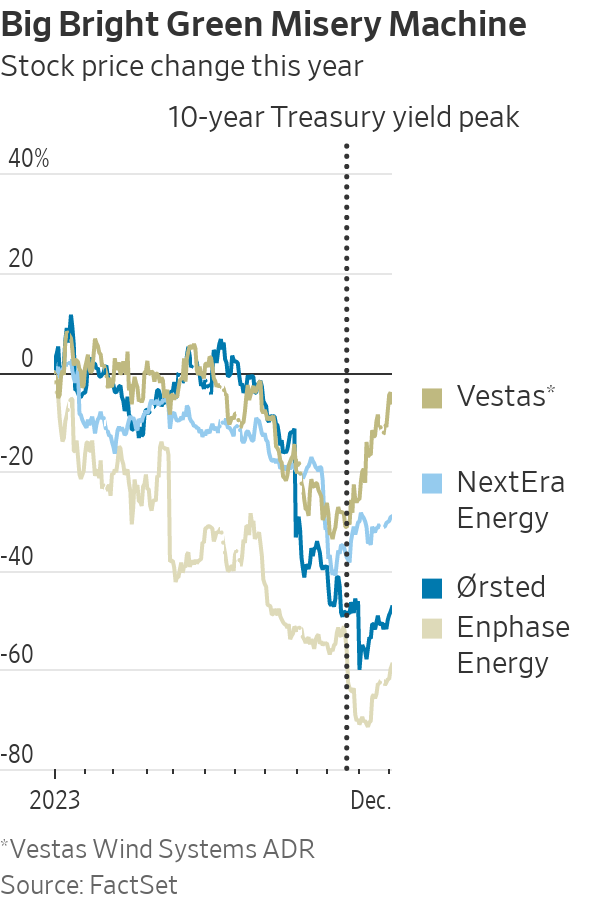
This year has been almost universally bad for clean investments. The two worst performers still in the S&P 500 are solar companies Enphase Energy and SolarEdge Technologies, down 60% and 70%, respectively. Hydrogen stocks have fallen sharply, led by Plug Power, which warned it might not survive. Wind-farm developers have been doing so badly they have pulled out of some contracts, with Denmark’s Ørsted off 48% in dollar terms and Florida-based NextEra Energy off 29%.

Electric cars have disappointed too, hitting startups and suppliers and pushing the price of lithium ores, used to produce the battery metal, down by three-quarters or more, although market-leader Tesla’s stock has been an exception.

Just as there was a coordinated green selloff, there has been a coordinated partial rebound in the past month or so.

This provides the first lesson: debt. The clean-energy sector is dependent on vast amounts of borrowing, so high interest rates really hurt. Roman Boner, who runs a clean-energy fund at Dutch fund manager Robeco, points out that major projects are typically financed with 80% debt, so rises in financing costs have a big impact on competitiveness.

Investors who bought into green stocks probably didn’t think they were making a leveraged bet on Treasurys, but that is what they ended up with. It isn’t only about corporate financing costs, either. High borrowing costs hit consumer demand for rooftop solar and for electric cars, both of which are often leased, since leasing costs depend on the cost of debt.

At a very high level, this is about long-term thinking. Low rates encourage investors to think long term, because they make future profits almost as valuable as current profits, and encourage borrowing to try to secure those future profits.

High rates encourage short-term thinking, by making profits today far more valuable than future profits—why bet on the future when you can earn 5% from Treasury bills? Short-term we get fossil-fuel profits, while long-term we get either clean energy or global warming; recently investors have been encouraged by rising rates to think short term.

The second lesson: government. Ronald Reagan overstated it when he said: “The nine most terrifying words in the English language are: ‘I’m from the government, and I’m here to help.’” But investors who rely on state subsidies to ensure profits leave themselves at the mercy of both fickle politicians and the bureaucrats Reagan was concerned about. This year’s selloff has been worsened by the bureaucrats and their failure to provide the details of many of the subsidies promised in last year’s badly named Inflation Reduction Act.

“We’re still hoping to get them by year end,” says Ed Lees, co-head of the environmental strategies group at BNP Paribas Asset Management. The next problem might be the politicians, at least if Donald Trump wins the presidency and torches the IRA. Lees thinks this will be hard, because so many IRA-subsidised projects are heading for Republican states. But Trump certainly has no sympathy for environmental causes.

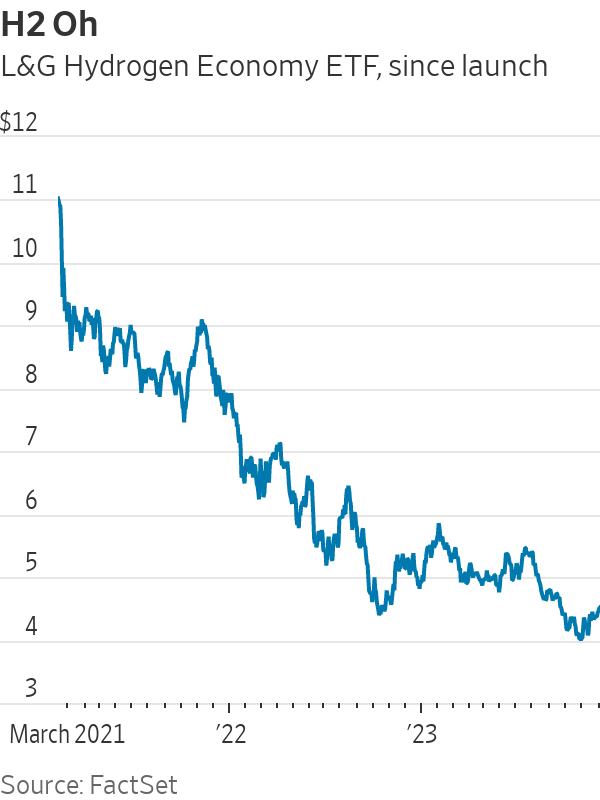
The third lesson is the one most relevant to buying today: valuation. Buying stocks when they are trendy and wildly overpriced is a recipe for disaster. Perhaps the most extreme example of late is the L&G Hydrogen Economy ETF, launched in London at the height of clean-energy excitement in February 2021. It plummeted from day one, never regained its launch price, and is down 55% since then.

“We’ve seen a very harsh reality check,” said Sonja Laud, chief investment officer of L&G Investment Management.

The question is whether the hype has left. Laud worries that one year of high rates won’t have crushed all the excesses built up in 12 years of near-zero rates. But clearly valuations are much lower than they were, and she is hopeful there are opportunities to be found now.

“The huge green premium you had previously is no longer there,” says Velislava Dimitrova, who runs sustainable funds at Fidelity International. Clean-energy stocks are “much more interesting than they used to be—I don’t believe that renewables are dead.”

In the bond market, investors are no longer paying much if any “greenium,” or extra price for green bonds. In stocks, it is harder to judge: The S&P Global Clean Energy index trades at a discount to the global market on some measures, but not others, making it difficult to conclude that the sector as a whole is a wonderful bargain.

Still, it is good news for buyers that the hype has evaporated. Investors who care about profits more than purpose can finally consider clean-energy stocks again.

An early Christmas present for mortgage holders as rates hold steady

Interest rates will remain at 4.35 percent following a meeting of the Reserve Bank of Australia board today. The decision by the board, which was widely predicted by economists, follows on from the November meeting where rates rose by 0.25 percent, the first rise in four months.

Governor Michele Bullock said last month’s rise was designed to accelerate the decline in inflation which the board considered to be happening at a slower pace than required.

“This decision reflected the Board’s view that progress in bringing inflation back to the target range of 2 to 3 percent was looking slower than earlier forecast,” Ms Bullock said. “While the economy has been experiencing a period of below-trend growth, it was stronger than expected over the first half of the year.”

The increase in the cash rate had been an effective tool in moderating inflationary pressures, she said.

“Higher interest rates are working to establish a more sustainable balance between aggregate supply and demand in the economy,” Ms Bullock said. “The impact of the more recent rate rises, including last month’s, will continue to flow through the economy. 

“High inflation is weighing on people’s real incomes and household consumption growth is weak, as is dwelling investment. Holding the cash rate steady at this meeting will allow time to assess the impact of the increases in interest rates on demand, inflation and the labour market.”

Head of research at CoreLogic Australia Eliza Owen said last month’s rise had already impacted on the property market, with November property values recording their smallest increase since February at 0.6 percent.

“Recent market performance indicates that while housing has been surprisingly resilient this year in terms of capital gains, interest rate increases have had some impact,” Ms Owen said. “This is particularly the case where rate increases were unexpected. This was evident following the ‘surprise’ rate hike through June, and appears to have had some impact through November.”

While the RBA board will not meet again until February 2024, Ms Bullock would not rule out further rises in the new year.

“Whether further tightening of monetary policy is required to ensure that inflation returns to target in a reasonable timeframe will depend upon the data and the evolving assessment of risks,” she said in a statement. “In making its decisions, the Board will continue to pay close attention to developments in the global economy, trends in domestic demand, and the outlook for inflation and the labour market. 

“The Board remains resolute in its determination to return inflation to target and will do what is necessary to achieve that outcome.”

Heat coming out of V-shaped property market recovery

The V-shaped recovery in Australia’s property market was interrupted in November, with CoreLogic’s national home value index recording its smallest monthly gain since the new growth cycle began in February. Melbourne home values dipped by 0.1% and Sydney’s growth rate slowed sharply to 0.3%, representing a significant cooling in Australia’s two biggest property markets, and dragging down the national home value growth rate to 0.6%.

Factors taking the heat out of Melbourne and Sydney include affordability constraints, rising interest rates, pessimistic consumer sentiment and a higher number of homes for sale. CoreLogic Research Director Tim Lawless said market weakness was more pronounced in the upper price brackets. “The more expensive end of the market tends to lead the cycles in these cities. As borrowing capacity reduces, we may be seeing more demand deflected towards lower housing price points, with the broad middle of the market now recording the strongest rate of growth in Sydney and Melbourne.”

Meantime, the Perth, Brisbane and Adelaide markets continue to rise strongly. Perth dwelling values surged by 1.9% in November the largest monthly gain since March 2021 while Brisbane moved 1.3% higher and Adelaide went up 1.2%. Mr Lawless said buyer demand was strong amid low levels of supply. “This imbalance between available supply and demonstrated demand is keeping strong upwards pressure on housing values across these markets, despite the downside factors leading to weaker housing market conditions across the lower eastern seaboard,” Mr Lawless said.

Canberra recorded subdued growth at 0.5%, Hobart values fell 0.1% and Darwin values fell 0.3% last month. The supply of homes for sale began increasing over winter, which is seasonally unusual, leading to stock levels above five-year averages in Hobart, Canberra, Melbourne and Sydney today.“In these cities, market conditions are now in favour of buyers as higher stock levels provide more choice, less urgency and greater opportunities to negotiate,” Mr Lawless said.

“The same can’t be said for Perth, Brisbane and Adelaide, where advertised stock levels remain remarkably low. Perth listings are nearly 40% below their five-year average for this time of the year, while listings are more than 30% below average in Brisbane and Adelaide. Unsurprisingly, these cities are continuing to show a consistently high rate of growth amid strong selling conditions.”

Perth, Brisbane and Sydney have been the strongest performing capital city markets of 2023 with home values up 13.6%, 11.9% and 11.3%, respectively. Regional markets have lagged behind the capital cities this year, with the strongest gains seen in regional South Australia, up 9.6%, regional Queensland, up 7.9% and regional Western Australia, up 7%. Overall, regional property prices remain 1.8% below their historical peak recorded at the top of the last cycle in May 2022.

Mr Lawless said it would be “a very different housing market” in 2024. It is looking increasingly clear the housing market is moving through a new inflection point, with the rate of growth in home values becoming more diverse, but generally weakening,he said. The prospect of higher interest rates for longer has likely dampened buyer confidence as well. “We don’t expect to see a material lift in housing activity until interest rates reduce, and that isn’t likely until the second half of next year.”

Not sure about that apartment purchase? Check out the new digital tool bringing surety back

A new digital tool is providing surety for would-be apartment buyers in NSW. Here, Laszlo Peter, partner at KPMG Origins, explains how the Building Trustworthy Indicator works — and why it’s essential for investors and homeowners alike.

What is the Building Trustworthy Indicator? When was it introduced?

The Building Trustworthy Indicator is a unique digital product, developed by KPMG Origins in conjunction with the property industry, universities and the NSW Government that provides greater transparency of apartment buildings in NSW.  The Building Trustworthy Indicator (BTI) provides consumers, financiers and insurers with information on who was involved in creating the apartment buildings, what materials were used, and what certifications were achieved for critical elements, such as waterproofing, fire systems and structure. The Trustworthy Indicator enables differentiation between trustworthy and non-trustworthy apartment buildings and brings greater transparency to construction processes. 

It was launched in July 2022, focused on apartment buildings in NSW. 

How did it come about?

KPMG Origins BTI was developed as a response to Building Commissioner David Chandler’s six-pillar agenda to bring back trust to the residential construction sector. 

The aims of the agenda are to restore confidence to the multi-storey residential market to ensure buildings are safe throughout their life and defects, if they are identified, are addressed by the developers.  Going forward, this enables the regulator to be empowered and strengthened by data for impactful compliance activities across the sector. 

BTI contributes to this agenda by bringing greater information about the built asset, creating a building DNA for everyone to access. 

Why is it necessary?

Residential construction in NSW faces a unique challenge with significant defects appearing post-completion with many owners left to deal with expensive remediation. The Building Trustworthy Indicator helps consumers understand the trustworthiness of the asset by highlighting the involvement of trustworthy players (WHO) compliant use of materials (WHAT) and appropriate quality documentation (HOW). This highlights the potential risks associated with an asset and showcases lower risk buildings informing consumers, investors and insurers in their key decisions. 

What are the benefits of having it in place?

Access to the BTI helps would-be buyers better understand the riskiness of the apartment they are buying. Combining this data with other decision-making factors such as location, price and size enables informed decisions and consumers are reassured that any defects found will be addressed by the developer. Developers can differentiate their assets in market, highlighting best construction practices and quality documentation. Demonstrating trustworthiness throughout the lifecycle from design to completion helps with pre-sales and greater market access. The BTI also helps developers streamline data collection required to meet regulatory obligations prior to completion. 

How does it work?

Property developers, builders and contractors upload documents to the BTI product, such as the details of the contractors, documents showing the materials used in each building element and inspections certificates, that are ultimately used to create a BTI score for that building.  Using a risk-based methodology developed in collaboration with universities, the BTI score weighs the trustworthiness of each element and calculates the aggregate output, giving buyers confidence that best practices have been used. The higher the number of stars, the higher the trustworthiness.

How will they access it? 

A developer receives acknowledgement of their BTI result in the form of official BTI badges to market their project.  A specific landing page is created to promote the result, and market the apartment building to consumers. 

Property developers can use these assets in their own marketing initiatives across print, digital and out of home (signage outside the property) as well. Access to BTI badges helps with promotional materials across pre-sales and sales and has even been known to help with secondary market resale.

We are also hearing of stories where current apartment owners are requesting the information from developers in order to utilise the positive results for future resale opportunities.


What does a trustworthy building look like?

There are 4 levels of BTI scores. Prior to construction commencing and to support pre-sales, developers are able to obtain a Trustworthy as Designed indicator. 

BTI Trustworthy as Designed — Demonstrates support has been provided for design requirements to be met, designs have been reviewed to verify the design process and materials are suitable for the design. Once the construction process has been completed, three levels of of trustworthiness are available for the as-built asset.

BTI 3 Stars  Trustworthy as Built – Confidence in the design and construction to a trusted level of standard beyond regulatory practice has been achieved.

BTI 4 Stars Leading as Built — Confidence in the design and construction processes and certifications equal to the highest levels of trust in the industry.  

BTI 5 Stars Benchmark as Built — Confidence in the design and construction to an industry-benchmark level of excellence


How does the BTI fit in with the iCIRT and Latent Defects Insurance products to provide surety for buyers?

BTI, iCIRT and LDI are three pillars of Building Commissioner David Chandler’s agendas to support improved trust and transparency in the construction sector.  They work as follows:

BTI – Focuses on the trustworthiness of the asset (an apartment building in this case)

iCIRT – Focuses on the history and financials of the developer

LDI – Enables insurance for the asset to cover any defects that may occur after completion

Why should developers and builders seek BTI approval?

It’s the only way to provide confidence in a finished project and the underlying asset.  This allows developers and builders to market and promote the trustworthiness of the building for pre-sales purposes.


What does it mean for the quality of residential development going forward?

Property developers risk being left behind when consumers are demanding these initiatives are in place before they purchase a property.  Consumers are now asking sales offices and property developers to provide as much information as possible to ensure that the property they are buying is trustworthy.  With the increased transparency, and consumer awareness of such tools, developers are working harder to ensure that the right materials and processes are followed to produce a trustworthy building/project.


What opportunities exist for BTI in the future? 

As the BTI is evolving, and developers, consumers, financiers and insurers begin to embrace these new measures, there are new opportunities arising.  

In recent projects, owners are now asking for the BTI data to help present their apartment for resale.  Insurers are also beginning to ask for benchmarking reports and developers are beginning to use ‘templates’ of a trustworthy project to brief builders and contractors and issue tenders. 

 These use cases for BTI and the associated data are beginning to introduce efficiencies and greater productivity in the sector.

Sponsored by KPMG Origins

Carbon Trading Opens Loophole in Paris Climate Accord

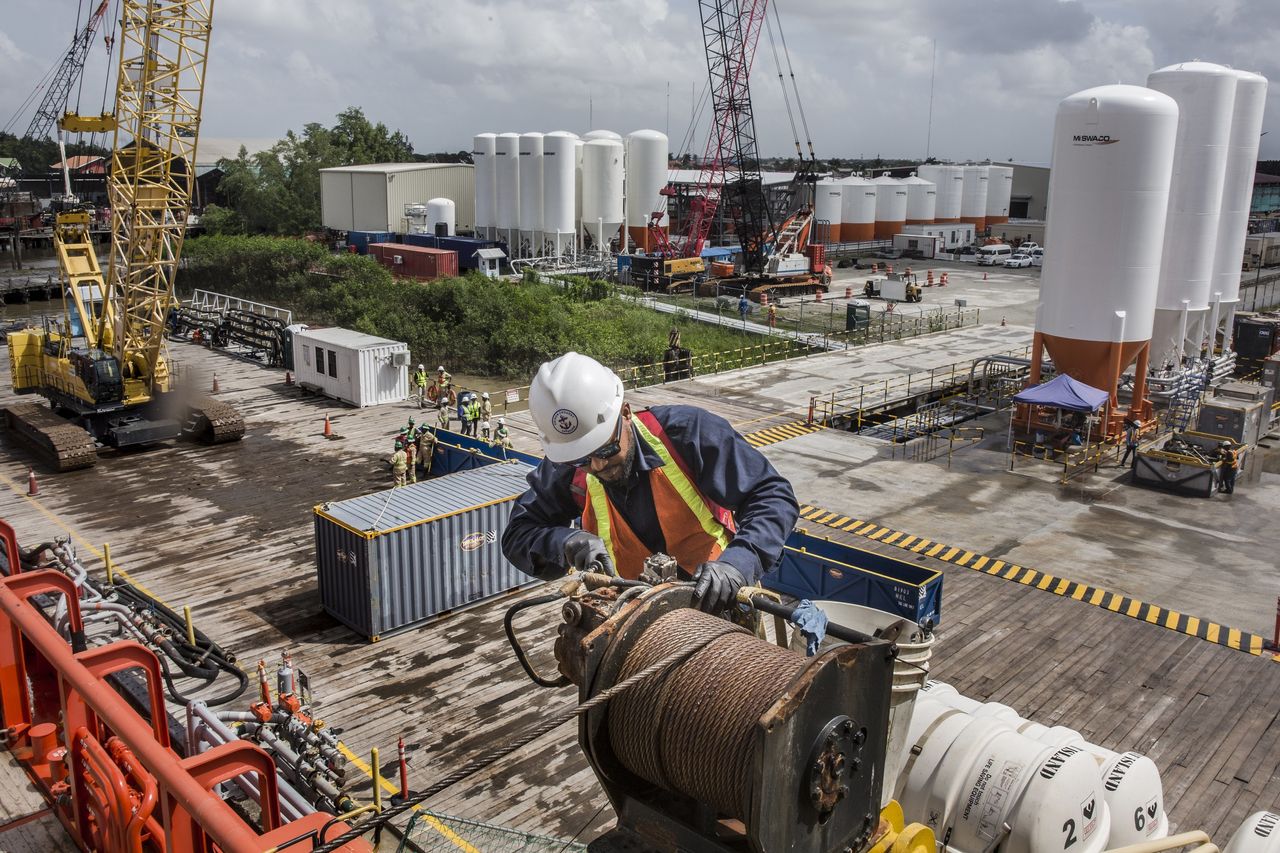
When the South American nation of Guyana wanted to sell millions of carbon-offset credits to preserve its rainforests, government officials knew they had a problem: The country’s lush Amazonian forests were actually in good shape.

Guyana’s rate of deforestation was already low, meaning its forests wouldn’t yield much under standard methodologies for calculating carbon credits. So its government chose a new method that allows a large adjustment for countries with healthy forests. The change raised the credits that Guyana could issue sixfold. Guyana sold 37.5 million of them last year to U.S. oil giant Hess for at least $750 million, and is now shopping the remaining two thirds to countries facing pressure to comply with the landmark Paris climate accord, officials say.

That agreement calls for governments to adopt national plans to limit greenhouse-gas emissions and allows them to pay for emission-reduction projects elsewhere in the world to offset their own pollution. Credits for each ton of emissions cut can then be traded between countries. It is as if the emission reduction happened in the country buying the credit, not the one selling it.

Guyana is among the first in a long line of developing-world countries expected to cash in on credits compliant with United Nations agreements. Some officials worry the U.N. risks giving its seal of approval to credits for forests that aren’t under threat. At the COP28 climate summit under way in Dubai, negotiators are debating how much scrutiny carbon trading should face from U.N. experts and the public to prevent the mechanism from becoming a loophole in the Paris accord.

“If we play that game—every country gets to come in and pull an arbitrary methodology out of the ether, apply it to their forest areas and say give me credits—we’re never going to get anywhere,” said Kevin Conrad, the climate envoy of Papua New Guinea.

For now, the Paris accord imposes relatively little oversight on the market. Credits are required to undergo review by a panel of experts. But at last year’s COP in Egypt, governments decided that the experts wouldn’t be allowed to review the “appropriateness” or “adequacy” of projects.

That is fuelling fears the accord opens the door for polluting countries to buy lower-quality credits from poorer nations to meet their own emissions targets, undermining the Paris accord ambition of limiting global warming to 1.5 degrees Celsius above preindustrial era temperatures. Some developing countries are pushing for the right to keep much of the information around offset projects confidential. Companies would end up buying the credits, critics say, that would support spurious greenhouse-gas reduction claims. Hess said it would apply Guyana’s credits to its goal of completely offsetting its emissions by 2050.

“There is very little oversight of the process,” said Jonathan Crook of Carbon Market Watch, a Brussels-based nonprofit. “Some countries could set a higher bar, but there’s a risk that others do not.”

Guyana is in talks to sell credits to Singapore, which is evaluating whether it will accept the adjustment for low deforestation countries, an official involved in the talks said. The U.N.’s civil aviation agency last year said it would accept Guyana’s methodology under new regulations it set to limit emissions from international flights, making Guyana’s offsets the first eligible under the rules.

Switzerland is moving to purchase the first credits under the Paris accord, for non-forest projects in Ghana, Thailand and Vanuatu. The credits will then be used by Swiss companies to comply with the country’s greenhouse-gas limits under the Paris accord.

The Swiss government is refusing to invest in forestry projects because of uncertainties around the baseline against which the lack of deforestation is measured. Switzerland also has concerns around whether protections for forests are long term—a tree cut down or destroyed in the future would release the planet-warming carbon dioxide it has absorbed over its lifetime.

Corporations over the past decade have invested billions of dollars in greenhouse-gas offset projects in the developing world. Those projects yield so-called voluntary carbon credits: The companies are under no legal obligation to buy them but do so because of public commitments they have made to offset their carbon emissions.

Academic research and media reports have cast doubt on the impact of many of the projects underlying these credits. The problems were particularly acute in projects to prevent deforestation. Because such programs typically cover relatively small areas within a larger forest, they risk pushing logging and clear-cutting for agriculture into other sections that aren’t protected by a project.

Guyana’s project is designed to address some of these problems. It is one of the first to cover an entire nation, eliminating the possibility that deforestation could be displaced within the country. Covering around 45 million acres, it is one of the world’s largest forest-protection projects, according to Trove Research.

Guyana has some of the most pristine forests on the planet. They have been mostly spared the rampant logging and clear-cutting seen in neighbouring Brazil. Guyana lacks rich soil suitable for large-scale agriculture, a major driver of deforestation, scientists say.

“These are among the poorest soils on the planet,” said Janette Bulkan, a Guyanese forestry expert at the University of British Columbia.

Critics say issuing credits for protecting such forests violates a core principle of carbon crediting: They should only be issued for emissions that would have happened without the project.

Guyanese officials say its forests are nevertheless at risk in the near future without intervention. The country’s economy is growing quickly, as is global demand for the commodities that could be extracted from its rainforests. Guyana is also reaping a windfall from oil discoveries off its coast that are now being pumped by Exxon Mobil and Hess.

“Guyana’s forests offer opportunities for a wide range of goods and services, and development opportunities for opening up areas for industry and manufacturing,” said Pradeepa Bholanath, who oversees climate policy at Guyana’s Ministry of Natural Resources.

Guyana’s credits have been calculated by Architecture for REDD+ Transactions, a program run by the U.S. nonprofit Winrock International. The program’s methodology allows countries like Guyana that have had little deforestation in the past to issue credits against a predicted future level of deforestation under a formula devised by Winrock.

Winrock and other advocates of the methodology say the money allows much-needed climate finance to flow to rain-forested countries, even if they haven’t experienced past deforestation. Guyana has already received more than $100 million in its deal with Hess. Officials say that money is reaching tribes that live in the rainforests and being used nationally for forest preservation and renewable energy projects.

Don’t Roll Your Eyes: Looking the Part Could Land You That Job

Think appearances don’t matter if you’re applying for a job online? New research shows that looking the part is very much part of the equation.

Your credentials and referrals may get you on the shortlist. Even if the whole process takes place online, though, it’s rare that a hiring manager won’t check out your LinkedIn profile. Making the final cut can come down to nailing a specific professional look, according to a new study published by the Harvard Business School.

Analysing 63,000 job openings and the more than 160,000 freelancers who applied for them over a six-month period, researchers found that certain accessories or physical features gave candidates an edge in landing the job—even after controlling for race, age and gender. Researchers used computer vision technology and machine learning to help classify which attributes made someone be perceived as a better fit for a job, then examined what role that played in hiring.

Different jobs favoured certain looks. The analysis showed that men wearing glasses and having a computer visible in the photo were perceived to be a better fit for a software programming assignment than men without glasses, boosting their chances of getting it. A beard gave them a slight edge, too.

With design and media-related jobs—one of two broad job categories examined in the study—flashing a smile and using a photo with high image quality was also important. Women sporting reading glasses and an “artistic” look were seen as a better fit for graphic design jobs than other women.

Fashion designer. ILLUSTRATION: DAISY KORPICS/THE WALL STREET JOURNAL, ISTOCK, PIXELSQUID

The researchers, from Harvard and the University of Southern California, found that certain photo features could tilt the selection process when profiles included equally high ratings from previous clients. The advantage could be roughly the equivalent of a 5% pay differential.

On the other hand, the study suggests that looking the part for a job doesn’t rely just on a candidate’s gender, ethnicity and age. Rather, paying attention to the details of a profile photo can go a long way, recruiters say.

“We would be fooling ourselves to say it’s not part of the package,” says Jessica Vann, founder of Maven Recruiting Group, a San Francisco job-placement firm. While not as important as job or communication skills, “it’s a piece, for sure.”

It’s generally a good idea to have a neutral background and no children, pets or celebrities in the photo. Vann, whose firm specialises in placing executive assistants and chiefs of staff at Silicon Valley companies, says she has counselled job seekers to eschew an obviously AI-generated photo or tone down the makeup.

Banker. ILLUSTRATION: DAISY KORPICS/THE WALL STREET JOURNAL, ISTOCK

In a CivicScience poll of more than 2,000 people conducted online last week, about half of respondents said they had used a professional-looking photo of themselves in some capacity; 82% agree that appearance makes a difference in a job offer.

Title VII of the Civil Rights Act of 1964 prohibits employers from discriminating because of race, gender and religion, among other factors. But other aspects of personal appearance—whether height, weight or hairstyle—aren’t necessarily covered by the federal statute, says Steven Pearlman, a labor attorney at Proskauer Rose in Chicago. Plus, it’s often difficult to legally prove whether such biases were the reason for a candidate’s rejection.

Brent McCreary, a theatre ticketing director in New York, has found certain photo details can swing a hiring manager’s decision either way. His professional profile picture usually shows him with a favourite celebrity. At one point it was Britney Spears. Now it’s Kelly Clarkson.

The choice worked against him when he lost out on a revenue management job at a theme park three years ago. In the rejection note, the interviewer suggested a more professional LinkedIn photo.

A month later, though, the executive director of a San Francisco-based streaming platform contacted him. The job he’d applied for was already filled but she noticed his photo. “Your personality and background seem so fun and special,” she wrote in a LinkedIn message. When another project-management job opened soon after, McCreary got it. The job turned out to be a better fit for him, too, he says.

“The company I ended up working for was one where I kind of jelled with the organisation,” he says.

Looking the part is often informed by stories and stereotypes, career coaches say. “You see it in books and movies,” says Catherine Fisher, a LinkedIn career expert who studies data and trends on the professional social media network.

Programmer. ILLUSTRATION: DAISY KORPICS/THE WALL STREET JOURNAL, ISTOCK

Every industry has its own sartorial vibe, from the fleeced vests and sweatshirts of Silicon Valley to the traditionally suited-up finance crowd in New York.

“You always think hoodies are related to tech companies, but that doesn’t mean I have to wear one,” Fisher says. By the same token, angular bobs and big sunglasses have come to be associated with the fashion industry, though “not everyone in fashion looks like Anna Wintour,” she says.

That’s rapidly changing as home and work life become more mixed, Fisher says. More than half of working Americans say that how they present themselves at work has changed since the pandemic, according to a poll of 2,000 people conducted last year by LinkedIn. Two-thirds said they thought that managers and co-workers were more accepting of different ways of dressing and styling than several years ago.

Alice Stephenson, a 42-year-old lawyer, says that for much of her early career, she dressed the part and concealed her piercings and tattoos. “I wore a stereotype of what a professional looked like,” she says. “I never felt comfortable or able to express my own individuality or creativity through my appearance.”

That changed after she started her own law firm. In her photo on the firm’s website, in her email signature and on LinkedIn, she is wearing a friendly smile, a blue sleeveless dress and a visible sleeve of tattoos.

“I want to look friendly and approachable,” says Stephenson, who lives in Amsterdam. “That’s key to my brand.”

Home loan approvals up in October as first home buyers weigh in

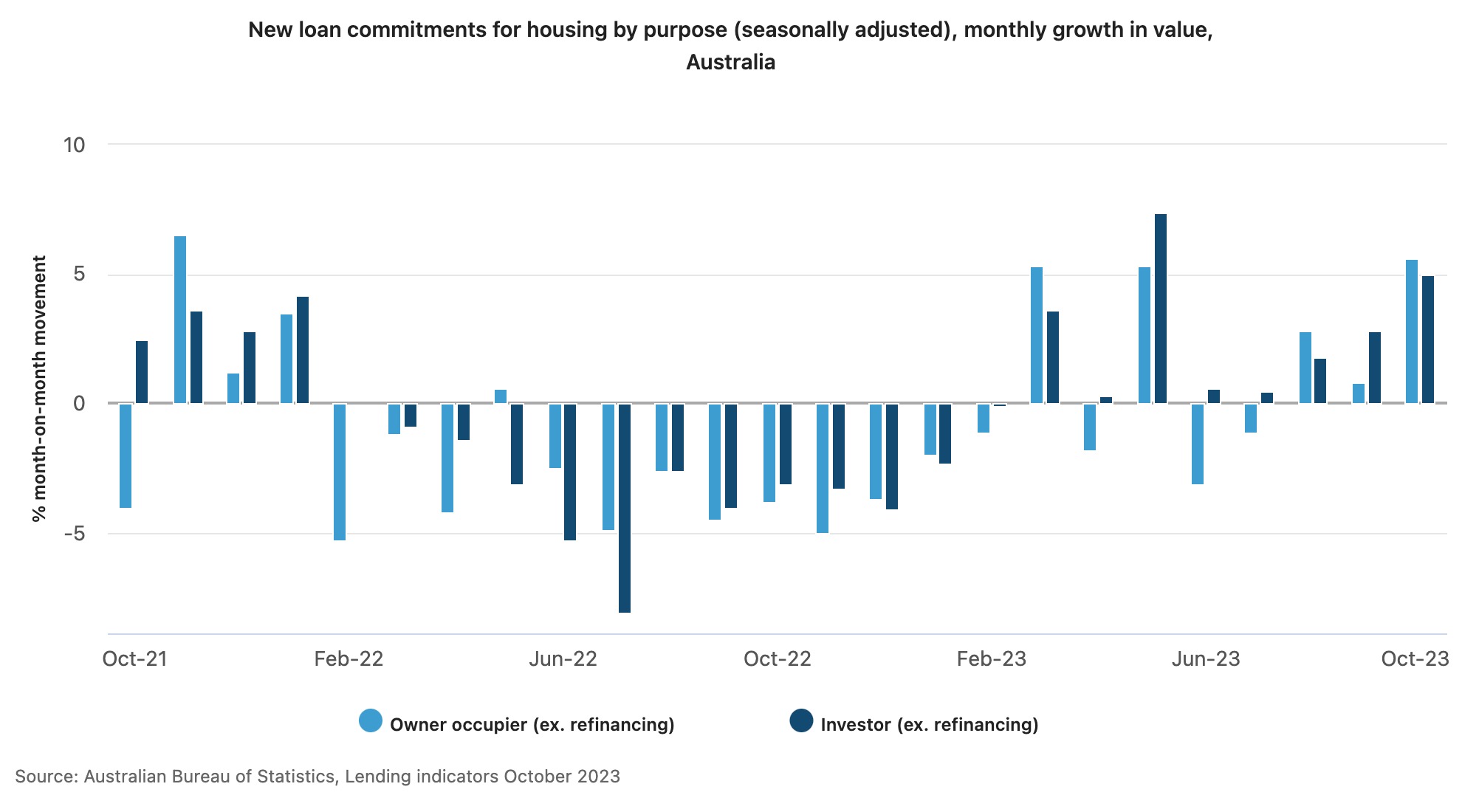
Lending for housing is on the rise, new data from the ABS reveals. Statistics released today show lending for housing rose 5.4 percent seasonally adjusted in October, up from an increase of 0.6 percent in September.

Owner occupiers saw the highest increase over the month, up 5.6 percent compared with loan commitments for investors at 5 percent. The stronger results may reflect the pause in interest rates over October.

The RBA declined to increase the cash rate at its board meeting in October, giving those entering the market confidence that rates may have peaked. However, at its November meeting, the board announced interest rates would increase a further 0.25 percent, bringing the rate up to 4.35 percent.

The number of first home buyers gaining approval for new loans was up 6.2 percent in October, compared with 5.0 percent for investors, seasonally adjusted.

In terms of the differences between owner occupiers and investors, there’s a clearer contrast over the past 12 months, with loan commitments for investors up 12.1 percent compared with a much more modest 1.4 percent for owner occupiers. Among owner occupiers, the value of new home loans commitments by first home buyers rose 11.8 percent over the 12 months.  

Construction of new dwellings was up 9.1 percent over the month, although it is still -19.5 percent down over the 12 months to October 2023. Purchase of newly erected dwellings was up 1.7 percent, compared with -5.3 percent over 12 months and purchase of existing dwellings 

Best Paints In Australia For Exceptional Interior And Exterior Finish: 2024 Guide

You either love it or loathe it but there’s no question that painting your house, whether it’s inside or outside, takes considerable time and effort. So it’s important that once the preparation work is done, you choose the best paint for the task. With so many on the market, it can be challenging sorting through so we’ve prepared the ultimate painting product cheat sheet. It’s guaranteed to be more fun than watching paint dry.


DULUX WEATHERSHIELD

Exterior Schemes | Dulux

Best for: Exterior walls

Available in 10 paint types, including Low-Sheen, Semi Gloss and Render Refresh, the Weathershield range has been specifically designed for Australian conditions with built-in UV, mould dirt and stain resistance. As the market lead, the Dulux range of colours stretches into the thousands,but  the company provides specific advice for popular exterior colour schemes.


TAUBMANS ENDURE

Vibrant Taubmans colours used to create memorable restaurant interior | ArchitectureAU

Best for: Interior walls

Created with Nanoguard Advanced Technology, the Taubmans Endure range is ideal for high traffic areas such as hallways and living areas thanks to its ability to withstand wear and tear. According to the manufacturer, it also protects against mould and mildew and is approved by the National Asthma Council Australia’s Sensitive Choice program.


BRITISH PAINTS 4 SEASONS

British Paints Primal Instinct | Neutral Colour Chart & Palette

Best for: Exterior surfaces

As the name would suggest, the point of difference with this paint product is its ability to weather seasonal changes. Owned by the Dulux group, British Paints 4 Seasons is self priming on most surfaces, for a faster, more satisfying result. It comes with a 25-year guarantee against peeling, flaking and blistering as well as providing resistance to mould, fungus and algae.


HAYMES EXPRESSIONS

Haymes Paint launches Origins Colour Library for 2024 | ArchitectureAU

Best for: Interior walls

Haymes Paints was established in Ballarat in 1935 and the family-run business still offers an Australian owned and made product. Haymes Expressions® Low Sheen has been designed for easy washing – and stain removal –  and is ideal for wet areas, thanks to its seven-year mould and mildew protection guarantee. Haymes Paints also releases a yearly colour forecast to provide design professionals and homeowners with inspirational colour palettes.


WATTYL SOLAGARD

Wattyl Solagard | Wattyl Australia

Best for: Exterior surfaces

A mainstay of the exterior paint market, Wattyl Solagard is known for its durability and colour fastness over an extended period of time. Suitable for painting over most exterior surfaces, including concrete, masonry, timber and galvanised iron, it is UV and dirt resistant. It is available in a wide range of colours to suit most house styles, including Coastal, Heritage and Modern.


PORTER’S ORIGINAL PAINTS

Porter's Paints Launches Smooth Impasto & Colour Collection 16.

Best for: Specialty finishes

Now part of the Dulux Group, Porter’s Paints has built its reputation on its wide range of specialty finishes for exterior or interior use such as limewash, chalk paint, French wash and liquid iron. While some products require specific application processes, there are easy-to-follow video tutorials and step-by-step instructions to support customers interested in a unique finish. Aside from an enviable array of carefully crafted colours, Porter’s Paints are water based and low in VOCs.


HEALTH AND ENVIRONMENT CONSIDERATIONS

More homeowners are becoming aware of the potential hazards associated with house paint, particularly when it comes to air quality. The main concern is Volatile Organic Compounds, or VOCs, which are released into the indoor environment and have been linked with eye irritations, breathing difficulties, as well as damage to kidneys, the liver and the central nervous system. From a product perspective, VOCs slow down the drying process, creating a wet edge on application so the user has more time to work with it.  More paint manufacturers are now offering low or zero VOC paints, but be aware that even those paints may still contain elements like ammonia and formaldehyde. Ventilate the space as much as possible, opening windows and doors as well as using fans and wear masks and gloves to minimise exposure to fumes while working.


TOP PAINTS FOR THE JOB, AND THE PAINTER


Painting a home involves so many decisions, and choosing the right paint for the right job is tricky. Here we look at the top paint brands for the jobs at hand.

Exterior paints need strength to withstand the elements, they do this by adding additional and expensive, top quality resins so fading is less of an issue, and new technology that offers UV protection.  Who wants to repaint a house, right? After years of advancement, you can now achieve great results with acrylic exterior paint, which has the primer built in. Taubmans All Weather and Taubmans Sun Proof are great options here.

Exterior features such as fences and front doors are a chance to add extra zing to the design, and very often the best way to produce that effect is with a gloss or enamel paint. While there have been improvements in acrylic gloss products, purists and pros are still reaching for the oil based product – the finish is simply brighter and more reflective, and more to the point will last longer on high traffic spots such as doors. The lesser known Norglass brand offers a magnificent result, and comes in small cans, which is a bonus for feature trim jobs.

Interior walls cop the most passing traffic scuff and grime, especially if you are blessed with kids or pets. The ideal paint here is a washable, acrylic based paint that goes on smoothly, and wipes clean easily. A combination of huge colour range, and great coverage (meaning less coats to put on) is the Dulux Wash and Wear brand. You can actually feel the extra weight on the brush or roller, which is a good thing, but tougher on older hands, or newbies to the roller game.

Getting on top of ceilings is perhaps the most difficult of paint jobs; back breaking and neck stretching, it is a job with little pay off – but is critical to achieve a perfectly finished room. A dead matte finish is ideal, usually in white (but don’t let that stop you), and always acrylic. While you can use a cheaper matte paint, a purpose designed one will go on easier and offer better coverage – it’s designed to be a one stop wonder. British Paints Paint and Prime is reputed to have be a good ceiling paint that goes on thickly, and works particularly well with a long knap roller, reducing spray.

Houses have damp zones, and yes they need extra care because paint that doesn’t deflect the wet will get mould, mildew and then peel. The elasticity of acrylic paint is great here, and Berger Paints have a product, Kitchen and Bathroom Everlast which offers a five-year guarantee against mould and mildew. Best tip here is to, for once, not use a matte ceiling paint, but the soft or low sheen bathroom paint.

A secret of professional painters is the top paint brand Haymes. Haymes is perhaps a lesser known brand to the home decorator but it has been rated by Canstar as the top paint in Australia for the last six years. Haymes has been produced by the one family in Australia for generations, and commands respect from those who spend their lives up a ladder. They don’t need expensive ad campaigns, because those in the know don’t need reminding of this solid and impressive brand. Always consider checking out their products when starting a project.

The Stocks Investors Are Putting Under the Tree

Retailers are making modest predictions about the holiday shopping season—and their stocks are going gangbusters in response.

Victoria’s Secret, Foot Locker, Ulta Beauty and Dollar Tree are among the companies that offered somewhat mixed assessments of the state of the shopper last week. Yet each received an ovation from investors.

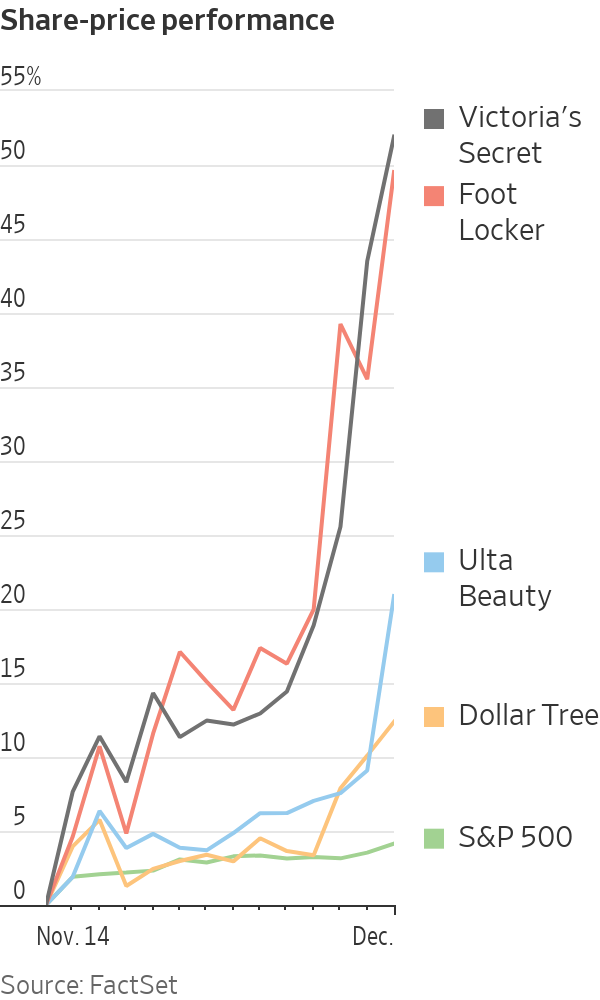
Traders have piled into stocks en masse since a softer-than-expected inflation reading on Nov. 14 bolstered wagers that the Federal Reserve is done raising interest rates and is poised to cool the economy without tipping it into a recession. Treasury yields have sharply declined as well, giving equities a second wind.

The S&P 500 has risen 4.1% since the report, extending its gains for the year to almost 20%.

Many depressed sectors of the market, such as retailers, have risen even faster. The SPDR S&P Retail exchange-traded fund—which includes 78 retailers, from department stores and other apparel companies, to automotive and drugstores—has jumped about 13%. Victoria’s Secret has soared 52%, Foot Locker is up 50%, Ulta has risen 21% and Dollar Tree has added 12%. (Three of the four stocks have suffered double-digit percentage declines this year.)

Americans slowed their spending in October, according to last week’s consumer-spending data from the Commerce Department. But the early readings from the holiday shopping season have been more encouraging. U.S. shoppers spent $38 billion during the five days from Thanksgiving through the following Monday, up 7.8% from the same period last year, according to Adobe Analytics.

Many investors closely watch consumer spending because it is a major driver of economic growth. If spending is too strong, the Fed could be forced to raise interest rates again. Whereas, if spending is too weak, it could be a sign that the economy is entering a recession.

In the coming days, investors will look at U.S. service-sector activity for November and Friday’s monthly jobs report as they try to assess the strength of the economy and the market’s trajectory.

“The consumer has been resilient throughout it all,” said Jay Woods, chief global strategist at Freedom Capital Markets. “The economic news is now starting to back that up, that, ‘OK, we aren’t going to be in a recession. Things are getting a little bit better.’ And these stocks that had been beaten-down are finally catching a bid.”

Victoria’s Secret posted its second consecutive quarterly loss Wednesday, with the lingerie retailer facing a continued slump in sales. But the company forecast higher sales in the current quarter, sending shares up 14% the next day, their largest one-day percentage gain in more than two years. The stock is down 20% in 2023.

Footwear retailer Foot Locker said Wednesday that Black Friday sales were strong and it forecast an upbeat holiday shopping period, while reporting lower sales and profit for the third quarter. Its shares rose 16% that day, their biggest gain in more than a year, trimming their 2023 decline to 21%.

Cosmetic retailer Ulta on Thursday posted stronger-than-expected sales in the third quarter and raised the lower end of its sales and profit outlook for the year. The shares rose 11% in the following session, their best day since May 2022. They are up 0.6% for the year.

Dollar Tree reported Wednesday that same-store sales growth was weaker than analysts expected, but investors appeared to be encouraged that the discount retailer is seeing increases in customer traffic, even if basket sizes are shrinking. Its shares rose 4.4% that day and are off 11% in 2023.

Another reason why retail stocks have rallied? Warehouses have reduced merchandise, and store shelves aren’t spilling over with discounted goods.

John Augustine, chief investment officer at Huntington Private Bank, said higher interest rates and oil prices made him bearish on retail stocks over the summer. But with an easing macro environment, he believes retailers could be poised to do well.

“It seems like traffic is gonna be there for the holidays,” Augustine said. “Now can retailers make the same profit, earnings per share, with tighter inventory?”

Short sellers are licking their wounds after the recent rally. They lost about $120 million in November betting against the SPDR S&P Retail ETF, according to financial-analytics firm S3 Partners. That compares with a loss of $2.8 million through the first 10 months of the year. Short sellers borrow shares and sell them, expecting to repurchase them at lower prices and collect the difference as profit.

Many retail stocks still generally look cheap compared with the broader market. Victoria’s Secret is trading at 11.8 times its projected earnings over the next 12 months, while Foot Locker is at 16.2. The S&P 500’s multiple is 18.8.

Despite the recent excitement in markets, many investors caution that it is too soon to count on a soft landing for the economy. Jamie Dimon, chief executive of JPMorgan Chase, recently cautioned that inflation could rise further and a recession isn’t off the table.

In the past 11 Fed rate-hiking cycles, recessions have typically started around two years after the Fed begins raising interest rates, according to Deutsche Bank. This hiking cycle started last March.

“It’s not an all-clear resurgence trade that we’re in right now,” said Brock Campbell, head of global research at Newton Investment Management. “This is gonna be a much more idiosyncratic stock picker’s group for a while.”

Fashion’s New Look for Stores: Bigger, Better, Fewer

LONDON—Fashion retailers have found a way to make their shops dazzle customers again: make them more like Apple stores.

Brands including H&M and Zara have closed hundreds of stores in recent years to cut costs as more shoppers turn to e-commerce. Now they are investing in those that remain to woo customers in ways they can’t online.

The new-look stores are typically larger and more spacious, offer services such as beauty salons, repair stations and coffee shops, and enable new digital features such as apps that allow shoppers to rummage virtually through the storeroom.

“Now it’s about engaging with consumers and giving them an experience,” said Henrik Nordvall, manager of H&M’s U.K. business.

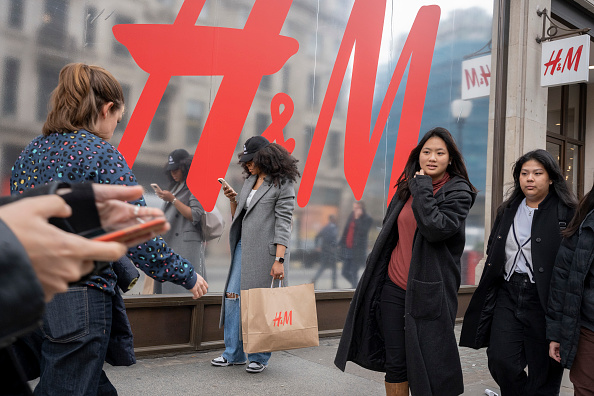
At the brand’s recently redesigned store on London’s Regent Street, foot traffic matters more than sales figures, Nordvall said. While in-store sales are still strong, many customers spend time there developing an affinity with the brand and then buy clothes online later, he added.

The refurbished store is home to a floor-to-ceiling TV screen that the company says is the biggest in any store in Europe, a beauty bar for customers to book nail or eyelash treatments, and a rental section where shoppers can borrow selected items, especially relatively expensive clothes from H&M’s designer collaborations.

Since the changes, the average duration of a customer visit has increased substantially, said Nordvall, who declined to provide specific numbers.

By turning their stores into destinations that shoppers actively seek out and spend time in—a model that Apple honed with its roomy, landmark stores filled with usable gadgets—the fashion retailers are redefining the clothing store for the digital age.

Retailers once needed a large network of stores “to reach people, but now they have the internet for that,” said Patricia Cifuentes, an analyst at the asset manager Bestinver. “Now stores are about brand image. They’re like tourist destinations.”

Not every retailer is following the approach of the big global fashion brands. Macy’s, for example, is opening smaller stores as a way of bringing its brand to places where customers run their daily errands. The electronics chain Best Buy is closing larger locations and opening small stores instead.

But for global fashion’s heavy hitters the shift toward fewer but better stores is well under way. While the investment could backfire if the stores fail to draw sustained traffic, for now the strategy appears to be working.

Inditex, the parent of Zara, has eliminated a quarter of its stores since 2018 and now has 5,745 locations across its brand stable, which also includes Bershka and Massimo Dutti. Yet the Spanish group’s total revenue from stores increased 8% in 2022 compared with four years earlier, with each store selling 30% more on average, Chief Executive Officer Oscar Garcia Maceiras said on a recent earnings call.

After closing its weaker locations and upgrading the rest, “We have been left with a network of bigger, better and more beautiful stores in the best retail destinations globally,” Garcia said.

Despite operating fewer stores overall, Inditex increased its capital expenditure budget for 2023 by 14% to 1.6 billion euros, equivalent to about $1.7 billion, half of which is earmarked to make improvements to stores.

Much of that money is being spent on the rollout of a new Zara store design—including at new U.S. locations in Baton Rouge, La., and San Antonio—to make the shopping experience more enjoyable.

Essential to the new layouts is making stores feel roomier by having more open space between displays so customers don’t feel crowded. With more open space, stores will increasingly have discrete in-store boutiques to highlight individual collections.

Zara has a team of in-house architects who design its stores, and uses pilot stores at its headquarters in Spain to experiment with new layouts.

Garcia, who regularly visits Zara stores around the world, said in a recent interview that store managers routinely tell him they want to expand because only larger stores are able to accommodate most or all of Zara’s range.

The Zara store in Miami is one beneficiary of the move toward bigger and better: It is doubling in size, according to Garcia, to provide the more spacious experience the company wants to deliver.

Bigger stores are more productive, Zara has found. Though stores are getting larger, sales per square foot is now up 16% relative to 2019, Garcia said.

Zara is cramming its stores with new tech such as automatic return and collection points, as well as self-checkout areas. Customers can use the Zara app to check the contents of the storeroom to see if an item is available in their sizes, for example.

H&M has shrunk its store count 14% from its 2019 peak to 4,375 outlets today. The company doesn’t break down its revenue into physical and online, and says the two parts of the business are complementary.

Increasingly, stores “are a way for our customers to get inspiration,” CEO Helena Helmersson said in a recent interview.

H&M upped its capital spending budget 43% for 2023 to roughly $1 billion, partly to push ahead with store modernisation.

Even before the Covid-19 pandemic, H&M’s leaders recognized it was time to update the physical store to offer a more engaging experience, said Nordvall, the U.K. manager. When the pandemic led to a surge in online sales, the company accelerated its effort to redesign its stores, he said.

The revamp of the Swedish brand’s store on London’s Regent Street was aimed at encouraging customers to spend more time there. It has a secondhand area, Lego sculptures in the children’s section and fitting rooms with a built-in selfie function.

H&M also uses the store to host events for shoppers who sign up for its membership program. In November, it held a party to mark the launch of a collaboration with the fashion house Rabanne.

The Japanese brand Uniqlo is still expanding in Western markets, where its footprint is significantly smaller than H&M and Zara, but it is also opening so-called destination stores.

The chain’s recently opened store in London’s Covent Garden is located in a converted Victorian-era carriage works building, where shop floors loop around a brightly sunlit courtyard beneath a vaulted glass roof. There is a Japanese tea shop upstairs with a rooftop balcony, and a florist downstairs.

Visitors can use a machine to print their own T-shirt designs, have clothes altered or mended at the store’s repair station, and lounge in comfy chairs while browsing coffee-table books.

While online sales are growing, destination stores “have become the driver of European earnings,” as well as places where the brand communicates what it stands for, said Taku Morikawa, the CEO of Uniqlo Europe, during a recent earnings presentation.

Only a memorable in-store experience will make customers trust and admire your brand, he said.