Moving to the bush without leaving the city

COVID-induced lockdowns might be over but our love affair with regional centres continues, with one small caveat. Most of those contemplating a move would prefer to be within two hours of a major city centre.

This property at 22 Benjamin Road Mount Kembla, just a 10-minute drive from Wollongong CBD offers all the comforts of regional living with the convenience of city living. The four-bedroom, three-bathroom architecturally designed home has distinct mid century design vibes but with contemporary open plan spaces set over two levels. 

The spacious, but manageable 696sqm block is surrounded by trees, offering a ‘living in the treetops’ experience from the upper floor, while large picture windows and sliding glass doors ensure the house is flooded with natural light.

Well-placed eaves, louvres and awning windows contribute to the passive solar design of the house, creating cross ventilation and thermal comfort indoors.

An ideal home for growing families, the block also includes a lap pool and lawn with abundant room for play equipment.

Offered for the first time in almost 20 years, the house has a price guide of $2m to $2.5m.


Address: 22 Benjamin Road, Mount Kembla

Price guide: $2m to $2.5m

Open for inspection: Saturday, May 13 10am-10.30am

Agent: Jordan Andonovski, The Agency Wollongong 0410 347 443


‘Still: A Michael J. Fox Movie’ Review: A Star’s Dignity

This is probably less a critique than a thank-you note to director Davis Guggenheim and to the subject of “Still: A Michael J. Fox Movie,” a marriage of exhilaration and sadness and, despite the title, the most moving thing on television. Mr. Fox was one of Hollywood’s biggest stars when he was diagnosed in 1991 with Parkinson’s disease, which finally forced his full retirement in 2021. His sense of humour remains a wonder. Something most viewers will only have to wonder, fortunately, is whether they would maintain the same dignity under the same set of circumstances.

The title, “Still,” describes something the actor never seemed to be, as evidenced by the voluminous collection of film clips Mr. Guggenheim uses to structure much of the film—Mr. Fox was always running, from “Teen Wolf,” to “The Secret of My Success,” to “Bright Lights, Big City,” to the blockbuster “Back to the Future” franchise and in and out of “Family Ties,” the sitcom that established his comedy credentials and wide appeal. Much of the background action, as well as Mr. Fox’s early biography, is covered through dramatic re-creations and otherwise unconnected film scenes knitted into a coherent narrative. The research must have been strenuous; the editing, too. The pace is nonstop, the humour abundant, the devotion of Mr. Fox’s wife, actress Tracy Pollan, is made plain, and there’s no small amount of nostalgia in store for people who know and love the Fox filmography. But the heart and soul of the film are the face-to-face interviews, which are far less delicate than one might expect. And all the deeper for it.

Seven interviews were conducted over the span of a year, and at one point Mr. Fox and his director (an Oscar winner for “An Inconvenient Truth”) are getting back together after some time, the subject recounting how he basically had, in the interim, fallen and broken his face. Mr. Guggenheim reacts with alarm; his subject is almost blasé. “Gravity is real,” he says, laughing. “Even if you’re only falling from my height.” During a walk along Fifth Avenue with an aide, Mr. Fox is recognised by a fan and when he turns to say hello back, he topples to the sidewalk. “You knocked me off my feet,” he tells the passerby. Everyone smiles, but it breaks your heart.

“I can see in your eyes that you’ve got a great one-liner,” Mr. Guggenheim says to the actor at a point in their exchanges, “and then it has a problem getting to your mouth.” Mr. Fox doesn’t disagree; he doesn’t have to, and often lets a nonresponse compensate when a response would be thwarted by his ailment. As Mr. Guggenheim says, the predictable storyline in a Michael J. Fox movie now would be about a huge star getting a debilitating disease and being crushed by it. “Yeah,” Mr. Fox says, “that’s boring.” Nothing in “Still” is the least bit boring.

Nor is it preachy, or weepy, or looking for pity for its subject, who isn’t looking for any either. He does recall feeling at some point, post-diagnosis, that he was somehow reaping cosmic payback for the enormous if less-than-overnight success he had enjoyed after several seemingly immovable objections fell and he was cast in “Family Ties.” (His tales of Hollywood poverty are close to harrowing although, as he might say, he got over it.) If there’s a flaw in “Still,” it might be Mr. Fox’s reluctance to discuss his physical agony or the psychic struggle that comes with Parkinson’s. (“The worst thing is to be confined,” he says, answering one of Mr. Guggenheim’s very direct questions. “To have no way out.”) You come close, Mr. Guggenheim says about Mr. Fox discussing his pain, “and then you dart away.” But that is a principal reason his subject, and film, are so involving and watchable and rich.

More Wives Now Outearn Their Husbands. They Also Stay Together Longer.

Marriages in which wives outearn their husbands are not only more common, but less likely to end in divorce than in the past.

Couples married in the late 1960s and 1970s were 70% more likely to divorce when wives earned the same or slightly more than their husbands compared with couples where the husband earned more, according to research from Christine Schwartz and Pilar Gonalons-Pons, sociologists at the University of Wisconsin-Madison and the University of Pennsylvania, respectively. For couples married in the 1990s, however, the divorce rate for those with female breadwinners had fallen to 4% higher than male breadwinners.

The reasons these marriages are succeeding seem to be cultural as well as economic, Prof. Schwartz said. Growth in women’s educational and career trajectories has removed some of the stigma of lower incomes for husbands. And the higher cost of building a life together has made it a necessity for more couples to maximise their two incomes.

Sarah O’Brien, a 35-year-old archivist in Palm Desert, Calif., overtook her husband in earnings five years ago. The couple first met climbing the ranks of the public library world together, but she worried he would be uneasy about what her higher income would mean for his role in the household.

When they sat down to have the conversation, Ms. O’Brien said her husband, David Murguia, a 36-year-old circulation manager, told her that he was proud of her.

“I don’t have the ego of ‘I need to earn more money,’” Mr. Murguia said. “More money for her is more money for us, and more money for me is more money for us.”

Ms. O’Brien and Mr. Murguia are one of many more egalitarian marriages. The share of women outearning their husbands has tripled over the last 50 years, from 5% to 16% of all opposite-sex marriages, according to data from Pew Research Center.

Men used to worry that having a more financially successful wife could be detrimental to their own careers, said Johanna Rickne, professor of economics at the Swedish Institute for Social Research at Stockholm University. Women in the upper echelons of their professions were more likely to be divorced than women in less prestigious positions and were far less likely to be married at all.

“It’s changing, and now there is progress in the sensitivity to women’s economic empowerment within relationships,” Prof. Rickne said.

When Sally Mellinger, a 38-year-old director of content strategy in South Bend, Ind., first moved in with her fiancé, she said they both talked about their experiences as breadwinners: Ms. Mellinger as the wife outearning the husband in her first marriage and her fiancé, Luis Beltran, as the sole breadwinner in his own previous relationship.

Nearly three years later, Ms. Mellinger brings in nearly triple in salary what Mr. Beltran makes as the owner of his own barber shop. But she said talking about what their combined incomes can do for their shared future isn’t a loaded conversation but instead a hopeful one.

“When I was previously married, I was the major breadwinner and everything was on me,” Mr. Beltran said. “I see her as my equal, and I feel like at this point, because she is a boss, I admire that and I see a future.”

Despite the shifting viewpoints on female breadwinners, there remains a gender pay gap. As of 2022, women earned an average 82% of what men earned, according to a Pew Research Center analysis.

Over the same period, the overall divorce rate has declined, according to the Centers for Disease Control and Prevention, and younger couples are entering first marriages at later ages.

Relying on a single breadwinner to bring home all the bacon is no longer a sustainable model for many couples, especially those raising children, said Jennifer Glass, professor of liberal arts and executive director for the Council on Contemporary Families at the University of Texas at Austin. The median cost of keeping an infant in daycare ranges from $8,000 a year in more rural areas to nearly $17,000 in major cities.

“The traditional family structure leaves you poor today,” Prof. Glass said.

Farnoosh Torabi, who hosts a personal finance podcast, said she’s spoken with couples who say they need two incomes to protect their household against a possible recession, the next round of layoffs or any other unforeseen challenges.

In her own marriage, Ms. Torabi said she had been primed to defend her newfound breadwinning status when she overtook her husband in earnings before they were married. But instead, the two celebrated her success—and the financial freedom it afforded them both. The conventional wisdom was no longer true, she said.

“I was told that would be a turnoff: Don’t tell guys you have ambitions because they’re not going to feel like they can take care of you,” she said.

The Home Buyer’s Quandary: Nobody’s Selling

Many Americans who want to move are trapped in their homes—locked in by low interest rates they can’t afford to give up.

These “golden handcuffs” are keeping the supply of homes for sale unusually low and making the market more competitive and pricey than some forecasters expected.

The reluctance of homeowners to sell differentiates the current housing market from past downturns and could keep home prices from falling significantly on a national basis, economists say. This could dull the Federal Reserve’s efforts to slow inflation by cooling the economy.

Emily and Isaac Naatz of Cottage Grove, Minn., a suburb of St. Paul, had a baby last year and want a bigger place. They have lived for more than four years in their two-bedroom townhouse, and they now want a three- or four-bedroom house with a yard and space for a home office. “You get four people in here…and it feels like a large crowd,” Mr. Naatz said.

But they locked in a 30-year fixed mortgage rate of 3.4% in 2021—and don’t want to give that up to take on a new mortgage with a rate about 3 percentage points higher, especially when home prices in their area haven’t come down much.

The type of home they would want to buy would cost them about $1,100 a month more than they currently pay, Mr. Naatz said. “I don’t feel comfortable paying what I still think is an inflated price for a home, and on top of it paying twice the interest rate,” he said.

As of March 31, nearly two-thirds of primary mortgages had an interest rate below 4%, according to mortgage-data firm Black Knight. About 73% of primary mortgages have fixed rates for 30 years, Black Knight data show. The average rate for a new 30-year fixed mortgage was 6.39% in the week ended May 4, according to Freddie Mac.

The mortgage-rate factor is leaving some people in houses that aren’t a good fit, whether it’s a growing family without enough bedrooms or ageing homeowners with too much space, or dissuading people from relocating for jobs or other opportunities. Some people that wanted to sell in 2022 or 2023 shelved their plans.

As current homeowners stay put, “the movement up the ladder is sort of grinding to a halt,” said Sam Khater, chief economist at Freddie Mac. “It’s getting much harder for first-time home buyers to jump into the market because of the lack of supply.”

Half the listings

In April, there were about half as many homes for sale as in April 2019, though there were more listings than in April 2022, when they were near record lows, according to Realtor.com.

The number of homes newly listed on the market in April fell about 21% from a year earlier, an indication that sellers are holding back even during the normally busy spring home-buying season.

The constrained inventory is a key reason why home prices haven’t fallen much, even though higher mortgage rates have pushed many buyers to the sidelines.

The median existing-home sale price in March slid 0.9% from a year earlier, according to the National Association of Realtors. Existing-home sales, meanwhile, fell 22% in March from a year earlier.

It’s a “unique market condition,” said Lawrence Yun, NAR’s chief economist. “Sales are down and even prices are down in some areas, yet from a buyer’s perspective it’s hard to get that home, because they are competing with other buyers.”

Frenzied bidding wars are still common in parts of the country, especially for moderately priced homes that appeal to first-time home buyers. In Clifton, N.J., a New York City suburb, a two-family house that listed for $449,000 in early April received 120 offers in six days, said Mahmoud Ijbara, the real-estate agent who listed it. The house is under contract for about $150,000 over the asking price, he said.

“The low inventory is what’s driving the prices up,” he said. “A lot of buyers are really panicking right now.”

A healthy housing market has between four and six months of supply at current sales rates, economists say. The existing-home market, which makes up most of the housing market, hit a record low 1.6 months’ supply in January 2022 and stood at 2.6 months’ supply in March of this year, according to NAR. The smaller new-home market is more amply supplied, at a seasonally adjusted 7.6 months in March, according to the Commerce Department.

The shortage of supply in the housing market has been a growing issue for years. Following the subprime-mortgage crisis, many builders went out of business and others sharply cut back on spending and new construction.

Mr. Naatz worked while his daughter played nearby. They want to sell and move to a bigger home but don’t want to give up their current low-rate mortgage. TIM GRUBER FOR THE WALL STREET JOURNAL (3)

The problem worsened starting in 2020, when record-low mortgage rates and a pandemic-driven increase in remote work prompted buyers to rush into the market and snap up primary homes, vacation homes and investment properties. Home builders ramped up construction but struggled to meet demand due to volatile material costs, labor shortages and supply-chain issues.

That sales boom, along with a huge wave of homeowners who refinanced their mortgages, locked in millions of homeowners to low-rate, long-term loans. Among people planning to sell their homes and buy new ones in the next 12 months, about 56% plan to wait for rates to decline, according to a Realtor.com survey conducted in February. (News Corp, parent of The Wall Street Journal, operates Realtor.com.)

The Fed has been working to slow inflation. It raised its benchmark federal-funds rate last week for the 10th time since the start of 2022 but signalled it might be done raising rates for now.

Housing is one of the most rate-sensitive economic sectors, and the housing-market slowdown since early 2022 has been one of the main ways that the Fed’s actions have directly affected consumers.

Even some people who can accept higher mortgage rates are staying put because they are struggling to find something to buy. Julie and Aidan Booth expected to live in their three-bedroom home in East Rutherford, N.J., for about five years when they bought it in late 2019. Since then, they’ve had a second child and both switched to fully remote and hybrid working schedules, prompting them to want more space sooner than they expected.

The family started house hunting at the start of the year. They would be able to afford a higher mortgage rate, Mrs. Booth said, but they are stymied by the lack of supply.

“The last three weeks, there has been nothing new in our town” that met their criteria, she said. “There’s just no inventory.”

Opening for builders

The housing scarcity is good news for home builders, who struggled to find customers for much of 2022 with mortgage rates rising but reported stronger-than-expected demand in the first quarter. Newly built homes made up about one-third of total single-family homes for sale in March, up from a historical norm of 10% to 20%.

“If somebody does want a home at [either higher or lower price points], new construction is where they can find it right now,” said Jessica Hansen, vice president of investor relations and communications at D.R. Horton, the biggest home builder by volume, in an April earnings call.

The current market could also be a boon to remodelling companies. Rachael and Aaron Wyley, who have owned their Sacramento, Calif., house for almost 10 years, have considered moving to another house with space for Mrs. Wyley’s mother. But prices were either too high or mortgage rates too steep. Instead, they are saving up to remodel to add an in-law unit.

“We would break down the math of it and look at what we would put down, on top of how much we would get from the house selling,” Mr. Wyley said. “We’d have enough to make the monthly payments but not much else.”

There will always be homeowners who have to move due to life events like death, divorce or job relocations, and others who don’t view current mortgage rates as an obstacle. Many retirees and remote workers opt to move to cheaper housing markets, where lower prices can offset the effect of higher rates. About 38% of owner-occupied housing units have no mortgage, according to Census Bureau data. And about 27% of March existing-home sales were purchased in cash, according to NAR.

Many homeowners who have lived in their houses for years have also built up equity they can use toward down payments on their next homes, reducing the size of their loans. U.S. homeowners had $270,000 more equity on average in the fourth quarter of 2022 than they did at the start of the pandemic, according to CoreLogic.

How long the mortgage rate lock-in effect will last is hard for economists to say. Mortgage rates have never climbed as quickly as they did in 2022.

As the gap widens between homeowners’ existing mortgage rates and the prevailing rate, moving slows down, according to a March working paper by Julia Fonseca at University of Illinois at Urbana-Champaign and Lu Liu at the University of Pennsylvania’s Wharton School. The paper also found homeowners with low locked-in mortgage rates are less likely to relocate for higher-paying jobs.

Ryan and Megan Carrillo bought their first home in Phoenix in 2020 for $320,000, locking in a 2.75% fixed mortgage rate for 30 years.

Last year, after Mr. Carrillo got a higher-paying job, they wanted to upgrade to a nicer house in the $600,000 to $700,000 price range. When they started looking in January 2022, they planned to pay about $3,000 a month for a new house, but they backed out of the market after their expected payments ballooned to more than $4,000 by September.

The Carrillos now plan to stay in their house for about five more years and then turn it into a rental property when they move out of state.

“I’d love to keep it forever and not sell it,” Mr. Carrillo said. His ultra low mortgage rate, he added, is “too good to give up.”

Indonesia Impact Alliance Aims to Draw Private Capital for Good

The Ford Foundation, alongside government organisations and the business community, launched the Indonesia Impact Alliance in Jakarta on Wednesday to attract more private capital into ventures that solve social and economic problems while earning market returns.

The alliance is being forged at a time when Indonesia is thriving in many ways. In 2021, the Southeast Asian nation regained status lost during the pandemic as an upper-middle-income country, according to the World Bank.

Yet, Indonesia, the fourth-most-populous nation in the world, is home to many people who remain in poverty without sufficient access to education and health services. While abundant in natural resources, the country has also suffered environmental degradation from exploitation of its rainforests for palm oil—a practice that is subsiding from a combination of government and nonprofit efforts.

As the economy continues to grow, the government alongside the United Nations Development Programme Indonesia, Ford, and others, want to ensure society and the environment are taken into account. The alliance aims to boost direct investment into “early-stage, high-impact companies” through increasing investment from investors within the country and abroad, and from the Indonesian diaspora, according to a news release.

“The alliance is about creating a kind of a centre of gravity for diverse stakeholders in Indonesia that all have a shared interest in marshalling more private capital in the service of just and sustainable development,” says Margot Brandenburg, head of impact investments for Ford’s US$1 billion mission investments program.

Chairing the alliance is Romy Cahyadi, CEO of Instellar, an Indonesia company that supports social enterprises through incubation, advisory, and investment.

Members of the alliance are “entrepreneurs, companies that are delivering these impacts, the funds and intermediaries that place capital in those companies, and asset owners,” Brandenburg says. “It also importantly needs to include the government, which can create, and we believe should create, an enabling environment for this type of investment and that can compliment private capital and do things that the private sector can’t do.”

The alliance also includes technical assistance providers of nongovernmental organisations in addition to global and regional economic development institutions. Temasek, the sovereign wealth fund of the nearby nation of Singapore, is also taking part. It needs to be all of those actors, she says, and “we need them all rowing in the same direction.”

Indonesia receives significant impact investing support from a third of those who invest for impact globally, according to a 2018 report from the Global Impact Investing Network. At the time of the report, private institutions had invested nearly US$149 million in 58 transactions, while development finance institutions had invested US$3.6 billion in 67 deals. Many of these investments are still at an early stage, according to Ford.

The alliance is being formed now as a “call to action,” for various governmental bodies, NGOs, and private actors to work together, Brandenburg says. “The sense is that there’s a diverse group of stakeholders working not always in coordination.”

Given the size of the country and its economy, there are people “working across sectors and geographies that may not be in relationship with one another

or may not have connected the dots,” she says. “That’s the role that government policy and regulation play in creating a favourable investment environment

and vice versa.”

The ultimate goal, Brandenburg says, “is to make sure that the whole is at least as great as the sum of the parts, so that people can build off of one another

and not inadvertently duplicate efforts.”

The alliance is affiliated with the Global Steering Group on impact investments, which has national associations in a number of countries, including the U.S. Impact Investing Alliance. Being part of this group gives the new Indonesia alliance access to resources, models, and policy blueprints that have succeeded elsewhere.

A question for Indonesia will be how to take advantage of natural resources that produce cloves, cinnamon, nutmeg, and vanilla, in addition to palm oil, natural rubber, cassava, and coconut oil, while not exploiting workers and local communities or harming the environment.

“Biodiversity is a major asset, but of course with that, [there’s] palm oil and logging and the potential for extractive industries,” Brandenburg says. “The question for impact investors is what does a better model look like that allows a country to prosper on the basis of its natural resources and allows its communities to prosper as well.”

What the Federal budget means for Australia’s housing market

ANALYSISAmid a national rental crisis, fast recovering population growth, and constrained housing supply, measures to address the housing shortage and worsening affordability featured prominently in this year’s budget. 

While renting is a vital part of Australia’s housing market, it has been failing many.

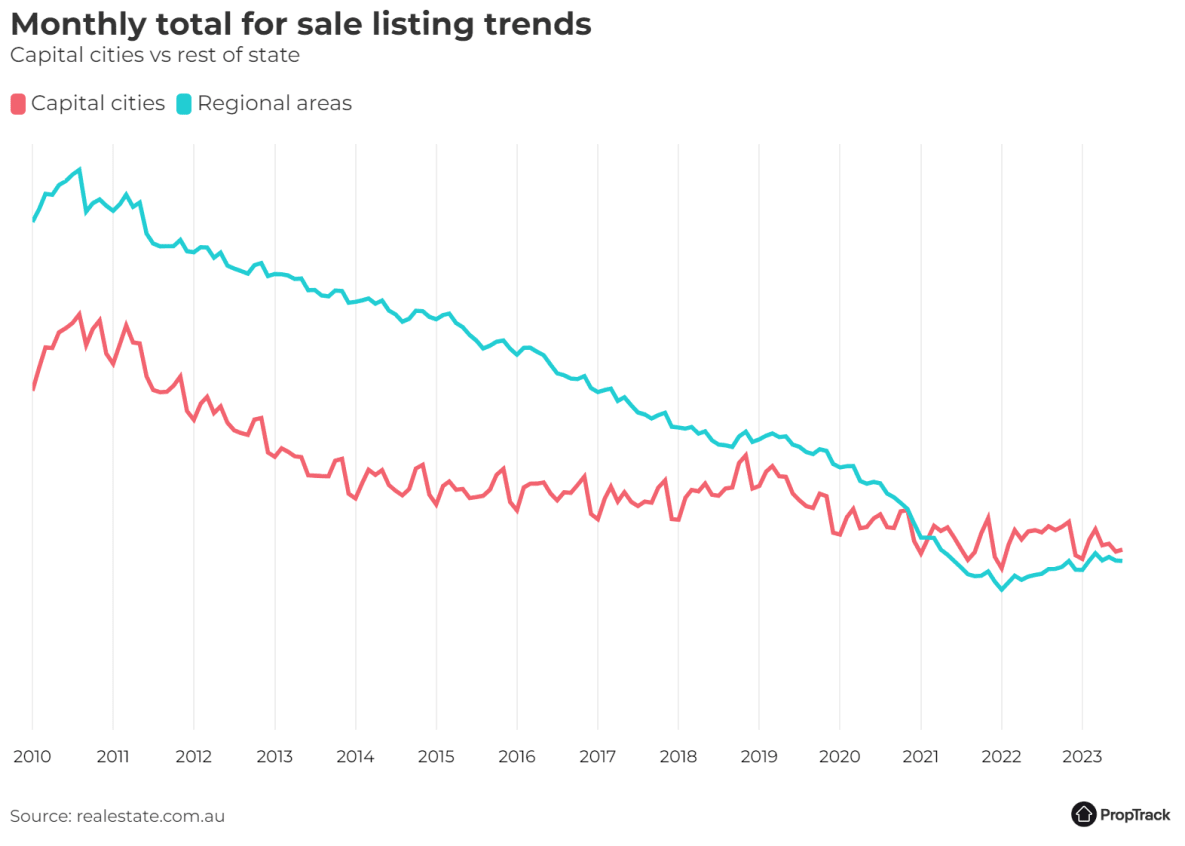
Nationally, advertised rents have soared 11% year-on-year, and vacancy rates are at historic lows. With the outlook remaining challenged, the budget’s new housing line items honed in on this area.

Increased assistance payments for low-income renters, measures to boost rental supply and measures to increase construction of social and affordable rental housing are the big-ticket items.

Given the one in three households that rent are more likely to be younger Australians, on lower incomes, with less wealth than owner-occupiers, and typically lower savings buffers, the measures will come as some relief.

Commonwealth Rent Assistance increases

Commonwealth Rent Assistance is already available to Australians on pensions and benefits including JobSeeker, the Family Tax Benefit and Parenting Payment.

The budget has delivered funding to increase the maximum rates of the Commonwealth Rent Assistance payment by 15% in a bid to help ease pressures on low-income renters.

The maximum increase will be between $15.73 and $31.76 a fortnight.

Renters currently receiving Commonwealth Rent Assistance will receive up to $31 extra a fortnight from September, a measure aimed at assisting vulnerable lower-income renters. For most low-income earners, rent assistance is a targeted and cost-effective safety net.

Strong demand to rent, bolstered by the fast pace of immigration, is well outstripping the supply of available rentals, with the total supply of rentals in the capital cities sitting at historic lows in March, with the supply of available rentals down 18.3% year-on-year.

Meanwhile advertised rents in the capital cities increased by 13% over the year to March with the extreme shortage of rental stock weighing.

This increase to Commonwealth Rent Assistance is the largest in more than 30 years, but rent assistance payments have long fallen behind soaring rental prices.

In the capital cities rental prices are up 18% on pre-pandemic levels, while in regional areas rents are up 23%.

Capital city rental markets are significantly undersupplied. As a result, prices are rising briskly and vacancy rates trending lower.

Rental Crisis

Rental prices are rising across the country amid low supply and high demand. Picture: Chris Pavlich.


Pegging payments to adjust in line with subsequent market rental price increases in the future, or a regular review schedule to ensure that assistance payments keep pace with surging rents, could have been a welcome step further.

The persistent undersupply of properties available to rent is pushing vacancy rates lower. And with rental demand outstripping supply, weekly rents are increasing strongly. And without a meaningful increase in rental supply on the horizon rental prices will continue to grow in the coming months.

But rental price increases aren’t the only problem. These challenges don’t just manifest in budgetary constraints as weekly rents increase, but with fierce competition properties are renting out at record speeds and finding an available rental is tough. The level of competition for limited rentals is forcing many to make sacrifices.

In the long run, the best solution is to provide more dwellings, but this takes time.

New tax break for build-to-rent sector

The only sustainable solution to the rental crisis is increasing rental supply.

Building approvals have fallen sharply over the past year are now sitting at decade lows, led by a significant 46% year-on-year drop in approvals for private sector apartments, especially larger builds.

Industry challenges, higher construction costs and labour shortages are set to see growth in the supply of new rentals remain limited, at a time when there is already a severe shortage of available rentals.

This is a problem; the supply side of the housing market should be better able to adjust when needed.

An increase to the available pool of long-term rentals could come from increased activity from both small and large-scale investment.

Last year’s budget announcement, the Housing Accord aims to build one million, new, well-located homes over 5 years from 2024.

This budget aims to help achieve this by incentivising an increase in the supply of rental housing by reducing barriers to entry and tax disincentives for large scale investment via the build-to-rent sector.

CHALMERS WALK UP and Doorstop

Treasurer Jim Chalmers has handed down his second budget. Picture: NCA NewsWire/ Dylan Robinson


Build-to-rent is a real estate development model where a property is constructed specifically for the purpose of renting it out, often with long-term leases and professional property management.

This sector could play a helpful role in alleviating rental supply constraints.

The withholding tax rate will be cut from 30% to 15% for eligible fund payments from managed investment trusts to foreign residents on income from newly constructed residential build-to-rent properties after 1 July 2024, subject to further consultation on eligibility criteria.

The depreciation rate will rise from 2.5% to 4% per year on eligible new build-to-rent projects where construction starts after May 9, increasing the after-tax returns for build-to-rent developments.

Build-to-rent dwellings must also offer a lease term of at least 3 years for each dwelling, meaning a predictable income stream for developers but also stable longer-term tenure for tenants.

While encouraging increased investment and construction of build-to-rent projects won’t help with the current pressures and low supply of rentals, advancing the build-to-rent sector could help increase rental supply in the long term.

But is it enough to move the dial?

The budget states industry estimates that cutting taxes on build-to-rent developments could lead to an increase of 150,000 new rental properties over the next 10 years.

150,000 additional rental properties would be a just over 6% increase to our current total rental stock over the next decade.

In the year to September 2022 the population swelled by a record 418,500 people, driven by net overseas migration of more than 300,000 people in the same period, a near record. In fact, Australia experienced the largest quarterly net inflow of overseas migrants on record in the September quarter at 106,000 people.

Treasury estimates there will be an influx of 650,000 migrants over the course of this financial year and next.

Based on ABS household projections out to 2033, 150,000 new rentals will cover just 9.6% of the forecast increase in the number of households.

Meaning with the faster than expected return of immigration and strongly rebounding population growth, 150,000 additional rental properties in a decade will aid rental supply shortages but probably won’t provide enough of an increase.

Build-to-rent is already an established asset class in the US, Europe, and Japan and could be a key missing ingredient to the housing mix in Australia.

Encouraging smaller investors to return to the market is a missing ingredient in today’s budget.

Although advancing the build-to-rent sector is a welcome measure, policy that aims to incentivise small scale investment via “mum and dad” into the housing market thus adding to rental supply appears to be missing.

Social and affordable housing

The government also announced an extra $2 billion to lower the cost of construction of social and affordable dwellings.

The additional $2 billion is set to increase the National Housing Finance and Investment Corporation’s (NHFIC) liability cap from $5.5 billion to $7.5 billion from 1 July 2023, which will enable the NHFIC to support more social and affordable rental homes through lower cost loans to community housing providers.

The increased funding for social and affordable housing will help provide stable and secure housing options for those who need it, but while social housing is a good safety net for those at high risk of long-term homelessness who can’t access private housing, it is an expensive solution.

The additional billions are expected to support around 7,000 more new social and affordable dwellings, a step in the right direction, but the impending increases to rental assistance will be a better targeted measure.

What’s ahead for the rental market?

Strong rent growth is likely to persist this year. This is particularly the case in Sydney, Melbourne and Brisbane, where most arrivals first land and rental supply is tight. Adelaide and Perth also have very constrained supply conditions.

However, renters in Hobart and Canberra now have much more choice with total listings available to rent close to double the record low levels recorded in September 2018 and around 50% higher than pre-pandemic levels – a factor that has contributed to rental vacancy rates easing in these two cities over the past year.

Renters in Hobart are enjoying more choice following record low supply in recent years. Picture: Supplied


Demand to rent remains elevated in inner-city areas following the return to offices and universities, while supply shortages are set to remain for now.

Strong migration, low vacancy rates and limited new supply means tough conditions for renters are likely to remain.

To address the housing shortage and cater for our growing population, it is key that we continue to focus on building more homes.

Unfortunately, incentivising investors to return to the market is a missing ingredient in the budget.

Homebuying incentives –  eligibility expanded but many miss out

The government has also expanded the eligibility criteria for the First Home Guarantee, and the Regional First Home Buyer Guarantee.

The schemes have previously only been available to singles and married or de facto partners, but now the expanded classification of a “couple” includes friends, siblings, and other family members, meaning they will be eligible for joint applications from July 1, 2023.

The guarantees will also be expanded to non first-home buyers who haven’t owned a property in Australia in the past 10 years, supporting those who have fallen out of homeownership, now also including permanent residents.

The Family Home Guarantee will also be expanded to be available to eligible borrowers who are single legal guardians of children such as an aunt, uncle or grandparent, in addition to single natural and adoptive parents.

These changes build on last year’s increase in the number of places available – 35,000 per year for the First Home Guarantees, 10,000 places per year under the Regional First Home Buyer Guarantee, and 5,000 places per year to 30 June 2025 under the Family Home Guarantee.

In the current environment, while home prices in most markets are slightly lower now than they were 12 months ago, borrowing costs are higher and prices have fallen by much less than the calculated shift in borrowing capacities would imply.

Affordability has deteriorated markedly, to the worst levels since the 1990s on some measures, and repayments are now very high relative to history in real terms.

These conditions are challenging for first-home buyers, for whom the most significant hurdle to home ownership is the deposit burden. The expanded Home Guarantee Scheme aims to tackle this issue.

The First Home Guarantee scheme allows an eligible applicant to buy with just a 5% deposit, with the government guaranteeing the remaining 15%.

Expanded homebuying schemes could see more Australians own a home sooner. Picture: Getty


While the time taken to save for a deposit is influenced by many factors, such as your savings rate and how much you can afford to put aside each month towards a deposit, assuming all other variables remain constant, saving for a 5% deposit will take less time.

For example, let’s say you’re buying a home worth $800,000, and you want to save for the deposit. A 20% deposit would be $160,000, and a 5% deposit would be $40,000. That means you would need to save an extra $120,000 for the 20% deposit compared to the 5% deposit.

If you can save $1,000 per month towards the deposit, it would take you 10 years to save $120,000 for the 20% deposit, and 2.5 years to save $40,000 for the 5% deposit. Therefore, you would save 7.5 years by utilising the 5% deposit instead of the 20% deposit.

By reducing how much deposit they must save, and expanding the definition of a “couple” the scheme will help some Australians purchase a home sooner than they otherwise could have.

To be eligible for the scheme, the property you buy must fall under a certain price cap.

These price caps will remain a constraint for some first-home buyers because they rule out more than half of homes in some capitals.

Eligible applicants will have plenty of choice in Darwin, Perth and Melbourne but less in Sydney, Hobart and the least in Canberra.

Looking at smaller geographical areas, it’s clear the caps will be more binding in inner-city areas where prices are highest and areas with more expensive dwellings, like Dural, and Baulkham Hills for example.

Risks of expanded scheme

The key feature of the scheme is that borrowers are taking out higher loan-to-valuation ratio mortgages. That means price falls of as little as 5% would take the borrower underwater – owing more on their mortgage than their home is worth.

There are risks to taxpayers too. If the borrower was to subsequently default while underwater, losses on mortgages guaranteed by the scheme would be borne by taxpayers.

The substantial interest rate tightening that has been pushed through already saw conditions in the housing market rebalance quickly last year, with prices falling from peak levels in most parts of the country.

Prices nationally fell for nine consecutive months, but that trend has reversed this year with national home prices rising for four consecutive months.

The impact of interest rate rises is being counterbalanced by stronger housing demand and tight supply conditions.

Although home prices have begun to increase again this year, the risk of further price falls remains if the downturn seen for much of last year were to find a second wind, meaning these risks are more elevated than they have been in recent years.

Many will still miss out

The scheme will help some purchase sooner than they otherwise could have, likely increasing demand and therefore prices of certain types of properties soon after.

Though the impact on prices and the housing market is likely to be limited.

First-home buyers accounted for just 16.5% of new lending in March according to the Australian Bureau of Statistics.

However, the allocation for each guarantee scheme has not increased.

Many first-home buyers will still miss out given the limit of 35,000 places. Over the past 5 years the number of first-home buyers taking out mortgages has averaged more than 120,000 per annum.

And in the past 12 months 102,060 first-home buyers took out mortgages.

The allocation caps will limit the effectiveness of the scheme, but it is also increasing or bringing forward demand for housing without increasing supply to match.

The end result is many who are finding it both hard to buy and increasingly hard to rent will miss out, meaning the benefits of the scheme are a drop in the ocean in resolving housing affordability.

The only long-term solution to housing affordability is to build more of the right homes in the places where people want to live.

Home under construction

Building more homes remains key to improving housing affordability. Picture: iStock


It’s clear what’s missing is a serious plan to reform state and local government planning systems and to increase the supply of new dwellings. Demand-side incentives should be tied to unlocking land, improving planning efficiencies, and boosting new supply.

There is mention that planning ministers, working with the Australian Local Government Association, will develop a proposal for National Cabinet in the next 6 months outlining reforms to increase housing supply and affordability – but no concrete measures are outlined in the budget.

With Australia’s population set to keep growing over the next two decades, building more new homes where people want to live will be critical if we are serious about tackling housing affordability.

Stamp duty reform a missed opportunity?

Deteriorating housing affordability was a key focus of the Federal Budget, seeking to alleviate some of the pressures both those looking to buy or rent currently face.

But stamp duty reform was not one of them.

Support for the states to transition from stamp duty to a broad-based land tax must be seriously explored if we hope to create a strong structural foundation for an efficient and equitable property market.

Stamp duty reform is needed to allow the property market to function more efficiently in all states.

Some of the issues identified with stamp duties are that they increase the cost of housing, increase the deposit burden and disincentivise household mobility.

Stamp duty is an inefficient tax that acts to slow the property market, reduces economic growth and makes housing less affordable.

The former NSW Treasury estimated that eliminating stamp duty could unlock $10 billion in economic value.

Aerial view of houses in outer suburban Sydney.

Stamp duty is seen as a barrier to homeownership, but also a disincentive to rightsizing. Picture: Getty


State governments replacing stamp duty with an annual land tax would help to better utilise the available housing stock.

Stamp duty makes it harder for many first-home buyers to buy a home because it is an upfront additional cost on top of the deposit you have to save. In Sydney it takes 7 years to save a 20% deposit for an entry-level home. In Melbourne, it takes a little over 6 years.

Stamp duty adds to this deposit hurdle.

Stamp duty for a relatively affordable home adds around an extra year of saving in most cities.

State governments already recognise the impact of stamp duty on first-home buyers; that’s why most states offer stamp duty concessions or waivers for first-home buyers.

Home ownership rates have been declining among younger, lower income Australians for decades. Reducing up front purchase costs for first-home buyers by replacing stamp duty with an annual land tax, would reduce the deposit hurdle for first timers and allow many to purchase sooner.

Stamp duty also discourages right sizing, with many “empty nest” households not needing as much space as they have. But they keep it because downsizing is unattractive due to the size of transfer costs.

The big barrier here is stamp duty, which adds to the cost of downsizing, promoting inefficient use of existing housing stock.

But stamp duty is also a barrier to moving in general, for example for a new job.

Reforming stamp duty could not only help younger households and improve housing affordability, but also better utilise Australia’s existing dwelling stock. A clear win in the face of a growing population and existing housing shortage.

This story is reprinted with permission from PropTrack.

Relief for energy costs as Federal Government releases budget

Relief for household energy costs, payment increases for job seekers and a bonus tax discount to help small businesses electrify – these are just a few takeaways from the Federal Government’s 2023 budget announced by Treasurer Jim Chalmers last night.

All businesses with an annual turnover of less than $50m will be eligible for 20 percent of spending that goes towards electrification and energy efficiency, including purchasing more efficient white goods, as well as upgrading to electric heating and cooling.

In further news around energy, the Government sought to relieve cost of living pressures with their energy bill relief plan, which will lower the costs for eligible households by up to $500. Prime Minister Anthony Albanese has forecast that the measure should help lower inflation by 0.75 percent.

“This is a responsible budget,” the Prime Minister said. “What we’ve done is to take pressure off families without putting pressure on inflation.

“What we haven’t done is put cash payments that would have added to inflation.”

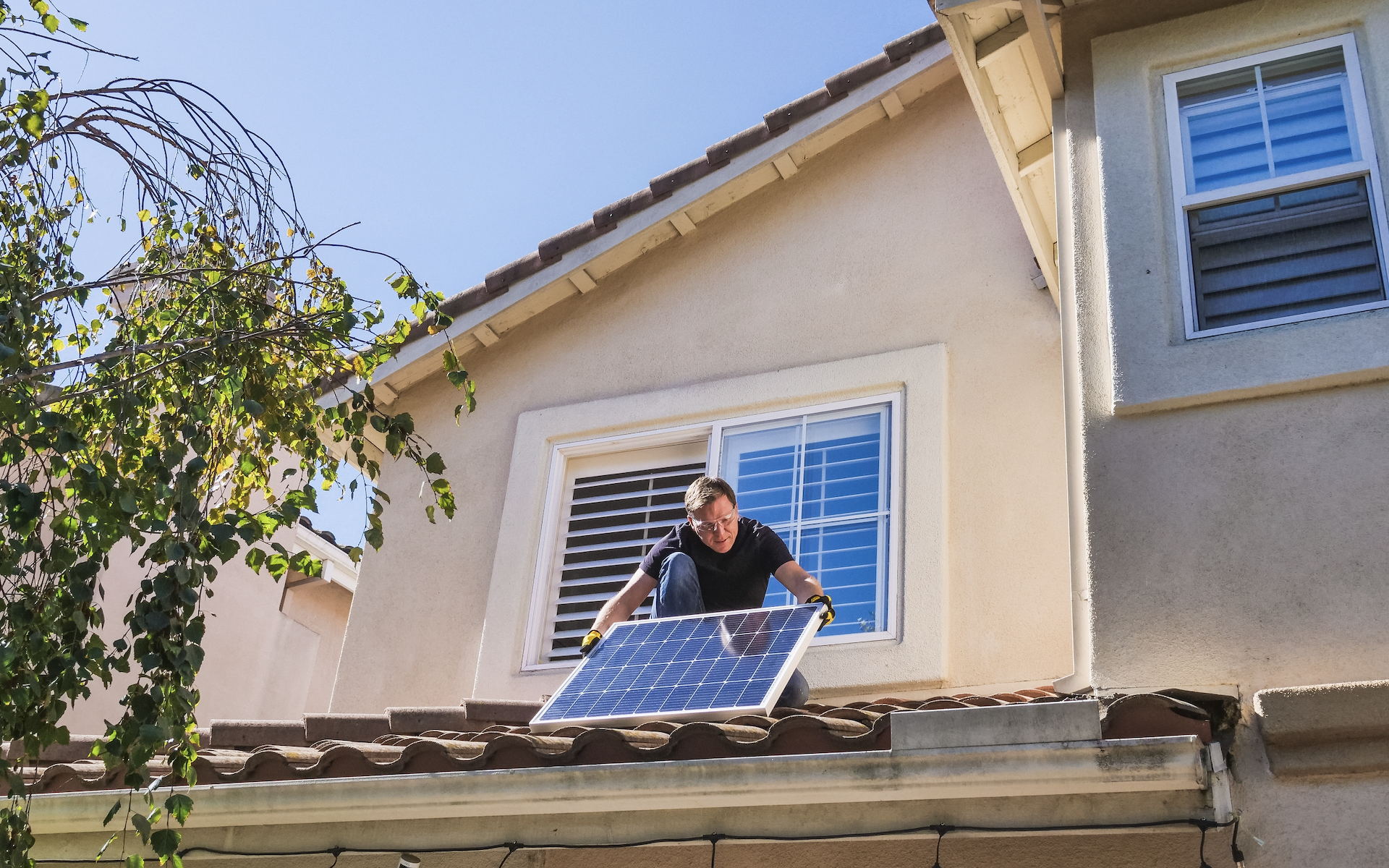
Households seeking to improve their energy efficiency will have access to a low interest loan, with 110,000 on offer for upgrades such as solar panels and double glazing, as well as more energy efficient appliances. The Federal Government has set aside $1b to establish the fund.

Following repeated calls for more support aimed at job seekers, the budget also includes a $40 a fortnight increase in the JobSeeker payment, which still falls short of the recommendations by the Economic Inequality taskforce. Treasurer Jim Chalmers said on ABC News Breakfast that his government had ‘done what we can’ to address the needs of job seekers.

“We’ve tried to do as much as we can without blowing the budget and adding substantially to inflationary pressures in the economy,” he said.

The budget also sought to relieve pressure on the Medicare system, tripling the bulk billing system for the most common consultations


ChatGPT Is Causing a Stock-Market Ruckus

The rise of artificial intelligence is taking the tech world by storm. The technology is also making waves on Wall Street.

It is early days for so-called generative AI, a form of artificial intelligence that can conjure original ideas in the form of text, video or other media. But the tool has caused a stir in companies, schools, governments and the general public for its ability to process massive amounts of information and generate sophisticated content in response to prompts from users.

Big technology companies are investing billions of dollars in the technology. Startups are raising cash and trying to develop business models using AI at a rapid pace.

Investors are gauging the extent to which AI’s arrival will upend companies, industries and contemporary business practices—and placing bets accordingly. That has sent stocks swinging wildly in both directions: Chip maker Nvidia’s shares are surging, while shares of study-materials company Chegg have plummeted.Enthusiasm for the potential of AI is one reason big tech companies are among this year’s strongest performers.

There is little doubt that generative AI chatbots are popular. ChatGPT reached 100 million users in two months, the fastest app on record, analysts at Goldman Sachs said in a research note. In comparison, TikTok took nine months to reach that milestone, while Instagram took 30.

“We view AI as huge, and we’ll continue weaving it in our products on a very thoughtful basis,” Apple Chief Executive Tim Cook said last week on a conference call with analysts.

Apple isn’t alone. There have been more than 300 mentions of “generative AI” on company conference calls worldwide so far this year, according to data from AlphaSense. The phrase barely garnered a mention before 2023.

Major health systems are experimenting with AI to see whether the technology can help boost the productivity of their medical staffs. Entrepreneurs and venture-capital investors hope generative AI will revolutionise businesses from media production to customer service to grocery delivery. Even Coca-Cola told investors it is experimenting with the technology.

Some investors wonder whether generative AI is the latest tech with the potential to disrupt entire industries. The dawn of online streaming spelled the end of home-video-rental companies such as Blockbuster, while cameras on phones helped render photo processing obsolete and helped spark Apple’s rise and Kodak’s decline.

Artificial intelligence is “almost certainly overhyped in its initial implementation,” said Michael Green, chief strategist at Simplify Asset Management. “But the longer-term ramifications are probably greater than we can imagine.”

Microsoft has added nearly $500 billion in market value since the tech giant announced a $10 billion investment in startup OpenAI, developer of ChatGPT, in January. Shares of Nvidia, which makes chips needed to power the chatbots, have risen 96% so far this year. Google parent Alphabet shed $100 billion in market value in a single day earlier this year after its chatbot Bard underwhelmed investors, though those losses quickly reversed.

Alphabet shares are up 22% this year.

Those moves might prove ephemeral as the technology’s power becomes clearer, said Daniel Morgan, senior portfolio manager at Synovus Trust. “The most difficult thing to ascertain is, what is going to be the impact of all that spending to these companies on revenues and profits?” His fund owns shares of Microsoft, Alphabet and Nvidia.

The flurry of investor interest has pushed valuations higher. Nvidia trades at 164 times its past 12 months of earnings, according to FactSet. Microsoft and Alphabet trade at 33 times and 24 times, respectively.

Portfolio managers said the race to understand the implications of AI’s emergence is essential, both to invest in the technology’s winners and to avoid its eventual losers. Shares of Chegg fell 48% last week after the study-materials company said that the rise of ChatGPT was harming its ability to attract new customers.

“You just don’t know all the knock-on effects,” said Will Graves, chief investment officer at Boardman Bay Capital Management. “If this really is an iPhone moment, nobody saw that Uber was coming out of the iPhone to hammer the taxi industry.”

China Finally Has a Rival as the World’s Factory Floor

Western companies are desperately looking for a backup to China as the world’s factory floor, a strategy widely termed “China plus one.”

India is making a concerted push to be the plus one.

Only India has a labor force and an internal market comparable in size to China’s; India’s population may be the world’s largest, according to the United Nations. Western governments see democratic India as a natural partner, and the Indian government has pushed to make the business environment more friendly than in the past.

It scored a coup with the decision by Apple to significantly expand iPhone production in India, including expediting the manufacturing of its most advanced model.

Signs that India is changing are visible at the sprawling industrial parks in Sriperumbudur, a city in the southern state of Tamil Nadu. Foreign manufacturers here have long churned out cars and appliances for the Indian market. They’re now being joined by multinational corporations making goods from solar panels and wind turbines to toys and footwear, all looking for an alternative to China.

In 2021 Denmark’s Vestas, one of the world’s largest wind-turbine manufacturers, built two new factories in Sriperumbudur. Its six assembly lines now assemble hub cells, power trains and other components, stacked high in a storage yard to be shipped across the world.

Forecasts that India would soon become the second-largest market for turbines sparked Vestas’s expansion. But it was also a conscious effort to diversify away from China, which hosted the bulk of its regional production, especially after repeated lockdowns under Beijing’s zero-Covid policy, said Charles McCall, who oversaw the expansion as senior director of Vestas Assembly India. “We don’t want all our eggs in one basket in China.”

Some of Vestas’s suppliers have joined it. American contract manufacturer TPI Composites moulds 260-foot-long turbine blades that regularly draw attention as they are shuttled along surrounding highways. It has expanded significantly in India even as it reduces operations in China. Eventually, 85% of Vestas’s suppliers will be in India, said Mr. McCall, who recently left the company.

China still towers over every other country in global manufacturing, a position it cemented when multinationals flooded in after it joined the World Trade Organization in 2001. But a growing list of factors has prompted companies to search for a backup. First, there were rising labor costs in China and pressure from the Chinese government to transfer technology to Chinese competitors. Then there were President Donald Trump’s tariffs on Chinese imports in 2018, Covid lockdowns from 2020 through last year, and now a push by Western governments to decouple their economies from China.

Many countries are competing to be the “plus one,” with Vietnam, Mexico, Thailand and Malaysia in particular contention.

India must still overcome entrenched problems that have kept it a bit player in global supply chains. Its labor force remains mostly poor and unskilled, infrastructure is underdeveloped and the business climate, including regulations, can be burdensome. Manufacturing remains small relative to the size of India’s economy.

Nonetheless, after decades of disappointment, it is making progress. Its manufactured exports were barely a tenth of China’s in 2021, but they exceeded all other emerging markets except Mexico’s and Vietnam’s, according to World Bank data.

The biggest gains have been in electronics, where exports have tripled since 2018 to $23 billion in the year through March. India has gone from making 9% of the world’s smartphone handsets in 2016 to a projected 19% this year, according to Counterpoint Technology Market Research.

Foreign direct investment into India averaged $42 billion annually from 2020 to 2022, a doubling in under a decade, according to central-bank figures.

Since China declared a “no limits” friendship with Russia on the eve of the invasion of Ukraine last year, the U.S. and its allies have stepped up efforts to reduce dependence on China. Through “friendshoring,” the U.S. is “strengthening integration with our many trusted trading partners–including India,” Treasury Secretary Janet Yellen said on a visit there in February.

No company better embodies the bet on India as the next China than Apple. Over the past 15 years, the company built up a state-of-the-art supply chain almost entirely in China to make its laptops, iPhones and accessories. Its presence helped the entire manufacturing sector in China.

The California-based company has assembled lower-end iPhone models in India since 2017 and began making its newest, flagship iPhone 14 here within weeks of its launch last year. J.P. Morgan estimates a quarter of all Apple iPhones will be made in India by 2025.

Indian officials hope Apple’s presence will spur others to come. “Very often you have anchor companies who set the trend,” commerce and industry minister Piyush Goyal said in an interview. “We believe that this will send a strong signal…to other companies in Europe, America and Japan.”

Apple has been pushing suppliers to diversify beyond China after many faced production disruptions during Covid lockdowns. Meanwhile, geopolitical tensions have been growing between the U.S. and China, as well as between Beijing and Taiwan, where Foxconn Technology Group, Apple’s main manufacturer, is based.

Foxconn is set to expand production of iPhones at its existing plant near the Indian city of Chennai. It aims to boost iPhone production to around 20 million units annually by 2024 and roughly triple the number of workers to as many as 100,000, according to people familiar with the matter, The Wall Street Journal has reported.

An Apple spokesman declined to comment.

India has made progress overcoming some barriers to business. In 2014 Indian Prime Minister Narendra Modi unveiled “Make in India,” an effort to boost manufacturing. India has digitised many government services and accelerated construction of railroads, airports, container shipping ports, and electricity generation.

Mr. Goyal pointed to India’s rise on the World Bank’s ease of doing business rankings and the World Intellectual Property Organization’s global innovation index and a growing number of free trade pacts as evidence “we have now taken…integrating ourselves with other countries far more seriously.”

India introduced tax and customs rebates for exports in 2015 and overhauled them in 2021. The customs rebates were “the trigger point for the entire electronic industry,” said Sasikumar Gendham, managing director of Finland’s Salcomp, the world’s largest maker of smartphone chargers and supplier to Apple.

Since 2014, Salcomp’s Indian workforce has increased sixfold to 12,000 and it aims to hire 25,000 people in the next two years.

With 200 buses to transport workers and plans to build dormitories for 15,000 people, the company’s campus is massive by Indian standards, though not yet by Chinese standards. The facility churns out about 100 million units every year, compared with its China facility which produces about 180 million units.


For all this progress, it isn’t clear it’s enough to set India apart. Jules Shih, a Chennai-based director of Taiwan’s trade promotion agency, TAITRA, said India has become an easier place to do business, but in many respects still lags behind other countries.

It can take longer to get land and approvals to set up a factory in India and getting visas for expatriate technicians, managers and engineers is time consuming, Mr. Shih said. “We feel they don’t have a united goal integrated across agencies to make Make in India happen faster,” he said.

In March 2020, India introduced “production-linked incentives” that directly subsidise targeted products, starting with mobile phones and components, pharmaceuticals and medical devices.

Some companies have found the process to claim the production-linked incentives to be burdensome. South Korean technology giant Samsung Electronics has been in discussions with authorities over the amount of the rebate. A Samsung India spokesman said the company is committed to being a partner of India and working to make the plan a success.

Labor shortages are emerging in India’s manufacturing hubs, local officials and businesses say. That’s because, unlike in China, many workers are reluctant to relocate long distances in search of work. Trade unions are stronger in India than China.

China encouraged foreign companies to locate supply chains in special economic zones with reduced tariffs on imported components and machinery. By contrast, “Make in India” sought to replace imports with domestically manufactured products by raising import tariffs.

Those tariffs discourage industries that import many components. “India is protectionist in precisely those sectors, goods manufacturing, where the China+1 opportunity arises,” Viral Acharya, an economist at New York University and former deputy governor of India’s central bank, wrote in a report for the Brookings Institution released in March.

In its annual review of India’s economy last December, the International Monetary Fund said its integration into global value chains has stalled.

Manufacturing’s share of Indian economic output has actually shrunk since Make in India was launched, to 14% in 2021-–far below that of Mexico, Vietnam and Bangladesh.

Arvind Subramanian, who was Mr. Modi’s chief economic adviser from 2014 to 2018, said for every company such as Apple that has embraced India, several report bad experiences. Even Apple’s investment “wouldn’t have happened without the push from China,” he said.

Amazon.com closed some of its Indian ventures last fall. “We continue to develop and grow the local e-commerce ecosystem,” Amazon said in a statement.

China’s experience suggests creating lots of moderately paid jobs for less-educated rural workers, especially women, requires manufacturing.

In Tamil Nadu, a homegrown unicorn, Ola Electric, embodies those hopes. India is the world’s largest market for two-wheeled motorcycles and scooters, and Ola has made a splash with its brightly painted scooters catering to demand for electric vehicles.

New registrations for electric two-wheelers have grown more than tenfold over the past two years to 684,273 in the latest financial year ended March 31, according to the Council on Energy, Environment and Water, a New Delhi-based think tank.

Ola is making half a million electric scooters a year from its new plant. It plans to quadruple factory floor space, including two acres reserved for an indoor forest. The company says it will start making electric cars from early 2024.

The airy plant has an almost all-female workforce, from security guards to workers wielding spray guns of paint, to those who test-ride the final product.

“Initially, their parents were hesitant to let them work in factories,” said Jayaraman G., Ola’s associate director of corporate affairs. “No more. In the last one year, they saw how the situation changed financially–from paying for the education of their siblings to helping build two- or three-room apartments. It’s a proud moment for their families.”

Profits up for Australia’s biggest home loan lender

Profits at the Commonwealth Bank are up 10 percent on this time last year, according to its latest trading update released today.

The country’s largest mortgage lender posted an unaudited cash net profit after tax of $2.6 billion for the third quarter of this financial year. At the same time it noted that growth had slowed by 2 percent over the first half of the year.

“Volume growth (has been) offset by lower net interest margins primarily from continued competitive pressure in home loan pricing and customers switching to higher yielding deposits,” the bank said in a statement. 

“Competition for home loans has remained intense in Australia and New Zealand. 

“Non-interest income was 11 percent higher, primarily driven by higher trading income and the non-recurrence of losses from equity accounted investments in the prior half.”

The bank credited its ‘franchise strength, customer focus and consistent operational execution’ for the profits it had delivered, pointing to particularly strong growth in the retail bank sector, with the number of new retail transaction accounts opened up by a third.

It also noted that home loan arrears were still relatively low at 0.44 percent, which the CBA said was a reflection of low unemployment levels.

CBA CEO Matt Comyn said the bank was ‘committed’ to supporting customers through cost of living pressures and higher interest rates, adding that Australia is well placed to weather domestic and global challenges.

“We remain positive on the medium-term outlook,” he said. “The strength of our balance sheet means we are well placed to continue supporting our customers and the broader Australian economy while delivering sustainable returns to our shareholders.”

Underwhelming Chinese Stock Markets Show Concern Over Recovery

One mystery in global markets this year is that while China’s economy appears to be rebounding strongly, its stock market hasn’t been doing as well.

The MSCI China index has risen only 1.8% so far this year, underperforming many of the major markets. The S&P 500 index, for example, has gained 7.7%. Stocks listed in Shanghai and Shenzhen have done a bit better—the CSI 300 index has gone up 4.9% in 2023. That seems to be in contrast to the rebounding economy, after China scrapped its strict “zero-Covid” pandemic restrictions in December and scaled back its regulatory crackdown on its technology companies.

China’s gross domestic product grew 4.5% from a year earlier in the first quarter and, more significantly, consumption has also come back strongly: retail sales jumped more than 10% in March from a year earlier. Crowds were everywhere in Chinese scenic spots in the recent five-day “Golden Week” holiday. Total domestic trips during the holiday rose 19% from the same period in 2019, according to official figures. Tourism revenue also recovered to pre pandemic levels.

Of course, the rally in Chinese stocks late last year already priced in a big part of the recovery. The MSCI China index surged 34% in the last two months in 2022, after rumours of reopening started to circulate.

Yet earnings growth so far has been disappointing. For nearly 80% of Chinese listed companies that have reported their first-quarter results, profits only grew an average 1% year on year, with around 69% of them having missed consensus earnings estimates, according to Goldman Sachs. About 77% of A-share shares—companies listed in Shanghai and Shenzhen—revised down their earnings guidance for 2023, according to Bank of America.

Earnings growth will likely improve ahead, especially against a lower base last year, when lockdowns across the country battered the economy. The struggling housing sector also seems to have stabilised. But a big question that remains is how long the consumption bounce could last. The export sector may suffer with a potential recession looming in the U.S. and Europe. China’s job market, especially for younger workers, is still quite weak. That partly explains why investors have jumped back into shares of state-owned enterprises—a more stable choice in an uncertain time.

Chinese stocks have rebounded substantially from their lows last year, but are still way off their peaks in early 2021, when China appeared to have avoided the worst of the pandemic. A more sustained market recovery would require a more broad-based revival of earnings growth.

Buffett and Munger on Success, Toxicity and Elon Musk

The question was a philosophical one: How should you avoid major mistakes in business and life?

Warren Buffett, the 92-year-old chairman and chief executive of Berkshire Hathaway, paused briefly.

“You should write your obituary and then try to figure out how to live up to it,” Mr. Buffett said. “It’s not that complicated.”

At Berkshire’s annual shareholder meeting on Saturday, an event that draws thousands to Omaha, Neb., each spring, Mr. Buffett and his longtime business partner, Charlie Munger, spent hours weighing in on topics as varied as the recent banking turmoil to artificial intelligence and the future of the U.S. As is typical at such gatherings, the executives also doled out plenty of advice on management practices, career choices and how to enjoy a good life.

In prior years, Mr. Munger has heaped scorn on consultants, compensation specialists and what he described as make-work activities inside U.S. companies. This weekend, he directed his ire at wealth managers.

“Having a huge proportion of the young and brilliant people all going into wealth management is a crazy development in terms of its natural consequences for American civilisation,” Mr. Munger said. “We don’t need as many wealth managers as we have.”

He added: “I don’t think a bunch of bankers, all of whom are trying to get rich, leads to good things.”

Mr. Buffett, for his part, said he wanted to see greater accountability inside banks, saying that the recent crisis in the industry illustrated why executives and board members should face consequences if a business encounters problems.

“If the CEO gets the bank in trouble, both the CEO and the directors should suffer,” Mr. Buffett said. “You’ve got to have the penalties hit the people that cause the problems, and if they took risks that they shouldn’t have, it needs to fall on them if you’re going to change how people are going to behave in the future.”

Over hours of questions from investors and others, the two billionaires often peppered their answers with recommendations on how to navigate business. Mr. Buffett advised that people pay attention to how others might try to manipulate them.

He also encouraged those in attendance to resist the temptation to criticise or vilify others.

“I’ve never known anybody that was basically kind that died without friends,” Mr. Buffett said. “And I’ve known plenty of people with money that have died without friends.”

Mr. Munger said that success comes from steering clear of toxic people.

“The great lesson of life is get them the hell out of your life—and do it fast,” Mr. Munger said.

When hiring some of his top leaders over the years, Mr. Buffett said he has tried to suss out someone’s talents and not focus on whether they attended a prestigious institution.

“I have never looked at where anybody went to school in terms of hiring,” Mr. Buffett said. “If somebody mails me a résumé or something, I don’t care where they went to school.”

One of Mr. Buffett’s top lieutenants, Ajit Jain, studied at Harvard Business School, “but he isn’t Ajit because he went to those schools,” Mr. Buffett said.

Mr. Buffett graduated from the University of Nebraska-Lincoln and later studied under the legendary value investor Benjamin Graham at Columbia University. Mr. Munger, who is 99 years old, studied mathematics at the University of Michigan and meteorology at the California Institute of Technology, and went on to earn a law degree from Harvard University.

On artificial intelligence, Mr. Buffett said he had been impressed at generative AI’s abilities to summarise legal opinions and potentially take on other tasks, though he said he also worried about its potential consequences. “It can do all kinds of things, and when something can do all kinds of things, I get a little bit worried because I know we won’t be able to uninvent it,” Mr. Buffett said.

Mr. Munger said he was skeptical of some of the hype around artificial intelligence. “I think old-fashioned intelligence works pretty well,” he said.

Near the end of the meeting, an audience member asked the two billionaires to weigh in on Elon Musk, the SpaceX and Tesla CEO who took control of the social-media platform Twitter last year.

Mr. Buffett called Mr. Musk a “brilliant, brilliant guy,” who had a much different approach in dreaming about the future than the Berkshire executives. Mr. Buffett has often said he takes a hands-off approach to managing Berkshire’s subsidiaries, which range from the insurer Geico to the restaurant chain Dairy Queen. Mr. Musk is known for weighing in on the details at his companies.

“He would not have achieved what he has in life if he hadn’t tried for unreasonably extreme objectives,” Mr. Munger said of Mr. Musk. “He likes taking on the impossible job and doing it. We’re different: Warren and I are looking for the easy job.”

Mr. Buffett said he didn’t want to compete against Mr. Musk, to which Mr. Munger added: “We don’t want that much failure.”

Mr. Musk tweeted Saturday that he appreciated the “kind words from Warren & Charlie.”

Auction clearance rates on the up across the capitals

Last weekend’s auction clearance rate in Australian capitals was the highest in more than a year, CoreLogic data reveals. 

Of the 1,750 auctions held over the weekend, 75.1 percent were sold according to preliminary figures, the highest since February 2022, which had a clearance rate of 75.7 percent.

The number of properties put to market was consistent with figures from the previous week, where 1,739 homes were offered for sale nationally. However, figures were still down on this time last year when 2,059 homes went to auction.

In signs that buyer confidence is gaining ground, of the 732 auctions held in Melbourne, the preliminary clearance rate stayed above 70 percent for the fourth week in a row, at 76 percent. The market was similarly buoyant in Sydney, with a clearance rate of 78.5 percent, based on preliminary data. The number of properties put to market was also up, 650 homes last weekend compared with 570 the week prior. This time last year, 659 were auctioned.

Among the smaller capitals, Adelaide has so far recorded the strongest results, with 72.1 percent of the 128 homes put to market being sold. 

The results come less than a week since the RBA made the surprise decision to raise the cash rate by a further 25 basis points to bring the official interest rate up to 3.8 percent, in a move widely criticised by construction and housing industry bodies.

Jewels Created for Princess Diana Going up for Auction in New York

A diamond and South Sea pearl necklace and pair of matching earrings created for the late Princess Diana—and worn by her just once, at a 1997 English National Ballet performance—will go up for auction in June and could fetch as much as US$15 million.

The auction will take place not long after the coronation of Diana’s ex-husband, Charles, who will become king in a ceremony on Saturday at Westminster Abbey in London.

The necklace has clusters of pearls and 178 diamonds. Courtesy of Guernsey’s

New York-based auctioneers Guernsey’s will oversee the sale at Manhattan’s Pierre Hotel on June 27, according to a news release. The jewels were speculated to have been commissioned by Dodi Fayed, Diana’s paramour, before the couple perished in an August 1997 car crash, a Guernsey spokesperson said.

Along with its clusters of pearls and 178 diamonds, the necklace is significant because of Diana’s mystique—and the scarcity of her possessions on the market, according to Arlan Ettinger, president and founder of Guernsey’s.

“This is the only major jewellery of Diana’s that will ever be sold,” Ettinger says. “The family is not about to start parting with treasured items from their late mother.”

The prized jewels are being sold by Mark Ginzburg, a Ukrainian real-estate developer who bought them in 2009 at Guernsey’s and now is being forced to sell because of the war against Russia

Guernsey’s declined to disclose how much Ginzburg for the set.

One report, however, said Ginzburg paid US$632,000, which Penta couldn’t independently confirm.

“The family’s success in Ukraine enabled them to buy the jewels, but their business has been largely devastated by the war,” Ettinger says. “This is a motivated sale.”

The Crown Jeweller, which has created baubles for the Royal Family for centuries and at the time was the venerable British jeweler Garrard, designed the necklace for Diana after meeting with her in early 1997, according to Guernsey’s. Two years after Diana’s death, her family authorised the Crown Jeweller to sell the necklace.

Diana “didn’t have much in the way of jewelry while she was princess,” Ettinger says. “Most of what she wore was jewellery owned by the crown, given for an occasion, but not permanently.” Once Diana divorced then-Prince Charles, “she emerged as her own woman, and the fact that the Crown Jeweller created this for her is a big deal.”

Once the necklace was completed, Diana wore it to a June 3, 1997, premiere of Swan Lake by the English National Ballet. She returned the necklace to the jeweller after the ballet so he could complete a set of matching earrings, although Diana never had a chance to wear them, Guernsey said.

“It has been said that the Princess of Wales—who was also England’s Patron of Dance—was photographed more often on that occasion than at any other time of her life, with the exception of her wedding day,” according to Guernsey’s.

Next month’s sale will mark the third time the necklace has changed hands. Ettinger handled the first sale in 1999; the buyer was Houston furniture magnate James McIngvale. Ten years later, McIngvale put the necklace up for auction with Ettinger and Guernsey’s, which is when Ginzburg bought it.

The diamonds and pearls on their own “are intrinsically worth at least US$1 million to US$1.5 million,” Ettinger says. “But what they’re worth on the market is hard to predict.”

He estimated the necklace may sell for anywhere from US$5 million to US$15 million, though there was no official range provided by the auction house.

“This is connected to someone who was one of the most admired and accomplished women in the world,” Ettinger says.

As India Overtakes China in Population, Will Its Stock Market, Too?

Is India’s stock market a better long-term bet than China’s?

Some economists think so, now that India is on track to become the world’s most populous nation. Demography, they believe, is destiny.

While China’s population has long been the largest in the world, the two countries are now neck and neck, at roughly 1.4 billion people each, according to the United Nations. India will be No. 1 sometime this year, if it isn’t there already. And by the year 2100, India’s population is projected to be 1.5 billion, while China’s is projected to be 800 million.

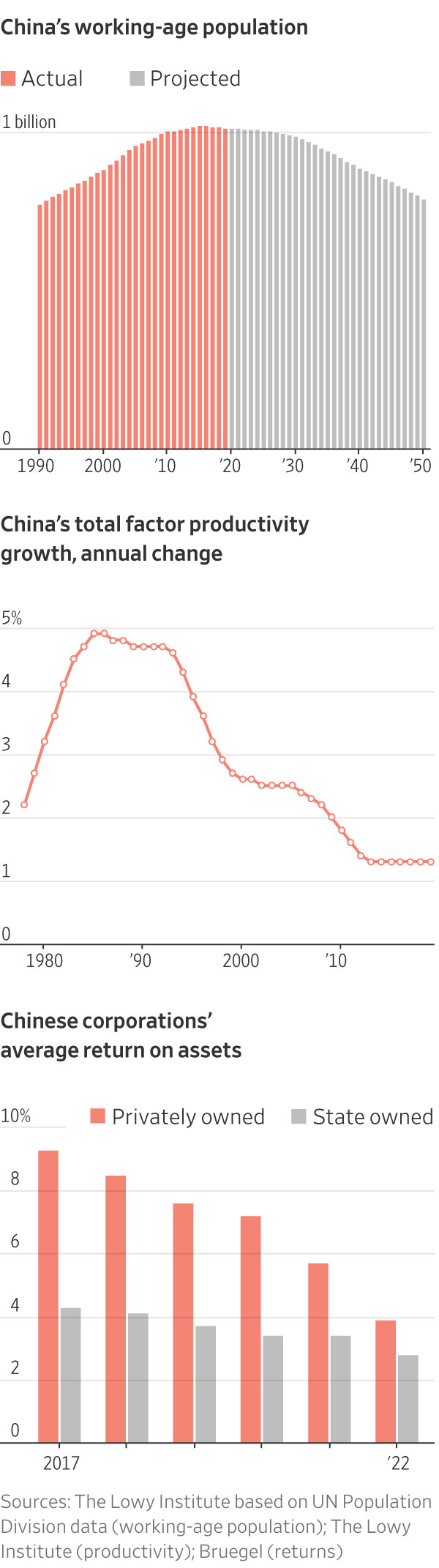
A larger population doesn’t automatically translate into a stronger economy or a better-performing stock market, says Alejandra Grindal, chief economist at Ned Davis Research. The more important variable when projecting economic growth is the size of the working-age population. When it comes to the stock market’s long-term prospects, furthermore, it is the size of “the maturing age population that is important,” she says.

The MO ratio

The indicator that perhaps best captures the relative size of these two groups is the so-called MO ratio, says John Geanakoplos, an economics professor at Yale University. The numerator of this ratio—“M,” for middle-aged—is the number of those ages 40 to 49, while the denominator—“O,” for old—contains those from ages 60 to 69. Prof. Geanakoplos is the co-author of an academic paper, published in 2002, documenting that demographic variables such as the MO ratio historically have been significantly correlated with the stock market.

Prof. Geanakoplos says the correlation stems from the fact that the MO ratio is a good proxy for how many people in a country are saving and investing for retirement relative to how many are withdrawing money from the stock market to pay for their retirement. When the ratio is high, there are more savers and investors relative to spenders, which means that capital will be relatively plentiful and interest rates will be lower than they would otherwise be. That in turn means that the discounted value of companies’ future earnings and dividends will be higher. When the ratio is low, in contrast, interest rates will tend to be higher and the present value of future earnings and dividends will be lower.

Prof. Geanakoplos adds that the absolute level of the MO ratio is less important for the stock market’s prospects than its trend. That poses a special challenge to China’s stock market over the longer term, since the country’s MO ratio is projected to decline precipitously over the next several decades—from its current 1.32 to 0.73 in 2050, according to data from Ned Davis Research. This means there will be nearly a doubling in the number of retirees in China pulling money out of the economy and the stock market between now and 2050, relative to the number who are saving and investing.

“Insofar as demography is destiny” Prof. Geanakoplos says, “the long-term prospects for the Chinese stock market are relatively poor.”

India’s MO ratio, in contrast, is projected to decline at a more moderate pace over the next three decades compared with China’s, from its current 1.98 to 1.34. That means that, though demographic factors will be headwinds to both countries’ stock markets in coming decades, not tailwinds, those headwinds will be stronger in China than in India.

Other factors

Ms. Grindal says that while the impact of population trends shouldn’t be minimised, there are many other factors—both political and economic—that will influence the two countries’ economics and stock markets in coming decades.

To put into perspective the demographic headwinds that China and India will be facing, consider the U.S.’s MO ratio. According to Ned Davis Research data, the ratio is projected to rise from its current 1.01 to 1.31 by the end of the 2030s, before declining to 1.15 by 2050. This increase will come as a surprise to many, given recent media attention to Social Security’s financing shortfall. But, Ms. Grindal points out, the millennial generation “is about the same size, if not slightly larger, than the baby boom population,” and is about to enter the 40-49 age cohort. That’s largely what will cause the U.S. MO ratio to rise. Relative to China and India, in other words, the U.S. MO appears quite favourable.