New mortgage commitments have seen a monthly rise of almost 5 percent since January 2022, ABS data released today reveals.
The strongest figures were for loan commitments by owner/occupiers, up 5.5 percent compared with investors at 3.7 percent. The rise is a 1 percent increase on February figures.
While it’s an overall improvement, the ABS notes that the $24 billion increase in loans is 26.3 percent down on this time last year. Borrowing rose sharply during COVID, particularly among owner/occupiers. This reflects the corresponding rise in housing values, which analysts put down to low interest rates and government support to protect jobs during the pandemic.
PropTrack economist Angus Moore lending activity was remarkably strong in 2020 and 2021.
“The value of new mortgage commitments in March was up just under 5% compared to April. That’s notable as it’s the first time we’ve seen an increase in new lending since early 2022,” he said. “Even so, we’re seeing a lot less new lending than we were a year ago, down a bit over a quarter compared to March 2022.
“While that’s a substantial pullback, it really reflects just how strong lending activity was in late 2021 and early 2022. The value of new loan commitments is still pretty robust and is substantially stronger than we were seeing in 2019 or early 2020, in part because of the strong growth in house prices we’ve seen.”
His expectation is that the upward trend in lending is set to continue this year, although it may be tempered by further interest rate increases by the RBA.
“External refinancing activity remains very strong and is showing no signs of slowing down,” Mr Moore said. “It hit another new peak in March, with around 28,000 owner occupiers refinancing in March alone – that’s twice as many as we’ve typically seen on average over the past two decades.”
When Covid hit in 2020, Iain and Ronni Watson were planning a cruise in Greece with their friends David and Jackie Weill. So instead of heading to the Mediterranean, the Watsons ended up visiting the Weills at their new home in Alys Beach, a coastal planned community on the Florida Panhandle.
But the Watsons quickly discovered that Alys Beach had more in common with their intended destination than they thought. With its all-white, stucco homes and cobblestone streets, Alys Beach reminded them of the Greek Islands.
The Watsons were so besotted with the community that they made an offer on a five-bedroom home during the visit. By December, they had moved full-time from California to Alys Beach with their two daughters.
White walls and roofs are among the requirements that create the unusual aesthetic of Alys Beach, a 158-acre community on the Gulf of Mexico off Scenic Highway 30A. The look has proven popular with home buyers: Over the past several years, demand for homes there has increased and prices have ballooned, according to local real-estate agent Jonathan Spears with Compass. In the first quarter of 2023, the average sale price in Alys Beach was $5.74 million, up about 25% from $4.59 million during the same period of last year, he said.
“Most of the families that we’ve met here, 20 to 25 families, have bought in the last three years,” said Dr. Weill, 59, an organ-transplant specialist and author. He and his wife live primarily in New Orleans and spend about 170 days a year in Alys Beach.
When Alabama residents Elton B. Stephens and his wife, Alys Stephens, started vacationing on the Panhandle about 70 years ago, what is now Alys Beach was vacant land. At the time, the area had yet to become a popular vacation spot, according to their granddaughter, Alys Protzman. “I can only imagine what the roads must have been like,” she said. “Many people were not vacationing down there at that point.”
David Weill with Frannie and Lucy. PHOTO: JESSIE BARKSDALE FOR THE WALL STREET JOURNAL
In the 1970s, Mr. Stephens purchased the land that would become Alys Beach through his company, the Birmingham-based conglomerate Ebsco Industries. The Stephens family held on to the land for decades as beach communities grew up around it. In the early 2000s, they felt the time was right to develop the land into a second-home community, Ms. Protzman said. They named it after her grandmother, Alys Stephens, who had died by the time construction commenced in 2004.
Ms. Protzman’s cousin, Jason Comer, spearheaded the project with urban planners Andrés Duany and Galina Tachieva of DPZ CoDesign. Mr. Duany had been part of a team in the 1990s that coined the term New Urbanism, which refers to the creation of mixed-use, walkable communities. DPZ CoDesign has been behind the design of several New Urbanist communities on the Panhandle, including Rosemary and Seaside.
Alys Beach has about 1,500 feet of shoreline on the Gulf of Mexico. PHOTO: JESSIE BARKSDALE FOR THE WALL STREET JOURNAL
In designing Alys Beach, Mr. Duany said the goal was to create a community that was both walkable and private. To do this, many of the homes are built around individual courtyards, a design that was inspired by courtyard homes in Guatemala. They are also close together, some sharing party walls, which creates a cohesive sea of white along the community’s narrow streets. “With the conventional American house, you need a large lot to achieve privacy,” Mr. Duany said, “but the courtyard provides privacy in a relatively small lot.” This allows Alys to have a high density and enough people to support the restaurants and public life, he said.
Most people in the community walk or ride bicycles, said Dr. Weill. “We stay most of the summer there, and I can go a month without getting into the car,” he said.
Home designs in Alys Beach must be approved by Marieanne Khoury-Vogt and her husband Erik Vogt, the designated town architects, and other members of a review committee. At first, the style of the homes in the community was inspired by Bermudian architecture, according to Mr. Duany. But it has since evolved into an unusual blend that includes everything from Mediterranean to Moorish influences, Ms. Khoury-Vogt said. Alys Beach has a list of approved builders and architects that homeowners can choose from, although they can apply to use a different architect.
White is the colour of choice, Ms. Khoury-Vogt said, because it is timeless and reflects heat. (Elements such as doors, window surrounds, shutters and gates can be different colors, she said.) The absence of color pushes architects to give each house distinctive carvings and parapet walls, said Jeffrey Dungan, an architect who has been designing homes in Alys Beach for over a decade. Homes are also required to be masonry, although materials like wood, stone and metal can be used judiciously to introduce warmth and texture, Ms. Khoury-Vogt said.
There are also guidelines for vacation rentals in Alys Beach. In order for homeowners to rent out their homes, for example, they are required to have specific glasses, linens, and serveware: cotton-sateen blend Garnier-Thiebaut linens, and dinnerware and flatware from Fortessa. These items are purchased through the community’s vacation rental program.
Alabama-based real-estate agent Matt Curtis and his wife, Courtney Curtis, bought their four-bedroom, roughly 3,900-square-foot home in Alys Beach for about $6.4 million with the intention of spending a few weeks there with family, then renting it out the rest of the year. They spent about $5,170 to purchase the required linens, Mr. Curtis said, plus a $100 monthly replacement fee. No family photos can be displayed while a property is being rented, he said.
Residents say they appreciate the exclusivity and attention to detail. Before buying their home in Alys Beach, the Weills owned a house in nearby Rosemary, but wanted a quieter community. Over the years, some beaches on the Panhandle have gotten crowded and have a “spring-breakish flare” to them, said Dr. Weill. “I think the folks who developed Alys saw a demand for a more exclusive property that was quieter.”
The Weills sold their Rosemary home and paid $5.4 million in the summer of 2020 for a roughly 3,600-square-foot, three-story house in Alys Beach with a rooftop deck. The property is three doors away from the Gulf.
The Watsons paid $7.5 million for their Alys Beach home, which has an enclosed courtyard leading to the front door. Inside, the walls are white Venetian plaster, and large entertainment spaces sit adjacent to smaller, intimate rooms. “It’s spacious yet cozy,” said Ms. Watson, 58, a former nurse who also worked for several medical startups. Mr. Watson, 67, was a strategy consultant and investor before retiring.
Still, the Watsons have decided that the roughly 5,200-square-foot home is too big for them, and they are planning to downsize to a smaller Alys Beach home. They have listed their current house for $12.495 million, more than 60% above the 2020 purchase price.
Alys Beach is about 65% sold out and about 50% developed, according to the community’s in-house sales team. The team handles all new developer-owned property listings, which are released in phases.
When Mark and Wendy Patterson started looking for land in Alys Beach in 2020, there were only a few lots available. Demand in the market was “crazy,” said Mr. Patterson, 52, the chief of staff at a tech conglomerate. “It was a ‘you-need-to-buy-today-or-it-will-be-gone-tomorrow’ kind of thing,” he said. They paid about $1.5 million in July 2020 for a vacant lot, then built a roughly 4,300-square-foot house.
The building process was quite the undertaking due to the various requirements, the Pattersons said. Property owners building homes in Alys Beach must start construction within 30 months of their purchase, and they have 36 months to complete it, according to the sales team. So the Pattersons moved quickly, picking an architect from the pre approved list. It took them about nine months to get their plans approved and about two years to build the house.
The community is strict about elements visible from the outside, Mr. Patterson said, “but if you want to go crazy on the inside, you would probably have a lot more leeway there.” They chose a dark bluish-gray for their window trims and put balconies on the front of house. The Pattersons said they don’t mind the requirements, and in fact the community’s all-white color scheme was a feature that drew them there.
With the house completed, they split their time between Dallas and Alys Beach, Ms. Patterson said, and their daughters and son-in-law visit as often as they can.
The rental market in the community is also robust. The Curtises started renting out their home in August 2022 with nightly rates ranging from around $1,000 to $2,500 depending on the time of year. According to Mr. Curtis, demand has been strong, with the home already rented out for half of May and all of June.
There are likely several reasons for the recent uptick in demand for Alys Beach homes, according to Mr. Duany. A community takes decades to operate as intended, he said, and over the past several years, many of the plans for Alys Beach have come to fruition, with restaurants and boutique storefronts filling up commercial spaces. Moreover, Florida became a hot spot for out-of-state home buyers during the pandemic, according to Mr. Spears.
The closer you get to the Gulf in Alys Beach, the more competitive the market becomes. There are 20 Gulf-front homesites in the community, and only six that are still undeveloped and not yet available for purchase, according to Ms. Khoury-Vogt. In 2021, attorney Chasitie Walden, along with her parents and brother, purchased a beachfront lot for $12 million, according to Mr. Spears, who represented them. It was the most expensive single-family lot sale recorded along 30A, he said.
Ms. Walden, 48, who lives full-time in Kansas, said there was at least one other offer on the property. After her family purchased the lot, they received an unsolicited offer to buy it, which they declined.
Ms. Walden said she first visited Alys Beach with her family after reading about it in a magazine in 2013. Compared with the other beach communities in the area, they feel Alys has the most attractive amenities, such as its beach club, wellness centre and a nature preserve.
After Ms. Walden visited the community, she and her family bought a home in a nearby neighbourhood and waited for a lot big enough to come available in Alys Beach. Now, they are about two years away from completing construction of their home there.
Ms. Walden, who recently finished a three-year build in Kansas, said she “swore she’d never build again.” But for a beachfront home in Alys Beach, “it’s worth it.”
The first year in retirement is often the most difficult. But it also can be the most crucial, setting the stage for how you’ll fill the years ahead—both financially and psychologically. Stephen Kreider Yoder, 65, a longtime Wall Street Journal editor, joined his wife, Karen Kreider Yoder, 66, in retirement in September. In this monthly Retirement Rookies column, they are chronicling some of the issues they are dealing with in their first year, offering their different perspectives on what can be a confusing transition.
Steve
For the first time in many years, time isn’t money.
That was never more clear one afternoon earlier this year when we were gazing down at the Mediterranean Sea while sipping coffee in a cafe in the town plaza in Bejaia, Algeria. We had no fixed plans for the day or the next week—just as planned.
We suddenly have time in abundance, now that we’re both retired, and we’re learning how to spend this currency that for decades has been so scarce. We can now linger where we want to be and dally over what we want to do.
Algeria was an ideal place to test this new reality. We had visited in 2019, but could afford only two weeks, what with full-time jobs—far too short for a country roughly 3.5 times the size of Texas. “We need more time there,” I said as we flew home.
This year, we could take nearly twice as long to immerse ourselves in what the country offered: a green coastal region that gives way to the golden Sahara; a mosaic of Arab, Berber, French and other cultures; Roman Empire ruins; good food and wine; some of the most hospitable people we’ve met.
We’ve been fantasising about this time in life since we got married. For decades, time was a rare commodity, and we had to spend a lot of money to acquire it. We paid an absurd price for a house in San Francisco, partly to limit our commutes. We often hired others to do tasks I enjoyed, like fixing our cars or restoring the trim on our Victorian.
“We need more time” was our constant lament, at no time more than during travel. We would shoehorn several countries into two-week tours. We liked to travel abroad on a low budget—it got us closer to the reality of wherever we were—but that took time, and we often didn’t have the luxury.
We have it now. Earlier this year, we rode the Amtrak California Zephyr to Iowa, rather than flying, to see my parents. It was about 48 hours each way, but what was the hurry? We got beds, three meals a day and a rolling display of Western America. We extended our stay with Mom and Dad to a full week.
Back home, I fired up the metal lathe to fine-tune a bearing-cup press I had made earlier—a bike tool that worked fine but which I had great fun fussing with for hours to refine it. I’ll soon solicit bids for scaffolding, so I can start restoring trim.
It’s beginning to occur to us: By saving money assiduously during our 44 years of marriage, we weren’t putting away only funds. We were also accumulating time to spend in retirement.
Money, at long last, is time.
Karen
I’ve never been more aware of the finite nature of time. We’re rich with it now, but there’s no guarantee how long those riches will last. At best, thanks to the longevity that runs in our families, we may have 30 good years of life left. That feels like a long time—and no time at all.
So I’ve been thinking: Maybe we should be budgeting our time like we budget money.
Should I, for instance, spend some of my newfound wealth of time on things I’ve loved to do all my life but had to cut back on while I was working? During the busy years of my career, I continued to make quilts, but had to leave many undone. I baked my own granola and whipped up many meals for friends, but found myself ordering out or picking up prepared foods from the grocery store to save time.
Yet now that I have the luxury of time, the opportunities to fill it have also grown. And that means I still find myself weighing how to spend it—and when to keep spending money instead. I still love to create things, for instance, but would I rather sew an original outfit from scratch or shop for a less-original affair and bank the time? We have time to do housecleaning now; does that mean we should stop paying someone else to do it once a month?
These aren’t easy questions. As a result, we’re talking about looking at all the large time expenditures on our list—travel, house work, volunteering, organising photos—and laying them out on an annual budget. That will help us use our time more wisely.
As we talked about in our last column, we also need to do a better job savouring—as opposed to just running through—the time we have. That hit home on our trip to the Algerian Sahara this year. We had blocked off a week to explore the desert, far longer than we would have during preretirement travel. We could finally take a leisurely pace, we told ourselves.
Yet we couldn’t shake the old urge to make each hour pay off. My question when we arrived the first night: “When should we be ready for breakfast in the morning?”
Our Tuareg guide, Habib, laughed. “You get up when you want,” he said. “In the desert, slowly, slowly.”
That became our mantra for the next days as we camped each night in a different swath of the wilderness. We sat around a low table for our morning coffee and baguette with fig jam. “Slowly, slowly,” Habib would say, and we would repeat it after him.
“Slowly, slowly,” he cautioned as we set off scrambling over rocks toward ancient pictographs. After lunch under a cool tree, we would chat and read and nap. “Slowly, slowly,” we would chant, and again in the evening as Habib stoked a small fire to heat tea, pouring it back and forth between two pots until it foamed into a thick, sweet brew. We brought that mantra home from Algeria. We’ve got time now, and if we budget it carefully, we can afford to spend it slowly, slowly.
Maserati is sitting out the auto shows—at least most of them.
“The world is changing, and we made the decision about auto shows in 2019 or 2020, when the pandemic happened, and we’ve stuck with it,” CEO Davide Grasso told Penta in an interview. “No more auto shows, except Shanghai. We make an exception for Shanghai.” It helps that China now has the largest auto market in the world.
Indeed, at Shanghai on April 19, Maserati unveiled its second electric Folgore model (after the redesigned GranTurismo, which was also being introduced to China). The new entrant is the SUV Grecale Folgore. “It’s a new beginning for the brand,” Grasso said in Shanghai. “We’re celebrating Folgore, the electrification plan that has become a reality and is ready to pave the way in this revolutionary era. I’m very excited to be here in Shanghai, which is not only an international exhibition but also a global platform for innovation. It’s the ideal place to unveil the first electric models in the history of Maserati.”
Maserati’s Davide Grasso: “To succeed as a luxury brand, you have to focus on quality, not quantity.” (Maserati photo)
When it released the Grecale Folgore, Maserati said it would be built in Italy with a 105-kilowatt-hour battery and “all the true Trident performance elements.” These include more than 500 horsepower with 590 pound-feet of torque. The top speed will be over 124 miles per hour. There are now three versions of the Grecale: the GT, with a four-cylinder mild-hybrid powertrain and 300 horsepower; the Modena, with a three-litre, 530-horsepower V-6 related to the Nettuno engine in the MC20; and the Folgore, 100% electric with 400-volt technology.
Grasso saysMaserati is thriving as part of the 14-brand Stellantis, headed by hard-charging CEO Carlos Tavares—a stickler for quality.
“The quality issue is important,” Grasso says. “Carlos is a great believer in the potential of the Maserati brand. To succeed as a luxury brand, you have to focus on quality, not quantity. So we are putting a lot of effort into upgrading our processes. We took the time to ensure that the Grecale would be pristine..”
Maserati had a 24,269-vehicle global year in 2022. That was not the loftier goal set by the company in 2018, but it was quite a successful year nonetheless
The company’s full-year profits were US$221 million, nearly double of 2021“Maserati is back, doing the right things in the right way,” said Tavares in an earnings call. Unlike Tavares, Grasso did not come up through the auto industry ranks. Before Maserati, he was CEO and president at Converse, and prior to that was chief marketing officer at Nike. But shoes or cars, the core principles are basically the same, Grasso says.
“The pillars are brand marketing, customer service, residual value, and human resources. Without all these things and the right mindset, managing a luxury brand won’t work. You can have the best marketing team, but if you’re bad at servicing—if we don’t give you a loaner, if we treat you badly—it all falls apart,” he says.
Grasso also says he was happy with the electric versions of the GT and Grecale.
“The electric GT is heavier, but the cars are still very responsive, with 2.7 seconds to 60 mph and 760 horsepower on tap,” he says. “We are in full execution of our electrification strategy now, and we’re excited by the level of performance. We will have an electric Quattroporte in early 2025 on a brand-new platform, redesigned from the inside-out. Then the new Levante. We will be only electric by 2030. The plans are coming together, so it might even be earlier than that.”
Although SUVs dominate today, Grasso sticks up for the sedans and two-seat sports cars (the MC20) in Maserati’s lineup.
“It’s never all SUVs,” he says. “There’s the comfort of a sedan versus the off-road capability of an SUV. Maserati was born on the track, so we combine speed and luxury. Many of our owners have multi-car garages, so they can own different types of vehicles.”
Maserati has been aggressive in establishing its U.S. dealer network, and now has more than 100 outlets. “We are right-sizing it, and there are some locations where we don’t need to be,” he says. “We have to be where the customers are. And going forward, the stand-alone dealership is the model. We have to make sure that the dealerships are aligned with our core values, treating the customers with courtesy and streamlining the buying procedure. But we don’t want to woo people with bells and whistles if it’s not matched with excellence in the rest of the operation.”
The rise of artificial intelligence and other new technology may mean plenty of roles and professions shift in the coming years, displacing some employees and requiring far different skills and training, according to executives in a range of industries.
In sessions at The Wall Street Journal’s Future of Everything Festival this week, some leaders gave blunt assessments of the coming transition and said current employees may not be able to adapt.
“This is the hard part: I’m not sure we can upskill everyone. I don’t think they’re going to make it. It’ll take too long,” said Jim Farley, CEO of Ford Motor, in an onstage interview on Wednesday. “There’s going to be a big shift in know-how in the company.”
At Ford, the automaker will still need traditional roles such as powertrain engineers and supply-chain specialists to help it manufacture vehicles, but it will also require employees with more digital expertise, Mr. Farley said. The company has been recruiting more technical employees, and its office in Silicon Valley is now full of such workers, he said.
“There’s a new skill set we’re going to need, and I don’t think I can teach everyone,” he said. “It’ll take too much time. So there’s going to be disruption.”
For years, workplace specialists predicted that technology would upend work, often warning that blue-collar jobs could be most affected by automation. More recently, though, many leaders see AI as having a far greater potential impact on corporate employees than hourly workers.
At the hotel giant Hilton, CEO Chris Nassetta said he could see AI being used in marketing, revenue management, customer insights and finance functions in the company.
Many executives said they were still unclear about AI’s role inside companies, and some expressed optimism about how the technology could free workers from drudgery.
Slack CEO Lidiane Jones. PHOTO: JUSTIN J WEE FOR THE WALL STREET JOURNAL
“AI is going to take away a lot of mundane tasks from people and hopefully free people up to spend more time creatively, spend more time with the people they want to spend time with,” said Marissa Mayer, the former Yahoo CEO. She is now the CEO and co-founder of the startup Sunshine, whose product helps people to better manage their digital contacts.
Others said AI potentially could help with tasks such as summarising messages from colleagues, freeing employees from reading hundreds of emails and other communication.
“When there is so much happening in organisations, AI can also help you focus,” said Lidiane Jones, CEO of the messaging platform Slack. “So out of my 5,000 pings, what are the things that I should really prioritise?”
Labor leaders said they, too, were eyeing AI’s influence on the workplace. Sara Nelson, the international president of the Association of Flight Attendants-CWA, AFL-CIO, said she hopes any sort of efficiency benefits achieved through AI would be shared with workers.
“Workers really need to be at the table to make sure that these are going to be technologies that are going to work for us, and give us more tools to do our job,” she said. “So we do want to implement these things in a way where, No. 1, we are sharing the benefits of that productivity, and that’s going into everyone’s pockets who’s a part of that company.”
Beyond technology, executives said they were seeing other changes in the job market. It is now easier to hire cooks, housekeepers and other hotel employees than it was earlier in the pandemic, Hilton’s Mr. Nassetta said, though he added that the hospitality industry is still dealing with some labor shortages. He also called for changes to immigration policies to enable more workers to come to the U.S.
“There just aren’t enough people in our country in terms of service-level jobs to do the things that we need to do,” he said. “If we don’t think about immigration really sensibly, we’re eventually going to stunt the growth of our economy.”
New York City Mayor Eric Adams said his administration was considering flexible hours and other benefits to get more people to take jobs with the city. Mayor Adams also said he was concerned by layoffs among financial companies in New York.
“It’s crucial that we stabilise Wall Street,” he said. “Wall Street is so important to the economic stability of the city.”
Throughout the event, a number of speakers also sprinkled their remarks with guidance for professionals looking to navigate the challenges of careers. Fashion designer Michael Kors said he made the biggest mistakes in his career when he became too focused on others.
“You cannot constantly be looking at everyone else. You can’t look over your shoulder. You have to do what’s right for you,” Mr. Kors said. “Listen to your gut. Move slowly. Stay focused.”
A leading real estate industry body has called for a government enquiry to address ‘skyrocketing housing demand’.
CEO of the Real Estate Institute of NSW, Tim McKibbin said the contrast between the demand for housing and the available stock is already at ‘critical’ levels – and is only set to get worse.
“REINSW is calling for an immediate and expeditious Inquiry into the inhibitors of supply and then a brutal action plan involving industry and Government to implement the recommendations,” Mr McKibbin said.
“The community is sick of all the talk on this issue. It’s time for action and this means government and industry working together now.”
Homebuyers unable to find a property at their price point have remained in the rental market, where a lack of supply is putting further pressure on rental prices, which have soared 10.2 percent in the past year.
Data from PropTrack has shown rental vacancy rates were at an historic low in March this year. As rental properties become available and have been quickly leased, landlords have had the opportunity to increase rent, further impacting households’ ability to save for a deposit.
In capital cities, rents have risen 13 percent year-on-year, while in regional areas, rents have gone up by 4.5 percent.
CoreLogic reported house values are also on the move, which Mr McKibbin said put the goal of buying a home further out of reach.
“Higher house prices and rents are an unavoidable market consequence of a housing shortfall, and without more social and affordable housing, increased homelessness is a catastrophic social consequence,” he said.
“There is already evidence of prices beginning to rebound and we need to remember that the bull-run through the pandemic typically pushed median prices up between 20 percent and 30 percent, depending on the area.
“The rebound in house prices is no surprise. The lack of supply is the primary enemy of affordability.”
Inflation has proved more stubborn than central banks bargained for when prices started surging two years ago. Now some economists think they know why: Businesses are using a rare opportunity to boost their profit margins.
Figures released Tuesday by the European Union’s statistics agency showed consumer prices in the eurozone were 7.0% higher than a year earlier in April, a pickup from March and more than three times the European Central Bank’s target. However, the core rate of inflation—which excludes food and energy prices—edged down to 5.6% in April from a record high of 5.7% in March.
Inflation rates also remain uncomfortably high in the U.S. and many other parts of the world despite interest-rate rises that have gone further and been delivered more quickly than at any time since the 1980s.
There have been good reasons for businesses to raise their prices in recent months. The supply-chain disruptions caused by the Covid-19 pandemic and the energy, food and raw-material bottlenecks that followed Russia’s invasion of Ukraine have pushed costs higher.
But there are signs that companies are doing more than covering their costs.
According to economists at the ECB, businesses have been padding their profits. That, they said, was a bigger factor in fuelling inflation during the second half of last year than rising wages were.
Jan Philipp Jenisch, chief executive of construction-materials maker Holcim, said on a recent earnings call: “We are in that inflationary environment already for almost two years now…We have done the pricing in a very proactive way, so that our results aren’t suffering. On the contrary, they are improving the margins.”
One puzzle is why consumers have played ball. Usually, economists would expect any business that raised its prices to lose customers to competitors that don’t, or not by as much.
But these aren’t normal times. In rare situations—such as an economy’s reopening after a pandemic—widespread knowledge that costs are rising allows businesses to raise their prices knowing that their competitors will act in the same way, according to a paper by Isabella Weber, assistant professor of economics at the University of Massachusetts, Amherst, and her colleague, Evan Wasner.
That is a pattern the two economists said has played out in an analysis of recent earning calls in which executives at U.S. businesses present their financial results to analysts.
“We do have to think about pricing differently,” said Ms. Weber. “A cost shock, or bottlenecks can create an implicit agreement among firms that raise their prices, so they can expect others to act likewise.”
Consumers have also been unusually willing to accept higher prices lately. Paul Donovan, chief economist at UBS Global Wealth Management, said businesses are betting that consumers will go along because they know about supply bottlenecks and higher energy prices.
“They are confident that they can convince consumers that it isn’t their fault, and it won’t damage their brand,” Mr. Donovan said.
The latest round of earning calls by large consumer-facing companies underlined that. Food and health company Nestlé last week said it had boosted sales by 5.6% in the first three months of the year despite raising its prices by 9.8%—its CEO said the company was simply matching cost increases over the previous two years.
“We’re still in the process of catching up with some of the hits we’ve taken,” said Mark Schneider in a call with analysts.
Elsewhere, the desire to boost margins, rather than just cover increased costs, appears to be one reason why food prices have continued to rise rapidly in Europe.
Much of the surge in food prices since the middle of last year stems from higher costs, particularly for energy, since most food production is quite energy-intensive. But economists at insurance company Allianz have calculated that about 10% of the rise reflects the search for higher profits. They suggest that is possible because key parts of the food-supply chain are dominated by a small number of firms.
“There is not enough competition in the food sector, especially in distribution,” said Ludovic Subran, chief economist at Allianz.
Not all businesses are opportunistically boosting their margins and Ms. Weber said that when some do, it can cause problems for others that are closer to the final consumer and are at greatest risk of facing a backlash.
Over recent months, Germany’s largest retailer, Edeka, has complained about the pricing behaviour of its suppliers of branded goods and has stopped stocking some of their products.
“We call on the branded-products industry to live up to its responsibility and stop artificially driving up inflation,” said Edeka’s CEO Markus Mosa.
There are some signs that food-price inflation is starting to slow. In France, food prices were 14.9% higher in April than a year earlier, a slowdown from 15.9% in March. In Germany, food inflation slowed to 17.2% from 22.3%. But the British Retail Consortium, a group that represents U.K. stores, said food inflation accelerated in April to hit a record high.
In recent earnings calls, some executives said consumers were becoming more resistant to price rises.
“We will probably see pricing moving down,” said Francois-Xavier Roger, Nestlé’s chief financial officer.
Last month, Procter & Gamble said it had boosted its profit margins in the first three months of the year, thanks in large part to higher prices. It warned that there were limits to how far it could push that tactic before consumers switched to cheaper alternatives.
“We’ve made several adjustments to price gaps, not just versus private label, but versus branded competition as we’ve gone through this period of pricing, and we need to continue to be sensitive to that,” said Jon Moeller, the company’s CEO.
For Mr. Donovan at UBS, the period of profit-driven inflation might be coming to an end, in part because of rising public scrutiny.
“We are probably at a point where companies may be reassessing whether to push this,” he said. “A reputation for being poor value for money stays for a long time.”
Skepticism about the value of college is growing, but earning a four-year degree by your mid-20s is the surest route to a good job by age 30.
That is a key takeaway from a new analysis by Georgetown University’s Center on Education and the Workforce that aims to identify the paths that bring people to good jobs. The findings are important as companies, individuals and families are trying to better understand how college degrees affect career outcomes.
Georgetown researchers examined government data for more than 8,000 Americans born in the early 1980s from adolescence through age 30. They identified 38 decision points that could influence workers’ ability to land what they deemed a good job by age 30—one that pays the minimum for economic self-sufficiency, a median annual salary of $57,000.
Pursuing a bachelor’s degree made more of a difference than any other decision that researchers analysed.
“The main road to a good job is still to go get the BA,” said Anthony Carnevale, who directs the Georgetown centre.
The researchers focused on people who didn’t go directly from high school to college, because the cohort that graduated college in their early 20s had a high rate of good job outcomes.
Millions of people start bachelor’s degrees, but don’t finish them by their mid-20s. Those non-finishers have a 40% chance of getting a good job by 30, Georgetown data show. If they eventually earned a bachelor’s degree by age 26, they would have a higher chance—56%—of getting a good job, Georgetown estimates.
Even starting a bachelor’s degree by age 22 made a difference for some high-school graduates. People who pursued an associate degree, skills training or certificate had a 29% shot at a good job, compared with 23% for those who didn’t pursue higher education by that age.
College Debt—and Payoff
Escalating college costs have complicated people’s decision to attend, said Zack Mabel, an author of the Georgetown report and a research professor of education and economics at the university.
The expected payoff to getting a bachelor’s degree is higher than it has ever been, Prof. Mabel said, but added, “with the rising cost of college, and the increasing debt that students and families have to take on, the risk of pursuing higher education is higher than it’s ever been.”
Some 56% of respondents to a recent Wall Street Journal-NORC poll said a four-year degree isn’t worth it, because students often leave with large student debt loads and no specific job skills. Ten years ago, 40% of people polled thought a college degree wasn’t worth it.
Dany Nguyen, 30 years old, started a job in Austin last year as a software developer for General Motors after a decade of working while going to school.
Mr. Nguyen, who graduated from high school in 2010, said he spent four years stocking shelves at a store, running food orders at a restaurant and working at a banquet hall while taking community-college classes at night. Though exhausting, the arrangement ensured he could pay his bills and tuition. He got skills and connections that led to better paying roles, he said, including an inventory job with a dental-product company that he learned about from a co-worker at a different job.
Mr. Nguyen ultimately transferred from community college to California State University, Long Beach, and finished his bachelor’s degree in management information systems last year. Today, he is making more than ever and sees the benefit to working his way through school.
“Being able to combine both school teamwork and work teamwork, you’re able to do your job efficiently,” he said.
Salaries for college graduates are higher than those without degrees, but data analysed by the Federal Reserve Bank of St. Louis shows the gap in net worth between college grads and non grads has narrowed significantly. One reason is the high cost of college, with many grads’ higher earnings offset by student debt.
Renee Wooten worked while attending a for-profit university, delivering pizzas and fielding queries at a call centre, then turning a contract position in the video game industry into a full-time job with benefits. Mr. Wooten, 33, makes six figures as a video game producer but says having $40,000 in outstanding student debt is stressful.
“I don’t know if I would do it again,” Mr. Wooten said, adding that an associate degree to start may have been a better choice. “I’ve been dumping my bonuses and my tax returns into my student loans, just for them to be eaten up by interest.”
Industries Matter
Some companies have eliminated bachelor’s-degree requirements for hires, though almost 70% of the new jobs created in the U.S. between 2012 and 2019 were in occupations that typically require a four-year degree or higher for entry, according to Opportunity@Work, a nonprofit.
Georgetown’s analysis showed several other early-career decisions can help put 20-somethings on the path to a better-paying job if they don’t go to college after high school. Steady work between the ages of 20 and 22 and avoiding resume gaps in these years can help, researchers said, because hiring managers are more likely to hire experienced people who are actively working.
Industries count, too. Working at age 22 in a blue-collar job or in tech or finance, rather than fields such as education, food services and the arts, also helped raise the chance of getting a higher paying role. Still, workers who took one of those paths had no more than a 25% chance of landing a good job by 30. Those pathways proved more effective when combined with attending college.
Diego Padilla faced a choice in 2020 while in his late teens: Continue his internship with JP Morgan Chase, assisting clients with transactions such as opening accounts and withdrawals, or accept a full-time job managing a grocery store.
Mr. Padilla, then a fresh high-school graduate enrolled in community college, was drawn to the stability of a full-time job. But he wondered where he could go if he stayed at the bank. Now 22, Mr. Padilla has a full-time role with Chase, finished his associate degree and transferred to Chicago where he works with Chase clients.
Mr. Padilla is taking online classes in pursuit of his bachelor’s degree while working full time. After that he said he wants to get an M.B.A.
The Reserve Bank of Australia board has decided to raise the cash rate by a further 25 basis points following its meeting this afternoon. This brings the rate up to 3.85 percent.
Citing a persistently high 7 percent inflation rate for the move, which has eased at a slower pace than hoped, the board reiterated its target of bringing inflation down to more manageable levels this year.
“The Board held interest rates steady last month to provide additional time to assess the state of the economy and the outlook,” RBA governor Philip Lowe said in a statement. “While the recent data showed a welcome decline in inflation, the central forecast remains that it takes a couple of years before inflation returns to the top of the target range; inflation is expected to be 4½ percent in 2023 and 3 percent in mid-2025.”
Most economists predicted that the board would keep rates steady again this month, following criticism that it had not given the economy enough time to absorb the impact of previous rate rises.
Roy Morgan released research from February this year stating that almost 25 percent of mortgage holders were at risk of mortgage stress. The cash rate has now increased by 50 basis points since then.
Research director at CoreLogic, Tim Lawless, said the recent rise in housing values may have contributed to the board’s decision.
“Although housing considerations aren’t part of the RBA’s mandate, a return to a more positive housing trend could be accompanied by a lift in consumer attitudes, supporting consumption and potentially keeping inflation higher for longer,” he said.
“The lift in interest rates could act to dampen some of the recent housing exuberance, although a range of other factors are likely to support the continued stabilisation in home values including low available supply, extremely tight rental conditions and higher demand via net overseas migration.”
Mr Lawless predicted that today’s increase is likely to be the last following record rises over the past 12 months.
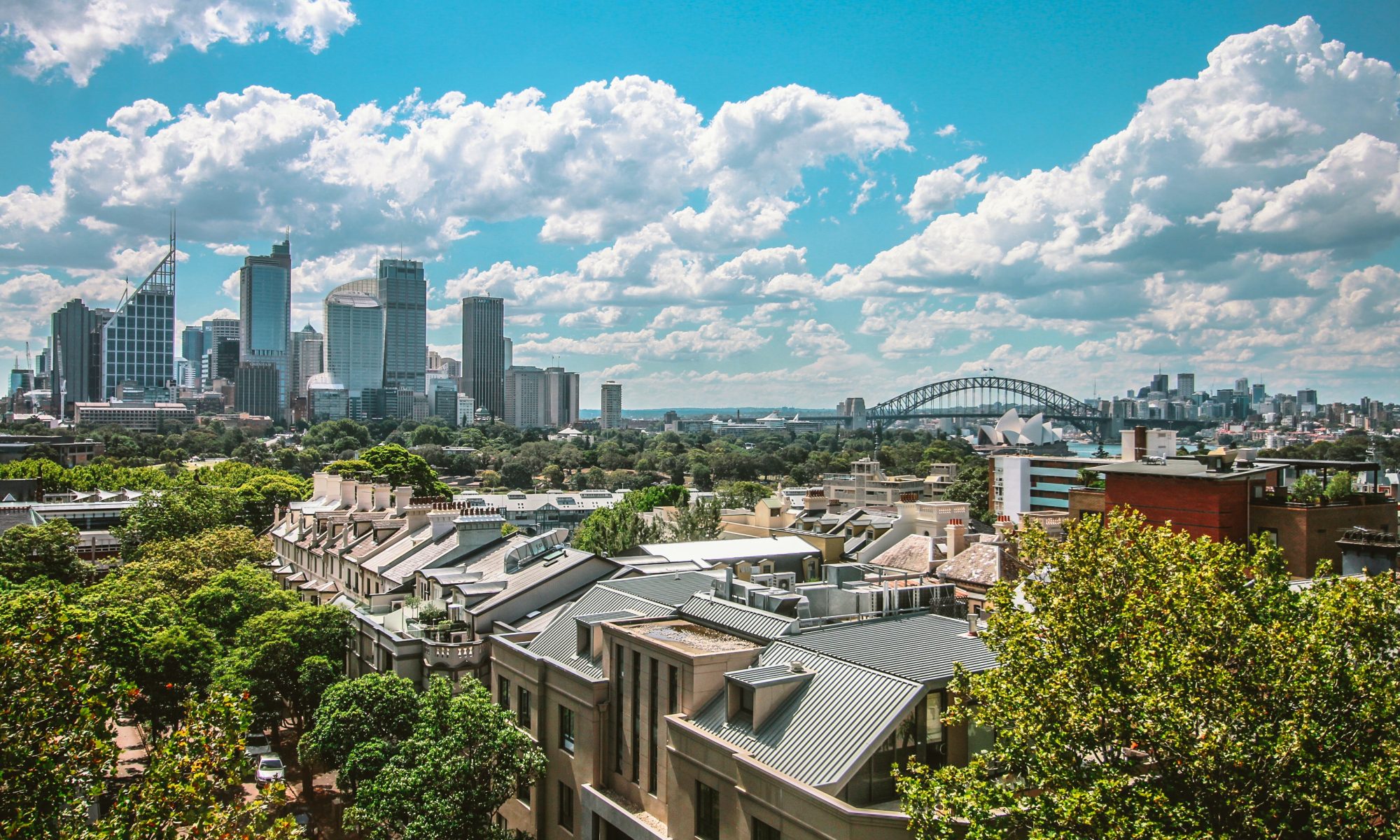
Australia’s high income earners have a median age of 51 years and most of them live in Sydney.
The Australian Bureau of Statistics released new data today based on combined information from the census and administrative sources showing those with an income in excess of $10,000 per week make up 2.9 percent of the population.
For the first time, the ABS has used data from administrative sources including the Australian Taxation Office, Medicare and the Department of Health, as well as sales and registration information to create a fuller picture of wealth distribution around the country.
Five Sydney suburbs topped the list as the home of choice for high wealth individuals, including Mosman, Woollahra, Bellevue Hill and Rose Bay-Vaucluse-Watsons Bay.
Cottesloe and City Beach in WA also made the top 10, while Forrest in the ACT and Toorak in Melbourne also ranked highly.
The report showed it was a different story for most Australians, with a median personal income of $789 and a household income of $1,770 per week.
On a state-by-state level, the ACT recorded the highest median weekly earnings, at $1,158 personal income, while in Tasmania, the median weekly personal income was the lowest national level at $696.
On gender lines, 6.08 million women earned less than $1000 per week in Australia, compared with 4.77 million men while at the top end, data showed there were nearly 2.5 times more men than women with an income of $3,500 or more a week.
Almost a third of people, or 6.6 million, received a government benefit payment in the 2020 to 2021 financial year. Nearly 2.2 million of those received the age pension.
For at least a decade, Elon Musk has tried to steer the development of artificial intelligence—only to be outmanoeuvred by rivals and former allies.
He has now stepped up his efforts after the success of OpenAI, an organisation he co-founded but then left after a power struggle. Mr. Musk has warned for years that poorly built artificial intelligence could have catastrophic effects on humanity. Since OpenAI’s ChatGPT became a viral sensation last November, Mr. Musk has denounced it as politically correct and warned it could lead AI to become too powerful for humans to control.
He has called his new effort TruthGPT, and billed it as a truth-seeking artificial intelligence model that will one day comprehend the universe. On March 9, he incorporated a company called X.AI in Nevada, laying the formal groundwork.
So far, he has struggled to define a precise vision for his startup and is still in the process of assembling a team, said people familiar with the matter. Musk’s representatives have said X.AI intends to raise cash at some point from investors, the people said.
Mr. Musk didn’t respond to requests for comment.
Two weeks after incorporating X.AI, Mr. Musk signed an open letter calling for a six-month pause on the development of AI models stronger than the latest one released by OpenAI, called GPT-4. The letter was organised by the Future of Life Institute, which says its goal is to steer transformative technology away from extreme, large-scale risks. Its biggest funder is Mr. Musk.
Steven Weber, a professor at the University of California, Berkeley who met Mr. Musk several years ago at a gathering of A.I. academics in Northern California, sees a consistent thread through what appear to be opposing impulses.
“He holds both of these beliefs at once: that human beings can’t be relied on to really control technology, and technology is going to advance and it needs to advance subject to his vision, more than anybody else,” Mr. Weber said.
“AI stresses me out,” Mr. Musk said at the end of a March presentation given to Tesla Inc. investors. “It’s quite dangerous technology. I fear I may have done some things to accelerate it.”
For X.AI, he hired Igor Babuschkin, a senior scientist at DeepMind, an AI lab under Alphabet Inc.’s Google, to lead the effort, people familiar with the matter said. Mr. Musk also purchased powerful computer chips similar to ones used in the technology behind ChatGPT, one of the people said.
He is still trying to attract top talent from leading labs and universities, people familiar with the matter said. Some AI researchers said they have been turned off by Mr. Musk’s struggles to turn Twitter around since acquiring the social-media company in October, as well as his public attacks on OpenAI.
Mr. Musk’s faltering attempts to steer AI’s development date back more than a decade. He has previously said he made an early investment in DeepMind, founded in 2010, to monitor its AI research rather than make money.
In late 2013, he launched a last-minute bid to purchase DeepMind, the leading AI lab at the time, but lost out to Google, according to people familiar with the talks. Mr. Musk wanted to steer the lab’s research and told associates that Google’s then-Chief Executive Larry Page couldn’t be trusted to oversee the creation of advanced AI, according to people familiar with his thinking.
DeepMind has become a central element of Google’s efforts to infuse advanced AI into its search powerhouse, and recently merged with another AI unit called Brain to form Google DeepMind. In a recent interview with Tucker Carlson on Fox News, Mr. Musk said he and Mr. Page used to be close friends who spent nights discussing AI safety at Mr. Page’s home in Palo Alto, Calif.
Mr. Page wanted to create a “digital god” as soon as possible, Mr. Musk said, and in their conversations called Mr. Musk a “speciesist” for saying it was important that the technology protected humanity.
Mr. Page and representatives at Google didn’t respond to requests for comment.
Mr. Musk’s interest in buying DeepMind was informal and didn’t reach the DeepMind board, according to the people familiar with the talks. It hasn’t previously been reported.
Mr. Musk co-founded OpenAI two years later with Sam Altman, the current chief executive, and several others. The organisation was founded as a nonprofit and intended to serve as a counterweight to Google, with the goal of developing AI in a safer, more transparent way than large tech companies could.
Mr. Musk served as the financial linchpin for the project and promised to make sure that OpenAI fully received the $1 billion in funding promised by early backers, people involved with the effort said. He recruited employees and met regularly with company leaders to set the vision, they said.
Mr. Musk set an aggressive research timeline for OpenAI, warning that the company’s credibility would be compromised if it didn’t achieve a major breakthrough soon after its launch, according to former employees familiar with the remarks. He often conducted polls among employees to see when they thought so-called artificial general intelligence—in which machines are able to match or surpass the intelligence of humans—could be achieved, former employees said.
In September 2017, Mr. Musk told his brother, Kimball Musk, and a longtime financial backer that he saw OpenAI and Neuralink, a startup he founded to link humans with computers through brain implants, as worthy of more of his time, according to recently released court documents related to a lawsuit against Tesla over Mr. Musk’s compensation.
“OpenAI and Neuralink are both critical to a good future for humanity. My instincts tell me that I should be devoting a much higher percentage of time to them,” Mr. Musk texted them, according to the documents. OpenAI and Neuralink at one point shared an office in San Francisco.
Mr. Musk grew frustrated with what he saw as OpenAI’s slow progress and pushed for more control of the company, The Wall Street Journal previously reported. At the time, OpenAI didn’t have a chief executive or a formal management structure.
Mr. Musk clashed with Mr. Altman, who wanted to create a for-profit arm that would allow OpenAI to raise cash from investors, people familiar with the matter said.
Mr. Musk subsequently left. Mr. Altman, who has said he considers Mr. Musk a mentor, became CEO in 2019, created a for-profit entity and raised $1 billion from Microsoft Corp.
OpenAI CEO Sam Altman at the company’s office in March. PHOTO: CLARA MOKRI FOR THE WALL STREET JOURNAL
Mr. Musk tweeted in March that he had donated around $100 million to OpenAI, though people familiar with the figure said he contributed less than $50 million.
Mr. Musk focused his AI efforts at Tesla, where he made progress in using the technology to enhance its driver-assistance systems. He said the EV maker would start introducing a fleet of robotaxis by 2020, and showcased a humanoid robot he said would feature safeguards to prevent wrongdoing by the machine.
Regulators are scrutinising Tesla’s driver-assistance software for safety problems. The company has yet to roll out robotaxis, which rely on the kind of driverless technology that Google sister company Waymo and General Motors Co.’s Cruise LCC have begun to deploy.
Mr. Musk grew more publicly critical of OpenAI after the company released ChatGPT last fall, accusing the company of being a “maximum-profit company” controlled by Microsoft. “Not what I intended at all,” he tweeted.
In a March 28 interview with the Journal, Mr. Altman said OpenAI took its safety obligations seriously.
“We spent more than six months after we finished GPT-4 to safety test, to align it, to really probe its capabilities, at a time when I believe some of the [Future of Life Institute] letter signatories were even, you know, pushing us to release it faster,” Mr. Altman said. He declined to specify which signatories he meant but said seeing those names prompted “some eye rolls.”
In early 2023, Mr. Musk texted Mr. Altman that he was starting a rival AI effort, according to people familiar with the exchange. Mr. Altman wished him well but said he didn’t understand how a new lab would allay Mr. Musk’s concerns about AI development, they said.
One OpenAI board member, Shivon Zilis, stepped down in part due to a conflict of interest with Mr. Musk’s new AI efforts, said people familiar with the matter. Ms. Zilis is also an executive at Mr. Musk’s Neuralink and had twins with Mr. Musk in 2021. Ms. Zilis didn’t respond to a request for comment.
After ChatGPT’s release, Mr. Musk said on Twitter that he cut off OpenAI from access to a pipeline of Twitter data, which OpenAI could potentially use for training the AI models powering ChatGPT. “I just learned that OpenAI had access to Twitter database for training,” Mr. Musk tweeted in early December. “I put that on pause for now.” People familiar with OpenAI say the company didn’t use this Twitter data to train its models.
A few days later, Mr. Musk visited OpenAI’s San Francisco headquarters at Mr. Altman’s invitation and the two had what turned into a lengthy discussion about the Twitter decision, among other topics, according to current and former OpenAI employees.
At one point, an OpenAI researcher showed Mr. Musk how Twitter could potentially use ChatGPT. Mr. Musk brought one of his toddlers and a nanny, some of the people said, and he and the nanny took turns bouncing the child on their laps when the child grew fussy.
He struck a benign tone with employees, who found him wandering around the kitchen and hallways with his security detail, the employees said.
In one conversation, Mr. Musk entertained the idea that the universe was a computer simulation, they said. Soon after, he left the building.
Melbourne has a well-deserved reputation for elegance and style with interior design, and with so many to choose from (especially if money is no object!) we thought a short list of the best interior designers, was needed. Please note, these are in no particular order, because everyone is quite frankly, fabulous.
An impressive portfolio of stand-out projects is the calling card for Simone Haag. Her website opens with a quote from editor of Vogue Living, which is pretty impressive. Young, enthusiastic, brave. Her studio core values are Discovery, Connection, Significance and Belief. Her “Art House” is a firm personal fav.
The Richmond base designer has an elevated contemporary style, that transforms spaces in a thoughtful, memorable and meticulous manner using bold colours, clever use of light and interesting textures.
Just flip through The Elwood House pictures to see the breadth of design expression that comes out of this studio, both residential and commercial. They master the contemporary elegance brief with ease, while still allowing a ‘touch of daring’ as they say, to create a holistic design.
Is it okay to say Megan Hounslow’s paintings are in fact what attracted me first? A bit off topic, but then again maybe not. The Hounslow touch is pictorial and nuanced. The Netherby House project is a study in rapport between contemporary and heritage aesthetics.
With studio values, such as ‘transportive, immersive and thought-provoking’ , it is no wonder the studio has such an impressive following in residential and commercial design. Their talented curation of items is an art form in itself.
This Abbotsford studio, which offers full architectural services, has an unpretentious honesty that creates happy spaces. Their profile says “interiors created by Heartly are creative, confident, practical and beautiful”, and that’s true. They were shortlisted in the 2022 Australian Interior Design Awards for Canning Street Cottage.
If repeat and referral business is a signpost to a good studio, then Mr Mitchell deserves to be right up there. Twenty-three years in business, and still producing vital, magazine worthy spaces that will outlast fads and trends – because as we all know, elegance is forever in style. His Mittagong project? To die for.
Aaron Wong leads the award-winning Alexander Pollock team as they create outstanding interiors for private residential and commercial residential projects. While all the homes are Insta worthy, their command of eclectic design is outstanding – the Kew House, for example, is brilliant.
Finding the perfect piece for the space is a drawcard to this full-service design studio. Although mentioned in other studios, the quality of 2D and 3D renders is fantastic here, guided by the fully qualified and experienced principals Caroline Lawton and Titia Huggard.
Not just a great place for design, but also a strong advocate for environmental responsibility. But back to interior design, with 20 years’ experience under her belt, contacts and resources are no issue for the studios informed, bespoke designs – from lofts to mansions, this practice is a go to.
Is it better to hire an interior designer?
Interior designers can be a better option if you’re designing a whole house because they can oversee the entire project for a more cohesive look. Interior designers also have access to trade prices, and often have longstanding relationships with trades and suppliers that can lead to lower costs, a smoother project and a better outcome in the long run.
How much does an interior designer cost in Melbourne?
Like most things, you get what you pay for. An inexperienced designer may charge between $50 to $90 per hour, but the average cost is between $100 and $300 per hour. It’s best to discuss budgets and expectations upfront to avoid disappointment or confusion.
At what stage should I hire an interior designer?
If you’re building a house, it’s wise to get an interior designer on board as early as possible, ideally during the planning stage. Often, they can help with critical details such as kitchen layout, storage options and materials selection, which will give you a realistic idea of budget.
How do I find the right interior designer?
Social media is your friend here. Many interior designers are active on Instagram, posting progress images, as well as finished spaces. Just be careful to check that the images they post are their own work. Alternatively, word of mouth is still a valuable source. If you visit a house, a restaurant or even a boutique hotel you like, ask who designed it. Be sure to create your own portfolio of images to take to your first meeting to help convey your ideas.
Nestled in a thickly wooded site in Kentfield, Calif., about 12 miles north of the Golden Gate Bridge, the house commissioned by Donald and Nancy Barbour 60 years ago pairs the solidity of a barn with the intricacy of a pagoda. A giant wooden rectangle, its entry facade is made mainly of two giant glass doors. Some 16 feet high, the doors slide open so completely that inside and outside unite, with the living/dining room becoming a kind of covered porch. A vast skylight over the interior space further blurs the line between indoors and out. Bedrooms occupy a kind of mezzanine that seems to float, as does the extra-wide roof. There are supports, but a magician hid some of them in floor-to-ceiling bookcases and threaded others through wisteria-laden trellises. In that way, anything heavy either disappears or dissolves into filigree ornament.
The magician was the Oklahoma-born architect John Marsh Davis (1931-2009), who built some of the most original Bay Area houses (and a handful of Napa Valley vineyards) in the second half of the 20th century. Though labeled Midcentury Modern, his houses are nothing like the better known Midcentury Modern works of architects like Richard Neutra, which are composed of flat, white surfaces. And, though labeled organic, they are nothing like the better-known organic works of Frank Lloyd Wright, which tend to hug the ground. Mr. Davis’s houses aren’t flat, or white, or low. They soar, in a style that Hans Baldauf, the author of a new book about Mr. Davis, calls “wood expressionism.” Mr. Davis himself liked to call his approach Forgotten Modern.
Now Mr. Davis’s Forgotten Modern is being remembered. Mr. Baldauf, himself a successful Bay Area architect, discovered Mr. Davis when he was hired to design a visitor centre for the Joseph Phelps winery in Napa. He was enamoured of the vineyard’s main building, a dramatic barn-like structure split by a great trellis. To make his addition successful, he says, he wanted to know more about that building. Its designer, John Marsh Davis (a name he had never heard before), turned out to be “the visionary behind a whole series of buildings that I had long admired,” he says. Given access to Mr. Davis’s archive by his niece, Katy Davis Song, Mr. Baldauf learned enough to finish the winery project, then spent more than a decade compiling a book about the early years of Mr. Davis’s career.
“The more I dug into John’s work, the more I came to believe that it deserved to be more widely known,” he says.
One of the first buildings Mr. Baldauf visited was the Barbour house, which, he says, “bowled me over. Having designed a large sliding door on an early project, I knew the complexities involved, and here was one four times as large and almost twice as high that allowed interior and exterior to merge completely.” The residence, he adds, “is one of John’s masterpieces and established themes that he would go on to explore throughout his career.”
Mr. Baldauf couldn’t have known when his book, “Design Legacy of John Marsh Davis: Early Years,” was published in March that the house on its cover would soon come up for sale. In the wake of Donald and Nancy’s deaths, both in 2022, their three children are listing the five-bedroom, three-bath, 4,000-square-foot house on 0.75-acre for $4.995 million. (The sale includes an adjoining 0.43-acre lot.)
“The grand scale of the rooms and the views of Mount Tam will draw many potential buyers,” says listing agent Bitsa Freeman of Boulevard Marin, “Whether they can pay the price remains to be seen.” In 2023, the median sale price in Kentfield was around $4.2 million, Ms. Freeman says. “We have priced [the house] definitely on the higher end because of its esteemed architectural history.”
No one who knew John Marsh Davis as a child could have predicted his career path. Growing up, Mr. Davis later told David Sheff, a journalist who is married to the Barbours’ daughter Karen, he didn’t know what an architect was. And nothing about his birthplace, in Oklahoma’s western prairie, taught him about expressive architecture or dramatic topography.
But two things happened that had profound effects on Mr. Davis’s direction. First, when he got to the University of Oklahoma in 1951, the director of the school of architecture was Bruce Goff, a student of Frank Lloyd Wright who designed some very quirky houses, and encouraged his own students to be just as idiosyncratic. So successful was Mr. Goff as a teacher than an entire cadre of architects, who fanned out across the country in the postwar years, have together been dubbed “the American School” by scholars. Their archives (including Mr. Davis’s) are being gathered at their alma mater, now the Christopher C. Gibbs College of Architecture at the University of Oklahoma.
Second, as an officer in the U.S. Navy from 1955 to 1959, Mr. Davis was able to tour Japan extensively, according to his niece. Among the landmarks he visited was the five-story pagoda at Horyuji Temple in Nara, its vast overhangs cantilevered from a single cedar post, and its wooden joints loose enough to withstand earthquakes. After leaving the Navy, Mr. Davis spent a few years working in Oklahoma before moving to Sausalito, Calif., in 1961. There, he began building in a style that had roots in what he had seen in Japan. His first house, which he designed for himself, was an elegant wooden volume, shaped roughly like a Japanese temple, overlooking Richardson Bay.
In 1963, Donald Barbour, a young physician, and his wife, Nancy, were looking for an architect to design a house on a parcel of land they had bought in the hills above Kentfield. Ms. Barbour saw the house Mr. Davis had built for himself in Sausalito on the cover of “California Home” Magazine. She called him. Soon, says their son Steve Barbour, Mr. Davis was sketching the rough outline of the house, which included a wooden bridge over a garden as the only route to the front door.
To design that garden, Nancy called the renowned landscape architect Thomas Church, whose work included helping with the master plans for UC Berkeley and Stanford University. According to their son-in-law Mr. Sheff, “Mr. Church agreed to design the garden only because (he admitted that) he liked the sound of Nancy’s ‘husky’ voice on the phone; she had a cold at the time. He charged $100 and a bottle of vodka.” For that, Mr. Church planned a terrace garden with twisting Japanese maples in large wooden planters.
According to Nancy Barbour, Mr. Davis’s style went beyond architecture to encompass a way of looking at life. “John taught me how to see beauty in details,” she told Mr. Sheff. “As I grew up, I noticed every corner, the trim, the way the boards intersected…. John anticipated every sightline, the way the light would filter in at different times of year. Everything is lined up. Everywhere you look, there’s something dramatic and spectacular.”
As Mr. Sheff wrote in an essay in Mr. Baldauf’s book, Mr. Davis’s “relationship with the family didn’t end when the house was complete; he became a lifelong friend. He never stopped redesigning the interior of the Barbour home. He would show up with Hargrave lamps, Persian rugs and random objects from shopping sprees abroad or at flea markets.”
Steve Barbour, was only 12 when Mr. Davis began designing and building the house. At one point, as it neared completion, the banisters needed to be smoothed. Mr. Davis handed young Steve a router and said, “You can do it.” And he did it. Not perfectly, perhaps, but that’s OK. Steve, now 70, says, “The house takes your breath away. So you don’t notice any of the little things.” He adds, “It was always a joyful house. It’s emotional to see it go.”
Steve Barbour, shown here, and his two sisters are selling their parents’ home. The siblings are settled into their own homes (one of which is also designed by Mr. Davis). PHOTO: AARON WOJACK FOR THE WALL STREET JOURNAL
Housing values appear to have bottomed out, new data from CoreLogic reveals. The latest Home Value Index showed values increased by 0.5 percent over April, after a rise of 0.6 percent in March.
Australian housing values dropped -9.1 percent between May 2022 and February 2023 but are now higher by 1.0 percent over the past three months.
Sydney values continued to increase over April, recording a 1.3 percent rise. This brings values up by 3.0 percent since January this year. All four of Australia’s largest capitals have now seen rises in housing values over the past three months.
CoreLogic research director, Tim Lawless, says prices are most likely on the way up again, which poses potential problems for the market as demand continues to outstrip supply.
“A significant lift in net overseas migration has run headlong into a lack of housing supply,” he said. “While overseas migration would normally have a more direct correlation with rental demand, with vacancy rates holding around one percent in most cities, it’s reasonable to assume more people are fast tracking a purchasing decision simply because they can’t find rental accommodation.”
Recent pressure on the RBA Board to put a hold on further interest rate increases had increased perceptions that they would either stabilise at their current level, or near to it. The uptick in values while interest rates remain at above average levels has a precedent.
“The last time we saw housing values trending higher through a rising interest rate environment was during the mid-to-late 2000s when the mining boom was underway,” Mr Lawless said. “This period was also characterised by surging net overseas migration that contributed significantly to housing demand.”
The Home Value Index also revealed that low levels of supply were continuing to support housing values as the numbers of newly listed properties, with the four-week trend at around -14 percent below average for this time of year.
The RBA Board will meet tomorrow to discuss the possibility of another increase in the cash rate. Senior economist at PropTrack, Eleanor Creagh said there was a reasonable possibility that a further rise would be put on hold as the full impact of previous increases played out.
“In April, inflation was higher and the labour market remained tight, which saw the board consider raising the cash rate another 25 basis points,” she said. “Instead, it opted to hold the cash rate steady at 3.60 percent, giving the RBA room to pause and assess how economic conditions unfold.
“There is still a way to go in returning inflation to the target range, but with the impact of higher interest rates yet to fully impact household cash flows, and set to do so in months ahead, we’re likely to continue seeing inflation move lower. This gives the RBA leeway for a continued period of patience in May.”
It’s been a wonky year for markets so far—but there may be several stocks to play it.
While the Federal Reserve has yet to give a clear signal it will pause interest rate hikes, many investors believe that rates will moderate in 2023 as the central bank works to fight inflation. As a result, stocks have rallied this year, with the S&P 500 up 9% andBig Tech companies generating stellar earnings results all in the face of bank worries and recession fears.
Several fund managers who attended the Morningstar Investment Conference are still looking for bargains—even though many economists such as Bank of America’s Michael Gapen see a case for a mild economic slowdown in 2023. The managers are focused on players in the aerospace industry, given the healthy outlook for travel, and companies with strong pricing power that can weather big swings in consumer demand.
Fidelity Investments portfolio manager Matt Fruhan during a panel on Wednesday said that he’s bullish on U.S. commercial aerospace firms such as Boeing (ticker: BA) and General Electric Company (GE). Passenger air traffic is growing and “we are still in the recovery phase of covid,” said Fruhan, who has been investing in the theme for the past 12 months to 18 months.
Demand for air travel in February—as measured by revenue and distances flown—rose 55.5% versus a year ago, according to the latest air traffic report from the International Air Transport Association, which represents some 300 airlines. That figure, however, is still lower than pre pandemic levels, matching about 85% of global traffic witnessed in February 2019.
Besides the U.S. names, Fruhan also likes French aerospace supplier Safran (SAF.France). It’s an engine manufacturer that also sells units like seats and lavatories and offers repair services, adding a recurring revenue stream.
Nate Velarde, co-portfolio manager of the Chautauqua International Growth Fund, bought Safran shares in 2022. He sees the proliferation of low-cost airlines as a tailwind—and is impressed by the company’s successive price increases in its spare parts business in 2021 and about 10% in November last year.
“Given the broad environment we are faced in, you need to find companies that have the ability to protect margins [through] pricing power,” Velarde told Barron’s at the conference.
Spencer Adair, a portfolio manager and partner at Baillie Gifford, says luxury cosmetic brand stocks are the best examples of pricing power, given makeup stands as “absolutely critical” in any macro environment.
One of his favourites: Estée Lauder (EL), which was a Barron’s pick last year. Shares are down 0.6% so far this year: Results for the December ended quarter showed prolonged Covid-19 lockdowns affected foot traffic at bricks-and-mortar stores in China. However, Adair expects these headwinds to abate, as China’s reopening gathers steam and Estée Lauder accelerates its direct to consumers sales.
Adair, who manages the nearly $300 billion investment firm, also likes Japanese skincare brand Shiseido (SSDOY), which reported a 6% drop in its China business last year. Adair cited demand from Chinese travellers, who are known for their interest in multi-step skincare regimens, as a tailwind.
Natasha Kuhlkin, a large-cap growth equity portfolio manager at Jennison Associates, sees strength in global luxury consumer brands. While sitting on a panel about the disruption of growth stocks with Adair and Fruhan, Kuhlkin named LVMH Moët Hennessey Louis Vuitton (LVMUY) and athleisure brand Lululemon Athletica (LULU). “There’s a controlled supply” of these companies, she said, adding that they “are starting to appeal to more consumers.”
Lululemon trades at 31.6 times forward earnings, lower than its 40.5 times five-year average. LVMH, meanwhile, is trading at 25.6 times nearly matching its average five-year price-to-earnings ratio.
Ultimately, it’s all about customer demand and how far can people stretch their frugality. Switching to a cheaper laundry detergent may work for some, but quitting on their go-to-gym leggings might be asking too much—giving companies with pricing power a leg up.