The next big thing in property presents sun, sand – and investment opportunities

F or anyone who has experienced family road trips along the Pacific Highway, The Big Banana at Coffs Harbour is a memorable landmark. When Australia’s first “big thing” was built almost 50 years ago, it literally represented the fruits of the labour for a parochial town sitting halfway between Sydney and Brisbane.

But what a difference half a century makes. 

Soon that local icon, now a family amusement park, will be bypassed with a 14km $2.2 billion highway upgrade, transforming the coastal city into a destination ripe for the picking.

For most visitors, the Big Banana is a a must-see attraction when in Coffs Harbour

Going bananas 

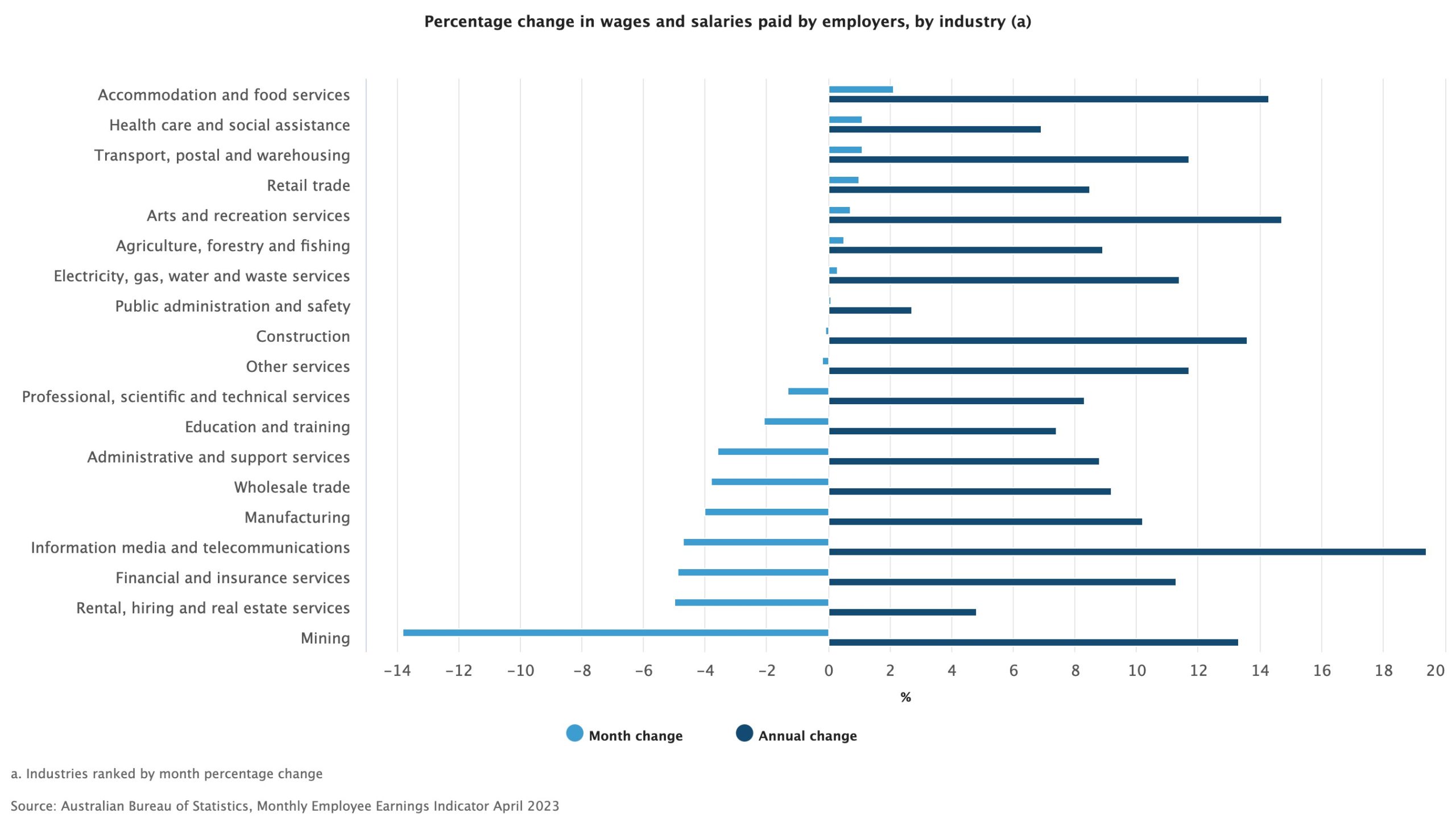
The 2021 Census named health care and social assistance as the leading employer in Coffs Harbour followed by retail, education, plus accommodation and food services. These in-demand employment sectors, as well as a significant amount of infrastructure already in the pipeline, continue to attract newcomers to the area.

For more stories like these, order your copy of the autumn edition of Kanebridge Quarterly magazine here.

Coffs Harbour recently welcomed a $194 million expansion to the local hospital and continues to introduce more carriers to the airport with daily direct flights to Sydney and Melbourne. It has a growing tertiary education campus with TAFE and University of Southern Cross courses, and an international sports stadium that hosts star-studded events.

Culture is also high on the agenda. In June 2022 Hollywood heavyweight Russell Crowe, who owns a farm in nearby Nana Glen, announced his intention to back a $438 million world-class film studio for Coffs Harbour.

Mountains meet the sea

The Coffs Coast is on the land of the Gumbaynggirr people and encompasses a collection of suburbs and townships including Nambucca, Urunga, Bellingen, Sawtell, Coramba, Moonee Beach, Sapphire Beach and Woolgoolga.

Often described as the place “where the mountains meet the sea” the sub tropical region, which is home to 78,759 people (and forecast to hit 100,000 by 2041 according to council estimates), is the meeting point of the Great Dividing Range and the Pacific Ocean. Due to its unique topography, Coffs ticks plenty of coastal boxes, but also offers leafy acreages and hinterland estates with ocean views. However, it’s this landscape which presents challenges for residential development and the supply of new housing.

Slow and steady

Homebuyer demand and prices in greater Coffs Harbour skyrocketed in 2021 but spent much of 2022 slowly declining as interest rates climbed. However, limited supply is likely to prevent significant price falls. 

“Based on the current peak in the cash rate expected for early 2023 and a lagged response in the property market, we could see a floor in price falls across Northern NSW lifestyle markets in the second half of this year,” says Eliza Owen, head of residential research Australia at CoreLogic.

According to CoreLogic the median house price in Coffs Harbour is $815,000, although there are some coveted suburbs such as Sapphire Beach to the north with a median of $1.39 million. 

“Values [in the Coffs Harbour region] have fallen a relatively mild -5.0 percent from a peak in August,” she says. This follows an upswing of 56.3 percent, so overall values are still up 47.9 percent. While COVID no doubt unlocked some value in Coffs Harbour that couldn’t be realised before remote work was so normalised, there are some headwinds for the purchasing market.”

New kids on the block

A pipeline of investment in Coffs Harbour caught the eye of residential developer Third.i. Late last year the group launched Sable at the Jetty, a medium-density development of 35 apartments.

“Part of the reason we wanted to target Coffs was because we believe there’s an undersupply of the style of apartments we create; a luxury lifestyle, or a larger downsizer product,” says Third.i director of sales marketing, Luke Berry.

“Coffs Harbour ticks so many boxes. I used to holiday there as a kid and I love the region. It’s only going to become more desirable as workers continue to turn to remote working and the ageing population seeks out appropriate areas to retire to. 

“Coffs is high on the list for anyone looking at a strategic investment or secure retirement,” he says.

Martin Wells, principal of McGrath Real Estate Coffs Harbour, says demand in the area has picked up significantly since the start of the year

Martin Wells, principal of McGrath Real Estate Coffs Harbour, says despite a slow finish to 2022, the forces of supply and demand kickstarted 2023.

“By mid January we noticed our online buyer inquiries had doubled compared with those softer episodes of last year,” Wells says. 

“The supply shortage is still the dominant driver of prices holding and I’d expect they’ll continue to climb again throughout 2023.” 

Top end prices, locally considered to be above the $1.5 million dollar mark, have “corrected”. However, Wells suggests the trough could have already passed. 

“We’re probably seeing about 5 to 10 percent off the price of top end properties,” he says. “But I think that’s probably the last of it because demand is coming back into that price point.

“Traditionally, around 30 percent of our inquiry might’ve been from Melbourne or Sydney purchasers, now it’s probably closer to 50 per cent. 

“So there’s still a large amount of money around.”

David Malvern, regional manager at McDonald Jones Homes says the limited land available meant any price decreases were unlikely to linger.

“If there was a larger supply I’ve no doubt new home sales would increase significantly,” he says.

“Either customers can’t find land, or when they do, often the topography is really not ideal for an affordable home. 

“They might find themselves having to spend $100,000 on earthworks just to get a block ready.”

He says while the supply of land  is the greatest challenge for buyers in the area today, it ultimately translates to a positive for anyone holding property for the long haul.

“You’ve got such a high demand for housing and a limited supply that if you’re an investor, or looking to move into Coffs Harbour, you’re going to benefit,” Malvern says. “I simply can’t see the market producing the amount of land and housing that’s actually needed to meet demand.”

Baby Blue Tubs and Lemony Loos. Are Coloured Bathroom Fixtures Chic Again?

COLOURED TUBS and sinks are getting another shot. Design experts are revisiting the look, which originated in the 1920s. American waterworks brand Kohler recently revived two heritage colors they originally released in the ’20s and ’30s, and British manufacturers such as the Water Monopoly and the Bold Bathroom Company have found fans on both sides of the Atlantic.

Some designers, however, wincingly recall the avocado-hued tubs and sinks of the 1970s and hold that coloured fixtures are a trend that will date very quickly. For these naysayers, only white bath fixtures will do. Here, they debate the issue.

Yes, coloured fixtures give a bathroom a much-needed shot of style.

Many design pros applauded the news that come summer, Kohler’s bathroom fixtures—including toilets—will be available in two shades from its archive: Spring Green, an icy teal, and Peachblow, a mauvy pink. Fans of the chromatically diverse Rockwell collection from the Water Monopoly, meanwhile, appreciate the fixtures’ vaguely vintage eccentricity.

London interior designer Lizzie Green nestled a Powder blue Rockwell tub, one with a puffy upper rim and spheres for feet, against a wall of variegated green-blue tiles (above). “The playful design creates a center piece in a large bathroom,” she said. (In a similarly bold move, Ms. Green installed a blue art deco pedestal sink from British manufacturer the Bold Bathroom Company in a shower room clad in rose-pink tile.)

Elizabeth Metcalfe, of EM Design in Toronto, made a chalky green Rockwell tub the hero of a primary bath and a foil to some serious luxury. It sits amid walls of Breccia marble—a creamy stone veined in deep purple—and windows hung with pink cashmere drapery. The tub gives an otherwise conservative, grown-up room a “uniquely stylish” edge, she said.

The designers we surveyed agree that the trend’s biggest fans are older millennials who grew up in what Lauren Lothrop Caron terms the “beige 2000s.” The founder of Seattle’s Studio Laloc—a senior millennial herself—urges her contemporaries to be bold. For her own bathroom remodel, she’s eyeing Kohler’s Peachblow fixtures.

Noncommittal types might do best to choose one small colored fixture, says Jake Rodehuth-Harrison, founder of Los Angeles design firm Hubbahubba. Mr. Rodehuth-Harrison loves the “heavy dose of nostalgia” the pieces provide at a time when “the design world and algorithms are always looking forward and saying new, newer, newest.” He popped lilac ball feet onto another Water Monopoly Rockwell tub, this one white, in a Napa Valley, Calif., project. The result perches, most surprisingly, on muted green flooring he chose. If that’s too bold, “we can neutralize these fixtures by surrounding them with tiles in the same color,” he noted.

Another trick: Tiffany Duggan of London’s Studio Duggan suggests working with vintage fixtures that were born white. The designer recently updated an original iron tub with a wash of Farrow & Ball’s Red Earth. “If you change your mind, you can just paint over it.”

No, colored basins and bathtubs are too fatally trendy and impractical besides.

Doubters say hued baths will be a blip on the trend continuum. Unless you’re trying to preserve the aesthetic of a historic home, warned Liana Hawes Young, creative director of Wimberly Interiors in New York City, “colored fixtures will feel dated quickly, if not immediately.” And unlike trendily tinted shower curtains or wall paint that can be changed with little expense, this craze requires a spendy swap out, argued naysayers. Said Kristina Phillips, an interior designer in Ridgewood, N.J., “Clients looking for more long-term, classic design, along with keeping eventual resale in mind, might hesitate.”

Traditionalists say that if you really must, relegate such vivid choices to powder rooms and kids’ baths, spaces you don’t linger in. And well-intentioned salvage-scourers should be wary of mixing eras, said other concerned parties. “Vintage plumbing fixtures can date a space due to their scale,” explained Hattie Collins, founder of Hattie Sparks Interiors, in New Orleans. “Most times, coloured tubs and toilets are much smaller than present-day fixtures.” A safer bet, she suggests, is to focus on rescuing original floor and surround tile.

Powder blue is one thing, many say, but bright or hot-hued renditions of this trend read garish. “Neons and oranges could be a thorn in the room,” said Los Angeles designer Gilda Hariri. Even Ms. Metcalfe, who otherwise champions the trend, warned, “Avoid vibrant, aggressive tones, such as reds and oranges, that evoke a strong emotional response.”

Designers who actually can see a place for coloured fixtures couldn’t help but trivialise the trend as “retro” and “eclectic.” The rest of the room has to quietly suggest luxury, they suggest, to balance kookiness with class. Ms. Collins thinks wallpaper that has layered, expressive colours—the sort often offered by House of Hackney, Gracie or Cole and Son—could help coloured fixtures read higher end, as would lighting of reeded glass and high-quality metal finishes. “Lovely but expensive,” she added. Is the cost of a cheerful toilet really worth it?

The power of association doesn’t work well in the trend’s favor, either. A black bathroom, for instance, installed for a sense of refined moodiness, might evoke one from a 1980s basement nightclub, giving words like sterility and sanitary a new appeal. Austere white bathrooms, a holdover from the “hospital white’” tiled bathrooms of the early 1920s, are far more practical. Dark colours reveal water marks and chalky toothpaste smears. To Kristine Renee, co-founder of Sacramento, Calif., interiors firm Design Alchemy, “Nothing ever seems as clean as white.”

The Wall Street Journal is not compensated by retailers listed in its articles as outlets for products. Listed retailers frequently are not the sole retail outlets.

‘Is This It?’ When Success Isn’t Satisfying

You got the job, won the award, launched the new project to accolades. So why don’t you feel better?

“You get the title and it’s, like, ‘Ugh. Is this it?’” says Robert Waldinger, a professor of psychiatry at Harvard Medical School who leads a longitudinal study, started in 1938, on how people thrive.

Sometimes, getting the thing is just as delicious as we imagine. Other times, we climb and climb, only to be underwhelmed by what we find at the top: more work, political wrangling, the feeling of being a fraud. Or the success high wears off fast, replaced by that old panic we hoped the accomplishment would finally cure. Then we wonder: Where’s the next win?

We’re all sprinting on what psychologists call a hedonic treadmill. That is, we might get a hit of joy when we achieve something, but we eventually return to our baseline level of happiness (or unhappiness). Whatever heights we reach, we’re still, well, us.

“From the outside, people think, ‘Oh, my God, amazing,’” says Andy Dunn, who helped sell clothing retailer Bonobos to Walmart Inc. in a $310 million deal after 10 years as chief executive and co-founder.

Mr. Dunn, now 44 and based in Chicago, spent years strategising and fantasising about such a sale but says it was a mirage. Building the company brought him more happiness, he says, than the eventual payout. (The Walmart deal paid him tens of millions of dollars.) Now working on a new startup, he’s keeping his team small and not chasing big checks from investors.

“I learned that those are just illusory things,” Mr. Dunn says.

The pursuit of happiness

Plenty of us would be happy to try our luck with fame and fortune, complications be damned. And it’s hard not to crave stuff and status when so much in our culture—from Super Bowl ads to friends’ Instagram feeds—insists that’s where fulfilment lies.

Success itself isn’t inherently bad, notes Dr. Waldinger, who adds: “Just don’t expect it to make you happy.”

Studying the antecedents of happiness among hundreds of participants in the Harvard Study of Adult Development, Dr. Waldinger found people acclimate to the trappings of achievement—including plump paychecks—swiftly.

“The corner office just becomes the place you go and do your work after a while,” he says. “The shine wears off.”

Lasting happiness results from wins that foster deep relationships and are imbued with meaning—some bigger payoff beyond your salary. Think work that affects clients’ lives or bonds your team together. When asked to share what they were most proud of, many of the octogenarians in the Harvard study talked about being a good leader or a helpful mentor, Dr. Waldinger says.

The power of authenticity

Many find they need to be able to succeed as themselves, rather than moulding their personas to fit the goal, to enjoy it.

Steve Babcock moved to New York City from Colorado in 2016 for a top creative job at an ad agency. He went from managing 50 people at his old job to overseeing 200. Industry publications profiled him. Every compliment on his LinkedIn posts was a dopamine hit. But on his train rides home from work, he felt empty. Numb.

“I have to give up who I really am to be this thing,” he says he realised. He preferred to be funny and casual at the office, but suddenly he was the boss. Subordinates often didn’t speak candidly as they tried to impress him, leaving Mr. Babcock feeling disconnected. He was also pulled farther from the creative work that he loved.

“I was always so driven to be seen as important,” he says. “There was just this cost to that.”

Mr. Babcock left the job, moved back to Colorado and now works at a food-technology company doing creative work. He sometimes misses the money—he now earns about what he did a decade ago—and the high-profile projects. He says he’s recently turned down three offers to be a chief creative officer again, unwilling to put the mask back on.

The impostor trap

Sometimes a coveted step up comes with burnout. Sabrina Hua spent three years working toward a promotion, and two years pursuing a master’s degree. She achieved both over a few months in 2021, and felt more miserable than triumphant.

The new job, in a university fundraising office, came with long hours and high-pressure goals. The degree felt like a huge accomplishment until she started to wonder if she needed a PhD.

“I just felt so much anxiety about what’s next,” the 29-year-old says.

Last fall, she quit. She’s spent the months since living off savings, traveling and focusing on small joys. Learning to crochet brought more happiness than completing her graduate program, Ms. Hua says. She plans to start searching for a new job soon, with new priorities.

“I don’t want to be obsessed with titles,” she says. “I want to have time.”

You don’t always have to pull a Peggy Olson, jumping ship from your old gig as she did in AMC’s drama “Mad Men,” to change your mind-set. Ruth Gotian, an executive coach and author of a book about reaching the apex of success, says that professionals often fear they’ll be seen as a fake at the exact moment they’re killing it. Winning a big client or publishing a definitive paper, they brush off compliments and worry that the prize will be taken away.

“Just because it’s unfamiliar doesn’t mean that you’re a fraud,” she says. Try to reframe the discomfort as positive, a cue that you’ve entered a new stage in your career. Collect thank-you notes and records of your wins along the way, so you can pull them out when you’re feeling shaky.

“There is a whole trail, a whole history of things that led to this point,” Dr. Gotian says.

The Best Indoor Plants You’ll Ever Grow To Spruce Up Your Home

We want plants, we love plants – but which plants will love us back? Here are the top 15 plants that will live happily in your home with the minimal amount of care. Some new wave, some old school, but all worth the effort.


Fruit Salad Monstera

The spectacular leaves of the monstera

Let’s start with the big guy of indoor plants, the big leafed Monstera. The easiest and least demanding of house plants that will give you the biggest bang for your buck. If you enjoy watching a slow reveal, buy a baby one, and watch as the leaves unfurl, eventually growing as big as 30cm. Bright light is good, but not vital. Water when dry – how easy is that?


Boston Fern

Nephrolepis exaltata, Boston fern, fishtail fern. Whatever name you know it by, this hardy plant does well indoors and contained in pots.

A long loved and robust fern that is coming back into vogue. Either in a stand, or hanging in a basket the ‘sword’ fern does require good watering (so hanging one high might be a pain in the neck), and thrives with a dose of liquid fertiliser, and the occasional spritz of water. They love light, but don’t let them get sunburnt. A super happy one can grow over a metre wide.


Black Velvet

Big green leaves of alocasia reginula black velvet

For absolute drama folks are looking to the black velvet plant – which looks especially stunning in a grey pot. It’s all about the leaves, so position in indirect light – but don’t miss out on a spotlight at night. New leaves start out green, and turn ‘black’ as they slowly mature, in direct contrast to white veins. A showpiece plant that can be a bit moody.


Mother-in-Law’s Tongue

Also known as the snake plant, Mother-in-law’s tongue is loved for it’s tough, vertical leaves

Here is a vintage look that is coming back to us. The architectural shape of the stiff and fleshy variegated leaves offer a real statement to any décor. Plus, they are as tough as old boots and can be positioned in any indoor light situation and while they might occasionally sprout a small white flower or two, the metre long leaves are the star attraction.


Rubber tree

The Ficus elastic plant rubber tree is ideal for adding a little darkness to your indoor plant family


For a true mid-century look, you can’t go past a rubber tree, once the décor partner of starburst wall clocks and Parker lounge sets. Position it near a sunny window, and let it dry out between waterings. Pruning will lead to a bushier plant – and off cuts often survive as new plants relatively easily.


Devil’s Ivy

Devil’s Ivy is ideal for hanging pots and is super easy to strike from cuttings

For some reason these plants are always highly priced, when in fact they grow easily from cuttings. Go figure. However, these plants are vines that are born to run, and with little help will do just that, showing off shiny, heart shaped leaves on fleshy stems. The brighter the position, the more verdant the growth – but they can take a little shade. Prune for a bushy response, or even train up a wall trellis.


Peace Lily

The flowering Peace Lily or Spathiphyllum loves a window sill position

With all this leafy talk, it’s nice to look at the virginal white petals of the verdant Peace Lily.

These guys will live for years, despite casual care. No fan of direct sun, but happy to be in a bright spot, they let you know if they’re very thirsty by wilting at the speed of light. Can live for years, and enjoy being repotted – and may be split into two plants (or more) if you’re brave.


Jade Plant

The humble jade plant doesn’t like having wet feet but is surprisingly easy to keep in good health

Those chubby little succulent leaves are just the ticket for a hardy indoor plant. They do grow relatively fast, especially when happy. The weak spot is root rot – so do not show your love by overwatering. They are sun loving, and the more the better, and fit happily into a small container – they look 100 per cent better in a contemporary pot with white gravel as mulch. Fun fact: broken off leaves will grow a whole new plant if laid in moist soil.


Blue Star Fern

Blue Star fern (Phlebodium aureum) makes a great, leafy statement indoors

Fabulous muted blue/green fronds in irregular shapes makes this new indoor plant a very cool customer. It’s a goody for the bathroom as it tolerates lowish light and looks divine against white tile. Interestingly it’s an epiphyte and naturally grows on trees in the forest, so a standard potting mix won’t cut it. If you’re repotting, try an orchid mix.


Fiddle Leaf Fig

The fiddle leaf fig, Ficus lyrata, was the ‘it’ plant a few years back. It is still prized for its large leaves and vertical growth habit

Is it possible to be sick of a plant? This one has been the poster child for contemporary design for a decade – it’s a good-looking plant when treated well. So many were bought for instant effect and then abandoned like a cold chai latte, they have a bad rep. When thriving you can’t beat their deep green, big, glossy leaves. Fiddles play well with others – so if you can afford it, get a few together so they ‘self humidify’ . Position in lots of bright light, but  out of drafts.


Maiden Hair Fern

Maiden hair ferns love a little humidity

If a plant could be described as a babbling brook, this would be it. Masses of dainty leaflets, cute curly fronds, dense foliage – ideal. Kept away from drafts, out of direct sun, but well humidified (a spritz a day keeps the brown leaves away), they can grow to be, frankly, enormous. And like any true beauty, they look good dressed in any sort of pot. Good news is, if you think you killed it – just cut it back to the ground and put it in the shade – voila! It will come back.


Cyclamen

Cyclamens come in a range of colours and are ideal for adding colour during the winter months

Of all the indoor plants that give a huge performance, you really can’t top the Cyclamen when she’s in bud and bloom. Surrounded by pretty variegated leaves, the sturdy spires pop up in Autumn and winter with masses of flowers. They don’t like being in a hot room, and prefer being watered by drawing water from a shallow tray. They don’t last forever, but they give it heaps while they’re here.


Basil

Fresh basil in a pot on the kitchen windowsill makes harvesting leaves a snap

Yes, the fragrant and tasty basil can thrive on a sunny window sill, and you get to show off by snipping the odd leaf and adding it to your focaccia – or if things are going really well, your own pesto. It grows like mad, and needs to be kept moist but after that, she’ll just keep on giving.


Moss

A moss garden inside a glass terrarium is about as low maintenance as you can get

Odd, sure, but moss is a green miracle and quite mesmeric. You can find moss (or similar) at aquarium shops, then add gravel and stones and soil in a terrarium sort of container – but the lid does not have to be perfect, and huzzah! Your own Zen world. Once it gets going, it really is a matter of spraying with water and offering it a couple of hours of morning light. Very cool.


Orchids

A table of blooming moth orchids is a beautiful sight, although they can require special care.

So many to choose from! Dramatic, exquisite, statuesque – orchids are truly stunning if you are up for the challenge. Yes, this is supposed to be about really easy plants, but SOME people think an established orchid is just that. Again, light but not sun, proper orchid fertiliser, don’t spritz the blooms, but do take the time to learn all about them It’s worth it.

Which is the most beautiful indoor plant?

This will depend on what you value but for their beautiful flowers and trailing habit, it’s hard to go past the orchid family. Whether it’s the robust cymbidium varieties, the delicate moth or the stunning Sydney rock orchid, these stunning plants make a gorgeous display – and last a whole lot longer than cut flowers.

Which indoor plant purifies the air the most?

Since NASA published a study in 1989 on the effectiveness of indoor plants as air purifiers, there’s been discussion about which plants work best. Sadly, their ability to remove toxins has been overstated, but there are still plants that will benefit to your indoor air quality such the hardy Peace Lily, the Spider Plant, Mother-in-law’s Tongue and Devil’s Ivy.

Which indoor plant is the best for home?

This will depend on many factors, including how much time you spend at home, whether you have pets and how experienced you are at gardening but tough species such as Devil’s Ivy, Peace Lily, Rubber Plant and Monstera is a good place to start.

What is the easiest house plant to maintain?

All plants require some maintenance but more die from over watering than they do from too little care. Go for Peace Lilies, Spider Plants, Jade Plants and cacti for easy care, low maintenance plants.

The new broom bringing confidence back to the multi-residential market

Most of us watched in disbelief as the nightly news flashed reports about the thousands of residents evacuated from their western Sydney apartment block on Christmas Eve 2018. The dire warning of a possible collapse in the Opal Tower came after several residents reported hearing loud cracks in the apartment block of 392 homes at Sydney Olympic Park. Structural cracks were found in the pre-cast concrete panels.

Months later, 130 residents were given hours to flee their 10-storey Mascot apartment building after cracks were discovered in the basement raising concerns of collapse. They were never able to move back in.

These homeowners became the very public face of the poor standards plaguing the $24 billion NSW building and property development industry. But you didn’t have to end up on the six o’clock news to empathise.

Four in 10 new residential apartment blocks in NSW have serious defects at an average cost of more than $330,000 a building, according to the Strata Community Association of NSW, with waterproofing and fire safety the most common problems.

And up until recently, the only avenue homeowners had to seek help was negotiating directly with the builder or developer, or embarking on a lengthy and expensive legal battle to get the defects rectified.

For more stories like these, order your copy of the autumn issue of Kanebridge Quarterly magazine here.

When the first NSW building commissioner was appointed in 2019 under the Berejiklian government, changes came swiftly. David Chandler, a 40-year veteran of the building industry, was armed with legislative powers to overhaul the state’s residential building sector — the RAB or Residential Apartment Buildings (Compliance and Enforcement Powers) Act — in what was called once-in-a-generation reforms.

And he wasted no time doing exactly that. The reforms included the power for Chandler to issue developers with orders to rectify serious defects before granting them an occupation certificate.

“The RAB Act was a turning point, it was an important piece of legislation which is quite unprecedented in the country…I’m the only regulator who has the powers that are in the RAB Act,” Chandler says. “It really needed to be brought in; it switched the balance to give consumers a much better standing than perhaps they have had in the past. In effect, it allows me to stop the issuance of an occupation certificate, and therefore consumers ultimately being forced to settle on their apartments.

“I use those powers very, very cautiously, but I have used them.”

Chandler also backed moves to give more power to apartment owners, pointing out that they had less consumer protection than someone buying a toaster or washing machine. To this end, he supported the creation of a ratings system for developers — the independent Construction Industry Rating Tool or iCIRT — to help homeowners arm themselves against buying apartments with defects.

Prior to this, homeowners had few, if any, resources to have defects fixed. A 2012 report by the UNSW City Futures Research Centre found 72 percent of apartment blocks in NSW had defects and in newer units it was as high as 85 percent.

Building commissioner David Chandler has moved swiftly to improve the standards of residential apartment construction in NSW.

An unregulated industry where tight deadlines and budgets to complete major works were written into contractual agreements between builders and sub-contractors led to cost cutting and a rise in defects.

“It was shocking,” says executive director of the Owners Corporation Network of Australia, Karen Stiles, about the state of the residential apartment sector before Chandler’s appointment. 

“You had more chance of winning a $20 million lottery than you did of having a building with no defects.”

 “Unfortunately most of us fall in love with the glossy brochure. That’s why iCIRT is so good. We are so used to seeing a ratings system on electrical appliances and cars but until now there has never been one on builders and developers.

“I’m hearing reports of people taking back their deposits when they discover a developer is not rated. It’s a really powerful card to play for a prospective buyer.”

Mirvac was the first major property developer to be rated on iCIRT and is the only company to have a five-star rating. Mirvac was awarded the five-star rating following a detailed, independent and rigorous review and Stiles hopes their addition will encourage other major developers to come forward and be added to it.

“Raising the standard of construction in NSW is critically important to protect purchasers and restore confidence in buying off the plan and newly built apartments,” says Mirvac’s head of residential Stuart Penklis about iCIRT.

Stephen Brell, president of the Strata Community Association of NSW, believes a new scheme called Project Intervene — which allows homeowners to bypass the courts and engage directly with a developer to fix defects with the support of NSW Fair Trading and the NSW Building Commissioner — is the most exciting new reform to come out of Chandler’s reign.

“It’s a really cost effective program and removes the often combative and expensive legal element from the process of having defects rectified,” he says. 

“Before, the onus of proof was on the owners corporation, so you would spend tens of thousands of dollars to identify the defects and then tens of thousands to get it through the courts. But Project Intervene only works if the builder has not gone into receivership.”

Another positive move is the introduction of a decennial insurance product which allows owners corporations to have serious defects fixed by builders for up to 10 years after the building is first occupied. Brell says the positive changes Chandler has brought in don’t just help homeowners, but all elements of the industry, including the vast majority of honest builders who now have a way to distance themselves from the dodgy developers in the market.

With Chandler set to retire in August, there is hope that the sweeping changes he made will be upheld.

“Chandler has set up a legacy system for NSW,” says Brell. “He has a great team and two significant and brand new pieces of legislation: the Design and Building Practitioners Act and the Residential Apartment Buildings (Compliance and Enforcement Powers) Act. This will give the commissioner’s office certain powers to last beyond Chandler’s retirement.”

Chandler himself is hopeful for the future of the NSW residential apartment industry and wants to pass on this positive outlook to a new generation.

“I am (hopeful) because the industry doesn’t want to go back to where it came from,” Chandler says. “The other challenge we also have is to make sure we have tomorrow’s workforce; we were facing a situation where young people were hearing such horrendous stories about our industry that their parents were doing everything in their power to dissuade them from coming into our industry, which is a great industry.

“So we’re working with TAFE, we’re working with a whole range of employer groups to attract the next workforce, which has got to be a composition of male and female. 

“If by 2025 we can lift the number of women in our industry up to 20 per cent that would be a great outcome, and if a few years down the track we can raise it to another level, that would be great.”

How 20 Seconds Can Make You a Better Investor

To break the day-trading habit that cost him friendships and sleep, crypto fund manager Thomas Meenink first tried meditation and cycling. They proved no substitute for the high he got scrolling through investing forums, he said.

Instead, he took a digital breath. He installed software that imposed a 20-second delay whenever he tried to open CoinStats or Coinbase.

Twenty seconds might not seem like much, but feels excruciating in smartphone time, he said. As a result, he checks his accounts 60% less.

“I have to consciously make an effort to go look at stuff that I actually want to know instead of scrolling through feeds and endless conversations about stuff that is actually not very useful,” he said.

More people are adding friction to curb all types of impulsive behaviour. App-limiting services such as One Sec and Opal were originally designed to help users cut back on social-media scrolling.

Now, they are being put to personal-finance use by individuals and some banking and investing platforms. On One Sec, the number of customers using the app to add a delay to trading or banking apps more than quintupled between 2021 and 2022. Opal says roughly 5% of its 100,000 active users rely on the app to help spend less time on finance apps, and 22% use it to block shopping apps such as Amazon.com Inc.

Economic researchers and psychologists say introducing friction into more apps can help people act in their own best interests. Whether we are trading or scrolling social media, the impulsive, automatic decision-making parts of our brains tend to win out over our more measured critical thinking when we use our smartphones, said Ankit Kalda, a finance professor at Indiana University who has studied the impact of mobile trading apps on investor behaviour.

His 2021 study tracked the behaviour of investors on different platforms over seven years and found that experienced day traders made more frequent, riskier bets and generated worse returns when using a smartphone than when using a desktop trading tool.

Most financial-technology innovation over the past decade focused on reducing the friction of moving money around to enable faster and more seamless transactions. Apps such as Venmo made it easier to pay the babysitter or split a bill with friends, and digital brokerages such as Robinhood streamlined mobile trading of stocks and crypto.

These innovations often lead customers to trade or buy more to the benefit of investing and finance platforms. But now, some customers are finding ways to slow the process. Meanwhile, some companies are experimenting with ways to create speed bumps to protect users from their own worst instincts.

When investing app Stash launched retirement accounts for customers in 2017, its customer-service representatives were flooded with calls from panicked customers who moved quickly to open up IRAs without understanding there would be penalties for early withdrawals. Stash funded the accounts in milliseconds once a customer opted in, said co-founder Ed Robinson.

So to reduce the number of IRAs funded on impulse, the company added a fake loading page with additional education screens to extend the product’s onboarding process to about 20 seconds. The change led to lower call-centre volume and a higher rate of customers deciding to keep the accounts funded.

“It’s still relatively quick,” Mr. Robinson said, but those extra steps “allow your brain to catch up.”

Some big financial decisions such as applying for a mortgage or saving for retirement can benefit from these speed bumps, according to ReD Associates, a consulting firm that specialises in using anthropological research to inform design of financial products and other services. More companies are starting to realise they can actually improve customer experiences by slowing things down, said Mikkel Krenchel, a partner at the firm.

“This idea of looking for sustainable behaviour, as opposed to just maximal behaviour is probably the mind-set that firms will try to adopt,” he said.

Slowing down processing times can help build trust, said Chianoo Adrian, a managing director at Teachers Insurance and Annuity Association of America. When the money manager launched its online retirement checkup tool last year, customers were initially unsettled by how fast the website estimated their projected lifetime incomes.

“We got some feedback during our testing that individuals would say ‘Well, how did you know that already? Are you sure you took in all my responses?’ ” she said. The company found that the delay increased credibility with customers, she added.

For others, a delay might not be enough to break undesirable habits.

More people have been seeking treatment for day-trading addictions in recent years, said Lin Sternlicht, co-founder of Family Addiction Specialist, who has seen an increase in cases since the start of the pandemic.

“By the time individuals seek out professional help they are usually experiencing a crisis, and there is often pressure to seek help from a loved one,” she said.

She recommends people who believe they might have a day-trading problem unsubscribe from notifications and emails from related companies and change the color scheme on the trading apps to grayscale, which has been found to make devices less addictive. In extreme cases, people might want to consider deleting apps entirely.

For Perjan Duro, an app developer in Berlin, a 20-second delay wasn’t enough. A few months after he installed One Sec, he went a step further and deleted the app for his retirement account.

“If you don’t have it on your phone, [that] helps you avoid that bad decision,” he said.

The Classic Noguchi Lamp as You’ve Never Seen It

WE ARE WELL acquainted with Isamu Noguchi’s iconic Akari light sculptures. The lovely little frameworks of bamboo covered with off-white washi paper (whose design dates to 1951) are the sort of thing uncompromising incense fans own. But who knew that 25 of the more than 170 Akari iterations currently in production are screen printed with flourishes of color or pattern. Not so minimalist, after all.

The decorative printed additions range from pure abstractions (alternating bands of black and white) to simplified pictures (knocked-out bow ties) to Japanese design motifs. “The appeal of the coloured versions is they have more cultural specificity than the unadorned ones but [still] achieve the timeless, placeless universality of Noguchi’s best work,” said Dakin Hart, senior curator at the Noguchi Museum in Long Island City, N.Y.

The Akari “sun” pattern on the 1AY model

Though seemingly art for art’s sake, the decorations have practical dimensions, too. The Akari “sun” pattern (shown above on the 1AY model), for example, leaves an ovoid shape unprinted, creating an analog way to dim the light: Turn the unprinted “sun” toward the wall to modulate the brightness; turn it outward, and the light increases.

In 1951, the artist first visited Gifu, Japan, the global hub of the traditional paper lantern industry, and was inspired to create a translucent, collapsible light sculpture. The result: the Akari, which translates to “light” and “glow” in English. Soon, the artisanal fixtures were among the most beloved (and accessible) modern lamps.

The Akari 9AD

In the U.S., the coloured and embellished Akari are available only through the Noguchi Museum (and strictly sold in tabletop versions), which makes them harder to get your hands on. But, given the basic models’ ubiquity, that scarcity makes them feel particularly un-routine. The screen-printed Akari—more playful than their monastic siblings—appeal to interior designers like Victoria Sass. The Twin Cities, Minn., pro said she also finds the coloured iterations more painterly, “like a piece of art” in contrast with the “more sculptural” unadorned version.

For a spot of color in his Düsseldorf living room, German design influencer Christoph Knopf layered an Akari 9AD “Blue Shovel” in among other midcentury modern pieces and Japanese-inspired décor. As he notes on Instagram, the lantern, lit at night, “is the star of the interior.”

The Wall Street Journal is not compensated by retailers listed in its articles as outlets for products. Listed retailers frequently are not the sole retail outlets.

Living among the trees in the hippest part of the city

It’s a part of Sydney that is often overlooked but the unassuming suburb of St Peters in the inner west has a lot to offer the discerning buyer.

Once better known for its brick chimneys than its beautiful locale, it is now coming into its own as people looking for a little creative culture get priced out of nearby neighbourhoods such as Marrickville and Newtown.

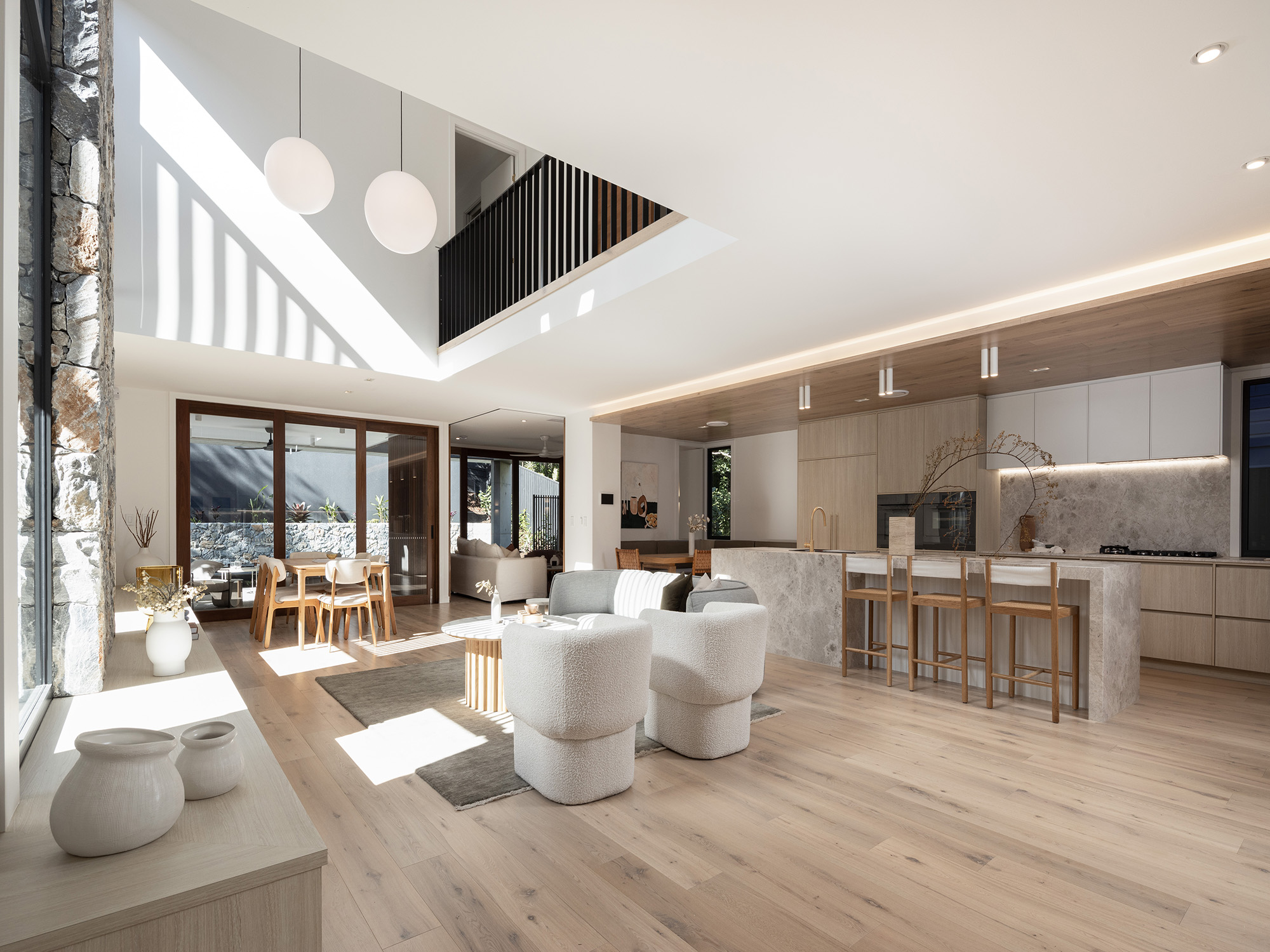
So in an area where land and green space is scarce, it’s hard to pass up a property like 2 Crown Street. Offering four bedrooms and two bathrooms over two levels, the home backs onto the best park in the suburb, Sydney Park. 

Surrounded by tree canopies, there’s a sense of living in the treetops, which is further enhanced by the easy flow between indoor and outdoor spaces.

While the integrated stone kitchen overlooks the open plan living area bathed in north easterly natural light, it’s the master bedroom on the upper floor that’s the showstopper, with bifold doors that retract entirely to lead onto an enclosed terrace amongst the trees.

Surrounded by primary and secondary schools, this is an ideal family home located within easy walking distance of St Peters Station and the burgeoning restaurant district of south King Street. A spacious double garage with ample storage is fittingly embellished with landscaping.

Address: 2 Crown Street, St Peters

Auction: 10.30am, March 25, 2023

Price Guide: $2.1 million

Agent: Brad Gillespie, Property Partner, The Agency, bradg@theagency.com.au 0418 448 295

When to buy property in a slowing real estate market

 Buy low, sell high. It’s the mantra for any asset transaction — and real estate is no different. Short of investing in a crystal ball, switched on buyers study market cycles to get the best impression of what the medium to long term holds.

Past behaviour of a suburb or property type is one of the best indicators of future behaviour at a micro level, but there are also a number of macro factors to be taken into account.

Watching the ticking property clock

Australian real estate travels through property cycles, which traditionally last between seven to 10 years. However, individual cities and towns (and then suburbs or property types within those locations) can run an independent race from the rest of the country.

National property valuation advisory firm Herron Todd White publishes a monthly ‘property clock’ which takes a regular snapshot of where house and unit markets are sitting within the cycle, indicating a market peak, a bottom, and the transitions in between.

For more stories like this, buy the autumn issue of Kanebridge Quarterly magazine here.

“The property clock is meant to be a kind of ready reckoner, so you can make a swift general comparison about what different markets are doing,” says Kevin Brogan, National Director, Group Risk and Compliance of Herron Todd White.

Although common sense might suggest it would be wise not to buy in areas sitting at the peak “12 o’clock” position, Brogan says it’s not always that simple.

“If somebody in Sydney is looking at a property in Adelaide, they might see it sitting in a peak position, but they’ll also look at the price point and think ‘Well, I don’t mind because Adelaide looks very affordable’. A local might feel differently.”

By the end of 2022, Sydney and Melbourne sat on the declining side of the “property clock” after reaching their peak positions in February 2022 and December 2021 respectively. Purchasers might be temped to take a “wait and see” approach, but there is no one-size-fits-all answer.

“You’ve had an interest rate environment putting pressure on buyers, but if there’s sustained demand in the market because of economic and population growth, that’s going to have a positive impact across different market segments,” Brogan says, adding that certain property types can also buck the cyclical trends.

“Vacant land and properties requiring refurbishment have struggled because of escalating building costs and concerns around the durations of projects.

“Conversely, renovated properties are selling quite well even in Sydney and Melbourne. So it’s very tempting to just look at a geographical market — and at a high level it’s quite useful to do that — but if you’re on the verge of making a decision, you need to look at the sub market too.”

Timing the market…

Waiting for the market to hit rock bottom might feel like the right buying strategy, however chief economist for Ray White Group, Nerida Conisbee, warns even schooled experts can often only pinpoint the trough in retrospect.

“Markets can move really quickly. At the start of the pandemic some economists were suggesting a 30 per cent decline, and then suddenly it turned around and we saw a 30 per cent increase,” she says.

Ray White chief economist Nerida Conisbee

From the first Reserve Bank official cash rate increase in April 2022, prices across many Australian markets started to decline after a short sharp boom, but just how long (and where) negative movement will be seen in 2023 depends on several factors.

“It’s been a slowdown that really had to happen because property was getting really too expensive,” Conisbee says. 

“But what we’re seeing is quite different changes to property values depending on where you are. 

“There’s such a diversion in geographic conditions, so much so that when people talk about a 20 percent price drop there’s absolutely no way that will happen across Australia. Even the market that’s most likely to see that drop would be Sydney because of the extraordinary gains, but it’s not going to be all of Sydney. Prices are certainly not going to drop to bargain levels.”

She added that since the recent price correction had been brought around almost solely by interest rates increases, once they stop the tables could turn.

“Once we start to see interest rates peak, potentially around March, that’s the point at which prices will start to stabilise,” she says. “And if you look at other factors that typically lead to price decline, we’re actually seeing the opposite. Population growth is starting to ramp up again and migration is back. 

“If you try and wait for the bottom, you could quickly find yourself in a dramatically different situation and you might discover you’ve missed the boat.”

…Or time in the market

It is a real estate cliche, but time in the market is often better than timing the market, says Brogan. 

“Although timing can be important in terms of the transaction to enter the market, you also have to consider how long you intend to hold the property for,” he says. “If you’re looking for a quick in and out, then timing is critical, but if you’re looking to hold for a period of time, it’s a different story.

“Everyone loves a bargain, everyone loves to tell their friends how well they’ve done in any transaction, particularly with property. 

“It’s only human nature to want to minimise your outlay, and that thinking won’t necessarily do you any harm. Unless, of course, analysis paralysis means you hold out or don’t act at all and you miss out altogether.”

Conisbee said the mistake many bargain-hunting buyers make in a declining real estate market is holding out too long only to jump in with everyone else.

“Of course it’s great to buy at the bottom of the market,” she says. “Ultimately though, if you’re holding on long term it doesn’t matter when you buy in a cycle. The best time to buy is when you find the right home in the right location at a price you can afford.”

Toblerone Is Removing the Matterhorn From Its Packaging

Toblerone, the triangle-shaped chocolate bars that fill duty-free airport shops, is losing some of its Swiss look as more of the treats are made outside of Switzerland.

The Matterhorn, the famous mountain in the Swiss Alps that has been on Toblerone packaging since 1970, will soon be gone. In its place will be a “streamlined mountain logo,” said a spokeswoman for Mondelez International Inc., the snack company behind the chocolates.

Mondelez said it is making the changes to comply with Swiss law, which says that production of certain foods must be done in Switzerland in order to use the country’s symbols on packaging.

The company said it will be making some Toblerone bars in Bratislava, Slovakia, to keep up with rising demand for the chocolate treat. It will continue to make Toblerone in Bern, Switzerland, where the chocolate brand was founded 115 years ago. Mondelez said it has updated the Bern factory to produce 90 million more 3.5-ounce bars a year.

The chocolate’s recipe will remain the same, the Mondelez spokeswoman said. An outline of a bear hidden in the Matterhorn logo will also stick around, the spokeswoman said, and will appear in the new mountain logo.

Toblerone has been around since 1908, the invention of Swiss chocolatier Theodor Tobler and his cousin Emil Baumann. Its name is a fusion of Mr. Tobler’s last name and torrone, the Italian word for the honey-and-nut nougat used in the bars. The chocolate has a distinct triangular shape, with peaks that look like a mountain range.

In 2016, another Toblerone change upset fans. The amount of chocolate was reduced in some bars sold in the U.K. because of the rising costs of ingredients and production, Mondelez said at the time, causing the gap between the triangular peaks of chocolate to be wider apart.

Toblerone is sold around the world, but the golden triangle packages are hard to miss in airport stores, where giant sizes of the chocolates are available, sometimes weighing more than 4 pounds.

In an episode of “Friends,” Toblerone fan Joey Tribbiani stopped Ross Geller, played by David Schwimmer, as he rushed to the airport. “Ross! Ross!” Matt LeBlanc as Joey shouted. “If you’re going to the airport, can you pick me up another one of those Toblerone bars?”

In addition to the mountain logo swap, Toblerone’s new packaging will also remove references to being made in Switzerland and make an addition: the signature of Mr. Tobler, one of the chocolate’s founders.

Britain Is Getting Back on Track

War in Europe, crisis in the Middle East, growing tensions across East Asia, and a widening chasm between a beleaguered West and the Global South: Writing a Global View column in times like these is not always the happiest of tasks. But at least one good-news story has been building quietly over the last few months. Global Britain is becoming a reality and the world is better off because of it.

The world has changed since the British voted to leave the European Union in 2016. After Brexit, enthusiastic backers expected an aggressively deregulating Britain would become a kind of Singapore-on-Thames. Russian oligarchs, Chinese moguls and Arab oil sheikhs would flock to London, eager to enjoy a sophisticated financial market that was less regulated and more hospitable than either the EU or the U.S. Free-trade agreements with the U.S. above all, but also fast-growing Asian nations, would more than compensate for the loss of the U.K.’s privileged position in the EU.

That’s not how things worked out, and the world is a much tougher place for middle powers than anyone expected when Brexit passed. Even as Covid disrupted the world economy and shut Britain’s lucrative tourism sector down, the open international economy of 2016 began to wither. Russia’s war in Ukraine and deepening U.S.-China tensions ended the dream that London could prosper as a neutral financial centre. Rising protectionism world-wide made trade agreements harder to reach and highlighted the importance of belonging to big trading blocs like the EU.

On top of this, a spat with the EU over the Northern Ireland Protocol, aimed at keeping the border with the Irish Republic open after Brexit, proved a much larger problem for Britain than Boris Johnson’s government anticipated. The details are fiendishly complicated, but in his rush to “get Brexit done,” Mr. Johnson signed an agreement with the EU that Unionist Protestants in Northern Ireland saw as weakening ties with Britain. The resulting tensions threatened the stability of the troubled region, and by the end of his premiership Mr. Johnson was threatening to break his own agreement with the EU. That stance infuriated Brussels and alienated an Irish-American named Joe Biden, killing any talk of a free-trade agreement between Britain and the U.S.

That’s not where things stand today. Building on foundations laid down in the Johnson era, Prime Minister Rishi Sunak has repaired relations with European partners and Washington even as Britain has carved out a significant place in Asia. Britain at long last may be finding a role.

Britain’s recent foreign-policy successes stand on two pillars. The first is Aukus, the agreement to work cooperatively with the U.S. to help Australia build a fleet of nuclear-powered submarines. The trust among these three countries enables a level of technological and economic cooperation that potentially extends far beyond the submarine program. With Britain moving toward membership in the Comprehensive and Progressive Agreement for Trans-Pacific Partnership (based on the Trans-Pacific Partnership that the U.S. helped negotiate but then refused to join), the U.K. has achieved a stronger presence than any European state in the fast-growing Indo-Pacific region.

Meanwhile, Britain’s unswerving support for Ukraine has put London back at the centre of European politics. Britain’s stance earned deep gratitude from Poland, the Baltic states, Sweden and Finland. That, along with Mr. Sunak’s more constructive approach toward Brussels, strengthened pro-British feelings inside the EU and helped pave the way for the major concessions on the Northern Ireland Protocol that enabled Mr. Sunak to forge the groundbreaking Windsor Framework. If the deal, announced last month, holds up, it would remove a major stumbling block in U.S.-U.K. relations.

The payoff could be substantial. Last week Sen. Chris Coons (D., Del.), a close Biden ally, introduced a bipartisan bill with John Thune (R., S.D.) authorising fast-track talks on a U.S.-U.K. free-trade agreement. The White House plans a Biden visit next month to commemorate the 25th anniversary of the Good Friday Agreement, which ended the violence in Northern Ireland. British negotiators hope for Britain’s eventual inclusion in tech talks between Washington and Brussels.

With an unpopular Tory government facing a revived, de-Corbynized Labour Party, and with inflation wreaking havoc on British living standards and touching off waves of strikes among public employees, foreign-policy success may not be enough to save the ruling Conservatives from the wrath of the voters. But it is likely to help, and if the Sunak government can continue to carve out a serious role for post-Brexit Britain in world politics, the next election could be a much closer affair than most forecasters currently predict.

Regardless, Americans should welcome Britain’s return to the high table of world politics. A stronger Britain means a healthier West, and given the otherwise grim state of world affairs, Washington can use all the help it can get.

The UK design company Australians love is ‘no longer a teenager’

It might have been the jet lag talking, or perhaps it’s just evidence of his legendary laconic style but Tom Dixon’s view on the role of the designer is unorthodox, to say the least.

“Design is a great profession for the easily bored and the curious,” Tom Dixon commented. 

Sitting down last week ahead of an event at Sydney’s Quay Quarter Tower created to celebrate 20 years of his company, Tom Dixon was reflecting on what could best be described as a meandering career. 

Untrained, self taught and continually interested in the new possibilities of untried materials and their applications, Dixon’s career has been one of following his interests wherever they might take him, whether that is music, management – or design.

Indeed, while he was enjoying finally being able to see the foyer and market hall he designed for Quay Quarter Tower after three years of COVID stopped him from visiting Australia, he remained unconvinced the birthday celebrations were necessary.

“I don’t really think about these things and it was slightly imposed on me,” he said. “I like looking forward if at all possible. 

“Maybe that’s why I didn’t really want to do it – 20 sounds quite old – like I’m no longer a teenager.” 

He certainly continues to bring a youthful attitude to his work. The one-time bass guitarist for early 80s band, Funkapolitan who dropped out of the Chelsea School of Art, Dixon almost fell into design after becoming fascinated by the possibilities of welding.

This progressed into furniture design, with his S chair for Cappellini in 1989 (now in the New York Museum of Modern Art), followed by his appointment as creative director of Habitat, the epitome of homeware style in the 1990s, where he sharpened his understanding of the commercial realities of design and promoted emerging designers.

By the time the new century arrived, Dixon was ready to branch out on his own, founding his business, Tom Dixon in 2002. The Design Research Studio – the architectural and interior branch of his business – began the following year. 

More than 20 years on and he is credited with some of the most ubiquitous designs, including his BEAT range of lighting, as well as some of the coolest interior spaces in Europe, including Shoreditch House in London and Le Drugstore in Paris. In recent years, he has experimented with sustainable materials such as cork, mushroom-based products and latex, although he remains frustrated that the cost of manufacturing makes them less appealing to a commercial market.

Dixon’s BEAT range of lights have become synonymous with quiet sophistication and embody his ethos of ‘expressive minimalism’.

Perhaps unsurprisingly, he prefers not to be categorised.

“The big battle always is stopping yourself from being categorised or pigeon holed because effectively, everything is designed,” he said. “What has been nice here is, doing a corporate lobby doesn’t seem like a nice job, really but getting to see it now, that is the kind of design challenge we haven’t really had before. 

“It’s nice to approach it with a naive perspective.”

Clearly, that sense of exploration is key to what still drives him. Dixon’s range of homewares for residential and commercial use extends from lounge chairs and coffee tables to carafes, candles and cables. Such is his reach, the Tom Dixon brand sells in 90 countries.

So, what is it that has resonated with buyers from Beijing to Bondi?

“I don’t know if it does resonate across other cultures,” Dixon said. “Maybe I’m exotic. I sell in Dakar and I sell in Casablanca. Maybe I’m exotic because I’m not part of that culture.”

However, when products do well across the varied markets, Dixon said they tend to have something in common.

“When the objects we make are successful, they tend to be legible in different ways. I call it ‘expressive minimalism’,” he said. 

“Minimalism can mean you work all the visibility of the functions out of an object just to make a cube or something you can’t really define as a toaster or a car. If you are able to express the functions, you’ll be able to put it in a lot of different contexts I think. 

“And the most successful is where some people will say ‘oh that’s very Art Deco’ and others will say ‘that’s very Space Age’ and somebody else will say ‘that’s quite futuristic’.  

“Those objects tend to be the successful ones.”

His lighting ranges, which mostly recently has included the ‘Melt’ range seen in Sydney’s Bennelong Restaurant and the perforated ‘Etch Puff’, continues his fascination with lighting. Dixon continues to be inspired, it seems, by this evolving sphere of design.

Tom Dixon’s Melt range were installed as lamps in Bennelong Restaurant. Image: Sydney Opera House

“It’s a category that is fascinating because it’s still in the middle of this huge revolution in technology – and you cannot say that about tables and chairs right now.

“You have to remember that 10 years ago, LEDs were an expensive and ugly light that nobody wanted. 

“Lighting is still in the process of evolving. You can see it everywhere – the deconstructing of spaces with light. There is much more opportunity to be theatrical, much more opportunity to light things underneath or do washes or linear lighting.”

With so many options, the role of the lighting designer is even more important, he said. 

“I was talking to Es Devlin,” Dixon said. “She’s the UK’s leading lighting designer for installations and rock shows. I asked her ‘what’s your tip for lighting’ and she said ‘turn it all off, have one candle’.”

It’s the notion of reducing complex problems into a simple, beautiful expression that comes through in Dixon’s work. Although, he has another take on the role of design.

“It’s a great profession for poking your nose into other people’s business.”

Tom Dixon’s collection is available in Australia through Living Edge.


More Parents Are Moving In With Adult Children—at Younger Ages

More parents are moving in with their young adult children, and they are doing it while they are younger, healthier and often still working.

One in four Americans aged 25 to 34 lived with parents or older relatives as of 2021, the fastest-growing segment in multigenerational households, according to data from Pew Research Center. Most of this group is adult children moving back in with their parents, but a significant number of older adults are moving in with millennials, said Richard Fry, a senior researcher at Pew. In 2021, 9% of multigenerational households were headed by a 25- to 34-year-old, up from 6% in 2001.

Some parents aren’t waiting for retirement or urgent healthcare needs to move in with adult children, the Pew data suggests. Known as the reverse-boomerang effect, the move is often driven by changing attitudes about family life, high housing costs and challenges in finding affordable child care, the researchers said.

Nearly one in five Americans lived in multigenerational homes in 2021, which are defined as two or more adult generations living under the same roof. Such arrangements were more the norm in the first half of the 20th century. But they fell out of favor as housing centered on the nuclear family and older Americans stayed healthier longer and had more money.

After bottoming out at 12% of Americans in 1980, multigenerational living has made a comeback in recent years, particularly after the 2008 financial crisis and during the pandemic, according to Pew.

The challenges of the housing market are also a factor. In 2022, 14% of all home buyers set up multigenerational homes, up from 11% in 2021, according to the National Association of Realtors. The pandemic drove an increase in demand for homes designed for multigenerational living, with separate living areas for older parents.

Pooling resources

Having more generations in one household allows first-time millennial buyers to pool financial resources with older relatives, says Jessica Lautz, the NAR’s deputy chief economist and vice president of research.

Though the hallmark of independence was once living on your own, adults who asked older relatives to move in say it has advantages.

Last year, Darin Freeman, a 30-year-old who makes a living promoting home appliances, clothes and makeup on social media, bought a 3,300-square-foot home in Tampa, Fla., with her husband. The couple spent a year trying to convince her dad, Daniel Kane, and his wife and stepdaughter to move in with them and their two children.

Mrs. Freeman wanted to be closer to Mr. Kane, who lived in Safford, Ariz. She offered him a job managing her and her husband’s Amazon reselling business. They would pay him about $5,000 a month to communicate with manufacturers, keep track of inventory and test new products.

Mr. Kane, 48, says he was hesitant. His job in radio communications for a mining company paid $120,000 a year, but meant 12-hour shifts, a two-hour commute and crawling through narrow spaces.

“I’m turning 49. I’m tired of beating myself up to make someone else money. I’d rather beat myself up making my daughter money,” he said.

He also wanted more time with his daughter and his grandchildren beyond yearly trips, he said. He wanted to cook them breakfast and watch their soccer games and gymnastics practices. Mr. Kane and his wife have their own bedroom and separate bathroom, which he calls “his own little apartment.”

Sharing bills and space

The Freemans pay the mortgage. Mr. Kane shops for groceries, his wife cleans the house, and they watch the Freemans’ 7-year-old daughter and 6-year-old son. Groceries and utilities go on one shared credit card, which they split down the middle.

“For the first time we have endless amounts of help,” Mrs. Freeman said. “We have more time to do things that we enjoy.”

But with most of the adults working from home, it can be hard to find a quiet place to work, says Mrs. Freeman. She works from her bedroom, where she shoots videos and social media content.

As a child, Mrs. Freeman, who is half Filipino and half white, lived with her mother, grandmother and great-grandmother. She says that made her more comfortable with the idea of living with her father as an adult.

Mrs. Freeman’s husband also grew up in a four-generation household. She says he understood her desire to have her family closer, since many of his family members also live in Florida.

Pros and cons

The majority of adults in multigenerational households say living with adult family members has been at least somewhat positive, according to Pew, although nearly a quarter said it was often stressful.

Since 2018, Simon DoQuang, 31, and his wife, Alexis DoQuang, 28, have lived with his father in a four-bedroom house in Ellicott City, Md. Mr. DoQuang’s father, Louis DoQuang, made the down payment and the younger DoQuangs pay the $2,425-a-month mortgage. Louis, 62, has Parkinson’s disease and often needs help. And Simon and Alexis, who are working parents with two children, found themselves looking for child care.

In the summer of 2020, they convinced Simon’s mother, Anna DoQuang, to move in, too. She had been living in Las Vegas, apart from her husband. The younger DoQuangs’ oldest son is 4 and goes to daycare, but they needed someone to watch their youngest. Simon offered to pay his mother every month to move in and care for their 2-year-old.

“It’s a blessing to see my grandson grow up,” Anna said.

Simon said his multigenerational living experience is bittersweet. His parents cook, clean and babysit on date nights. But what they are saving in child care and time is costing them in privacy.

“Sometimes I feel like we can’t really be ourselves as a family of four,” Simon said.

His mother says she also misses the privacy of living by herself but that it is too expensive. She says because Alexis’s work schedule changes every week, they need someone to look after their toddler and Louis.

Simon says he and his wife feel they have to keep public displays of affection around the household to a minimum.

“There’s a lot of pros and cons to it,” Simon said. “We’re thinking about possibly selling this house sometime next year so we can separate from my parents.”

Why pyjamas are not appropriate for the office – but relaxed workwear is

The past few years have seen a radical shift in what many would consider appropriate workwear. After months working from home, office workers have adapted to a hybrid model defined by ‘anchor days’ and flexible working hours. For International Women’s Day, stylist and sustainable fashion advocate Madeleine Park has partnered with Dress for Success, a not-for-profit organisation designed to empower women to gain financial independence by enabling them to face the job market with confidence. Here, Ms Park addresses the challenges of dressing for the new workplace amid cost of living pressures and hybrid work environments.

What is appropriate office wear in a hybrid workplace? How did COVID change what we wear to work?

Anything that says you’re ready for work (i.e. not your pyjamas!) is appropriate, but COVID certainly softened and eased the rules on what’s acceptable. People want a level of comfort not only in what they wear but how they interact with others and this is interfacing with how things are being designed. So whilst suiting has had a moment in fashion for some time now, it’s a deconstructed and softer version of the traditional suit. The modern suit is often seen in fashion-forward colours and in relaxed and oversized fits, carrying the ideas of comfort, ease and adaptability. There is also a trend towards the high-low. So, mixing high-impact items with low-key staples and comfort pieces. An example of this could be a very fashion-forward pink suit with pleated wide-legged pants and an oversized blazer paired back with sneakers, cotton t-shirt and a cross-body bag but this is subverted into a weekend look. Once this suit is deconstructed, the pants on their own offer a lovely sophisticated silhouette that can be paired back to a more traditional fitted business shirt providing a classic silhouette more appropriate for corporate environments.

How are we shopping for workwear now when more people are working from home at least part of the week?

From a consumer perspective, individuals are requiring more adaptability in their wardrobes as well as trying to understand their wardrobes in more sustainable ways. Their clothes need to be chic while driving more functionality across different environments, and as things get tighter financially, this will continue as individuals seek maximum cost per wear out of their garments. So, those pieces that look smart but are comfortable and can translate across different contexts e.g collared t-shirts, a knit midi skirt or tailored pants in natural fibres such as linen, or silk. Consumers are also shifting towards repurposed pieces and investment pieces so there is more longevity to their wardrobes. 

Sustainable fashion advocate and podcaster, stylist Madeleine Park

Women are now being encouraged to be more assertive in business environments, whether that’s asking for a promotion or getting their point across in meetings. How can you dress for that kind of success?

You only get one chance to make a first impression so it is important to present yourself in a way that is contextually appropriate, resonates with your audience but offers an insight into who you are. While that can feel like a lot of pressure on one outfit, finding that look that makes you feel assertive, is a great way to enter into a confident mindset. Combining that confidence with a sense of self is a very individual thing, but you can fall back on some straightforward styling principles to guide your look. For example, choosing shapes and silhouettes that provide a stronger presence, finding your look in a colour that suits you but in a shade that makes impact and, lastly, accessories – whether it’s the right shoe height, a piece of jewellery that shines a light to who you are or a belt or scarf that adds interest to an otherwise straightforward suit – accessories are a great way to add individuality and lift your look. 

Is it possible for women to look professional and feel comfortable in the workplace?

Absolutely! As there is a shift in the fashion industry to design with purpose, we are seeing more and more styles that are adaptable to various environments. As a result, more traditional workwear pieces are being produced in softer, more free-flowing fabrics and in more relaxed silhouettes. Not only is this a more modern way to conceive of workwear, considering the various hybrid work environments a lot of people are operating in, but generally, this translates to looks that offer style and comfort whilst having multiple purposes.

Does the ‘dress for the job you want, not the one you have’ rule still have relevance?

You can think about using your wardrobe as one of the tools in your kit to give you impact. However, as we see more inclusivity across job roles and changing work environments, the rules around dressing for the job you want have changed. Just take the example of Melanie Perkins, the CEO of Canva and billionaire – she has broken the mould in so many ways, not only with a female-founded start-up but she presents as approachable and relatively casual and is fairly vocal about anti-materialist sentiments. So we are seeing a shift in the expectations of appearance and relying more on a focus of an entrepreneurial spirit. Across the board, that sense of entrepreneurialism is associated with more casual looks that wouldn’t have traditionally been associated with negotiating multi-million dollar deals. 

Are there different rules around work wear for women and men? What are they?

There are definitely still environments that lend themselves to more traditional gender rules for corporate dressing like a suit and tie for men, blouse, skirt and blazer for women, however these protocols are specific to the individual workplace. As concepts of gender become less polarised and we embrace more size inclusivity, the way fashion is constructed, and trends are evolving, we see more styles designed to fit any body shape. The world is changing so whilst this sentiment might not be as overt in more traditional environments, there are definitely signs that what men and women wear to work is not necessarily defined by gender. 

Is it still worthwhile for men to invest in a suit? What about investment clothing for women?

Investing in classic items that stand the test of the time is always worthwhile, whether it be a tailored suit or a classic cut blazer. Made-to-measure pieces tend not to be transient pieces in your wardrobe, they feel better to wear, and they stand the test of time. Interestingly, there has been a surge in women’s bespoke suiting services and I think this is because women are seeking out that same tailored service that traditionally has been the placeholder for men. Corporate environments are shifting in terms of formality around workwear but suiting shapes are also softening and becoming more relaxed to adapt to the changing work trends. 

If you had to name one failsafe work wear outfit for women, what would it look like?

As a general rule, something that is a classic style, well constructed and made from natural fibres is always going to be a winner in terms of feeling good and carrying you through your day. As we are all different body shapes, express ourselves differently and have different priorities, I can only speak to my one failsafe look, which would be a waisted midi dress in cotton or silk. The conservative but fashionable length carries me into various contexts and the natural fibres are breathable and comfortable. By changing shoes and adding/taking off an unstructured blazer, I can easily get myself from school drop-off to work meetings (on or offline) to, if I’m lucky, a date night with my partner!

Another rate rise, but it’s not over yet

The cash rate has hit its highest peak since 2012 following the RBA’s decision this afternoon to raise it by a further 25 basis points.

This will raise interest rates a further 0.25 percent to 3.6 percent, as predicted by most economists and the major banks earlier today. It marks the 10th consecutive rise since May 2022 and places the cash rate at 105 basis points above the pre-COVID decade average of 2.55 percent. For borrowers with a $500,000 mortgage, that adds about $160 more each month to repayments. 

Despite concerns expressed by various sectors of the community regarding the impacts of further pressure on household incomes, the Reserve Bank’s statement cited an ongoing commitment to driving down inflation as an influence on its decision.

“The Board’s priority is to return inflation to target,” the board said. “High inflation makes life difficult for people and damages the functioning of the economy. And if high inflation were to become entrenched in people’s expectations, it would be very costly to reduce later, involving even higher interest rates and a larger rise in unemployment. 

“The Board is seeking to return inflation to the 2–3 per cent target range while keeping the economy on an even keel, but the path to achieving a soft landing remains a narrow one.”

Responding to criticism from some quarters that the full effects of consecutive rate rises over the past 10 months has yet to be quantified, the board said it recognised that “monetary policy operates with a lag and that the full effect of the cumulative increase in interest rates is yet to be felt in mortgage payments” and that some households would be feeling the pinch more than others.

“Some households have substantial savings buffers, but others are experiencing a painful squeeze on their budgets due to higher interest rates and the increase in the cost of living,” it said.

Indicating that further rate rises could be on the way, the board said ‘further tightening of monetary policy will be needed’.

“The Board remains resolute in its determination to return inflation to target and will do what is necessary to achieve that.” 

The RBA is next due to meet on April 4.