Charming 1840s Berrima Residence Lists in the Highlands’ Most Sought-After Village

Known for its historic jail, bucolic rolling hills, beautifully preserved Georgian-era architecture and nearby wine country, Berrima is a drawcard for buyers seeking a stylish tree change with all the bells and whistles.

Whether it’s a grand agricultural estate or a charming period cottage, Berrima in the NSW Southern Highlands is home to a thriving property market buoyed by city slickers coveting a slower – and greener – lifestyle.

So popular as a weekend getaway location, the region has been coined “The Hamptons” of Sydney.

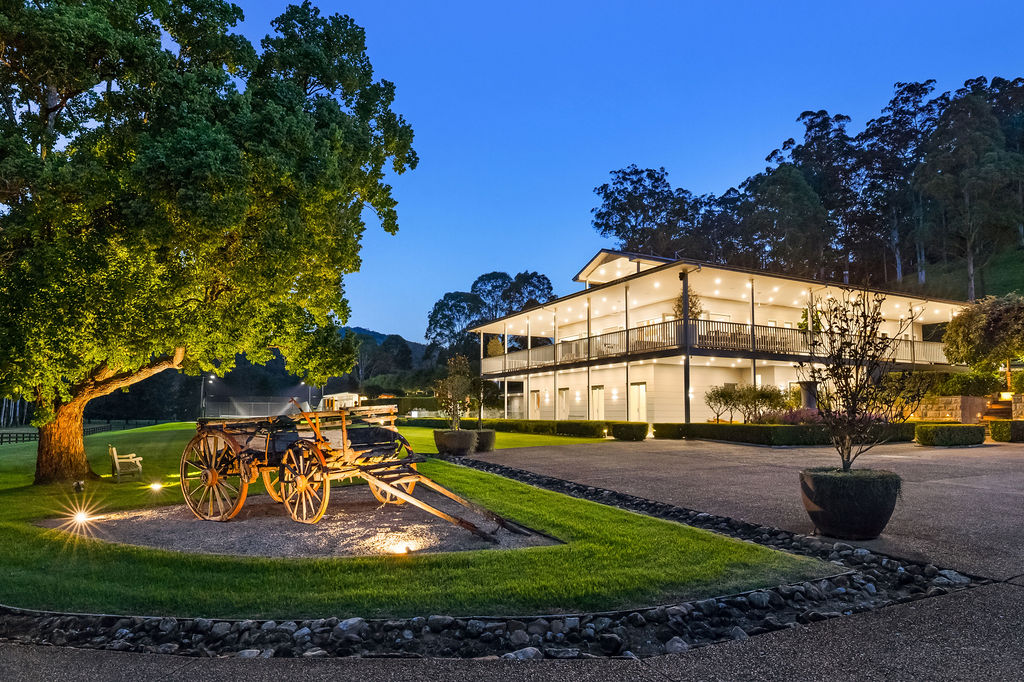
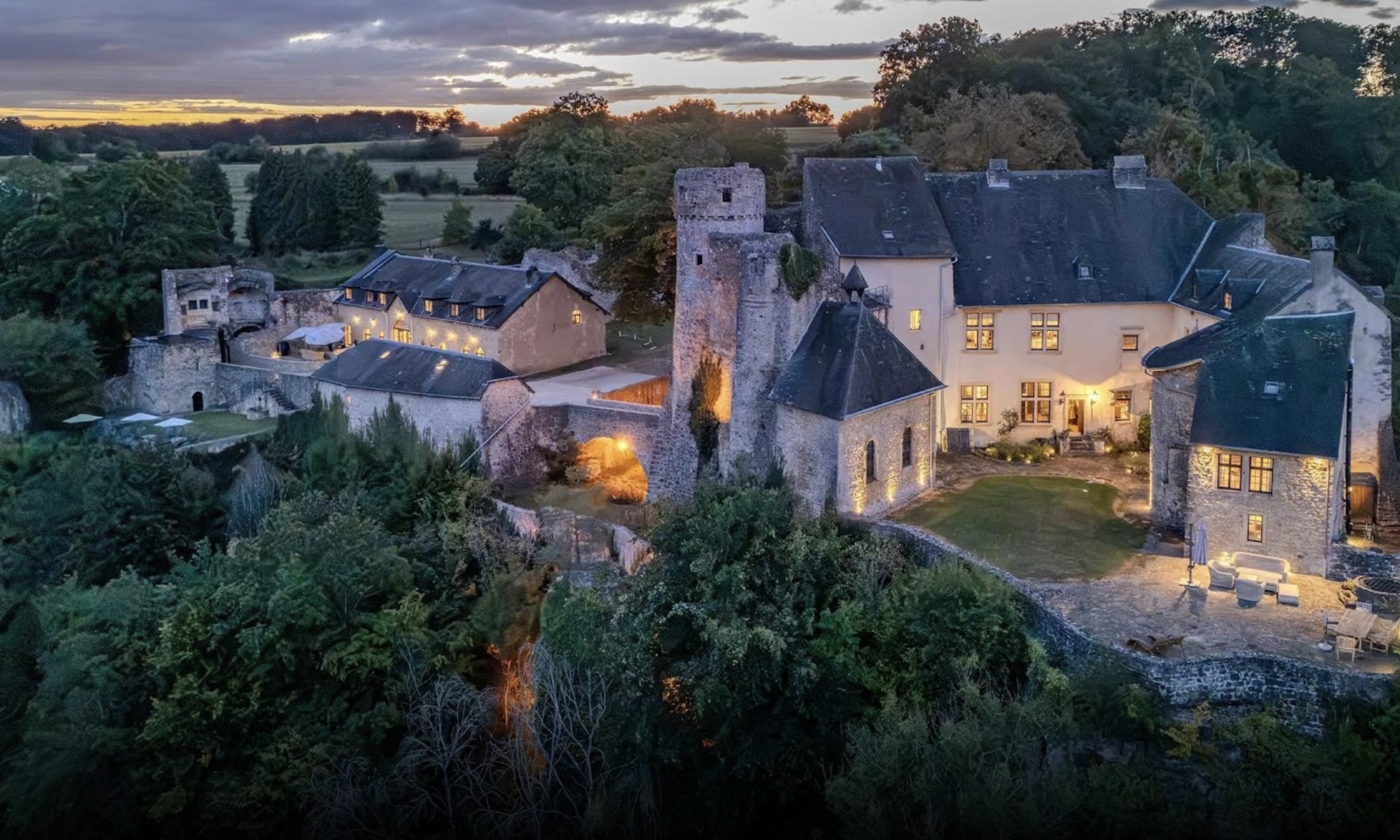
Hillside, on a grand 2462sq m land parcel in the heritage heart of Berrima, dates back to the 1840s. Sitting only minutes from the centre of town, the period property is surrounded by local history.

The Wilkinson St residence is opposite the landmark Harper’s Mansion estate, a National Trust heritage property and popular tourist attraction that is home to one of the largest hedge mazes in Australia.

Couple its prime position in Berrima with its Georgian charm – and a separate cottage on site – Hillside is filled with opportunity, said selling agent James Hall of Savills. 

“It’s got the whole village on its doorstep, which makes it so appealing. And the bonus is that as a short-term rental, it’s always in demand because you’ve got the very popular Bendooley Estate wedding venue just down the road,” Hall said.

“Berrima has really come into its own because it’s retained its old school charm and hasn’t become commercialised while still appealing to visitors.”

The property is within close walking distance of Berrima’s quaint boutiques, cafés, and noted restaurants such as Eschalot, as well as Australia’s oldest continuously licensed pub with a beer garden, the Surveyor General Inn. 

Last sold in 2015 for $1.45 million, Hillside is now coming to market with a price guide “in the high $3 millions” according to Hall.

The traditional home paints a pretty picture with its fairytale facade framed by meticulously landscaped grounds reminiscent of a stately English homestead.

The private setting features tall established trees, heritage stables, a gazebo, a fire pit, and a lockup garage with a workshop. In addition to the two-bedroom main residence, the guest cottage has en-suites to all three bedrooms.

A classic country house that is as rich in character as it is grand in scale, Hillside has rustic exposed brick interior walls, timber floors, and multiple French doors spilling out to the lush landscaped grounds. 

“The beautiful wraparound veranda overlooks almost a full-size grass tennis court,” Hall added. 

“Then there are the incredibly mature pine trees giving it privacy, even though it’s so close to the village.”

The vast level lawn is also an idyllic spot for a game of croquet, cricket, or a good old-fashioned English tea party.

As well as the selection of casual and formal living and dining areas, there is a cosy library, a wine cellar, and a modern kitchen with sophisticated sage green cabinetry, stainless steel appliances, a Hastings Turner ceramic double sink, a central island bench, and designer pendant lighting. 

Added extras include air conditioning, hydronic heating, four original fireplaces, and the original well has been integrated into the entryway as a period feature.

Hillside at 10 Wilkinson St, Berrima is listed via private treaty with James Hall of Savills.

Why First-Home Buyer Schemes Are Becoming a Stealth Investment Strategy

Australia’s home prices continue to grow, and while that makes them great investments, they are also some of the most unaffordable in the world.

That’s why first-home buyer schemes such as the First Home Owner Grant, the First Home Guarantee, and stamp duty concessions have become so valuable.

These programs are designed to reduce upfront costs and fast-track people into homeownership.

But the question many aspiring investors are now asking is can these schemes be used as part of an investment strategy? These government initiatives aren’t designed for investors, but they can still play a key role in your long-term investment journey if used strategically.

What the schemes actually allow

Every first-home buyer incentive in Australia is created to support owner-occupiers, not investors.

Whether it’s a cash grant, reduced deposit requirement, or a stamp duty discount, the catch is always the same in that you must live in the property for a set period of time. For example, the First Home Owner Grant often requires you to live in the property for at least six to twelve months, depending on the state.

The First Home Guarantee allows you to purchase with just a 5 per cent deposit without paying lenders’ mortgage insurance, but again, you’re required to live in the property for at least one year.

Likewise, state-based stamp duty concessions are only available for properties intended as a principal place of residence. If your intention from the outset is to buy a property solely for rental income, you won’t be eligible. However, if you’re open to living in the property initially, then transitioning it into an investment, there’s a path forward.

A strategy that works

Rentvesting has emerged as one of the most practical ways for first-time buyers to take advantage of these schemes while also laying the groundwork for a property portfolio.

The concept is simply, buying a property in an area you can afford (using the first-home buyer schemes to assist), live in it for the minimum required period, and then rent it out after fulfilling the occupancy condition.

This approach lets you legally access the benefits of first-home buyer schemes while building equity and entering the market sooner. Instead of waiting years to save a full 20 per cent deposit for an investment property, or getting priced out altogether, you get your foot in the door with reduced upfront costs.

Once you’ve satisfied the live-in requirement, the property can become an income-generating asset and even serve as collateral for your next purchase.

What to look for in a rentvestment property

If you plan to eventually convert the property into an investment, you need to think beyond your short-term living experience. It’s essential to buy a property that performs well both as a home and as a long-term asset.

That means looking at key fundamentals like location, rental demand, and growth potential. Suburbs with strong infrastructure, access to employment hubs, good transport links, and low vacancy rates should be high on your list.

A balanced price-to-rent ratio will help ensure manageable holding costs once the property transitions to an investment.

Established low-density areas often outperform high-rise apartment developments that flood the market with supply and limit capital growth. And ideally, your property should offer scope for future improvements, whether that’s a cosmetic renovation, granny flat addition, or potential to subdivide down the track.

Mistakes to avoid

There are a few common missteps that can undermine this strategy. The first is selling too soon. Some grants and stamp duty concessions include clawback provisions if you offload the property within a short period, which could see you lose the benefits or even owe money back.

It’s also a mistake to let the lure of a government handout sway your purchasing decision. A $10,000 grant doesn’t justify compromising on location, growth prospects, or property fundamentals.

Another pitfall is failing to consider the financial impact once the property becomes an investment. Repayments, tax treatment, and outgoings may change, so it’s important to stress-test your position from day one.

Lastly, beware of buying into oversupplied areas simply because they’re marketed to first-home buyers. Not all new builds are good investments. If hundreds of identical properties are being built nearby, your long-term growth could be seriously limited.

With the right approach, your first home can be the foundation for an entire property portfolio. It starts with using available government support to lower your entry cost.

From there, you occupy the property for the required time, convert it to an investment, and leverage the equity and rental income to fund your next purchase.

Many of the most successful investors today began with a single, strategically chosen property purchased using these exact schemes. By buying well, you can turn your first home into the launchpad for long-term wealth.

Abdullah Nouh is the Founder of Mecca Property Group (MPG), a buyers’ advisory firm specialising in investment opportunities in residential and commercial real estate. In recent years, his team has acquired over $300 million worth of assets for 250+ clients across Australia. 

The Year’s Hottest Crypto Trade Is Crumbling

The hottest crypto trade has turned cold. Some investors are saying “told you so,” while others are doubling down.

It was the move to make for much of the year: Sell shares or borrow money, then plough the cash into bitcoin, ether and other cryptocurrencies. Investors bid up shares of these “crypto-treasury” companies, seeing them as a way to turbocharge wagers on the volatile crypto market.

Michael Saylor  pioneered the move in 2020 when he transformed a tiny software company, then called MicroStrategy , into a bitcoin whale now known as Strategy. But with bitcoin and ether prices now tumbling, so are shares in Strategy and its copycats. Strategy was worth around $128 billion at its peak in July; it is now worth about $70 billion.

The selloff is hitting big-name investors, including Peter Thiel, the famed venture capitalist who has backed multiple crypto-treasury companies, as well as individuals who followed evangelists into these stocks.

Saylor, for his part, has remained characteristically bullish, taking to social media to declare that bitcoin is on sale. Sceptics have been anticipating the pullback, given that crypto treasuries often trade at a premium to the underlying value of the tokens they hold.

“The whole concept makes no sense to me. You are just paying $2 for a one-dollar bill,” said Brent Donnelly, president of Spectra Markets. “Eventually those premiums will compress.”

When they first appeared, crypto-treasury companies also gave institutional investors who previously couldn’t easily access crypto a way to invest. Crypto exchange-traded funds that became available over the past two years now offer the same solution.

BitMine Immersion Technologies , a big ether-treasury company backed by Thiel and run by veteran Wall Street strategist Tom Lee , is down more than 30% over the past month.

ETHZilla , which transformed itself from a biotech company to an ether treasury and counts Thiel as an investor, is down 23% in a month.

Crypto prices rallied for much of the year, driven by the crypto-friendly Trump administration. The frenzy around crypto treasuries further boosted token prices. But the bullish run abruptly ended on Oct. 10, when President Trump’s surprise tariff announcement against China triggered a selloff.

A record-long government shutdown and uncertainty surrounding Federal Reserve monetary policy also have weighed on prices.

Bitcoin prices have fallen 15% in the past month. Strategy is off 26% over that same period, while Matthew Tuttle’s related ETF—MSTU—which aims for a return that is twice that of Strategy, has fallen 50%.

“Digital asset treasury companies are basically leveraged crypto assets, so when crypto falls, they will fall more,” Tuttle said. “Bitcoin has shown that it’s not going anywhere and that you get rewarded for buying the dips.”

At least one big-name investor is adjusting his portfolio after the tumble of these shares. Jim Chanos , who closed his hedge funds in 2023 but still trades his own money and advises clients, had been shorting Strategy and buying bitcoin, arguing that it made little sense for investors to pay up for Saylor’s company when they can buy bitcoin on their own. On Friday, he told clients it was time to unwind that trade.

Crypto-treasury stocks remain overpriced, he said in an interview on Sunday, partly because their shares retain a higher value than the crypto these companies hold, but the levels are no longer exorbitant. “The thesis has largely played out,” he wrote to clients.

Many of the companies that raised cash to buy cryptocurrencies are unlikely to face short-term crises as long as their crypto holdings retain value. Some have raised so much money that they are still sitting on a lot of cash they can use to buy crypto at lower prices or even acquire rivals.

But companies facing losses will find it challenging to sell new shares to buy more cryptocurrencies, analysts say, potentially putting pressure on crypto prices while raising questions about the business models of these companies.

“A lot of them are stuck,” said Matt Cole, the chief executive officer of Strive, a bitcoin-treasury company. Strive raised money earlier this year to buy bitcoin at an average price more than 10% above its current level.

Strive’s shares have tumbled 28% in the past month. He said Strive is well-positioned to “ride out the volatility” because it recently raised money with preferred shares instead of debt.

Cole Grinde, a 29-year-old investor in Seattle, purchased about $100,000 worth of BitMine at about $45 a share when it started stockpiling ether earlier this year. He has lost about $10,000 on the investment so far.

Nonetheless, Grinde, a beverage-industry salesman, says he’s increasing his stake. He sells BitMine options to help offset losses. He attributes his conviction in the company to the growing popularity of the Ethereum blockchain—the network that issues the ether token—and Lee’s influence.

“I think his network and his pizzazz have helped the stock skyrocket since he took over,” he said of Lee, who spent 15 years at JPMorgan Chase, is a managing partner at Fundstrat Global Advisors and a frequent business-television commentator.

Gold Coast’s Trophy Market Fires Up for Summer. But It’s Not The Beach.

The Gold Coast prestige property market has ignited ahead of summer, but this time the heat isn’t coming from the beachfront. Instead, high-end buyers — both local and interstate — are turning their attention inland, where sprawling acreages and riverfront estates are redefining luxury living.

The latest headline-grabbing sale is Rivers Bend in Carrara (pictured), which has changed hands for a record $26 million — the highest price achieved along Main River this year and the second-largest riverfront sale in Gold Coast history.

Set on 6,300 sqm, the estate offers a masterclass in design and amenities. The primary residence features five bedrooms, including a master suite with a Nero Marquina marble ensuite and a 1.2-tonne freestanding bath. A gym, theatre room, 700-bottle temperature-controlled wine cellar, and garaging for 12 vehicles add to the home’s appeal.

Outdoors, the riverside entertaining terrace features a commercial-grade bar and kitchen. In contrast, the 18m saltwater pool — complete with spa, swim-up bar, firepit and TV — overlooks a championship-sized tennis court and rooftop pavilion. A self-contained two-bedroom guesthouse, complete with its own pool and spa, rounds out the estate.

The sale of Rivers Bend follows that of Redwood, the Currumbin Valley acreage that was quietly sold for $28 million earlier this year. The 2.88-hectare estate, last purchased for $2.55 million in 2017, was transformed by vendor Bridget Deer, wife of Ignite Travel founder Randall Deer.

The only other sale this year to break through the $20 million threshold was a Hamptons-style riverfront home in Southport, selling for $22 million.

Designed by Bayden Goddard, the four-level, 1,805sqm residence on Macmillan Court showcases century-old red ironbark flooring, Carrara marble, and chandeliers sourced from New York and Paris.

Among its highlights are five ensuite bedrooms, a chef’s kitchen with a cold room and three ovens, a 3,000-bottle wine cellar, an Aspen-inspired games den, and a six-bar basement.

The top floor is dedicated to leisure, featuring a gym, steam room, and a rooftop bar that accommodates up to 50 guests, complemented by open-plan living spaces that flow seamlessly into a north-facing saltwater pool and spa.

The newest addition to the trophy market is The Estate in Tallai, listed by former AFL player turned tech entrepreneur Brad Moran and marketed by Kollosche. Carved into the mountainside of its 8,888 sqm site, the ultra-luxury residence makes a statement from arrival, with a circular driveway of 75,000 hand-laid cobblestones and a five-element fountain finished in 24-carat gold mosaics.

The 2,240sqm home spans three levels and features 10 bedrooms, 11 bathrooms, a whisky bar, poker room, 16-seat cinema, and a wellness centre complete with gym, yoga studio, sauna, steam room, and hydrotherapy pools.

Outside, a “private fun park” includes a 160m go-kart track, putting green, basketball court, and 20m gold-tiled infinity pool.

Three self-contained “Sky Residences” cater for guests. At the same time, a glass-fronted garage gallery with space for nine cars — plus a race simulator and executive office — cements The Estate as one of the Gold Coast’s most spectacular offerings.

Pizza pioneer’s $15m Wildhaven estate is a luxe hinterland retreat

WildHaven is the extravagant contemporary compound of a pizza pioneer, but despite all its toppings, the hinterland hideaway has no pizza oven in sight.

High above the Glass House Mountains on the Sunshine Coast, the vast 42ha estate has been home to former CEO of Domino’s Australia, Nick Knight and his wife Noni, since the pair paid $1.313 million for a classic Queenslander on the land back in 2016.

Today, the prestige property is being marketed through Melissa Schembri and Daniel Rees of Queensland Sotheby’s International Realty with $13 million to $15 million price expectations.

Knight began his career with the fast food giant as a 13-year-old “wobble boarder” (holding advertising signs on the roadside), then worked his way up to become a large-scale franchisee. He went on to become the Australia and New Zealand boss in 2015, just one year before buying Wildhaven. Knight retired in 2021 after 20 years with the company.

Their Booroobin estate near Maleny, 90kms from Noosa Heads, is an extensive retreat built for family and friends. It consists of five separate residences and a wellness centre including hot and cold pools, a sauna, steam room, gym and an infinity edge pool with a spa.

To rival the long list of must-have holiday house ingredients, the elaborate property along the Blackall Ranges also has stunning views of the Glasshouse Mountains, and Cedar Valley and Morton Bay.

A meandering driveway winds through private parklands and native forest to reveal manicured lawns with stone terraces and sculpted gardens.

WildHaven’s four-bedroom main residence is a fusion of coastal and country design elements. Beyond the timber-clad exterior with traditional wraparound verandas, the home has a spacious footprint with a state-of-the-art kitchen featuring Miele appliances, a triple-stack oven, wine fridge, timber cabinetry, stone bench tops and a concealed butler’s pantry.

The living and dining areas are anchored by a sculptural fireplace and built-in seating, with retractable doors opening out to vast covered decks and the grand wet-edge pool.

Three self-contained, architecturally designed guest suites sit away from the primary house, all with private outdoor areas and separate bedrooms. Each features Miele kitchens, smart home automation and mountain outlooks.

Carved into the hillside, it is The Pavilion at WildHaven that sets it apart. The private spa and entertainment hub, created to rival any five-star resort, is a 305sq m chill out zone curated for rest and relaxation. There is a curved glass spa, a rain head shower, a therapeutic steam room, a full kitchen, and a sunken outdoor lounge with a fireplace.

Other entertaining features include a professional-grade gym and cinema. For adventures in the great outdoors, the estate has tranquil creeks, three dams, trails for walking or cycling, plus an adrenaline-inducing motocross track.

There are also two fenced paddocks, an orchard, as well as a large machinery shed, a 12-car garage, C-Bus smart technology throughout, automatic blinds, ducted air-conditioning, a commercial cool room and laundry, 300,000 litres of water tanks, plus a solar battery room that could take the whole compound off-grid.

Wildhaven in the Glass House Mountains is on the market with a price guide of $13 million to $15 million through Queensland Sotheby’s International Realty.

Pure Amazon Sets Sail: A New Standard in Luxury River Cruising

Pure Amazon, an A&K Sanctuary, has officially launched its voyages into the 21,000-square-kilometre Pacaya-Samiria National Reserve.

Designed for just 22 guests, the new vessel positions itself at the high end of wilderness travel, offering quiet, immersive, and attentive experiences with a one-to-one staff-to-guest ratio. The focus is on proximity to wildlife and landscape, without the crowds that have made parts of the Amazon feel like tourism has arrived before the welcome mat.

Where Architecture Meets the River

The design direction comes from Milan-based architect Adriana Granato, who has reimagined the boat’s interiors as part gallery, part observatory. Floor-to-ceiling windows frame rainforest scenes that shift hour to hour, and every space holds commissioned artworks by Peruvian artists.

The dining room’s centrepiece, Manto de Escamas de Paiche by Silvana Pestana, uses bronze and clay formations that mirror the scale patterns of the Amazon’s giant fish. Pestana’s works throughout the vessel reference environmental fragility, especially the scars left by illegal gold mining.

In each suite, hand-painted kené textiles by Shipibo-Konibo master artist Deysi Ramírez depict sacred geometry in natural dyes. Cushions by the BENEAI Collective feature 20 unique embroidered compositions, supporting Indigenous women artists and keeping traditional techniques alive in a meaningful, non-performative way.

Wildlife Without the Tame Script

Days on board are structured around early and late river expeditions led by naturalist guides. Guests may encounter pink river dolphins cutting through morning mist, three-toed sloths moving like they’re part of the slow cinema movement, and black caimans appearing at night like something from your childhood nightmares.

The prehistoric hoatzin appears along riverbanks, giant river otters hunt in packs, and scarlet macaws behave like the sky belongs to them. The arapaima — the same fish inspiring Pestana’s artwork — occasionally surfaces like an apparition.

Photo: Tom Griffiths

A Regional Culinary Lens

The culinary program is led by a team from Iquitos with deep knowledge of Amazonian produce.

Nightly five-course tasting menus lean into local ingredients rather than performing them. Expect dishes like caramelised plantain with river prawns, hearts of palm with passionfruit, and Peruvian chocolate paired with fruits that would be unpronounceable if you encountered them in a supermarket aisle.

A pisco-led bar menu incorporates regional botanicals, including coca leaf and dragon’s blood resin.

A Model of Conservation-First Tourism

Pure Amazon’s conservation approach goes beyond the familiar “offset and walk away” playbook. Through A&K Philanthropy, the vessel’s operations support Indigenous community-led economic initiatives, including sustainable fibre harvesting and honey production in partnership with Amanatari.

Guests also visit FORMABIAP, a bilingual teacher training program supporting cultural and language preservation across several Indigenous communities. Notably, the program enables young women to continue their education while remaining with their families — a rarity in remote regions.

Low-intensity lighting, heat pump technology, and automated systems reduce disturbance to the reserve’s nocturnal wildlife.

Photo: Tom Griffiths

The Experience Itself

Itineraries span three, four, or seven nights. Mornings often begin with quiet exploration along mirrorlike tributaries; afternoons allow for spa treatments or time on the open-air deck. Evenings shift into long dinners and soft-lit river watching as the rainforest begins its nightly soundtrack.

Granato describes the vessel as “a mysterious presence on the water,” its light calibrated to resemble fire glow rather than a foreign object imposing itself on the dark.

It is, in other words, slow travel done with precision.

DOUBLE-DIGIT HOUSE PRICE GROWTH ARRIVES AHEAD OF EXPECTATIONS

Australian house prices are surging again, delivering double-digit annual growth months ahead of schedule.

Nationally, the median house price climbed 1.1 per cent in October to $940,000, lifting annual growth to 10.6 per cent, the first double-digit increase since the 2021–22 property boom.

Market Resilience Surprises Analysts

The acceleration comes earlier than expected, according to Ray White Group Chief Economist Nerida Conisbee, who says the milestone was originally forecast for the end of the year.

“Stronger-than-expected October gains and continued tight supply across most markets have pushed growth ahead of schedule,” Conisbee said. “This shows how resilient demand has remained through spring.”

Perth (+14.8 per cent), Brisbane (+12.5 per cent) and Adelaide (+10.8 per cent) continue to lead the charge among capital cities, while Sydney (+8.6 per cent) and Melbourne (+6.5 per cent) show steady, consistent increases.

Regional Markets Extend Their Lead

Beyond the capitals, regional Australia is powering ahead, particularly in the resource states.

Regional Western Australia jumped 16.4 per cent year-on-year, and regional Queensland followed close behind at 14.5 per cent, as population growth and affordability continue to drive demand.

Units Outperform Houses

Unit prices rose even more sharply in October, up 1.4 per cent to $710,000, marking 9.2 per cent annual growth. Conisbee said affordability pressures, new first home buyer incentives, and a lack of available stock are pushing more buyers into the apartment market.

“Units are now seeing stronger monthly gains than houses, reflecting both affordability constraints and renewed first-home-buyer activity,” she said.

The biggest monthly jumps were in Perth (+1.6 per cent), Adelaide (+1.5 per cent), and Brisbane (+1.4 per cent). Melbourne’s unit market also firmed, up 1.6 per cent, as buyers returned to lower price brackets.

Spring Demand Defies Higher Listings

Despite an influx of spring listings, new stock has failed to match the intensity of buyer demand. Nationally, house prices have now risen every month since February, and unit prices every month since March.

“The pace of growth shows demand hasn’t been dampened by higher supply,” Conisbee said.

Outlook: Steady Growth Into 2026

The data comes as the Reserve Bank prepares for its Melbourne Cup Day meeting, where rates are expected to remain on hold at 3.6 per cent.

With inflation easing only gradually and unemployment sitting around 4.5 per cent, analysts expect monetary policy to stay steady for now.

Ray White’s forecast suggests 2025 will close with high single- to low double-digit annual growth nationally, with smaller capitals and regional areas tipped to outperform well into 2026.

Bell & Ross Takes Flight With High-Performance Timepieces

Bell & Ross has re-engineered its iconic BR-03 line with the launch of the BR-X3 series, a new generation of professional instrument watches designed for those who live at the edge of performance.

The new models — the BR-X3 Black Titanium, BR-X3 Blue Steel and BR-X3 Night Vision — take the brand’s signature “circle within a square” aesthetic into more experimental territory, merging technical mastery with striking design.

At the heart of the BR-X3 line is the BR-CAL.323 calibre, a self-winding mechanical movement developed by Kenissi for Bell & Ross, offering a 70-hour power reserve and COSC-certified precision.

Each piece is built around a multi-component 41 mm case that uses advanced materials including titanium, steel, carbon fibre, and luminescent resin, with a 5-year warranty across the range.

Three Takes on Flight

The BR-X3 Black Titanium focuses on lightness and strength, combining micro-blasted titanium plates with a perforated rubber strap for comfort.

The BR-X3 Blue Steel channels the colour of the stratosphere, with polished and satin-finished steel, anodised blue aluminium pillars, and a sunray blue dial inspired by space flight.

Completing the trilogy, the BR-X3 Night Vision pushes into nocturnal territory, its LUM-CAMO carbon-fibre case infused with photoluminescent resin for readability in total darkness — a 250-piece limited edition referencing the green glow of aircraft head-up displays.

BR-X3 Black Titanium, left, and BR-X3 Blue Steel.

A Partnership Born in the Skies

Unveiled at the 2025 Paris Air Show, Bell & Ross became the official partner of the Rafale Solo Display, the French Air and Space Force’s official flight demonstration unit.

To mark the collaboration, the brand released the BR-03 Chrono Rafale Solo Display, a 500-piece limited edition that embodies the precision and performance of the fighter jet it honours.

Housed in a 42 mm micro-blasted black ceramic case, the chronograph features the BR-CAL.301 automatic movement with a 42-hour power reserve.

Its matte black dial incorporates aviation-inspired details — a yellow dotted line around the date window, orange chronograph hands, and the Rafale Solo Display insignia.

The watch comes on a black rubber or ultra-resilient fabric strap, both built for durability under extreme conditions.

The stunning BR-03 Chrono Rafale.

Precision Meets Passion

Since its founding in 1994 by Carlos-A. Rosillo and Bruno Belamich, Bell & Ross has built its identity around precision timekeeping for professionals — from fighter pilots to deep-sea divers.

The BR-X3 and BR-03 Chrono Rafale Solo Display extend that lineage, fusing experimental design with the technical sophistication expected of modern instrument watches.

For collectors and aviation enthusiasts alike, these new releases represent Bell & Ross at its most daring — and most authentic — where mechanical innovation meets the thrill of flight.

RARE TASMANIAN COASTAL ESTATE ON THE MARKET FOR MORE THAN $20 MILLION

A landmark coastal property on Tasmania’s East Coast has hit the market, with expectations of more than $20 million for the fully integrated vineyard, distillery and hospitality estate.

White Sands Estate, set across 250 hectares at Four Mile Creek, is being offered by owner-operator John White through Tom Ryan of Knight Frank and Josh Hart of McGrath.

It represents one of the largest privately owned coastal holdings on the East Coast, a region increasingly favoured by both domestic and international investors seeking long-term tourism and lifestyle assets.

The property’s credentials are formidable. It encompasses an operating brewery, distillery and vineyard with a cellar door and tasting room housed within a 3,254-square-metre two-level complex.

Accommodation includes 19 self-contained villas and larger group lodges, alongside multiple event spaces catering to weddings, conferences and corporate retreats. The estate also features manicured lawns, gardens and beachfront event locations with direct private access to Four Mile Creek beach.

Located along the Tasman Highway between St Helens and Bicheno, White Sands occupies a prime position on the East Coast tourism trail, within easy reach of Freycinet National Park, Douglas Apsley and Maria Island. It’s about 90 minutes’ drive from Launceston, making it an accessible yet secluded escape that draws consistent visitor traffic year-round.

Knight Frank’s Tom Ryan said the property’s combination of operational success, large-scale infrastructure and future potential made it an exceptional offering. “An opportunity of this scale simply doesn’t come to the market,” he said.

“We expect strong interest from both domestic and international investors, particularly given the global profile White Sands Estate has developed.”

While already operating as a successful hospitality and tourism venture, the property also offers significant potential for expansion.

“The large-scale site offers multiple future development pathways,” Ryan added. “That includes eco-tourism, resort or residential projects, as well as expanded events and commercial operations.”

McGrath’s Josh Hart echoed that sentiment, describing the listing as a “once-in-a-generation opportunity to secure a fully operational coastal agritourism and lifestyle asset in a tightly held pocket of the East Coast.”

“It occupies a rare stretch of coastline with direct beach access and sweeping ocean views,” Hart said.

“This region benefits from strong year-round visitation linked to nearby icons such as Freycinet and Wineglass Bay, and there are very few large-scale holdings of this nature remaining.”

The East Coast of Tasmania has long been a magnet for tourism investment, prized for its dramatic coastal scenery, growing food and wine culture, and consistent visitor growth.

With strong domestic demand and increasing international visibility, assets like White Sands Estate are becoming increasingly scarce, and increasingly valuable.

The Expressions of Interest campaign for White Sands Estate closes at 2pm AEDT on Thursday, November 20.

MAISON de SABRÉ TAKES PARIS: AUSTRALIA’S MODERN LUXURY BRAND ARRIVES AT LE BON MARCHÉ

Australian design house MAISON de SABRÉ has opened a pop-up at Le Bon Marché Rive Gauche, marking its first Paris appearance and celebrating eight years of extraordinary growth for the brand founded by brothers Omar and Zane Sabré.

The residency, running from October 25, 2025, to January 3, 2026, positions the self-funded label within one of the world’s most exclusive retail destinations — a milestone that cements its status as one of Australia’s most successful global luxury exports.

Since its founding in 2017, MAISON de SABRÉ has evolved from a personalised phone case start-up into a $100 million modern luxury business, now shipping to more than 150 countries.

Around 80 per cent of its sales come from international markets, proof that its clean, design-led aesthetic and commitment to craftsmanship have global appeal.

At the centre of the Paris showcase is The Palais, the brand’s flagship handbag and new icon. Conceived over eight years, its architectural form represents MAISON de SABRÉ’s shift from personalised accessories to the rarefied territory of luxury fashion.

“The industry loves to romanticise heritage,” says co-founder Zane Sabré. “But heritage doesn’t guarantee relevance. The Palais proves you don’t need a century of history to create something iconic – you need conviction, execution, and a brand people actually believe in.”

Brother and creative director Omar Sabré adds, “Hermès has the Birkin. We have The Palais.”

Following its global sell-out debut earlier this year, The Palais now leads the brand’s international assortment and signals its arrival in the global handbag market.

The Le Bon Marché installation features multiple sizes of the bag, alongside the full collection of handbags and small leather goods. A Charm Bar offering on-site personalisation brings the brand’s signature interactive retail experience to the Paris stage.

The pop-up follows a string of high-profile activations in Tokyo, New York and Milan, where MAISON de SABRÉ has demonstrated its ability to reinterpret traditional luxury through a modern, design-forward lens.

Its recent flagship experience at Tokyo’s Miyashita Park placed the brand alongside Louis Vuitton, Gucci, Prada and Balenciaga — a move that signalled its ambition to compete at the highest level.

Underpinning MAISON de SABRÉ’s rise is a quiet but resolute commitment to sustainability and responsible production. The brand sources all leather from Leather Working Group Gold-Rated tanneries, including a Dutch partner pioneering waterless tanning technology that saves up to 20 litres of freshwater per hide.

Its charm collections are crafted from upcycled leather offcuts, demonstrating that environmental awareness can coexist with luxury design.

For a brand that began in Australia with a single monogrammed accessory, the Paris debut at Le Bon Marché is more than a retail event. It’s a statement — that modern luxury can be born anywhere, thrive without legacy, and redefine craftsmanship for a global audience.

GAC AION V ARRIVES: A NEW CHAPTER IN LUXURY ELECTRIC CARS

The wait is over. GAC has confirmed the Australian specifications for its all-electric medium SUV, the AION V, available in Premium and Luxury trims.

The model, available in more than 20 markets worldwide, combines progressive design with advanced EV engineering, offering a long-range, fast-charging alternative that redefines what Australian drivers can expect from electric mobility.

BUILT ON INNOVATION

Selling more than two million vehicles in China last year, GAC has emerged as a leader in new-energy mobility, drawing on decades of research and development and collaborations with Toyota and Honda.

Underpinning the AION V is GAC’s proprietary 400 V electric architecture, a densely packed 75.26 kWh battery, and extensive use of lightweight aluminium. The result: a 510 km WLTP range and fast charging from 30 to 80 per cent in just 16 minutes.

Its 150 kW motor produces 210 Nm of torque, while a heat-pump air-conditioning system improves overall power efficiency — hallmarks of the brand’s real-world engineering approach.

SAFETY FIRST

At the heart of the AION V’s safety credentials is the Magazine Battery 2.0, GAC’s patented technology designed for exceptional durability and fire resistance even under extreme conditions.

The SUV also meets i-Size, the latest international standard for child seat compatibility — reinforcing its credentials as a smart and secure family choice.

DESIGN WITHOUT BORDERS

Developed through GAC’s global design network, with studios in Milan, Los Angeles, Shanghai and Guangzhou, the AION V reflects the brand’s internationally influenced aesthetic.

Muscular proportions, a bold waistline and distinctive “dragon claw” lighting give it a confident, athletic stance, while inside, the cabin offers a calming, minimalist environment anchored by a 14.6-inch central display with Apple CarPlay and Android Auto.

Soft-touch materials, a panoramic glass roof with electric sunscreen, and 4 mm acoustic glass deliver a serene, premium ambience.

REFINED PRACTICALITY

Space is generous, with class-leading rear legroom of up to 1.1 metres and the ability to recline the front seats into a queen-bed configuration. A smart-sensor tailgate and 978-litre cargo capacity (rear seats folded) ensure practicality keeps pace with luxury.

The Luxury trim adds standout features, notably a 6.6-litre refrigerator hidden in the central armrest that cools to –15 °C or warms to 50 °C, and eight-point massage seats for driver and passenger.

READY FOR AUSTRALIA

Cheney Liang, Deputy General Manager of GAC Australia, said: “We’ve already delivered the AION V in over 20 countries worldwide, and we’re delighted that Australians can now experience this exceptional, feature-rich SUV for themselves.

“Whether choosing the Premium or Luxury model, every AION V represents the very best of modern electric powertrain technology, combining this with the safety, comfort and everyday practicality that truly make a difference in Australian life.”

Newport icon with oceanfront poise shatters sale records

Sydney’s renowned ‘Copper House’ in Newport has shattered beachfront sale records, selling for $17.5 million – the highest price ever achieved for a beachfront property between Freshwater and Whale Beach.

Although it sits just off the sand at Newport in Sydney’s Northern Beaches, this Myola Rd residence takes its cues from global design practices.

The four-bedroom home was the original vision of investment banker-turned-yoga devotee Eriko Kinoshita and her husband, Clive Mayhew, a former executive at Netscape.

The couple bought the land in 1992 for $750,000 and engaged Peter Stutchbury and his team to create a fusion of Japanese and Western influences that demonstrate Asian minimalism and relaxed Aussie living.

Award-winning Bellevarde Constructions completed the home in 2006. However, despite its almost two decades, the modern beach house with its striking copper roof still stands the test of time along one of Sydney’s most coveted waterfront parcels.

Kinoshita and Mayhew sold the Myola beach pad back in 2016 for $7.9 million, then it exchanged hands again in 2019 for $8.5 million. Today, the home on 1146sq m of level oceanfront land is listed via a private treaty campaign with a guide of $15.5 million to $17 million through Ray White Northern Beaches agents Emma Blake and Sasha de Bilde.

One of only four properties on the short street, the house is a local landmark thanks to its iconic asymmetrical roofline.

Upon entry, a tranquil reflection pond pulls focus along a gallery foyer and the open plan ground floor space combines living and dining as well as the state-of-the-art entertainer’s kitchen. In addition to high-end appliances, the kitchen has a butler’s pantry and Italian Copper bench tops, which pay homage to the unique exterior of the house.

The living zone peels back via sliding doors to connect the house with not only a lush landscaped lawn, but also the prized beachfront deck and ocean.

For those days when the Pacific is too wild to play safely, the 23m hydronic heated and tiled lap pool, plus the separate hot tub, make perfect relaxing alternatives.

On the same level, there is also a private study, a family room for movies, a barbecue side terrace and access to a 1000-bottle wine cellar.

Up on the accommodation level, the main bedroom is home to a sleek bath ensuite, ample walk-in wardrobe space and more sliding doors to showcase the enviable water view.

The remaining bedrooms upstairs feature custom-made built-ins and copper louvres controlling the natural sunlight throughout the day.

Added extras of the Newport beach house include an outdoor shower, iPad-controlled designer lighting, security gates with keyless entry and a double lock up garage with additional storage.


AUSTRALIA’S HOUSING CRUNCH: MCGRATH REPORT CALLS FOR SUPPLY-LED SOLUTIONS

Australia’s housing market has reached a critical juncture, with home ownership and rental affordability deteriorating to their worst levels in decades, according to the McGrath Report 2026.

The annual analysis from real estate entrepreneur John McGrath paints a sobering picture of a nation where even the “lucky country” has run out of luck — or at least, out of homes.

New borrowers are now spending half their household income servicing loans, while renters are devoting one-third of their earnings to rent.

The time needed to save a 20 per cent deposit has stretched beyond ten years, and the home price-to-income ratio has climbed to eight times. “These aren’t just statistics,” McGrath writes. “They represent real people and real pain.”

McGrath argues that the root cause of Australia’s housing crisis is not a shortage of land, but a shortage of accessibility and deliverable stock.

“Over half our population has squeezed into just three cities, creating price pressure and rising density in Sydney, Melbourne and Brisbane while vast developable land sits disconnected from essential infrastructure,” he says.

The report identifies three faltering pillars — supply, affordability and construction viability — as the drivers of instability in the current market.

Developers across the country, McGrath notes, are “unable to make the numbers work” due to labour shortages and soaring construction costs.

In many trades, shortages have doubled or tripled, and build costs have surged by more than 30 per cent, stalling thousands of projects.

Need for systemic reform

McGrath’s prescription is clear: the only real solution lies in increasing supply through systemic reform. “We need to streamline development processes, reduce approval timeframes and provide better infrastructure to free up the options and provide more choice for everyone on where they live,” he says.

The 2026 edition of the report also points to promising trends in policy and innovation. Across several states, governments are prioritising higher-density development near transport hubs and repurposing government-owned land with existing infrastructure.

Build-to-rent models are expanding, and planning reforms are gaining traction. McGrath notes that while these steps are encouraging, they must be accelerated and supported by new construction methods if Australia is to meet demand.

One of the report’s key opportunities lies in prefabrication and modular design. “Prefabricated homes can be completed in 10–12 weeks compared to 18 months for a traditional house, saving time and money for everyone involved,” McGrath says.

The report suggests that modular and 3D-printed housing could play a significant role in addressing shortages while setting a new global benchmark for speed, cost and quality in residential construction.

Intelligent homes

In a section titled Weathering the Future: The Power of Smart Design, the report emphasises that sustainable and intelligent home design is no longer aspirational but essential.

It highlights new technologies that reduce energy use, improve thermal efficiency, and make homes more resilient to climate risks.

“There’s no reason why Australia shouldn’t be a world leader in innovative design and construction — and many reasons why we should be,” McGrath writes.

Despite the challenges, the tone of the 2026 McGrath Report is one of cautious optimism. Demand is expected to stabilise at around 175,000 households per year from 2026, and construction cost growth is finally slowing. Governments are also showing a greater willingness to reform outdated planning frameworks.

McGrath concludes that the path forward requires bold decisions and collaboration between all levels of government and industry.

“Australia has the land, demand and capability,” he says. “What we need now is the will to implement supply-focused solutions that address root causes rather than symptoms.”

“Only then,” he adds, “can we turn the dream of home ownership back into something more than a dream.”

ROLLS-ROYCE MARKS A CENTURY OF PHANTOM WITH ULTRA-LIMITED PRIVATE COLLECTION

Rolls-Royce has unveiled the Phantom Centenary Private Collection, a landmark series of just 25 motor cars honouring the 100th anniversary of its most storied model.

Described as the marque’s most complex and technologically ambitious creation to date, the Centenary Collection is a statement of craftsmanship, symbolism and legacy, three years in the making.

Each Phantom Centenary tells the story of the nameplate’s century-long reign as the pinnacle of luxury motoring.

Every surface, from its embroidered headliner to its gold-detailed engine cover, reflects an element of Rolls-Royce’s history.

The Bespoke Collective of designers and artisans distilled the Phantom’s heritage into 77 motifs that appear throughout the car, created using groundbreaking techniques such as 3D marquetry, ink layering, laser-etched leather and 24-carat gold leafing.

Chief Executive Chris Brownridge called the Centenary Collection “a tribute to 100 years of the world’s most revered luxury item,” describing it as “a motor car which reaffirms Phantom’s status as a symbol of ambition, artistic possibility, and historical gravitas.”

Inside, the rear seats feature more than 160,000 stitches across 45 panels of high-resolution printed and embroidered fabric inspired by historic Phantoms, developed in partnership with a fashion atelier.

The front seats are laser-etched with hand-drawn sketches that reference key design codenames, while the Anthology Gallery installation – 50 brushed aluminium fins engraved with a century of quotes – forms a centrepiece that reads like a living archive.

The exterior pairs Super Champagne Crystal paint with Arctic White and Black tones, finished with iridescent glass particles. Each car is crowned with a solid 18-carat gold Spirit of Ecstasy, enamelled and hallmarked with a bespoke “Phantom Centenary” mark. Even the famed RR badges have been plated in 24-carat gold and white enamel for the first time.

Bespoke woodwork depicts the Phantom’s most defining journeys, from Sir Henry Royce’s homes in France and England to the 4,500-mile expedition of the first Goodwood-era Phantom across Australia. Roads and landscapes are etched in gold, and interior embroidery continues these lines in gleaming thread.

The Starlight Headliner, with 440,000 stitches, portrays the mulberry tree under which Royce once worked, complete with bees from the marque’s Goodwood apiary and constellations referencing legendary Phantoms such as Sir Malcolm Campbell’s ‘Bluebird’.

Limited to 25 cars worldwide, the Phantom Centenary Private Collection stands as both an homage to Rolls-Royce’s past and a promise of its future, a modern-day heirloom crafted to be read, driven and remembered over generations.

More Big Companies Bet They Can Still Grow Without Hiring

It’s the corporate gamble of the moment: Can you run a company, increasing sales and juicing profits, without adding people?

American employers are increasingly making the calculation that they can keep the size of their teams flat—or shrink through layoffs—without harming their businesses.

Part of that thinking is the belief that artificial intelligence will be used to pick up some of the slack and automate more processes. Companies are also hesitant to make any moves in an economy many still describe as uncertain.

JPMorgan Chase’s chief financial officer told investors recently that the bank now has a “very strong bias against having the reflective response” to hire more people for any given need. Aerospace and defense company RTX boasted last week that its sales rose even without adding employees.

Goldman Sachs , meanwhile, sent a memo to staffers this month saying the firm “will constrain head count growth through the end of the year” and reduce roles that could be more efficient with AI. Walmart , the nation’s largest private employer, also said it plans to keep its head count roughly flat over the next three years, even as its sales grow.

“If people are getting more productive, you don’t need to hire more people,” Brian Chesky , Airbnb’s chief executive, said in an interview. “I see a lot of companies pre-emptively holding the line, forecasting and hoping that they can have smaller workforces.”

Airbnb employs around 7,000 people, and Chesky says he doesn’t expect that number to grow much over the next year. With the help of AI, he said he hopes that “the team we already have can get considerably more work done.”

Many companies seem intent on embracing a new, ultralean model of staffing, one where more roles are kept unfilled and hiring is treated as a last resort. At Intuit , every time a job comes open, managers are pushed to justify why they need to backfill it, said Sandeep Aujla , the company’s chief financial officer. The new rigor around hiring helps combat corporate bloat.

“That typical behavior that settles in—and we’re all guilty of it—is, historically, if someone leaves, if Jane Doe leaves, I’ve got to backfill Jane,” Aujla said in an interview. Now, when someone quits, the company asks: “Is there an opportunity for us to rethink how we staff?”

Intuit has chosen not to replace certain roles in its finance, legal and customer-support functions, he said. In its last fiscal year, the company’s revenue rose 16% even as its head count stayed flat, and it is planning only modest hiring in the current year.

The desire to avoid hiring or filling jobs reflects a growing push among executives to see a return on their AI spending. On earnings calls, mentions of ROI and AI investments are increasing, according to an analysis by AlphaSense, reflecting heightened interest from analysts and investors that companies make good on the millions they are pouring into AI.

Many executives hope that software coding assistants and armies of digital agents will keep improving—even if the current results still at times leave something to be desired.

The widespread caution in hiring now is frustrating job seekers and leading many employees within organizations to feel stuck in place, unable to ascend or take on new roles, workers and bosses say.

Inside many large companies, HR chiefs also say it is becoming increasingly difficult to predict just how many employees will be needed as technology takes on more of the work.

Some employers seem to think that fewer employees will actually improve operations.

Meta Platforms this past week said it is cutting 600 jobs in its AI division, a move some leaders hailed as a way to cut down on bureaucracy.

“By reducing the size of our team, fewer conversations will be required to make a decision, and each person will be more load-bearing and have more scope and impact,” Alexandr Wang , Meta’s chief AI officer, wrote in a memo to staff seen by The Wall Street Journal.

Though layoffs haven’t been widespread through the economy, some companies are making cuts. Target on Thursday said it would cut about 1,000 corporate employees, and close another 800 open positions, totaling around 8% of its corporate workforce. Michael Fiddelke , Target’s incoming CEO, said in a memo sent to staff that too “many layers and overlapping work have slowed decisions, making it harder to bring ideas to life.”

A range of other employers, from the electric-truck maker Rivian to cable and broadband provider Charter Communications , have announced their own staff cuts in recent weeks, too.

Operating with fewer people can still pose risks for companies by straining existing staffers or hurting efforts to develop future leaders, executives and economists say. “It’s a bit of a double-edged sword,” said Matthew Martin , senior U.S. economist at Oxford Economics. “You want to keep your head count costs down now—but you also have to have an eye on the future.”