Mosaic Sets a New Benchmark for Queensland Luxury Living

Mosaic Property Group is pushing Queensland’s prestige market into a new era, leveraging design excellence, construction certainty and a fully integrated operating model to deliver some of the most sought-after residences on the coast.

With its flagship Florence by Mosaic capturing the Urban Development Institute of Australia’s Queensland Project of the Year, and two new coastal projects, Madeline in Broadbeach and Josephine in Burleigh Heads, surpassing early sales expectations, Mosaic has cemented itself as one of the nation’s most consistent and compelling luxury developers.

For Mosaic, luxury isn’t about embellishment. It’s about precision—architectural, experiential and operational.

That philosophy has driven rapid evolution into the top tier of residential development, redefining how high-end buyers think about design, craftsmanship and developer reliability. As the market becomes increasingly selective, Mosaic’s approach has struck a powerful chord.

Florence features expansive, light-filled living spaces with bespoke detailing and seamless indoor-outdoor connections.

Florence: The Project That Rewrote Expectations

Florence by Mosaic marked a turning point for the company. Receiving the 2025 UDIA QLD Project of the Year and being recognised as Australia’s best mid-rise development at The Urban Developer Awards affirmed what industry insiders had already observed: Mosaic’s end-to-end business model is delivering residential outcomes of rare consistency and quality.

The project showcased the group’s signature methodology, from meticulous site selection and architecture-led planning to in-house construction and client care that continues long after settlement.

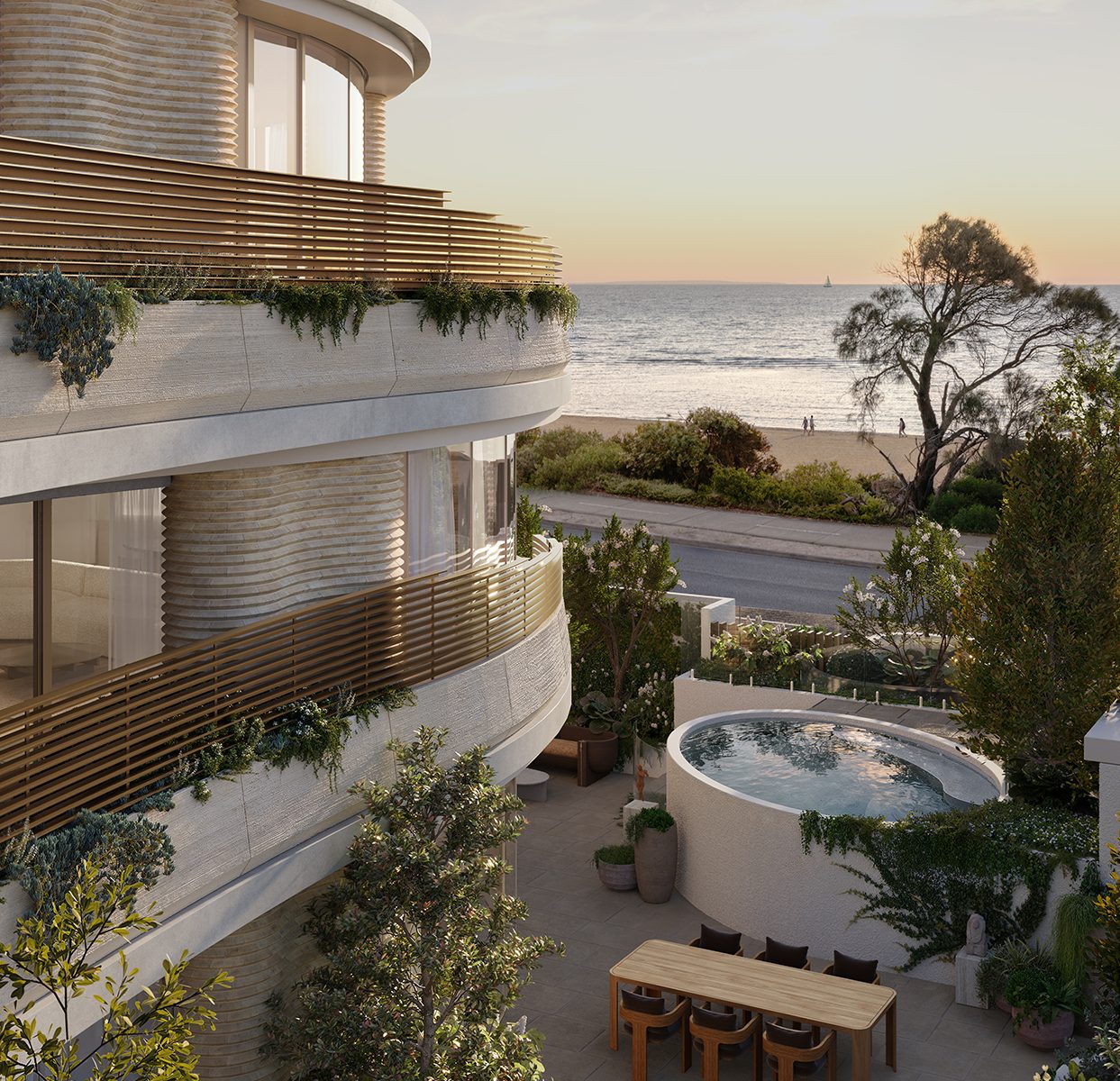
Madeline delivers a sophisticated coastal aesthetic, with expansive interiors and uninterrupted ocean views.

Madeline: Broadbeach Refined for A New Generation of Luxury Buyers

Madeline by Mosaic represents a confident expression of contemporary seaside prestige. Comprising a boutique collection of half-floor and full-floor residences, the project has been designed to maximise protected views of Broadbeach’s coastline—an increasingly rare commodity in the city’s accelerating development environment.

Each residence is shaped around privacy, spatial generosity and a seamless interplay between indoors and out. Interiors adopt a restrained, timeless material palette that favours longevity over decorative flourish, with bespoke detailing that signals the shift toward quiet luxury now dominating the upper end of the market.

The response has been emphatic. Madeline is approaching 90 percent sell-out within months, reflecting both deep demand for premium coastal residences and strong confidence in Mosaic’s delivery capabilities.

For buyers seeking security in a volatile market, Mosaic’s track record and disciplined processes have become a significant point of differentiation.

Josephine offers an intimate, beachfront living experience, with serene, sculptural interiors.

Josephine: A Boutique Icon for Burleigh Heads

On the iconic Burleigh Heads Esplanade, Josephine by Mosaic takes a more intimate approach to prestige living.

Its limited collection of half-floor and full-floor residences places exclusivity at the centre of the experience, with uninterrupted ocean views on the very prestigious Burleigh Heads beachfront, and architecture that embraces the raw beauty of the coastline.

Josephine’s early release was met with intense buyer interest, resulting in sales exceeding 50 per cent within weeks.

This momentum reflects the broader shift among affluent purchasers toward boutique coastal buildings that deliver privacy, permanence and a strong sense of place—qualities that Josephine captures with clarity.

Mosaic’s founder and Managing Director, Brook Monahan, encapsulates the project ethos simply: “Josephine is the antithesis of the high-rise tower. It’s intimate, personal, highly considered  and deeply connected to its coastal setting.”

The Power of an Integrated Model

Much of Mosaic’s success in the luxury segment stems from its atypical business structure.

While many developers outsource design, construction and even customer service, Mosaic retains full control of every component—from research and site acquisition to architecture, building and post-completion care.

This end-to-end model compresses risk, eliminates handoff errors and ensures accountability at every stage.

For high-net-worth purchasers, that reliability is invaluable. In a prestige market shaped increasingly by uncertainty, the assurance that a project will be delivered exactly as promised has become a decisive factor.

Mosaic complements this with a research-led approach to site selection, targeting high-demand lifestyle destinations with enduring capital growth prospects.

This discipline has created a consistent portfolio of developments aligned with long-term value creation, not short-term speculation.

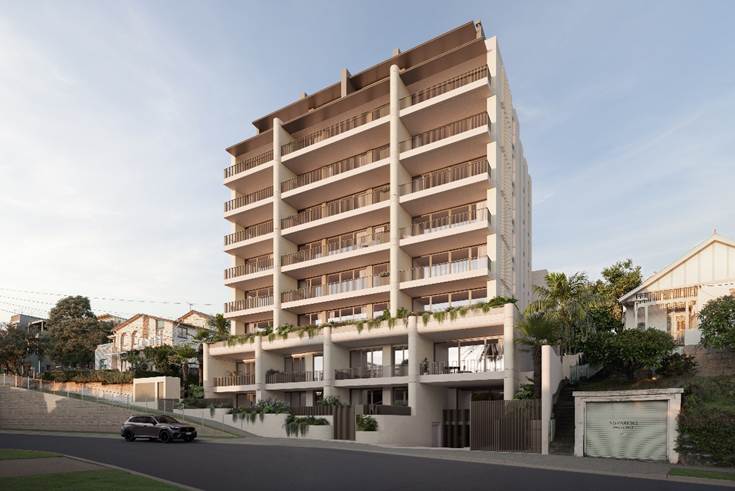
Florence presents a sculptural coastal façade with curved balconies and finely detailed stonework.

A Design Philosophy Built to Last

Across Florence, Madeline and Josephine, Mosaic’s design principles remain constant: scale rooms for real life, not marketing imagery; choose natural finishes that age with beauty; prioritise privacy, acoustic performance and engineering excellence; and orientate homes to capture light, views and a strong emotional connection to place.

This is luxury as functionality—not spectacle. Mosaic’s homes feel composed rather than crowded, timeless rather than trendy. As Monahan puts it, “Our ambition is simple: to create homes that feel as exceptional in 20 years as they do on day one.”

A Brand Built on Trust

In the luxury sector, reputation is everything. Mosaic’s rapid absorption rates at Madeline and Josephine are less about hype and more about the trust it has earned. Buyers recognise the brand not just for design, but for delivery discipline and transparency—qualities often promised but rarely upheld.

Projects are documented, audited and communicated with unusual clarity, and Mosaic’s client-care program continues long after completion. This culture of accountability has become one of its most valuable brand assets.

A New Standard for Prestige Living

Florence set the tone. Madeline and Josephine extend it. Together, these projects illustrate an evolution that is reshaping Queensland’s prestige residential market.

Mosaic isn’t simply building luxury residences—it is redefining what luxury means. With its integrated model, design-led philosophy and award-winning execution, the developer has established a new benchmark for premium living in Australia’s fastest-growing coastal region.

This is the Mosaic standard: prestige, delivered.

The North Carolina Village Where America’s Wealthiest Go to Fly Under the Radar

CASHIERS, N. C.—Shortly before 4 p.m. on a recent November afternoon, Buck’s Coffee Cafe was buzzing with a steady stream of customers that included a local chef, the scion of a hot-sauce empire, a real-estate developer and others.

Two Porsches and a pickup truck were parked in front of the shop, which serves as a de facto town hall at the intersection of North Carolina Highway 107 and U.S. Route 64.

If Cashiers had a town centre, this would be it: a crossroads surrounded by a smattering of retail.

In the Blue Ridge Mountains, the unincorporated village has no mayor, no local police force and no central public water supply. There is a limited public sewer system, just a handful of sidewalks and one Ingles supermarket, affectionately known as “Mingles” because it is where locals tend to socialise.

But what Cashiers does have is lots of uber-wealthy homeowners who have been coming to the area for more than a century.

With a full-time population of just 825—and at least four billionaires with homes—Cashiers has one of the highest concentrations of wealth in the country, according to data from Altrata, a wealth-intelligence firm.

Drawn to the area’s climate and natural beauty, most deep-pocketed homeowners, including billionaires like Ken Langone, a co-founder of Home Depot, and members of Nashville’s Ingram family, own property in a half-dozen private golf communities fanning out from the main intersection.

Even as real-estate values in Cashiers (pronounced Cash-ERS) nearly doubled over the past five years, locals have resisted overdevelopment in favour of retaining its small-town character, which provides relative anonymity to its wealthiest residents.

A September article in The Wall Street Journal, disclosing the presence of four billionaire families, got the community talking.

“People said, ‘Four? What an insult. We’ve got more than that,’” said Ann McKee Austin, who summered in Cashiers as a child and who co-developed, with her brother William McKee, the Wade Hampton Golf Club in the 1980s. “It attracts low-key people, not jet-set people,” said Austin.

South Carolina politician Wade Hampton III, a Confederate general, was among the first to build a summer lodge in Cashiers in the 1800s.

By the 1980s, golf communities with courses designed by Tom Fazio, Arnold Palmer and others began sprouting up in the area.

Today, there are at least 15 clubs on the Highlands-Cashiers Plateau, a roughly 25-mile area that includes Cashiers and its sister town of Highlands, a quaint tourist destination with high-end shops, restaurants and hotels.

By contrast, Cashiers has no Main Street and is “no frills,” said real-estate agent Kati Miller of Caliber Fine Property, comparing it to the fictional town of Mayberry. “You’re not going to see Prada or any sort of chain. It’s hard to get to—the closest airport is 45 minutes away on windy one-lane roads.”

Life in both places largely revolves around the clubs, where the average home-sale price was roughly $5.4 million over the past three months, said Ali Moody of Caliber.

Owning property is often a prerequisite to membership, which costs upward of $100,000 plus annual dues. Besides amenities like golf, tennis, croquet and dining, clubs also provide infrastructure like roads, water and sewer systems, making construction of luxury homes possible.

“Clubs are like mini-cities, quite frankly,” said Jody Lovell of Highlands-Cashiers Sotheby’s International Realty. Some clubs even provide workforce housing.

Over the years, the ranks of wealthy residents have swelled to include Langone, who paid less than $1 million combined to buy 5.77 acres at Wade Hampton in the 1990s, records show. (For many years, the late Bernie Marcus, another co-founder of Home Depot, also had a place there.) Martha Ingram, who succeeded her late husband as chairman of the billionaire family’s conglomerate Ingram Industries ,bought at the Chattooga Club more than three decades ago.

Langone said he was visiting a friend for the weekend when he toured Wade Hampton and was “blown away” by the newly-built golf course. He bought land before he left and built a four-bedroom home that he has added to over the years.

He said people in Cashiers are civic-minded, hard-working, and kind. “I go there, and they treat me like I’m just anybody else,” he said, “which is the way it should be.

Martha’s son, David Ingram, and his wife, Sarah, own several properties at Chattooga—and they recently purchased the club from his uncle (and Martha’s brother) John Rivers, who developed it in the 1980s.

Members of the McIlhenny family, which has been making Tabasco in Louisiana since the 1800s, also own in Cashiers, as does billionaire Scott Hardman Ward, a scion of Russell Stover candies, and Treasury Secretary Scott Bessent , who spent $4.6 million in 2022. He is now looking to sell his property for $5.25 million.

Billionaire energy mogul William Doré owns two homes in Wade Hampton, which he purchased for about $3 million combined in 2016 and 2019. And Ric Elias, the billionaire CEO of Red Ventures, recently sold a roughly 2.6-acre lot at the Club at High Hampton for $2.5 million, after paying $2.25 million in 2023. Elias and Bessent didn’t comment. Ward, Doré and the McIlhenny family didn’t respond to requests for comment.

Year-round residents say wealthy “summer people” don’t get any special attention. Pro golfers with homes in the area regularly grab a slice at Slab Town Pizza, said restaurant manager Scott Mulchay. No one bats an eye.

Langone said one of his favourite events is a July Fourth get-together hosted by a family at High Hampton, who serve barbecue; people dress in Americana, sing patriotic songs and fire off a mini-cannon, he said.

“We don’t need to prove what we have or show what we have,” he said. “We just enjoy everyone’s company.”

It’s been discovered

Despite its unpretentiousness, a turning point for the Cashiers luxury market came in the early 2000s, when Discovery Land Co., the developer behind Montana’s Yellowstone Club, opened Mountaintop Golf & Lake Club, drawing more well-heeled buyers not just from the Southeast, but other parts of the country. The McKee family’s sale of the High Hampton Inn in 2017 to the operator of Tennessee’s popular Blackberry Farm, which renovated the historic property, had a similar effect. undefined

Rob Palumbo, who works in the financial services industry in Atlanta, fell in love with Cashiers’ tranquillity 25 years ago, and for years he owned a log cabin on the Tuckasegee River. In 2013, he and his wife, Melanie Palumbo, paid $800,000 for a 2.3-acre lot at Mountaintop and built a six-bedroom house.

Like other resort areas, Cashiers experienced a Covid boom that turbocharged home prices.

Between 2020 and 2024, the average home sale price jumped 88.8% from $1.05 million to $1.98 million, according to data from the multiple listing service. Despite economic uncertainty that has slowed the luxury market nationwide, Cashiers recently had a string of sales above $7 million—a once-untouchable price point.

“For the longest time, $6 million was the ceiling,” said Caliber’s Miller, who said prices are rising as new homes sell for the first time.

The record in Cashiers was set in July, when a house at Mountaintop with a glass-and-steel facade sold for $11.11 million, said listing agent Liz Harris of Cashiers Sotheby’s International Realty. The prior owner paid $600,000 for the 1.85-acre lot in 2020, records show. “What kept [the market] down before, honestly, was people didn’t know about it,” Harris said. The buyer couldn’t be determined.

Chasing higher prices

Earlier this month, a 6.5-acre estate at Cullasaja Club—halfway between Cashiers and Highlands—sold for $12 million.

Some real-estate insiders say the market, as it currently exists, can only grow so much.

Cashiers has six months’ worth of world-class golf between May and October, but there is less to draw people there during the “shoulder” seasons, said developer Sam Lupas.

A bigger issue is inventory. Many of the clubs have waiting lists, Miller said, even Mountaintop, where the initiation fee will be $275,000 starting January 1. “I hate to say it, but we need another club up here,” she said. “They’re all full.”

Growing pains

In 2003, locals voted against incorporation out of fear of paying higher taxes or ceding autonomy to government bureaucracy. Instead, local philanthropists have supported a local charter school, library, boys and girls club and volunteer fire department.

Two decades ago, when a hotel developer tried to build an Econo Lodge near the main intersection, residents swooped in to purchase the land. They designed a Village Green that is encircled with a low stone wall, and a hard-to-find entrance in the rear. “It was meant to be for the people that live here, and you access it from behind the scenes, rather than ‘Stop here and have a picnic lunch,’” said Austin.

Over the past few years, Cashiers has experienced growing pains amid its newfound popularity. During the summer months, traffic can back up for miles, said the Rev. Steve Hines, a retired clergyman who is a member of the Chattooga Club. “There were wealthy people here before, but not at this level,” he said. The growth “has gotten a little out of hand.”

Affordable housing is also an issue, said Jackie Hooper Hernandez, a clerk at Lulu & You clothing boutique, who said she is lucky to live with a relative about 8 miles from the shop. Other family members drive more than 30 minutes to work. But she puts up with the inconveniences of the summer influx because her livelihood depends on it. “We might hate the traffic,” she said, “but you know, if we didn’t have that, I wouldn’t have a job,” she said.

Some people think Cashiers would be better off incorporating, so that it could benefit from having its own tax base and public infrastructure.

But others believe there is reason to fear overdevelopment. “I’ve witnessed an overbuilding [at other clubs], where going to dinner or getting a tee time for golf almost became a lottery system,” said Hufstetler, who just bought the $12 million house in Cullasaja. He previously owned homes in Destin, Fla., and on Lake Oconee, Ga., that he sold when those areas became too crowded.

Lupas said he and his partners are working on an effort to bring hospitality, retail and housing to Cashiers in a way that is both appropriate and “authentic” to the community. “Some people think I’m an evil developer,” but he said the opposite is true. He believes a certain amount of growth is good for Cashiers, if not necessary. “Everybody wants it to stay like it was in 1950, but it’s not possible.”

Palatial penthouse on Sydney’s north shore expected to break records

A palatial penthouse on Sydney’s Lower North Shore – complete with its own wellness studio – is set to smash the apartment record north of the bridge if it achieves its $30 million asking price.

It’s just a touch over the current local benchmark of $28.25 million with the recently reported sale of a house-sized apartment at Kurraba Residences in the little-known suburb of Kurraba Point.

The impressive price tag for the Mosman penthouse comes down to the vast 570sq m footprint of the yet-to-be-built residence atop the $200 million Amara project on bustling Military Rd in Mosman.

Developer Dare Property Group has engaged DKO Architecture to create the 26-residence block, with penthouse interiors curated by award-winning designer, Fiona Lynch.

Danny Avidan, founder of Dare, said the Amara penthouse reflects the culmination of carefully cultivating design-led living philosophies that prioritise wellness and quality.

“The Penthouse at Amara is an exercise in quiet luxury – a home that feels deeply personal, contemporary and enduring,” he said.

“Our vision has always been to deliver residences that go beyond aesthetics, creating spaces that nurture well-being and longevity. The Amara penthouse sets itself apart as a singular whole floor residence, with never to be built out views.”

The decadent five-bedroom home on the seventh level of Amara has a panoramic backdrop that extends from Sydney Harbour through the Heads to the Pacific Ocean horizon.

Curated with handpicked finishes, there are Travertine and solid oak floors, polished plaster walls and ceilings, with bronze Pittella door hardware and custom joinery.

The sophisticated kitchen features Wolf cooking appliances, Sub-Zero refrigerators and Blum hardware, while the five bathrooms each have Rogerseller fixtures, smart toilets, and natural stone surfaces.

Expansive sliding doors allow the living spaces to flow through to large terraces that capture the iconic views, bespoke landscaping, natural light and ocean breezes.

A major drawcard of the glamorous penthouse is also its private wellness retreat, a rare apartment inclusion that features a sauna and a yoga or pilates studio. Additionally, there is a unique wine display wall and parking for five cars.

Beyond the grand penthouse, Amara offers 7 two-bedroom and 18 three-bedroom homes, along with resident-only luxuries such as a discreet concierge service for home maintenance, car detailing, personal chef experiences, and wellness treatments. Even the lobby makes a great first impression with an artwork by artist Ben Mazey.

In Mosman’s evolving high street precinct, Amara will be home to a 1600 sq m public wellness and retail hub, promising to be the first of its kind for the affluent Lower North Shore suburb.

“There has never been a lifestyle-focused high street address in Mosman quite like this before,” Avidan added.

The project is within walking distance of Mosman’s designer boutiques, popular eateries, clifftop trails, Headland Park, Sirius Cove and Balmoral Beach.

Construction is scheduled to commence next year, with completion anticipated by the end of 2027.

The Amara Mosman penthouse display suite, located at 555 Military Rd, Mosman, is now available for private appointment through The Agency and Colliers.

A&K Unveils a New Era of Tailormade Luxury in Africa

Abercrombie & Kent has strengthened its position as the world’s leading experiential travel company with two newly transformed lodges in Africa, signalling a new era of tailormade luxury for guests seeking deeply personal, once-in-a-lifetime journeys on the continent that shaped the brand more than 60 years ago.

For A&K, Africa is not just another destination; it is the birthplace of the company and the foundation of its pioneering approach to responsible luxury travel.

Tailormade journeys allow guests to explore this vast continent entirely on their own terms, supported by a global network of destination experts, specialist guides, and on-the-ground “guardian angels” available around the clock.

Every tailormade itinerary is a fully customised experience, interweaving iconic highlights with hidden wonders. Whether guests dream of tracking wildlife on remote plains, discovering ancient cultures, or reconnecting with family in one of Africa’s most inspiring landscapes, each journey is designed to be as unique as the traveller themselves.

Abercrombie & Kent’s African portfolio has entered a new chapter with the reveal of two extensively rebuilt Sanctuary lodges in Uganda and Botswana, each designed to elevate the experience of Tailormade travel, the luxury company’s signature approach to deeply personal, fully customised journeys.

For more than 60 years, A&K has drawn on its roots in East Africa to craft exceptional, high-touch adventures for travellers seeking privacy, immersion and meaning.

With the reopening of Gorilla Forest Lodge in Uganda and Baines’ Lodge in Botswana’s Okavango Delta, the brand is doubling down on the blend of design, wildlife access and sustainability that has long set it apart.

A rare mountain gorilla in the wilds surrounding Sanctuary Gorilla Forest Lodge, deep within Uganda’s Bwindi Impenetrable Forest.

Gorilla Forest Lodge: A New Benchmark 

Tucked inside one of the world’s most biologically rich regions, Gorilla Forest Lodge, an A&K Sanctuary, has long had a singular claim: it is the only luxury lodge located within the actual boundaries of Bwindi Impenetrable National Park.

Already extraordinary in location, the lodge has now undergone a complete transformation — and the result is a deeply refined, fully immersive sanctuary designed with both sensitivity and ambition.

Design that draws from the forest, not against it

The rebuild significantly expands each of the ten guest suites, creating generous private sanctuaries suspended in the rainforest canopy. Interiors draw directly from local craft traditions — banana-fibre ceilings, handwoven textiles, reclaimed woodwork and artisanal detailing made in nearby communities. The effect is layered, tactile and unmistakably Ugandan.

Bathrooms have been reimagined as spa-like retreats, with freestanding bathtubs positioned for forest views and rain showers opening to private decks. Each suite now includes its own lounge, an oversized bed, and an elevated deck where guests often spot the region’s famed mountain gorillas at dawn.

A newly transformed suite at Gorilla Forest Lodge in Uganda’s Bwindi Impenetrable Forest. Photo: Damian Russell.

Conservation and culture at the centre

The lodge’s redesign continues A&K’s decades-long commitment to Uganda’s local communities. Every stay contributes to A&K Philanthropy projects, including education initiatives and healthcare access for villages bordering the park.

Geoffrey Kent’s deep history in Uganda, stretching back more than 40 years, is woven into the property’s ethos. Guests can participate in conservation-oriented activities, guided by expert trackers who work directly with the Uganda Wildlife Authority.

An experience shaped by rarity

Gorilla trekking remains one of the most extraordinary wildlife experiences on the planet. Being based inside the park means trekking groups can depart directly from the lodge, often reaching gorilla families in shorter times than guests staying outside the gates.

The result is an experience that feels both exclusive and unhurried, exactly what A&K’s Tailormade travellers value.

Lounge at Baines’ Lodge, Okavango Delta, Botswana. Photo: Damian Russell.

Baines’ Lodge: A Six-Suite Masterpiece Reborn in the Okavango Delta

Botswana’s Okavango Delta is one of Africa’s most iconic landscapes — a shifting world of floodplains, lagoons and wildlife-rich islands. Within this UNESCO World Heritage Site, Baines’ Lodge, an A&K Sanctuary, has emerged from a top-to-bottom rebuild that elevates it into one of the most intimate and design-driven lodges in the Delta.

A River Pavilion in the Wilderness

Set on the banks of the Boro River, the new Baines’ Lodge is constructed on stilts, lifting the six suites high above the floodplains. The architecture embraces an “African pavilion gallery” concept: column-lined walkways, soaring ceilings and open-sided lounges that dissolve the barrier between interior and wilderness.

The colour palette draws from the Delta itself — muted greens, reeds, sun-washed timber, handwoven ceilings and raw natural textures that give the lodge a sculptural quietness.

Six suites, each a private retreat

Every suite has been reimagined with:
• Deep soak tubs with uninterrupted water views
• Private decks and outdoor seating for birdwatching and stargazing
• Contemporary African art and artisanal pieces
• Expansive indoor-outdoor bathrooms
• King beds with mosquito-net canopies
• Soft, indirect lighting that mirrors the Delta’s shifting tones

Despite its refined interiors, the lodge remains deeply committed to environmental sensitivity. Lunawood, a lightweight timber material, forms much of the structure, ensuring minimal environmental impact and allowing the lodge to be removed without damaging the landscape, which is an unusually progressive approach for a luxury property.

Wildlife at your doorstep

Because the lodge is located on a permanent channel of the Delta, game viewing is exceptional year-round. Guests can explore by:
• Mokoro (traditional dugout canoe)
• Motorboat
• Guided walking safaris
• 4×4 game drives
• Private river cruises
• Sundowner excursions along the floodplains

The area is known for elephant herds, wild dogs, lions, leopards, hippos and rare birdlife, all often visible directly from the lodge’s deck.

Tailormade Africa: The Signature Advantage

While many safari operators offer luxury, A&K’s Tailormade approach is built around something rarer: absolute personalisation.

Guests receive access to:
• Private guides and handpicked specialists
• Seamless logistics across remote areas
• Behind-the-scenes experiences not open to the public
• 24/7 on-the-ground support
• Carefully choreographed transfers between lodges, parks and cities
• Exclusive conservation and community activities

A New African Chapter

The reopening of Gorilla Forest Lodge and Baines’ Lodge marks a significant investment in Africa by Abercrombie & Kent, reinforcing its mission to offer world-leading luxury experiences that honour place, elevate culture and maintain a light environmental footprint.

Both properties are now open, with bookings available as part of fully Tailormade itineraries crafted exclusively by A&K’s global network of experts.

Why the next three years could be the best time to invest in property

After the RBA failed to cut interest rates earlier this month, many Australians are still sitting on the sidelines, waiting for “the right time” to buy.

But as every experienced investor knows, there’s rarely a perfect moment. Only windows where fundamentals align.

The next three years look to be one of those windows. This period represents a great opportunity to step into the market strategically, supported by strong long-term tailwinds and a more stable lending environment.

Supply is tight and that’s not changing anytime soon

Australia’s housing shortage has become structural.

The government’s target of 1.2 million new homes by 2029 is already slipping out of reach, with completions tracking closer to 160,000 per year.

Construction costs, planning bottlenecks, and labour shortages continue to restrict new supply, while population growth and immigration remain high.

Australian market snapshot

Perth (WA)
4,251 listings (week ending 1 Jun 2025)
2,832 listings (Oct 2025) ↓ 40 % YoY; sales ↓ 3.1 %; median days on market ≈ 12
Significant supply contraction
Despite small weekly lifts, total stock remains 40 % below 2024. Homes under the median are selling within days.

Brisbane (QLD)
Median value $945 k; monthly growth 1.5 %
Median value $992,864 (+1.8 % MoM, +10.8 % YoY); unit listings 45 % below 5-yr avg
Tight supply + rising prices
Affordable pockets < $1 m remain highly competitive. Demand concentrated around family suburbs.

Melbourne (VIC)
Listings below 5-yr avg; mild buyer hesitancy
Supply still below 5-yr avg; tight in inner east, north & inner west
Selective undersupply

Now Australia’s most affordable capital on income-to-debt ratio. Tight supply in established suburbs positions it for rebound.

Across Perth, Brisbane and Melbourne, in particular, demand continues to outstrip supply, a formula for steady, sustainable growth rather than speculation.

In Perth, listings have fallen roughly 40% year-on-year, and properties are turning over in just 12 days on average, the fastest market in the country.

For Brisbane, supply remains well below normal, particularly under $1 million, where investors and first-home buyers overlap.

And in Melbourne, affordability is now the best in the country, with tight supply in key inner corridors setting up for a cyclical recovery as rates stabilise.

Confidence is returning

After two years of turbulence, the rate environment has finally steadied. Most lenders now sit between 5.3% and 5.6%, roughly 1% lower than a year ago.

On an average $800,000 loan, that’s about $8,000 in annual savings, a meaningful improvement to serviceability and household cash flow.

While no one expects large cuts in the short term, the broader shift will breed confidence.

Borrowers who were cautious in 2023–24 are re-entering the market with renewed clarity around repayments and borrowing power.

This is an ideal time to re-engage clients who paused during the rate-rise cycle. With the right structuring, many can now step forward without over-stretching.

Demand, supply & location

In a market where many investors fixate on short-term yields, it’s critical to bring clients back to fundamentals.

The best opportunities over the next three years will be in locations with strong demand drivers, limited supply, and genuine affordability.

Strong demand drivers

Focus on markets backed by tangible fundamentals, infrastructure investment, job growth, and migration inflows. Areas with improving economies and active employment hubs consistently attract owner-occupiers, which supports long-term value.

Limited incoming supply + affordability

When affordability and low supply align, upward price pressure follows. Australia is currently building only around 160,000 new dwellings per year, well below the 240,000 needed to meet national targets. Markets with low construction pipelines and accessible entry prices are positioned for sustained growth.

Location and value-creation potential

Established, owner-occupied suburbs tend to outperform because they’re insulated from large-scale supply shocks.

Look for houses or properties with strong land content, ideally a 50 % or higher land-to-asset ratio and those that allow for renovations, granny-flat additions, or subdivisions over time.

While every market will move through its own cycle, the next three years should continue to deliver solid opportunities across Australia, particularly in locations where supply is tight, economies are strong, and demand is anchored by real fundamentals.

The market is resetting its risk profile

Macquarie Bank’s recent decision to halt lending to new property purchases in trust structures could also change parts of the investor market.

While it may slow activity in investment-heavy markets, it’s unlikely to affect demand in locations where most of the activity is driven by home buyers.

These areas are largely found within the major capital cities, and even in some of the smaller capitals with growing owner-occupier bases.

When assessing these markets, it’s important to look at the local economy, the industries that support employment, infrastructure investment, and migration.

Even indicators like Gross State Product (GSP) can provide valuable insight into the health of the local market and its resilience to policy changes.

This shift reinforces the importance of sticking to fundamentals such as strong economies, real demand, and sustainable affordability, not investor-driven locations.

Thinking long-term

The next three years won’t be about chasing quick gains.

They’ll be about steady, compounding growth driven by constrained supply, stable rates, and solid demand. Property wealth isn’t about speculation, it’s about structure, patience, and the discipline of buying the right asset and holding it through cycles.

If you’re considering entering the market, now is the time to act. Stable rates, limited supply, and improving affordability create a strong foundation for the next property cycle.

Abdullah Nouh is the Founder and Director of  Mecca Property Group, one of Australia’s leading buyers’ agencies specialising in high-growth residential and commercial investments. 

Luxury Buyers Drifted North, But the Tide May Be Turning

Australia’s luxury housing map has been flipped on its head over the past five years, but the pendulum may finally be swinging back toward the big cities.

According to Ray White Group Senior Data Analyst Atom Go Tian, the pandemic years reshaped where prestige buyers put their money.

“If you were speaking about luxury houses five years ago, you wouldn’t even consider markets outside of Sydney and Melbourne,” he says.

But when COVID accelerated lifestyle migration and buyers were suddenly free to look elsewhere, the country’s wealthiest house hunters proved highly mobile.

“Luxury buyers proved themselves to be the most flexible and flocked away to where luxury was still sold at a discount,” Tian says. The result: Sydney and Melbourne were largely overlooked while regional prestige markets surged.

Both major cities saw their luxury prices spike briefly in 2021 as the COVID boom lifted the entire country, but the gains evaporated almost as quickly.

Rising interest rates and the lure of discounted luxury in the regions saw Sydney and Melbourne lose roughly half their 2021 uplift the following year.

The recovery since has been patchy. Tian says Sydney “grew six per cent between 2024 and 2025 after growing just two per cent between 2023 and 2024 to finally reach a new peak luxury price of $4.5 million”.

Melbourne, meanwhile, still hasn’t clawed back its pandemic peak. Luxury prices there rose five per cent between 2024 and 2025 after falling one per cent the year prior, ending 2025 at $2.6 million.

Over five years, the two major cities have been dwarfed by the east-coast lifestyle markets that stole their thunder. Sydney grew 35 per cent and Melbourne just 17 per cent.

Compare that with Brisbane (+77 per cent), Perth (+76 per cent), Adelaide (+73 per cent), the Gold Coast (+72 per cent), and the Sunshine Coast (+68 per cent).

That surge allowed the Sunshine Coast ($2.76 million) and Gold Coast ($2.86 million) to overtake Melbourne ($2.62 million) as the second and third most expensive luxury markets in the country.

Brisbane ($2.32 million) and Perth ($2.30 million) are now only 12 per cent cheaper than Melbourne, a huge shift from 2020 when both were 43 per cent cheaper.

Many assumed this decentralised luxury map was the new normal. But Tian says the last 12 months hint at a potential reversal.

“It’s easy to assume the new normal is a decentralised luxury market, but if the last 12 months signal what’s to come, luxury buyers may just be beginning to rediscover the value of Sydney’s prestige waterfront streets and Melbourne’s leafy inner suburbs.”

The price gaps that once tempted buyers north and west have narrowed. In 2020, Sydney was twice as expensive as the Gold Coast and Sunshine Coast.

Now the gap is closer to 1.5 times. Against Brisbane and Perth, the premium has shrunk from 2.5 times to 1.9. “Sydney’s premium looks more justified than overpriced,” Tian says.

Melbourne is a more complicated story. Its long lockdowns hit confidence harder than anywhere else, sending affluent buyers to other states. But Tian believes that weakness may now be its strength.

“At only 17 per cent growth over five years, it significantly underperformed relative to its fundamentals as Australia’s second-largest city.”

If interest rate cuts arrive and confidence lifts, he says the very buyers who abandoned Sydney and Melbourne could return to find relative value they haven’t seen in years.

Hollywood Is Reeling—and PG Movies Have Never Been So Popular

There’s one reliable group of moviegoers left in America—and they can’t go to the movies by themselves.

This week, the kids who make up the industry’s target audience will be heading to theaters for “Zootopia 2” and “Wicked: For Good,” sequels to box-office sensations that could be the highest-grossing movies of the year.

They also have something else in common that has become essential to Hollywood’s biggest hits.

They’re rated PG.

For decades, the movies that printed money were all rated PG-13. It was the rating of the most successful films ever made: superhero franchises, “Avatar” and “Avengers” releases, “Star Wars” episodes, “Titanic,” “Top Gun: Maverick,” the world of “Jurassic Park” and everyone from James Bond to Barbie.

But the entertainment business has never been so dependent on kids dragging their whole families to theatres for the latest PG movie.

Among the bright spots in a bleak year for Hollywood were “A Minecraft Movie” and “Lilo & Stitch,” which are currently sitting atop the domestic box office.

They may soon be jumped by “Zootopia” and “Wicked.” The list of PG hits this year also included the live-action remake of “How to Train Your Dragon,” which improbably beat the latest “Mission: Impossible.”

Meanwhile, last year was the most lucrative year of all time for PG movies, and there are more PG sure-things on the slate for coming years as studios pump out the movies that continue to defy the industry’s gravity.

To put it another way, the people with the most juice in Hollywood right now are 10 years old.

“Kids and preteens,” a recent National Research Group report concluded, “have been the driving force behind many of the biggest theatrical success stories of the past three years.”

The kids and preteens in the youngest generation have grown up with the ability to watch any movie on any device anytime and anywhere they desire.

As it turns out, the place they really want to watch movies is the theater. And theaters are perfectly willing to cater to their most loyal customers.

“If we have an R-rated or horror film on the same day as a PG animated film, I can promise you: We’re always going to try to play that PG animated film,” said Phil Zacheretti, chief executive of Phoenix Theatres Entertainment, which operates multiplexes across the country.

His strategy for those PG films is both simple and profitable.

“We basically try to play every studio’s PG films in as many theaters as we can,” he said.

By now, theatre owners understand those movies are their safest bets. Last year, “Inside Out 2” finished No. 1 at the box office.

The first “Wicked” was very, very popular, too. Anyone with young children was probably in theaters for “Moana 2,” “Sonic the Hedgehog 3” or “Despicable Me 4,” if not all of them.

The result was the first year that PG won the box office after decades of getting trounced by PG-13. And it might just happen again this year.

PG movies have always performed well. But once upon a time, they came with a stigma. “Older audiences thought PG was not going to be cool enough, and families with kids thought PG was going to be too edgy,” said Paul Dergarabedian , Comscore’s head of marketplace trends.

“It was the opposite of the Goldilocks rating.” Only recently has the rating of animated classics, Broadway musicals and video games become just right.

But their rising value isn’t just about PG movies doing better. It’s also about PG-13 and almost every other kind of movie doing worse.

At this point, not even superheroes are guaranteed attractions in Hollywood. Neither is Sydney Sweeney. There are still PG-13 juggernauts, like “Superman,” “Jurassic World: Rebirth” and the upcoming behemoth “Avatar: Fire and Ash.”

But every original PG-13 or R-rated movie like “Sinners” that gets adults to theaters without their children feels like a miracle.

Once they get to the theatre, children want different things than their parents. For them, moviegoing is deeply social, according to NRG’s study, and the single most powerful driver of their behavior is spending time with friends and family.

For as long as theatres have existed, kids have gone there to hang out. Until they couldn’t. In 2020 and 2021, a century of established habits was suddenly disrupted.

When family movies went directly to streaming, the industry feared that PG audiences wouldn’t come back when they could just stay home.

But in a dramatic twist, Gen Alpha now prefers theatres more than Gen Z, millennials or Gen X. If anything, they’re hungry for experiences that are more theatrical. They want immersive screenings—think IMAX , 3-D, Sphere. What they don’t want is to immerse themselves in phone screens.

“They’re not looking to replicate what they can get in their living rooms and bedrooms,” said Fergus Navaratnam-Blair, NRG’s vice president of trends and futures. “They’re looking for something that gives them a reason to disconnect.”

They’re also looking to engage in “participatory fandom.” PG releases meet that demand. Even theater-averse Netflix supplied Gen Alpha with limited theatrical runs of “ KPop Demon Hunters.”

In recent years, audiences sang along to “ Wicked ,” dressed up as Gentleminions and went nuts for Minecraft references their parents just wouldn’t understand.

Those full-blown viral frenzies help movies explode into movements. You might wait to see a movie if you can avoid shelling out for tickets, popcorn and a babysitter.

But your kids won’t. The whole point of seeing a movie is participating in the online memes around that movie, which means they must see it immediately.

This week, despite mixed reviews, “Wicked: For Good” was tracking for the highest ticket presales of any PG movie ever, according to Fandango.

As predictive indicators, those presale numbers are useful. Penn Ketchum, the managing partner of Penn Cinema, wasn’t sure what to expect from the upcoming “David,” an animated biblical children’s movie from a studio that specialises in faith-based content.

But when every showtime at his Pennsylvania and Delaware theatres had strong pre sales, he added screens. Then he added more. When it’s released in December, he predicts “David” will beat the box-office goliath of “Avatar” in some of his markets. “Which will be a massive upset,” he says.

Other PG titles have something else going for them. Navaratnam-Blair calls it “intergenerational nostalgia.”

When “Toy Story 5” comes out next year, for example, millennials who saw the original in theatres as kids 30 years ago will be accompanying their own kids.

Of course, not every PG movie goes to infinity and beyond. This was also a year when Pixar’s “Elio” flopped and Disney’s live-action “Snow White” was left for dead .

But those bombs were the exceptions that proved the industry’s rules of success. After all, today’s audiences don’t have a connection to Snow White. They care more about the star character of another PG movie coming out this year: SpongeBob.

Which means their parents will be taking Hollywood’s most reliable moviegoers back to theatres next month—just as soon as they leave Zootopia and Oz.

The must-visit restaurants in Port Douglas revealed

Ask any regular visitor to the Far North Queensland holiday town of Port Douglas for advice on eating out, and they’ll likely tell you to book your restaurants when you book your flights. 

During peak times such as Christmas and the winter holiday season, it’s notoriously hard to secure a table unless you strike it lucky with a cancellation or know the chef.

The Australian Good Food Guide’s Chef Hat awards use a points-based system to honour restaurants with one, two or three hats, a respected marker in the absence of Michelin stars. 

In Port Douglas, six restaurants appear in the 2025 Guide, four of them within a short stroll of one another.

Not bad for a small tropical outpost with a permanent population of just 3650.

And yes, you can still wear thongs. (Your good thongs, obviously.)

Jungle Fowl

This colourful venue serves modern, Thai-inspired, farm-to-table cuisine and has this year won restaurateurs Rachael Boon and Ben Wallace their third consecutive Chef Hat award. 

There’s a strong emphasis on local produce, with most ingredients grown on their four-acre farm at Oak Beach, where chickens (jungle fowl) roam among the lemongrass, galangal and betel leaf.

Expect prawn betel leaf as part of the Seasonal Thai Banquet, alongside chilli squid salad and black pepper Angus beef.

Harrisons

The flagship restaurant at the Sheraton Grand Mirage is helmed by Chef Spencer Patrick, who trained under Marco Pierre White. 

It is billed as Port Douglas’s most nationally awarded restaurant. The setting is old-world glamour with chandeliers, gilded busts and lagoon views; the cuisine contemporary.

Australian with reimagined English classics infused with North Queensland flavours. The set menu tells this story through line-caught chargrilled squid, baked oysters and duck fat Brussels sprouts.

Osprey’s

Located at a resort about ten minutes south of town, Osprey’s is perched in the treetops with views of rainforest-clad mountains and the sparkling Coral Sea.

Chef Krisztian Borbas presents a seasonal menu inspired by the tropics, featuring Moreton Bay bug with vanilla butter, spicy duck leg with red curry and slow-roasted pork belly with fried scallop wontons.

Melaleuca

Opposite the picturesque St Mary’s by the Sea, this open-air eatery is run by English-born chef Adam Ion and his Korean-born wife, Namhee.

The modern Australian menu, with clear Asian influences, features soft-shell mudcrab with green pawpaw Thai salad, and pan-seared Daintree barramundi for seafood lovers; flame-grilled beef tataki and slow-braised beef cheek for meat-eaters. 

With its deck built around the trunk of a fairy-lit mango tree, it’s one of Port’s prettiest dining spots.

You can read the full story  here.

NEW WAVE: THE EVOLUTION OF AUSTRALIA’S COASTAL LUXURY

In the land down under, the beach is in our DNA. So is it any wonder that Australian architecture is leading the world in luxury coastal design?

With about 85 per cent of our population living within 50 kilometres of the coastline, we’ve perfected the art of the beach house. Yet over the past two decades, there’s been a sophisticated shift in the traditional coastal cottage.

The residential revolution that has washed over our most valuable waterfront locations has replaced the original weatherboard “shacks” by the sea with a contemporary design movement shaped by admiration and respect for the natural environment.

No longer simply about the view, today’s coastal architecture is about creating beautiful homes that perform seamlessly in an increasingly volatile climate while meeting the rising tide of high-net-worth buyers who want it all.

From infinity pools to wellbeing spaces that connect with nature, one-time weekenders have been transformed into permanent escapes, providing year-round indulgence.

The Wamberal beach house.

An island home

Belgian-born, Tasmania-based architect Lara Maeseele believes the quintessential coastal home has become a finely tuned instrument. With more vacant land to experiment with, and lower entry prices, she says the Apple Isle is perfectly placed for architects and homeowners to explore the new-age beach house.

“A highlight in Tassie is you can find these amazing vacant blocks on the coastline, and still be blown away by the unexpected views,” she says.

Having studied in Belgium and worked in London, Maeseele brings a northern European minimalist sensibility to the Australian beach house.

“Our way of life is so complex. When we get home, it’s nice to slow down, to declutter and find some peace and quiet.”

Nebraska House on Bruny Island took home the 2025 HIA Tasmanian Home of the Year and earned a commendation at the Houses Awards, but Maeseele still affectionately refers to her design overlooking the D’Entrecasteaux Channel as a “shack.”

“What we tried to do was make sure that from the foreshore, it was kept small and consistent with the neighbouring properties, and that’s the luxury element that I see in the shack. It sits quietly in its setting.”

With a water backdrop from most rooms, she says the ocean was a primary player when designing the house, but light was just as important for the clients.

“Both the western and eastern elevations slide wide open so it feels like a bit of an umbrella,” she says. “Then in winter, it’s fully insulated and glazed. When the sun sets, you have the most beautiful evenings, feeling cosy and sheltered while watching the wind and water outside.”

True to her European roots, Maeseele believes that when it comes to aesthetically pleasing and functional coastal design, the less-is-more approach should drive every project.

“We’re on an island, so we’re very aware any build leaves an impact,” she says. “We chose lightweight materials so, in the end, the house could be dismantled and the timber reused.”

Light pours into the Wamberal Beach house dining room.

Thriving by the sea

Sydney architect Jon King, who has designed both beach houses and boutique hotels, says the new generation of coastal design is a balancing act between luxury and environment. 

Even in today’s dazzling designs, he believes comfort should still overshadow spectacle.

“If you’re going to make an exceptional beach house, it has to adapt. It needs to be beautiful when the sun is shining and the whales are jumping out of the water, but the next day it needs to withstand horrendous southerlies and wild storms,” he says.

“The material choices are vital because they need to look great, but last in that salty environment and in extreme winds and rain.”

What was once the domain of fibro cottages has developed into a sea of enviable, state-of-the-art designs.

“For a long time, we lived simply in beach environments because the land was cheap and our buildings were unsophisticated. But now, living on the coast has become coveted, even fetishised. People are making statements through architecture, and that changes everything.”

He says that in an effort to connect with nature, the temptation can be to build with vast walls of glass to capture the ultimate panorama, but subtle design can be more successful when it gives the dramatic backdrop a curated cameo.

“Most coastal locations are suburban in nature with small blocks and neighbours either side, so you can’t always get the view you want,” he says. 

“But you can frame it beautifully rather than opening everything up to the elements.”

Cheyne Fox of White Fox Gold Coast, who has recently listed one of only two houses on Hayman Island in the Whitsundays, agrees that Australia’s coastal homes are unparalleled.

“Gone are the days when people wanted their properties to stand out and look at odds with the surrounds. Today’s luxury designs are very much about fitting in,” Fox says.

The Residence at Hayman spans three levels and offers more than 1,400 square metres of internal and external living space.

Designed by the late, internationally renowned architect Kerry Hill, it also features breezeways, terraces and an infinity pool designed to embrace the subtropical environment.

“When you get to Hayman Island, you get calico bags. There are no plastic bottles or even cars. There is a true respect for the environment, being so close to the Great Barrier Reef. And as such, the architecture reflects that ethos.”

She says high-net-worth buyers will pay top dollar for such indulgent and considered coastal designs.

“This is a once-in-a-lifetime proposition for a purchaser, but also a once-in-a-lifetime proposition for an agent.”

Read the full story here.

Pop Stars: Six Champagnes For Every Festive Moment

If you are planning to celebrate properly this year, your Champagne list needs to work as hard as your social calendar.

So we asked Tamara Grischy, General Manager at  LANGTONS, to curate a line-up of bottles tailored to every key moment of the festive season, from the end-of-year company party to that final New Year’s Eve toast.

Her selection moves from richly styled magnums and Grand Cru Blanc de Blancs to benchmark prestige cuvées, with each Champagne chosen to shine in a specific setting, whether a seafood-laden long lunch, a beach escape, or an evening with a serious wine collector.

All you need to do is pick your occasion, chill the bottle and let the celebrations take care of themselves.

To open at the end of the year work party

GOSSET Grande Reserve Brut, Champagne MV Magnum, $275

Gosset Grande Reserve Brut from magnum makes a celebratory statement at any end-of-year party thanks to its rich winemaking heritage—blending Pinot Noir, Chardonnay, and Meunier sourced from premier and grand cru vineyards, and aged for a minimum of four years, all from the oldest winemaking house in Champagne, established in 1584.

With top critic scores (91 Robert Parker, 92 James Suckling, 90 Wine Spectator) and a style that avoids malolactic fermentation to preserve freshness and a racy tension, the team will love the vibrant orchard fruit, subtle pastry notes, and a long, elegant finish in every glass.

To enjoy during a long weekend away at the beach

BLIARD-MORISET Brut Blanc de blancs Grand cru, Champagne NV, $85

Bliard-Moriset Brut Blanc de blancs Grand cru is made entirely from Chardonnay grown in the renowned Grand Cru village of Le Mesnil-sur-Oger—a perfect match for seafood or a fresh beach lunch, with elegant balance and lively citrus freshness shaped by over 40% reserve wine and a minimum 24 months’ ageing on lees.

Produced with careful manual harvesting and sustainable, integrated viticulture, this Champagne offers precise orchard fruit and a crisp, lingering finish, making it an uplifting companion to a relaxed coastal escape.

To pair with a fresh seafood platter during summer

VAZART-COQUART & FILS 82/15 Blanc de Blancs, Champagne, $260

Vazart-Coquart & Fils 82/15 Blanc de Blancs, crafted entirely from Grand Cru Chouilly Chardonnay and based on a perpetual reserve dating back to 1982, delivers exceptional

freshness, finesse, and complexity—making it a standout match for a summer seafood platter.

Fine notes of citrus, white flowers, and sea spray, along with an energetic and saline finish, cut perfectly through the richness of shellfish and oysters, celebrating the bounty of the season with precision and style.

To share with loved ones at the Christmas lunch table

KRUG 171st Edition, $471.99 

Krug 171st Edition is the choice for Christmas lunch, blending 131 wines from 12 different years, including reserve wines as old as 2000, to deliver a deep and complex Champagne with bright freshness and layers of festive spice, citrus, brioche and toasted almond.

Awarded 99 points by leading critics, its vibrant mousse and long, elegant finish provide the perfect toast to family and togetherness, enhancing every special dish and sparkling conversation at the festive table.

To open with the fellow wine fanatic in your life

JACQUES SELOSSE Champagne Selosse Brut Rosé, $1,600

Jacques Selosse Brut Rosé is the perfect bottle to open with a fellow wine fanatic, offering rare complexity from an artisanal blending of two vintages of Avize Chardonnay with Pinot Noir from Ambonnay, aged in Burgundian barrels and matured for six years on lees before release.

This Champagne, often described as one of the world’s most thrilling rosés, serves up layers of wild strawberry, pomegranate, honey and spice, with electric acidity and a notably long finish—a benchmark grower Champagne that invites discussion and admiration from even the most seasoned enthusiasts.

To pop when the clock strikes midnight on New Year’s Eve

TAITTINGER Comtes de Champagne Rosé, Champagne 2011, $579

Taittinger Comtes de Champagne Rosé from 2011 is a prestige vintage, made only in exceptional years and comprising Grand Cru Pinot Noir and Chardonnay, including a generous proportion of still red wine from Bouzy to achieve a beautiful depth of colour and aromatic intensity.

With layers of wild strawberry, cherry, orange zest, pastry and a fine mineral finish—plus a 96-point rating from James Suckling—its energy, elegance, and celebratory flair make it the ultimate bottle for that first toast of the new year.

Waterfront Homes Surge Ahead as Australia’s Ultimate Luxury Asset

Australia’s most coveted real estate isn’t found in penthouses, trophy suburbs or architectural showpieces. It’s found on the water’s edge.

New analysis shows that absolute waterfront homes continue to outperform the wider prestige market, with buyers prioritising lifestyle, wellness and long-term security, firmly placing beachfront, harbourfront and riverfront properties in a class of their own.

According to new data from McGrath’s The Waterfront Advantage report, waterfront homes across Australia now command an average 86 per cent premium over comparable inland properties.

Sydney leads the increase at 122 per cent, followed by the Gold Coast at 82 per cent, Brisbane at 59 per cent and Melbourne at 43 per cent. All major cities have seen premiums rise over the past two years, underscoring the enduring power of a blue-chip waterfront position.

A Market Defined by Scarcity and Lifestyle Shifts

Several drivers sit behind this sustained strength.

The scarcity of absolute waterfront land, combined with limited turnover, has long kept supply tight. But in recent years, buyer appetite has surged as Australians place greater value on wellness, nature, and the quality of time spent at home.

The research notes that even in uncertain economic periods, prestige waterfront properties remain “reliable investments” thanks to their strong marketability and ease of repositioning within a portfolio. These homes are sought-after for both lifestyle and legacy value.

Absolute Waterfront Outperforms All Other Positions

Not all waterfront locations carry equal weight. In the year ending Q3 2025, super-prestige sales on the absolute waterfront rose 6 per cent, while waterfront reserve properties fell 30 per cent, and opposite-waterfront homes dropped 34 per cent. Premium buyers want direct frontage, and they are increasingly decisive when the right property comes onto the market.

Queensland continues to dominate East Coast waterfront activity, accounting for 58 per cent of all waterfront super-prestige sales, ahead of NSW at 38 per cent.

Victoria has remained consistent at around 9 per cent. Over the past five years, Barangaroo topped the charts for absolute waterfront apartment sales (73 sales), while Mosman led house transactions (38 sales). Regional standouts included Broadbeach Waters and Noosaville.

Maritime Facilities: The Luxury Buyers Now Expect

For prestige homeowners, proximity to water is only part of the appeal. Increasingly, buyers want direct boating access and exclusive maritime amenities.

The report shows that two-thirds of absolute waterfront sales included at least one maritime facility. Pontoons appeared in 28 per cent of sales, jetties in 26 per cent, and smaller shares featured slipways or moorings.

This reflects Australia’s strong boating culture. More than 900,000 vessels were registered nationally in 2025, with 83 per cent located along the East Coast. Boats between six and eight metres recorded the fastest growth, rising 19 per cent over five years.

Private Beach Access: The Ultimate Luxury Premium

Among all prestige property features, private beach access delivers one of the most substantial price uplifts. These tightly held homes recorded a 71 per cent value increasse in Q3 2025 compared with inland counterparts, up from 44 per cent in 2017.

The report attributes this surge to scarcity, heightened demand during the pandemic and the lasting appeal of privacy and seclusion.

Harbour Homes Still Command the Highest Premiums

Harbour frontage remains Australia’s most valuable waterfront category, delivering a 125 per cent increase over non-waterfront homes.

This is largely driven by Sydney Harbour’s deep waters, natural beauty and globally recognised backdrop. Coastal homes recorded a 93 per cent uplift, while riverfront residences achieved 74 per cent. Canal-front homes held steady at around 40 per cent.

Strong Outlook for 2026 and Beyond

The outlook for premium waterfront homes remains exceptionally strong. With limited supply, sustained buyer demand and a national shift toward lifestyle-led decision-making, absolute waterfront properties are expected to continue outperforming the broader prestige market.

As the report concludes, waterfront homes are not just coveted lifestyle properties; they are “enduring legacy investments” that combine prestige, privacy and long-term financial security.

The Stylish New Must-Have for Aussies Who Love the Sun

If there’s one thing every stylish Australian needs this summer, it’s a beach mat that looks as good as it performs.

Miss Amara has just launched its all-new Beach Mat Collection, and it’s already shaping up to be the must-have accessory of the season. For the person who has everything, consider this the rare gift that’s both chic and genuinely useful.

Crafted for long days outdoors, these mats strike the sweet spot between practicality and luxury.

Each one is double-sided with exclusive in-house prints, built-in carry handles and a soft 3mm foam interior that delivers a plush feel without the bulk. The water-resistant exterior shakes off sand, dries fast and stands up to the rough-and-tumble of Australian summer living.

The collection spans tonal, elevated colourways – Zama Tonal Chocolate, Cairo Cream and Cocoa, Solari Terracotta, Cream and Sky Blue – giving the humble beach mat a design-forward makeover.

Whether you’re setting up for a beach day, claiming a shady patch at the park or creating a chic picnic moment, each mat instantly upgrades the scene.

Available in two generous sizes – 140cm x 140cm ($109) and 200cm x 200cm ($129) – these mats also arrive beautifully boxed, making them a gifting no-brainer.

Think summer hosts who insist you bring “nothing,” the friend who lives by the beach, the couple who travels every weekend, or the person in your life who is impossible to shop for.

Beyond aesthetics, Miss Amara has built in clever features that make a difference: corner peg loops for windier days, a quick-fold design for easy packing, super lightweight construction and a durable polyester exterior that can be spot-cleaned or rinsed off in seconds.

They’re made for the high-traffic realities of summer – beach runs, backyard hangs, road trips and everything in between.

And with Miss Amara’s Black Friday sale running through December 1, there’s even more reason to snap one up. The brand’s biggest event of the year includes up to 60 per cent off rugs across staggered sale periods, making it the ideal time to stock up for gifting season.

For design lovers, sun seekers and anyone who values a little luxury in the everyday, Miss Amara’s Beach Mat Collection is the summer staple that proves style and function can absolutely coexist

Palatial Mornington Peninsula estate on the market

A colourful Mornington Peninsula estate belonging to the billionaire Smorgon family has come to market with price expectations of between $12.8 million and $13.8 million.

Tallagandra is a 35ha working farm in Flinders that has been held by a company linked to Rodney Smorgon and his wife, Anne, for almost two decades.

The Smorgons’ Australian dynasty dates back to the 1920s when siblings Eric, Moses, and Abram Smorgon migrated down under from Ukraine. In Melbourne, the brotherly trio opened a kosher butcher shop on Lygon St, but went on to grow the family empire to include steel manufacturing and mining.

A descendant of Moses, Rodney purchased Tallagandra and its original mid-century house in 2008 for $3.25 million. Since then, the couple have created a glamorous regional retreat in the semi-rural township on the popular peninsula about 90 90-minute drive from Melbourne.

Forbes Global Properties’ Michel Gibson and Robert Fletcher are handling the listing.

Today, the estate at 84 Meakins Rd is home to a palatial main residence, cattle and an alfresco gallery of more than 30 sculptures by local and international artists such as Kiwi artist Phil Price, Chinese creative Goa Xiaowu and Aussie Christabel Wigley.

Blending rolling bucolic scenery with eye-catching contemporary art, Tallagandra is a unique parcel straddling two distinct worlds.

The modernised five-bedroom house, recreated by SJB Architects, is surrounded by landscaping that expertly complements the carefully curated art pieces that are also illuminated by night.

Walls of windows capture the picturesque backdrop and handpicked artworks while a series of living spaces, including a formal lounge room, a games room with a grand billiard table, and a sunken family room, dish up ample options for the avid entertainer. The modern kitchen has a vast central island bench, a butler’s pantry with a cool room, and a full suite of Miele appliances.

There is also a dedicated kids’ playroom and a large home office with a fireplace.

From the primary bedroom suite, the bath and shower overlook a peaceful fishpond and sculpture garden, but there are blackout blinds for privacy. There are also dual walk-in wardrobes, as well as a dressing room with island storage and skylights. An additional accommodation wing houses four more bedrooms and two bathrooms.

For outdoor entertaining, the expansive property has multiple decks that capitalise on the views from every angle, plus a pizza oven and barbecue area, a pool and a flood-lit tennis court.

Beyond the art and architecture, Tallagandra has cattle, a 900-tree olive grove, a chicken coop, 110,000 litres of filtered water storage, three dams, a spring-fed stream, a worm farm system, and more than 600 native trees planted to attract local fauna. Outhouses include a large four-car garage and a hangar-style work shed.

Surrounded by the Peninsula’s renowned vineyards and cellar doors, such as Nazaaray Estate Winery, as well as thermal springs, golf courses and popular restaurants, Tallagandra is approximately 7kms from Flinders and 95kms from Melbourne’s CBD and 120kms from the airport.

The Mornington Peninsula property at 84 Meakins Rd, Flinders is being sold via expressions of interest campaign through Michel Gibson of Forbes Global Properties.

Rose Bay House: Sydney’s newest waterfront mansion 

What happens in one of Sydney’s most affluent suburbs when a neighbour’s trees block your panoramic views of the Harbour? You build a new $20 million house.

That’s the reality in Rose Bay, where there are plans for a knockdown rebuild of the trophy home Indah on the dress circle Bayview Hill Road. That last sold for just over $27 million in 2015 when it was bought by barrister Georgina Black. 

Two years ago, Black sought to have four recently planted palm trees on her neighbour’s property removed because they obstructed her view of the Sydney Opera House.

Council rejected the application, so Black took the matter to the Land and Environment Court. They also sided with her neighbour.

Now a new four-level home is planned for the prime 888 sqm block. The documents suggest it will be more in keeping with its location than the existing five-bedroom, glass-swathed mansion.

In its Design Statement submitted to Woollahra Council, Tribe Studio Architects described Rose Bay House as an “ambitious project.” They said they aim to set a high watermark for sustainable and Country-centred design.

Ironically, the report notes that, in a traditional sense, they are “being a good neighbour to the surrounding sites.”

“We are honouring shared views, we are creating landscape buffers, and we have liaised closely with neighbours where possible to secure their support for the proposal,” the report states.

They also say they are driven by being a “good neighbour” to the Harbour.

“In this prominent location, the house is a shared foreshore for everyone using the Harbour. The design reinstates a sandstone, bushy foreshore and reduces the sense of highly reflective, large glass spans that dominate the existing dwelling.”

“We hope to inspire a new generation of luxury that is not reliant on imports and extraction, but rather is inventive, crafted and responsible.”

The elements of the home are categorised for longevity to manage maintenance, upgrades, and overall durability. Permanent elements are designed to last for hundreds of years.

The new home will span four levels. The entry level will feature an open-plan kitchen, living, and dining area opening to gun-barrel views of the Harbour.

Two levels will sit below ground. The lowest level includes a natural pool and a quarry-like, double-height outdoor dining area and undercroft pool zone. Tribe drew inspiration from the Ca’n Terra House by Ensamble Studio in Menorca, Spain, converted in 2020 from an abandoned limestone quarry.

The entire top level will be a dedicated master suite with a dressing room and ensuite. In total, six bedrooms are proposed, along with several home office spaces and lounge areas.

It would be realistic that given the purchase price of the home a decade ago, and a $20 million rebuild, the new trophy residence would become one of the priciest in Rose Bay.

The current Rose Bay record was set earlier this year when a harbourfront home on Tivoli Avenue, with three separate residences on the 1,138 sqm block, sold for a reported $82.5 million.

Jeff Goldblum on Leather Jackets, Fist Bumps and His ‘Darn’ Oura Ring

From a young age, Jeff Goldblum had an eye for clothes. Growing up in Pittsburgh, he wanted glasses like John Lennon’s and turtlenecks like the Rat Pack’s.

As a member of New York’s Neighborhood Playhouse studying under the legendary Sanford Meisner, he scoured vintage shops for Russian-style overcoats and aviator hats.

After his success in blockbusters like “Jurassic Park” and “Independence Day,” he went through a Japanese-denim phase and loved what he calls “I’ve-been-working-on-the-railroad-type vests.”

“I’ve swung wildly, and I’ve had a lot of bad ideas,” Goldblum said of his style on a recent Zoom. 

The 73-year-old wore a bespoke green shirt from Anto, a shirtmaker based near his Los Angeles home.

On his feet were light-green socks, and handmade shoes from Florence, where he lives part-time with his wife, Emilie Livingston, and their two sons. 

This month, he reprises his role as the Wizard of Oz in “Wicked: For Good,” the second installment of the film adaptation of the musical juggernaut. He insisted he’s not contracted by Universal Studios to only wear green on the press tour.

In the last decade the world has paid more attention to the actor’s off-screen style, which has evolved since he began working with stylist Andrew Vottero around 2014.

A silver-haired fixture on best-dressed lists, Goldblum often finishes his zany outfits with chunky black specs. He has collaborated with glasses label Jacques Marie Mage and formed a close relationship with Prada , walking its runway and appearing in a 2022 brand campaign.

Here, Goldblum, who regularly performs with his jazz band the Mildred Snitzer Orchestra, talks cashmere, vegan Bolognese and handshakes.

Studying with Sandy Meisner was: a portal into my more-intense interest in clothing. Everything could be a key to finding a character, behavior and discovering who you are in the story – (for example) how the shoe felt and how it made you walk.

You don’t really see: a 1970s-style long shirt collar in stores. I had this green shirt I’m wearing made at Anto in Los Angeles. I have them in a bunch of flavors, including some with Western buttons. I’m thinking about getting one in orange.

I just read: James Kaplan’s two-part biography of Frank Sinatra, whose favorite colour was orange. I’ve always liked orange.

I like: that Marie Kondo book “Tidying Up.” In my youth, my family left me alone one day in the garage. It seemed messy to me. I started to throw everything away. I was sweating under my arms with excitement. I got a big kick out of it.

My kids: like to wear my band merchandise. They sometimes help me dress. I say, “Hey, pick out what I’m going to wear.”

I’ve had to get cozy with one or two: leather jackets for parts like Ian Malcolm in “Jurassic Park.” I have a Saint Laurent motorcycle jacket that I wore the other day that’s kind of tight. I like it a lot.

I probably wouldn’t want to wear: real fur. I’ve stopped eating animals except fish. It’s part health-wise from my nutritionist and part my own feeling about it.

My favourite meal is at: Craig’s in West Hollywood. My wife and I share a chopped salad, minus the cheese, to start. They have a spaghetti squash primavera with broccoli and a spicy tomato sauce. I get it with shrimp or vegan Bolognese.

I’ve always been hypersensitive to: certain fabrics, such as wool. I’ve recently accepted—what’s that wool called?—cashmere. I don’t like things that itch. And I don’t like tags in the back of my shirt. I use a professional seam ripper to cut out tags.

What drives me crazy are: printing machines and my phone, especially how it breaks down so often. I had to deal with that this morning.

My feet must be: comfy cozy. My wife, a ballet dancer, says we’re not really working unless our feet are bleeding. I can’t accept that. I really like these handmade shoes I had made in Florence. They’re the most comfortable ever.

Florence is: a jewel box of a city. I’ve found the people delightful and the quality of life great. There are so many artisans. My favourite hat is one I purchased at the Borsalino store. I don’t know any Italian. Just a word here or there.

I don’t want to get sick so I prefer: fist bumping to a handshake. My knuckles have hurt from a too-hard fist bump. So let’s fist bump gently. Let’s just fist touch.

I have to organise my: sock drawer. It’s in the research and development stage. I’m very into socks of one kind or another. I like to experiment with a colour, which is why I have a light green pair on now. For tight shoes, I like (thin) Pantherella socks . I like a shorter sock, too. Sometimes I make it look like it’s falling down.

For a while I had an aesthetic allergy to: cobalt blue. You’d see it on a lady’s blouse sometimes, and I would go, “That hurts! It’s too bright.” But yesterday, after going to the Dodgers game with my kids, I put on a Dodgers blue cobalt sock, and I was very happy. So I’m nothing if not changeable.

I love: pockets. I recently got a minty green chore coat by the Row that I really like. Its flap pockets are deep enough that things aren’t going to fall out. I’d never even heard the term “chore coat.” It carries my wallet, keys, maybe a Kleenex, a lozenge, a little pillbox with an aspirin and some hand sanitizer.

I never used: sunscreen. But my wife has got me using Sarah Chapman sunscreen , sometimes even tinted. I’ll use a Joanna Vargas serum of some kind. I’m not sure what it’s doing, but I put it on at night. I imitate Boris Karloff (in the “Frankenstein” films) and I make a joke with Emilie that I’m going to my laboratory to work on my new longevity theorem.

My acid-reflux man said: “Take care of your vocal cords.” So I’m off caffeine. I’ll have a Ryze mushroom coffee in the morning—a scoop with hot water and oat milk. Sometimes the kids will make me a decaf cappuccino with oat milk and a sprinkling of chocolate powder, and that is too delightful.

For many decades: I’ve been totally on the natch. I’ll have a sip of red wine if Emilie says it’s really fantastic, but I don’t want to get loopy.

I get the usual: seven or eight hours of sleep. I stopped wearing my Oura ring. I’d be in bed for 8 hours and it would go, “No, Jeff, let’s call it 5½ hours that you got.” It used to say, “You’re somewhat ready for the day,” and I’d say, “Go to H-E-Double Hockey Sticks.” I threw the darn thing away. I go with how I feel.

When I wake up: I go through the little vestige of transcendental meditation I learned decades ago. I crack my bones and do this stretching routine that ends with my taking a tennis racket and going through the motion of a backhand, forehand and serve. Then I take a Centrum for Men multivitamin, play my piano and work out in our gym.

Early on I was: a lanky guy. Then I started lifting weights. I wanted to steer some of those roles that were a little nerdy—even those scientist parts—in a cooler direction.

Am I: nerdy or cool? Well, these days, according to some circles, the two have overlapped. At this point, who knows?