The Australian capital setting a new record for property value falls

Highest property values, biggest dip the next. That’s the outcome for Australia’s northernmost capital on the east coast, with Brisbane property values recording their largest and fastest decline, data from Corelogic reveals.

The fall comes just seven months after values hit their peak after a population surge driven by the pandemic saw an increase of 43 percent. Home values hit a record high on June 19, 2022 but have since declined 10.9 percent, in parallel with eight consecutive interest rate rises since April last year.

Historically, peak-to-trough declines in Brisbane have lasted 14 months and have ranged from value drops of -2.9 percent to -10.8 percent. While the new record is just -0.1 percent compared with previous figures, that fall came over 21 months between April 2010 and January 2012. The latest decline was a much swifter seven month drop.

CoreLogic head of research Eliza Owen said it is worth putting the Brisbane figures into context with the rest of Australia’s capital cities, as well as considering the significant rise in property values in the Queensland capital over the pandemic.

“Brisbane now stands out as one of two capital city markets with record declines, the other being Hobart,” Ms Owen said. “Sydney continues to have the largest peak-to-trough falls of the capital city markets (currently at -13.8 percent), while peak-to-tough falls remain mild in some cities (such as Perth, where values are down just -1.0 percent from a recent peak in August 2022).” 

“The record fall in Brisbane home values has not made much of a dent in the gains made during the upswing. The fall in the Brisbane daily HVI follows an upswing of 43.5 percent between August 2020 and 19 June 2022, which was the fastest trajectory of rising values on record. This leaves home values across Brisbane 27.9 percent higher than at the previous trough in August 2020.” 

The median dwelling value in Brisbane jumped from $506,553 at the start of the pandemic in March 2020 to $707,658 by the end of last year, Ms Owen said.

“Despite the large decline from peak, Brisbane maintains the third highest gain in value of the capital cities since the start of the pandemic,” she said. 

“Only Adelaide and Darwin, which are 42.8 percent and 29.6 percent higher respectively than at the onset of the pandemic, have performed stronger. 

“For this reason, there is marginal risk of negative equity for Brisbane homeowners, with the exception of very recent buyers, who purchased around the peak in June 2022 with less than a 20 percent deposit.” 

However, there are signs of resilience in the market. Brisbane remains a more affordable option compared with the other east coast capitals, Ms Owen said.

Although housing values remain higher than pre-COVID levels, Brisbane retains a lower price point than Sydney, with a $435,170 difference in median house values and $280,749 difference in median unit values,” she said. 

“The gap between Brisbane and Melbourne housing values is also significant, with a $119,697 gap between median house values and $97,692 difference in median unit values.

“This could encourage ongoing housing demand from those willing to migrate to the state, or own an interstate investment.” 

Home Buyers Get Ahead of Supply-Chain Issues by Purchasing the House and Everything Inside

Last year, Gerardo and Rita Luna upgraded from their roughly 2,700-square-foot home in Oxnard, Calif., to a much larger house in nearby Santa Paula, paying $2.4 million. The couple, who own four automotive repair facilities, said they had been looking for a quieter place, where they wouldn’t be able to “shake their neighbors’ hands through the window,” Mr. Luna said. The Santa Paula estate, on 6 acres, fit the bill perfectly.

The only problem: how could they possibly furnish such a large property? They didn’t have nearly enough furniture to fill the nearly 7,000-square-foot house, and what they did have didn’t fit the French Country style of their new home. Plus, they knew that global supply-chain issues would likely make buying new furniture difficult and time-consuming. Instead, Mr. Luna proposed an unusual solution: They offered to buy all of the seller’s furniture, although the heavy draperies and plaid upholstery didn’t exactly fit their taste.

“We knew that it would take us perhaps years to fill the house with furniture,” said Mr. Luna, 45. “So, even though it didn’t totally fit our vibe, we felt it made sense. We didn’t want to sit in an empty house.”

The seller was downsizing to a new home nearby and agreed to sell her furniture to the Lunas for about $30,000, “pennies on the dollar,” compared with the original prices, said the Lunas’ real-estate agent, Victoria Adam of LIV Sotheby’s International Realty.

It’s a good thing she did. A new dining table the Lunas ordered for the house took six months to arrive, while a new sofa took three. “In the meantime, we had a sofa to sit on,” Mr. Luna said.

In the past, it was common for properties in second-home or resort communities to be sold with the furniture included, but primary homes were traditionally delivered empty. Since the onset of the pandemic, however, more home buyers are making offers to purchase properties fully furnished, real-estate agents said. With supply-chain delays and other logistical issues leaving buyers waiting months or even years for their new furniture, agents said, purchasing the sellers’ furniture is much more appealing than it used to be.

Developer Rick Rosemarin said he encountered this desperation firsthand last year, when he was trying to sell a roughly $10 million estate he built in Greenwich, Conn. It turned out that one would-be buyer who toured the modern estate was just trolling for furniture. The buyer said the house wasn’t for him, but asked if he could purchase all the furniture for another home he was buying. “That was hysterical,” said Mr. Rosemarin, 37.

While Mr. Rosemarin wouldn’t part with the furniture—it took him close to a year to furnish the house with supply-chain delays—he said didn’t blame the man. “The time frame for some of these deliveries was a joke,” Mr. Rosemarin said. “To this day, we still have a table we ordered in 2021 that hasn’t been delivered.”

When he did sell the property in December 2022, the buyers—a family from overseas—wanted most of the furniture, and paid a premium for it, Mr. Rosemarin said, although he declined to say how much. “They initially wanted to order their own for a few rooms, but when they found out from their interior designer how long it would take, they ended up buying more from us.”

Buyers are also increasingly asking to purchase the rental furniture that many owners use to “stage” their homes for sale. Home-stager Robert Sablic of Quadra said his company recently furnished a four-bedroom apartment asking $45 million at Manhattan’s One57 condominium. “Shark Tank” star Robert Herjavec made an offer to buy the condo for $34.5 million, but only if the rental furniture was included.

Such instances used to be unusual, Mr. Sablic said, since high-end buyers often preferred to have all new furniture rather than used pieces that had been shifted from place to place by the staging company. They also present a challenge for stagers, who want to keep their clients happy but also have to quickly re-source and purchase new items for their own inventory, while dealing with supply-chain issues themselves.

Andrew Bowen, partner at ASH Staging, said as a result of the surge in demand, his company recently started renting staged furniture to buyers for a year, so that they could have a place to sit and sleep while waiting for their own items to arrive.

Other buyers, however, simply fall in love with the sellers’ furniture.

Last year, real-estate agent Joan Herlong made a deal to sell a house in suburban Simpsonville, S.C., for about $9 million, a record for the area. The only glitch: the buyers loved the sellers’ eclectic, colorful furniture, which wasn’t for sale. The sellers planned to take everything with them to a new home they were building in nearby Greenville.

Once the deal was in contract, the buyers convinced the sellers to part with their furniture, Ms. Herlong said. She said she doesn’t know how much they paid for the furniture, but believes it could have been a seven-figure sum. Thinking it might be fun to “order all new stuff,” the sellers moved out with only a few suitcases, she said, leaving nearly their whole lives behind.

“Sometimes people don’t want to just buy your house, they want to buy your whole lifestyle,” Ms. Herlong said. The sellers did, however, draw the line when the buyer wanted their pet cows, too. “I’m not a cattle broker,” Ms. Herlong quipped.

When New York City media executive Andy Plesser, 71, started hunting for a weekend home in Connecticut’s Litchfield County, he wasn’t planning on buying a fully furnished house. But when he saw the home of Eric and Liz Macaire, he fell for their furnishings.

Mr. Macaire, 60, a restaurateur, and Ms. Macaire, a 54-year-old interior designer, had curated the home with items such as a set of 1940s bowling benches, a yellow settee that once belonged to Ms. Macaire’s socialite aunt, and an antique dough maker from a Paris flea market. There was also a pair of 19th century English “half moon” tables, an antique gold-framed beveled mirror and a cubist painting above the fireplace. “They were things that couldn’t easily be replicated or replaced,” said Mr. Plesser. He bought the house in November 2022 for $1.25 million, and made an unsolicited offer to buy all the furniture.

The Macaires were amenable to selling everything but a few sentimental items for $17,000, said Lenore Mallett of William Pitt Sotheby’s International Realty, a real-estate agent who worked on the deal. They were downsizing anyway, Mr. Macaire said, and some of the pieces would have been challenging to move. “It’s a compliment that people want the pieces we chose,” Mr. Macaire said.

While he didn’t buy the furniture for convenience so much as admiration for the sellers’ tastes, Mr. Plesser said it was also nice to have the pieces in place immediately, rather than waiting for new furniture to be delivered.

Dallas real-estate agent Cindi Caudle of Briggs Freeman Sotheby’s International Realty sold a roughly $2 million, two-bedroom pied-à-terre last year at the HALL Arts Residences condominium. The buyer, from California, wanted all the staged furniture, including small details like the Hermès blankets and decorative bowls on the countertop. When the deal closed, Ms. Caudle said she removed what she thought were throwaway staging items, including plastic lemons from a wooden bowl; they hadn’t used real lemons to avoid them going bad. When the buyer arrived in his new home, however, he quickly called Ms. Caudle to ask that the lemons be returned.

“I thought I was doing him a favour, that he wouldn’t want those nasty things,” she said. Instead, “I felt like the lemon thief. The lemon thief who came in the middle of the night.”

Sometimes, disputes over furniture and other add-ons can threaten to derail a deal. Greenwich real-estate agent Amanda Miller of Houlihan Lawrence said she almost had a multimillion-dollar deal fall through over a dispute about outdoor furniture cushions. “It can be the couch that breaks the deal, sometimes,” she said. To avoid these kinds of snafus, agents recommend sealing the deal for a property first, then turning to negotiations over furniture.

“Sometimes, folks can get emotional and stuck over stupid things, like a bureau or something,” said Evelyn Tilney of Kienlen Lattmann Sotheby’s International Realty in New Jersey. “I like to keep them separate so that if the furniture falls through, it doesn’t jam up the whole deal.”

Agents said they also recommend a separate bill of sale for the furniture, since mortgage lenders don’t want to have to determine the value of the furniture for the purposes of financing.

Ms. Herlong said she once had an eccentric buyer make an offer contingent on the seller parting with his two dogs. The lender’s appraiser wanted to charge extra for researching the resale market for Jack Russell terriers.

Where Are Stocks, Bonds and Crypto Headed Next? Five Investors Look Into Crystal Ball

A new trading year kicked off just weeks ago. Already it bears little resemblance to the carnage of 2022.

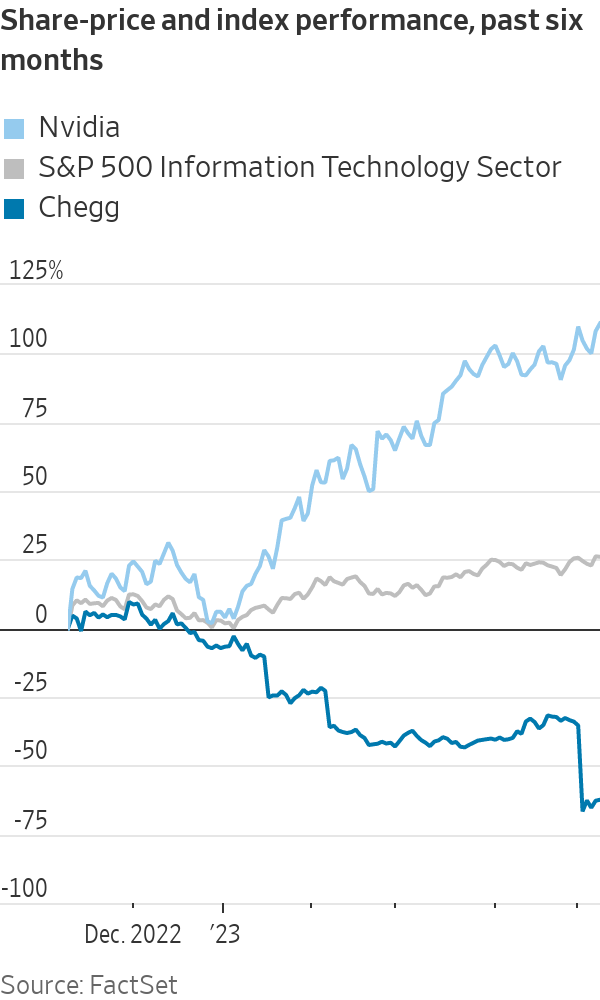
After languishing throughout last year, growth stocks have zoomed higher. Tesla Inc. and Nvidia Corp., for example, have jumped more than 30%. The outlook for bonds is brightening after a historic rout. Even bitcoin has rallied, despite ongoing effects from the collapse of the crypto exchange FTX.

The rebound has been driven by renewed optimism about the global economic outlook. Investors have embraced signs that inflation has peaked in the U.S. and abroad. Many are hoping that next week the Federal Reserve will slow its pace of interest-rate increases yet again. China’s lifting of Covid-19 restrictions pleasantly surprised many traders who have welcomed the move as a sign that more growth is ahead.

Still, risks loom large. Many investors aren’t convinced that the rebound is sustainable. Some are worried about stretched stock valuations, or whether corporate earnings will face more pain down the road. Others are fretting that markets aren’t fully pricing in the possibility of a recession, or what might happen if the Fed continues to fight inflation longer than currently anticipated.

We asked five investors to share how they are positioning for that uncertainty and where they think markets could be headed next. Here is what they said:

‘Animal spirits’ could return

Cliff Asness, founder of AQR Capital Management, acknowledges that he wasn’t expecting the run in speculative stocks and digital currencies that has swept markets to kick off 2023.

Bitcoin prices have jumped around 40%. Some of the stocks that are the most heavily bet against on Wall Street are sitting on double-digit gains. Carvana Co. has soared nearly 64%, while MicroStrategy Inc. has surged more than 80%. Cathie Wood‘s ARK Innovation ETF has gained about 29%.

If the past few years have taught Mr. Asness anything, it is to be prepared for such run-ups to last much longer than expected. His lesson from the euphoria regarding risky trades in 2020 and 2021? Don’t count out the chance that the frenzy will return again, he said.

“It could be that there are still these crazy animal spirits out there,” Mr. Asness said.

Still, he said that hasn’t changed his conviction that cheaper stocks in the market, known as value stocks, are bound to keep soaring past their peers. There might be short spurts of outperformance for more-expensive slices of the market, as seen in January. But over the long term, he is sticking to his bet that value stocks will beat growth stocks. He is expecting a volatile, but profitable, stretch for the trade.

“I love the value trade,” Mr. Asness said. “We sing about it to our clients.”

—Gunjan Banerji

Keeping dollar’s moves in focus

For Richard Benson, co-chief investment officer of Millennium Global Investments Ltd., no single trade was more important last year than the blistering rise of the U.S. dollar.

Once a relatively placid area of markets following the 2008 financial crisis, currencies have found renewed focus from Wall Street and Main Street. Last year the dollar’s unrelenting rise dented multinational companies’ profits, exacerbated inflation for countries that import American goods and repeatedly surprised some traders who believed the greenback couldn’t keep rallying so fast.

The factors that spurred the dollar’s rise are now contributing to its fall. Ebbing inflation and expectations of slower interest-rate increases from the Fed have sent the dollar down 1.7% this year, as measured by the WSJ Dollar Index.

Mr. Benson is betting more pain for the dollar is ahead and sees the greenback weakening between 3% and 5% over the next three to six months.

“When the biggest central bank in the world is on the move, look at everything through their lens and don’t get distracted,” said Mr. Benson of the London-based currency fund manager, regarding the Fed.

This year Mr. Benson expects the dollar’s fall to ripple similarly far and wide across global economies and markets.

“I don’t see many people complaining about a weaker dollar” over the next few months, he said. “If the dollar is falling, that economic setup should also mean that tech stocks should do quite well.”

Mr. Benson said he expects the dollar’s fall to brighten the outlook for some emerging- market assets, and he is betting on China’s offshore yuan as the country’s economy reopens. He sees the euro strengthening versus the dollar if the eurozone’s economy continues to fare better than expected.

—Caitlin McCabe

Stocks still appear overvalued

Even after the S&P 500 fell 15% from its record high reached in January 2022, U.S. stocks still look expensive, said Rupal Bhansali, chief investment officer of Ariel Investments, who oversees $6.7 billion in assets.

Of course, the market doesn’t appear as frothy as it did for much of 2020 and 2021, but she said she expects a steeper correction in prices ahead.

The broad stock-market gauge recently traded at 17.9 times its projected earnings over the next 12 months, according to FactSet. That is below the high of around 24 hit in late 2020, but above the historical average over the past 20 years of 15.7, FactSet data show.

“The old habit was buy the dip,” Ms. Bhansali said. “The new habit should be sell the rip.”

One reason Ms. Bhansali said the selloff might not be over yet? The market is still underestimating the Fed.

Investors repeatedly mispriced how fast the Fed would move in 2022, wrongly expecting the central bank to ease up on its rate increases. They were caught off guard by Fed Chair Jerome Powell‘s aggressive messages on interest rates. It stoked steep selloffs in the stock market, leading to the most turbulent year since the 2008 financial crisis. Now investors are making the same mistake again, Ms. Bhansali said.

Current stock valuations don’t reflect the big shift coming in central-bank policy, which she thinks will have to be more aggressive than many expect. Though broader measures of inflation have been falling, some slices, such as services inflation, have proved stickier. Ms. Bhansali is positioning for such areas as healthcare, which she thinks would be more insulated from a recession than the rest of the market, to outperform.

“The Fed is determined to win the war since they lost the battle,” Ms. Bhansali said.

—Gunjan Banerji

A better year for bonds seen

Gone are the days when tumbling bond yields left investors with few alternatives to stocks. Finally, bonds are back, according to Niall O’Sullivan of Neuberger Berman, an investment manager overseeing about $427 billion in client assets at the end of 2022.

After a turbulent year for the fixed-income market in 2022, bonds have kicked off the new year on a more promising note. The Bloomberg U.S. Aggregate Bond Index—composed largely of U.S. Treasurys, highly rated corporate bonds and mortgage-backed securities—climbed 3% so far this year on a total return basis through Thursday’s close. That is the index’s best start to a year since it began in 1989, according to Dow Jones Market Data.

Mr. O’Sullivan, the chief investment officer of multi asset strategies for Europe, the Middle East and Africa at Neuberger Berman, said the single biggest conversation he is currently having with clients is how to increase fixed-income exposure.

“Strategically, the facts have changed. When you look at fixed income as an asset class…they’re now all providing yield, and possibly even more importantly, actual cash coupons of a meaningful size,” he said. “That is a very different world to the one we’ve been in for quite a long time.”

Mr. O’Sullivan said it is important to reconsider how much of an advantage stocks now hold over bonds, given what he believes are looming risks for the stock market. He predicts that inflation will be harder to wrangle than investors currently anticipate and that the Fed will hold its peak interest rate steady for longer than is currently expected. Even more worrying, he said, it will be harder for companies to continue passing on price increases to consumers, which means earnings could see bigger hits in the future.

“That is why we are wary on the equity side,” he said.

Among the products that Mr. O’Sullivan said he favours in the fixed-income space are higher-quality and shorter-term bonds. Still, he added, it is important for investors to find portfolio diversity outside bonds this year. For that, he said he views commodities as attractive, specifically metals such as copper, which could continue to benefit from China’s reopening.

—Caitlin McCabe


Find the fear, and find the value

Ramona Persaud, a portfolio manager at Fidelity Investments, said she can still identify bargains in a pricey market by looking in less-sanguine places. Find the fear, and find the value, she said.

“When fear really rises, you can buy some very well-run businesses,” she said.

Take Taiwan’s semiconductor companies. Concern over global trade and tensions with China have weighed on the shares of chip makers based on the island. But those fears have led many investors to overlook the competitive advantages those companies hold over rivals, she said.

“That is a good setup,” said Ms. Persaud, who considers herself a conservative value investor and manages more than $20 billion across several U.S. and Canadian funds.

The S&P 500 is trading above fair value, she said, which means “there just isn’t widespread opportunity,” and investors might be underestimating some of the risks that lie in waiting.

“That tells me the market is optimistic,” said Ms. Persaud. “That would be OK if the risks were not exogenous.”

Those challenges, whether rising interest rates and Fed policy or Russia’s war in Ukraine and concern over energy-security concerns in Europe, are complicated, and in many cases, interrelated.

It isn’t all bad news, she said. China ended its zero-Covid restrictions. A milder winter in Europe has blunted the effects of the war in Ukraine on energy prices and helped the continent sidestep recession, and inflation is slowing.

“These are reasons the market is so happy,” she said.

—Justin Baer

Inflation set to level out in 2023 – but more interest rate pain likely

Australian mortgage holders should prepare themselves for more pain this year, with experts predicting another interest rate rise when the RBA meets next month.

The Big Four banks expect the RBA to raise the cash rate by at least another 25 basis points, which would mark the ninth consecutive rise since May last year, and the highest peak since 1990 at 3.35 percent.

The Reserve Bank has been raising the cash rate in a bid to combat rising inflation, which currently sits at 7.8 percent, the highest level since 1990. The Australian Bureau of Statistics points to more expensive domestic holidays, international travel and higher energy prices as some of the key drivers.

While some have expressed concern that further interest rate rises could be enough to push Australia into a recession, head of research at CoreLogic, Eliza Owen, says there’s not too much cause for alarm just yet.

In the CoreLogic Property Pulse Report released this week, she points out that the RBA predicted inflation would peak at 8 percent this year and that the signs of a coming decline in the rate of inflation are already there.

“Underlying core inflation (the RBA’s preferred reading on inflation), which is measured by trimming excessively volatile components of CPI, actually fell in the quarter, from 1.9 percent in September to 1.7 percent,” she said in the report. 

“Annual core inflation is still a long way from the 2 to 3 percent target range set by the RBA, at 6.9%. However, December marked the first fall in quarterly core inflation since March 2021, following eight consecutive interest rate rises from May 2022.”

The result, she said, is that inflation may have already peaked. 

“Inflation across the combined OECD slowed to 1.8 percent in the September 2022 quarter, after peaking at 2.1 percent through June,” she said. “Forecasts from the OECD also suggest a fall in inflation through 2023 across most major economies, as global economic demand starts to slow.”

This includes Australia’s major trading partners such as China, Germany, Japan and the US.

In better news for those looking to renovate or build this year, the report also says that housing metrics indicate the rate of growth in new build costs is slowing.

“December CPI figures showed housing costs were still up a substantial 1.9% in the quarter, but this was down from a 3.2% lift in the three months to September,” Ms Owen said. 


High-Earning Men Are Cutting Back on Their Working Hours

American workers have cut the number of hours they spend in their jobs since 2019, but no group has dialled back its time on the clock more than young, high-earning men whose jobs typically demand long hours.

The top-earning 10% of men in the U.S. labor market logged 77 fewer work hours in 2022, on average, than those in the same earnings group in 2019, according to a new study of federal data by the economics department at Washington University in St. Louis. That translates to 1.5 hours less time on the job each workweek, or a 3% reduction in hours. Over the same three-year period, the top-earning 10% of women cut back time at work by 29 hours, which translates to about half an hour less work each week, or a 1% reduction.

High-earning men in the 25-to-39 age range who could be described as “workaholics” were pulling back, often by choice, says Yongseok Shin, a professor of economics, who co-wrote the paper. Since this group already put in longer hours than the typical U.S. worker—and women at the highest income levels—these high earners had longer work days to trim, Dr. Shin says, and still worked more hours than the average.

The drop in working hours among high-earning men and women helps explain why the U.S. job market is even tighter than what would be expected given the current levels of unemployment and labour force participation, Dr. Shin says.

“These are the people who have that bargaining power,” Dr. Shin says of the leverage many workers have had over their employers in a tight job market. “They have the privilege to decide how many hours they want to work without worrying too much about their economic livelihood.”

The paper published by the National Bureau of Economic Research, which isn’t yet peer reviewed, suggests high earners were more likely to benefit from flexible working arrangements, which could be a factor in reduced work hours.

Before the pandemic, Eli Albrecht, a lawyer in the Washington, D.C., area, says he worked between 80 to 90 hours a week. Now, he says he puts in 60 to 70 hours each week. That’s still more than most men in America, who averaged 40.5 hours a week in 2021, according to federal data.

Mr. Albrecht’s schedule changed when he shared Zoom school duties for two of his young children with his wife. He’s maintained the reduced hours because it’s making his relationship more equitable, he says, and gives him family time.

“I used to feel—and a lot of dads used to feel—that just by providing for the family financially, that was sufficient. And it’s just not,” Mr. Albrecht says.

The downshift documented by Dr. Shin and his colleagues occurred as many professionals have been reassessing their ambitions and the value of working long hours. Emboldened by a strong job market, millions of Americans quit their jobs in search of better hours and more flexibility.

Overall, U.S. employees worked 18 fewer hours a year, on average, in 2022 compared with 2019, with employed men putting in 28 fewer hours last year and employed women cutting their time by nine hours, data from the U.S. Census Bureau’s Current Population Survey show. The average male worker put in 2,006 hours last year, while the average female worker logged 1,758 hours.

Separate data from the Census Bureau suggests that men with families, in particular, are working less. Between 2019 and 2021, married men devoted roughly 13 fewer minutes, on average, to work each day, according to the American Time Use Survey, which hasn’t yet published 2022 figures. They spent more time on socialising and relaxing, as well as household activities, according to men surveyed by the Census Bureau. The amount of time unmarried men spent on work changed little during that same period.

As high-earning workers in the U.S. cut back, low-wage workers increased their hours, according to Dr. Shin’s research. The bottom-earning 10% of working men logged 41 hours more in 2022, on average, than in 2019. Women in the lowest earning group boosted their hours worked by 52 last year compared with 2019.

While women work fewer hours than men, the unpaid labor they perform outside of their jobs has been well documented. Many working mothers take what’s termed a “second shift,” devoting more time outside work hours to child care and housework.

Maryann B. Zaki, a mother of three who has worked at several firms, including in big law, recently launched her own practice in Houston, giving her more control over her hours. She says she’s noticed more men in her field opting for reduced schedules, sometimes working 80% of the hours normally expected—which can range from 40 to more than 80 a week—in exchange for a 20% pay cut. For the average lawyer, that would amount to a salary reduction of tens of thousands of dollars each year; such arrangements were initially offered to aid working mothers.

Responding to new expectations of work-life balance may be particularly vexing for industries already facing staffing shortages, such as those in medicine. Dr. Lotte Dyrbye, the chief well-being officer for the University of Colorado School of Medicine, said she often hears from early-career physicians and other medical professionals who want to work fewer hours to avoid burnout.

These medical workers are deciding that to be in it for the long haul requires a day every week or two to decompress, Dr. Dyrbye says. But as staff cut back their hours, it costs medical organisations money and may compromise access to care.

Corporate Layoffs Spread Beyond High-Growth Tech Giants

Dow Inc., International Business Machines Corp. and SAP SE announced plans to cut thousands of jobs to prepare for a darkening economic outlook, as the current wave of corporate layoffs spreads beyond high-growth technology companies.

Together with layoffs announced by manufacturer 3M Co. this week, these companies are trimming more than 10,000 jobs, just a fraction of their total workforces. Still, the decisions mark a shift in sentiment inside executive suites, where many leaders have been holding on to workers after struggling to hire and retain them in recent years when the pandemic disrupted workplaces.

Unlike Microsoft Corp. and Google parent Alphabet Inc., which announced larger layoffs this month, these companies haven’t expanded their workforces dramatically during the pandemic. Instead, the leaders of these global giants said they were shrinking to adjust to slowing growth, or responding to weaker demand for their products.

“We are taking these actions to further optimise our cost structure,” Jim Fitterling, Dow chief executive, said in announcing the cuts, noting the company was navigating “macro uncertainties and challenging energy markets, particularly in Europe.”

The U.S. job market remains historically tight, with unemployment in December at 3.5% matching multi decade lows. The number of job openings still far outpaces the number of people looking for work. The Federal Reserve has been raising interest rates to tame growth and combat high inflation. But CEOs say many companies are beginning to scrutinise hiring more closely.

Slower hiring has already lengthened the time it takes Americans to land a new job. In December, 826,000 unemployed workers had been out of a job for about 3½ to 6 months, up from 526,000 in April 2022, according to the Labor Department.

“Employers are hovering with their feet above the brake. They’re more cautious. They’re more precise in their hiring,” said Jonas Prising, chief executive of ManpowerGroup Inc., a provider of temporary workers. “But they’ve not stopped hiring.”

Additional signs of a cooling economy emerged on Thursday when the Commerce Department said U.S. gross domestic product growth slowed to a 2.9% annual rate in the fourth quarter, down from a 3.2% annual rate in the third quarter.

Not all companies are in layoff mode. Walmart Inc., the country’s biggest private employer, said this week it was raising its starting wages for hourly U.S. workers to $14 from $12, amid a still tight job market for front line workers. Chipotle Mexican Grill Inc. said Thursday it plans to hire 15,000 new employees to work in its restaurants, while plane maker Airbus SE said it is recruiting over 13,000 new staffers this year. Airbus said 9,000 of the new jobs would be based in Europe with the rest spread among the U.S., China and elsewhere.

General Electric Co., which slashed thousands of aerospace workers in 2020 and is currently laying off 2,000 workers from its wind turbine business, is hiring in other areas. “If you know any welders or machinists, send them my way,” Chief Executive Larry Culp said this week.

Annette Clayton, CEO of North American operations at Schneider Electric SE, a Europe-headquartered energy-management and automation company, said the U.S. needs far more electricians to install electric-vehicle chargers and perform other tasks. “The shortage of electricians is very, very important for us,” she said.

Railroad CSX Corp. told investors on Wednesday that after sustained effort, it had reached its goal of about 7,000 train and engine employees around the beginning of the year, but plans to hire several hundred more people in those roles to serve as a cushion and to accommodate attrition that remains higher than the company would like.

Freeport-McMoRan Inc. executives said Wednesday they expect U.S. labor shortages to continue to crimp production at the mining giant. The company has about 1,300 job openings in a U.S. workforce of about 10,000 to 12,000, and many of its domestic workers are new and need training and experience to match prior expertise, President Kathleen Quirk told analysts.

“We could have in 2022 produced more if we were fully staffed, and I believe that is the case again this year,” Ms. Quirk said.

The latest layoffs are modest relative to the size of these companies. For example, IBM’s plan to eliminate about 3,900 roles would amount to a 1.4% reduction in its head count of 280,000, according to its latest annual report.

The planned 3,000 job cuts at SAP affect about 2.5% of the business-software maker’s global workforce. Finance chief Luka Mucic said the job cuts would be spread across the company’s geographic footprint, with most of them happening outside its home base in Germany. “The purpose is to further focus on strategic growth areas,” Mr. Mucic said. The company employed around 111,015 people on average last year.

Chemicals giant Dow said on Thursday it was trimming about 2,000 employees. The Midland, Mich., company said it currently employs about 37,800 people. Executives said they were targeting $1 billion in cost cuts this year and shutting down some assets to align spending with the macroeconomic environment.

3M, which had about 95,000 employees at the end of 2021, cited weakening consumer demand for its plans to eliminate 2,500 manufacturing jobs. The maker of Scotch tape, Post-it Notes and thousands of other industrial and consumer products said it expects lower sales and profit in 2023.

“We’re looking at everything that we do as we manage through the challenges that we’re facing in the end markets,” 3M Chief Executive Mike Roman said during an earnings conference call. “We expect the demand trends we saw in December to extend through the first half of 2023.”

Some companies still hiring now say the job cuts across the economy are making it easier to find qualified candidates. “We’ve got the pick of the litter,” said Bill McDermott, CEO of business-software provider ServiceNow Inc. “We have so many applicants.”

At Honeywell International Inc., CEO Darius Adamczyk said the job market remains competitive. With the layoffs in technology, though, Mr. Adamczyk said he anticipated that the labor market would likely soften, potentially also expanding the applicants Honeywell could attract.

“We’re probably going to be even more selective than we were before because we’re going to have a broader pool to draw from,” he said.

Across the corporate sphere, many of the layoffs happening now are still small relative to the size of the organisations, said Denis Machuel, CEO of global staffing firm Adecco Group AG.

“I would qualify it more as a recalibration of the workforce than deep cuts,” Mr. Machuel said. “They are adjusting, but they are not cutting the muscle.”

Top strategies for winning at auction

 Always part of the crowd but never the winning bidder? It can be frustrating  to keep missing out on securing your slice of Sydney. 

When you have your heart set on a property, you’re buying not just a home but a lifestyle that will champion your dreams and ambitions. So no wonder auctions are a nerve-racking affair. Put yourself on the front foot with these winning strategies.

Read more stories like this in the latest issue of Kanebridge Quarterly magazine. Order your copy here.

1 

Put in a pre-auction offer

Actually, there may be no need to go to auction at all. In today’s market, you have a good chance of calmly negotiating a winning deal ahead of time. Of all properties intended for auction, the proportion sold prior has roughly doubled since last year, now accounting for about half of all sales. So if you’ve done your research and don’t want to wait it out, make a solid pre-auction offer that reflects current market values.Conversely, in a strong market, you may be better advised to wait it out. Vendors are unlikely to take an early offer if they know there are other buyers waiting in the wings.  

2 

Own it to win it 

Show up at the auction dressed to impress and stand in a prominent position where you can eyeball other bidders. When people bid against you, respond quickly and decisively. Play your cards right and you’ll give your competitors the impression that you’re not going to stop – which may be enough to convince them to give up. 

3 

Bidding anonymously

Bidding remotely via a live auction app could be the solution to staying calm and clear-headed. The future-forward UrbaneLIVE app enables you to participate in live-streamed auctions from wherever you feel most comfortable. If you’d rather be on site, but feel uneasy about bidding publicly, you could use the app to bid anonymously. The app will also ensure you don’t miss out on the chance to bid if you’re out of town on auction day. 

4 

Use the professionals

Your agent is there to help. They offer advice and support as well as practical information about the auction, so take advantage of their expertise and ask as many questions as you can. Worried you might get caught up in the emotion on the day? Asking a seasoned auction goer to bid on your behalf will make you less vulnerable to auction day pressure. (If you’ve recently sold and have a good relationship with your agent, you could ask them to help you bid for your next home, provided the property is listed with another agency.) Alternatively, a buyer’s agent will bid on your behalf for a fee and help research the market and work with you to determine a reasonable limit. 


5 

Top-and-tail approach

Beyond the comical awkwardness, there’s little benefit in holding out on an opening bid. Before the crickets chirp and tumbleweed rolls, make your presence known with a reasonable low-end bid. You can then hang back and get a feel for your competitors, before boldly re-joining the bidding at the pointy end of the auction. If nobody else bids after your opening offer, even better. You’ll be first in line to negotiate a deal. 

6 

Hit them with your best shot 

When bidding slows, hopeful purchasers often settle in for a lengthy back-and-forth of $1000 increments. With amounts this small, it’s tempting for bidders to keep pushing that little bit further. If you still have some room in your budget, try knocking them out with an offer of $15,000 or $20,000 more. In the context of Sydney or Melbourne property, it’s a small price to pay to secure a purchase. There’s no better place to pick up tips than at an auction. Onlookers are always welcome so check out our auction listings and drop by to watch the show.


U.S. Economy Slows, but Europe’s Picks Up, Raising Hopes World Will Avoid Recession

Two of the world’s largest economies moved in opposite directions at the start of the year, with U.S. businesses reporting further declines in activity in January while the eurozone saw a modest pickup.

The divergence suggests that while the U.S. economy continues to lose momentum, Europe’s could be stabilising, at least for now. The pace of contraction in U.S. firms slowed in January, according to new business surveys released Tuesday, a possible signal that the economy could be bottoming out, thanks to slowing inflation and resilient demand.

Combined, the surveys point to a global economy that looks likely to slow this year but could avoid recession. The receding threat of energy shortages in Europe, a still-growing U.S. economy, and China’s postpandemic reopening could offset the effect of higher prices and interest rates and keep the world from a steep downturn.

In the U.S., the economy continues to expand late last year, despite the Federal Reserve’s string of interest-rate increases designed to cool the economy and bring inflation under control. Higher rates have weighed heavily on certain sectors and could be causing households to pull back.

Home sales fell almost 18% in 2022 from the previous year. Retail sales were down 1.1% in December and the labour market, while still vibrant, is starting to show cracks. Employers have shed temporary workers for five straight months. Some economists see lower temporary payrolls as a precursor to a broader decline in employment.

Yet economists estimate the U.S. economy grew at a seasonally adjusted annual rate of 2.8% in the fourth quarter of last year, down slightly from 3.2% in the third quarter. Inflation, which hit a four-decade high last year, is cooling. Consumer prices rose 6.5% in December from a year earlier, down from a 2022 peak of 9.1% in June.

The Commerce Department will release fourth-quarter gross-domestic-product data on Thursday.

Until recently most economists had seen the eurozone as likely to enter a recession this year after energy bills soared because of the Ukraine war.

But the combination of a mild winter, energy-conservation efforts, moves by governments to find new natural-gas suppliers and hundreds of billions of euros in fiscal support appear to have propped up the eurozone economy.

On Tuesday, S&P Global said its composite output index for the U.S., a closely watched survey of business activity, was 46.6 in January, a slightly slower pace of contraction from December’s index of 45. In Europe, the index rose to 50.2 from 49.3. A reading above 50 points to an expansion while a reading below that level points to a contraction.

“A steadying of the eurozone economy at the start of the year adds to evidence that the region might escape recession,” said Chris Williamson, chief business economist at S&P Global Market Intelligence.

The U.S., on the other hand, “has started 2023 on a disappointingly soft note,” he said. “Although moderating compared to December, the rate of decline is among the steepest seen since the global financial crisis.”

Monetary policy could explain some of the divergence and could point to more trouble ahead for Europe, according to Jennifer McKeown, chief global economist at Capital Economics.

While the Federal Reserve has raised interest rates by more than 4 percentage points since March to a range of between 4.25% and 4.5%, the European Central Bank has moved at a slower pace, pushing up its policy rate by 2.5 percentage points starting in July.

Rates in Europe have further to rise while the U.S. may be nearing the end of its rate-increase cycle, she wrote in a note to clients Tuesday.

“Some of this pain has yet to come in the eurozone,” she wrote. “However, the region may avoid a recession or, if there is one, it seems likely to be milder than we had feared.”

The surveys of U.S. purchasing managers found that higher interest rates and persistent inflation weighed on demand in the manufacturing and service sectors. But employment continued to rise as companies worked through their backlog of orders.

In Europe, the surveys pointed to a further easing of price pressures in January, as business costs rose at the slowest pace since April 2021. The eurozone’s annual rate of consumer-price inflation eased for the second straight month in December and further declines are expected this year.

By contrast, January’s composite output index for the U.K. fell to 47.8 from 49.0 to reach a two-year low. That was a sign that the country’s economy may lag behind other parts of Europe as businesses grapple with a shortage of workers, the impact of interest-rate rises by the Bank of England that started at the end of 2021, and the continuing drag on business investment caused by its exit from the European Union.

Elsewhere, China lifted many of its zero-tolerance pandemic controls in early December in an abrupt change of course. While that led to an increase in Covid-19 infections and deaths, it also opened the door to a sharp economic rebound in the world’s second-largest economy, which suffered its weakest expansion in four decades in 2022.

“The relaxation of China’s strict zero-Covid policy has boosted growth prospects, whilst the warmer weather in Europe has helped temper the intensity of the energy crisis,” economists at Investec wrote in a note to clients as they raised their forecast for global economic growth this year to 2.4% from 2.2%.

But China’s reopening also presents a risk to the global economy. The release of pent-up demand could drive up the price of oil and other commodities, which could put renewed pressure on global inflation. That, in turn, could force central banks to keep interest rates high, which would weigh on growth.

Beautiful one day, home the next

Heading back to the office after a sunny summer vacay is enough to bring on those post holiday blues. For those with the funds though, access to sun, sand and sea need never end with the opportunity to buy this island home and business on one of Australia’s best-known holiday destinations.

Located on the Pacific Ocean side of K’gari Fraser Island off the Queensland coast, Lots 1-5 Yidney Drive offers five three-bedroom holiday units, including manager’s unit, on 806sqm of land just 25m from the sand.

The local shop, bar and bistro are 1km down the road at Happy Valley Township.

Agent Todd McKee from McGrath Real Estate Mooloolaba reports that turnover is slow on the island and the units have a 75 percent occupancy rate with bookings two years in advance. The property last traded 14 years ago.

“This is a trophy buy,” he says. “It is the best spot on K’gari Fraser Island. A major attraction for buyers is that it’s freehold title rather than leasehold. That makes it a more secure proposition.

“We’ve had a lot of inquiry already and we’ve only just started advertising. We’re seeing interest from corporate clients looking to buy to use for client entertainment and staff incentives and rewards. Other buyers just want a slice of the island to call their own.”

K’gari, meaning paradise, is on Butchulla country and is the world’s largest sand island and was listed as a World Heritage Area in 1992. It is known for its natural beauty, drawing visitors each year to its unique landscapes including rainforest, dune, lake and soil systems.

Address: Lots 1-5 Yidney Drive, K’gari Fraser Island

Price guide: $5.9m

Agent: Todd McKee, McGrath Mooloolaba 0418 737 197

When It Comes to Marriage and Money, Opposites Attract

The person you marry will often change your relationship to money.

We tend to choose our partners based on shared values, in-common traits and other similarities, marriage researchers say. But money-management styles are one case in which opposites do attract, said Jenny Olson, an assistant professor of marketing at Indiana University who studies couples’ financial decision-making.

We are drawn to people who can check and balance our own rigid rules about money, Prof. Olson said. Someone who feels they are too focused on saving and not focused enough on using money to enjoy life might look for a partner who can help them feel more comfortable with an occasional splurge.

Over the decades, however, spouses often grow more alike. The spendthrifts married to the tightwads manage to find some middle ground, learning from one another in the process, said Scott Rick, a marketing professor at the University of Michigan whose studies marital finances.

“The spouses who don’t converge have a harder time and those marriages are probably more fragile and could end in divorce,” Prof. Rick said, referencing his analysis of 1,303 couples, which will be published in a forthcoming book.
This mutual influence along with the built-in financial accountability couples get when they pool their assets are partly why married couples have a financial advantage over their single counterparts, researchers say. The median net worth of married couples 25 to 34 years old was nearly nine times as much as the median net worth of single households in 2019, up from four times as much in 2010, according to research from the Federal Reserve Bank of St. Louis.

When Kristen James, a 33-year-old product manager in Austin, Texas, first started dating her now-husband, Ben, a 35-year-old startup co-founder, she noticed they came to the relationship with different approaches to their finances. Mr. James considered himself much more of a financial risk-taker; Ms. James preferred to manage her money more conservatively.

Instead of their differences erupting in conflict, Ms. James said her husband’s approach had a positive influence. After talking it over as a couple, Ms. James made the leap to change her career, moving into the technology industry and ultimately earning a higher salary as a result. Without her husband’s encouragement, she said she wouldn’t have felt secure making such a huge life change.

“He said, ‘You’re worth far more than what you’re making,’ and he pushed me to take on more risk and challenge myself in different ways,” she said.

Couples who communicate about the differences in their financial beliefs are better able to make decisions together, as tedious as that practice may initially feel, said Matt Lundquist, a psychotherapist and the clinical director of Tribeca Therapy, a psychotherapy practice based in New York.

He points to clients who take a regular weekend trip and have made it a habit to use the driving time to discuss their finances. While the children snooze in the back of the car, the parents review the state of their budgets and check in on progress toward longer-term goals.

Talking as a pair also prevents an imbalance of power in which one partner appoints themselves money manager, said Adrian Ward, a marketing professor at the University of Texas at Austin.

In his own research looking at how couples manage their money, Prof. Ward found that one partner often takes charge of the finances, not because they’re better equipped to do so, but because they have more time for the job. The in-house money manager—whom Prof. Ward calls “the household CFO”—often shuts the other partner out of the decision-making. Sometimes, the other person is relieved, but over time, that partner’s financial literacy suffers.

“Even though it’s hard to make decisions together and we’re both busy, and it would be way easier for one of us to just do it, it’s the best long-term way to care for each other,” he said.

Marcella Mollon-Williams, a behavioural financial adviser based in Bowie, Md., runs a premarital financial counselling session for couples.

The main issue she sees early on in relationships: Couples too often talk about the things one partner wants the other to avoid doing with their money, as opposed to the things they want to do together.

“Talk about the desires money brings, the things you want to accomplish,” she said. “When you start dreaming together, identifying the things money can buy, it’ll become easier. It’s sort of looking ahead and then working backwards.”

To stay on the same page financially, Kristen and Ben James set a monthly family finance meeting. Talking about their goals, reviewing financial allocations and having time to connect on those topics helps them keep their sights trained on the bigger picture, Ms. James said.

When she’s tempted to scroll through Redfin real-estate listings, she relies on her husband to hold her accountable.

“We have each other to say ‘We’re not buying a new house right now’ or ‘We’re not buying a new car right now’—you have that other person to ground you,” she said.

Christie’s to Offer Two Landscapes by Lucian Freud in London

Two landscapes by Lucian Freud previously in the collection of British businessman and philanthropist Simon Sainsbury will be offered next month at Christie’s in London, the auction house announced Friday.

Separately, Sotheby’s released additional highlights of its upcoming Masters Week in New York, including an over 400-year-old Anthony Van Dyke painting, A Sketch for Saint Jerome, that was found in a farm shed in the late 20th century in New York. The auction house expects to bring in more than US$100 million from across nine sales running now until early February.

Christie’s sale of the two Freud landscapes will take place on the evening of Feb. 28 in London. Offered by the same private collector, both paintings were formerly in the collection of Sainsbury, whose family founded Sainsbury’s, the second largest chain of supermarkets in the U.K. Upon his death in 2006 at the age of 76, Sainsbury bequeathed the majority of his art collection, estimated to be worth £100 million at the time, to the National Gallery and the Tate Gallery in London.

One of the paintings, Scillonian Beachscape from 1945-46, will make its first public appearance on the market since 1974 and has a presale estimate of between £3.5 million and £5.5 million (US$4.3 million and US$6.8 million). Depicting a dreamlike coastal scene in lush, sun-drenched color, it was inspired by Freud’s visit to the Isles of Scilly and directly based on his drawing, Untitled, which sold for £138,600 at Christie’s in London last October.

The other, Garden from the Window, depicts the artist’s garden at 138 Kensington Church Street. It was first unveiled at the Tate in London in 2002, and its debut auction at Christie’s is expected to fetch £2.5 million and £3.5 million.

“Lucian Freud, revered as one of the greatest painters of the 20th century, continually returned to the natural world as a source of rich inspiration throughout his career. This lifelong fascination is perfectly encapsulated in these two exquisite paintings which offer viewers insight into both his early and late life,” Tessa Lord, acting head of department of Post-War and contemporary art at Christie’s London, said in a news release.

The National Gallery in London has recently organized a centenary retrospective “Lucian Freud: New Perspectives,” which will move to Thyssen-Bornemisza Museo Nacional in Madrid in February.

Freud’s auction record was set by his painting large interior w11 (after watteau), 1981-83, from the collection of Paul Allen. It sold for US$86.3 million last November at Christie’s in New York.

Meanshile, t Sotheby’s, its first major sale of the year will be its Masters Week in New York, which is expected to bring in more than US$100 million across nine sales that will run through early February.

The sales will be led by 10 Baroque masterpieces from the collection of Mark Fisch, a real estate developer and a trustee of the Metropolitan Museum of Art in New York, and his ex-wife, Rachel Davidson, a former New Jersey judge. The two filed for divorce last year. Highlighting the collection, to be auctioned next Thursday, is a 1609 Rubens masterpieceSalome Presented with The Severed Head of Saint John the Baptist, with an estimate of between US$25 million and US$35 million.

The sales also include The One, a new format sale featuring one-of-a-kind objects throughout history. This sale will be led by Kobe Bryant’s Lakers jersey with a high estimate of US$7 million, and a Princess Diana’s dress, with a presale estimate between US$80,000 and US$120,000.

A Sketch for Saint Jerome from 1615-18 by Anthony Van Dyck that was discovered in the late 20th century in a farm shed in Kinderhook, N.Y., will be offered in the region of US$2 million and US$3 million. A portion of proceeds from the sale will benefit the Albert B. Roberts Foundation, which supports artists and other creatives.

Roberts, a collector of “lost” pieces, purchased the sketch for US$600. Soon afterwards, the sketch was recognized by art historian Susan J. Barnes as a “surprisingly well preserved” autograph work by Van Dyck, according to Sotheby’s.

He died in August 2021 at the age of 89.

What you need to know to future proof your home

 It’s fair to say that the world has gone through a period of accelerated change in recent years. Aside from the significant impacts of COVID, the effects of climate change are becoming more evident and, as countries around the world look for alternatives to fossil fuels, many homeowners are beginning to understand the implications at home, in the form of rising energy prices and greater weather extremes.

For those contemplating renovating or completely rebuilding from scratch, the idea of future proofing your home is beginning to take hold. But what does it mean to create a home for the future?

In general terms, a future-proofed home is one that is designed for longevity, with enough flexibility and sustainability built into it to provide residents with a comfortable lifestyle for decades to come. This means creating spaces that are not only comfortable to live in but have low running costs without the need to dramatically upgrade or alter aspects over time.

For some, that can entail embracing new technologies, which may come with substantial upfront costs, while for others, the focus is very much on design.

For more stories like these, pick up a copy of Kanebridge Quarterly magazine here.

 Architect Caroline Pidcock says the beauty of future proofing through design is that anyone building or renovating can take steps to make it part of the construction process. Whether you  plan to stay put or you have one eye on resale, she says the principles of a sustainable lifestyle still apply.

“There are three things anyone can do, whether or not you’re embarking on a major building project,” she says. 

“Firstly, make sure the external building envelope is as well sealed and insulated as possible. Secondly, we need to understand and work with the sun – where we want it and don’t want it – and work with it to capture its energy for our own use.”

The third measure, she says, is to step away from fossil fuels such as coal-fired power and gas, towards renewable sources of electricity.

“You should totally electrify your home,” she says. “Having a gas cooktop is like having a smoker in your home. If we totally electrify and make the building envelope as efficient as possible, we’re on the way to future proofing.”

In terms of design, Pidcock says it’s time to rethink the open plan living model in favour of more flexible spaces that can be opened up and closed down to allow for more efficient heating and cooling as well as better thermal and acoustic comfort for everyone.

“We need to rethink how much space we need,” she says. 

“That might mean the end of the open plan living dream. Adding doors is good from a thermal and acoustic point of view and the ability to close or open the spaces as you need them. 

“That flexibility of space is useful and important.”

This house designed by CarterWilliamson Architects is designed for flexibility and thermal comfort. Picture: Anson Smart

For Dr Trivess Moore, senior lecturer in RMIT’s School of Property, Construction and Project Management in Melbourne, the focus is very much on the ability of current housing stock to cope with the climate extremes many Australians are already experiencing.

“The majority of existing and new housing in Australia is not suitable for performing in our current climate,” he says. “This means we have a high reliance on mechanical heating and cooling to stay thermally comfortable, resulting in high energy consumption and bills. 

“The majority of the housing stock performs between 1.5 to 3 stars on a scale of zero (worst) to 10 (best). In some cases, households will find their housing unliveable for periods of time if we see climate change much further.”

Government regulation, such as the Building Sustainability Index (Basix) legislation introduced in NSW in 2004, has gone some way to make new housing stock more future proofed, says Moore, as have rebates to encourage Australians to take up renewable energies such as solar panels. The result is that one in three Australian households have installed solar panels, according to figures from the Clean Energy Regulator, the highest domestic uptake rate in the world. 

While battery storage systems are still prohibitively expensive for many, all indicators are that they will be a necessary part of any future proofed home, thanks to their ability to store energy from renewables to be used on demand.

Managing diretor of Qcells Australia, Jin Han says the sooner you can install a storage battery, the sooner you can make the most from solar energy supplies generated on your own property. He says there are options for those who would like to avoid the initial outlay.

“This can be addressed with green loans and financing,” Han says. 

The future of car use is electric, with home battery storage a given.

Qcells has partnered with Arcstream financing, allowing homeowners to bundle monthly payments with their energy plan. 

“For example, before solar your bill is $200 per month, add solar and battery and energy plan with no upfront payment, and pay $180 per month consistently, and be paying off an asset that you then own.”

Even some volume home builders are now offering battery storage packages and EV charging points.

Managing director of Volkswagen Group, Paul Sansom says once drivers move past concerns about ‘range anxiety’ for their cars, homes and residences equipped with EV charging stations will quickly become more desirable.

“Neither new houses nor new apartment buildings will be feasible without easy access to renewable EV charging; no more so than a home without internet access,” he says.

Further proof that the future of living is already here.

The Modern Chandelier Trend That’s Making Everything Else Seem Dated

Chandelier in plaster white from Montauk Lighting,

IN THE INTERIOR DESIGN WORLD, a new kind of chandelier has taken hold: fixtures whose metal components are coated in quietly arresting, matte, white plaster. The humble material—once the darling of rococo mirror frames and highly ornamental ceiling medallions—is showing up on chandeliers with few flourishes but lots of style, making a statement without being gaudy.

“I have used plaster lighting quite extensively,” said Los Angeles designer Martyn Lawrence Bullard. The pieces “add great drama and sophistication yet don’t overpower a space.” Cate Dunning also admires their subtlety, and recently installed a six-armed version by Currey & Co in a client’s dining space to give the eye a spot to rest in a pattern-filmed room that might be characterised as grandmillennial in style. Said the partner at Atlanta interior-design firm GordonDunning, “I love that plaster chandeliers introduce a new texture without adding another metallic finish.”

When creating a line of light fixtures for furnishings retailer RH’s Contemporary collection, New York designer Ryan Korban looked to the plaster creations of European sculptors Serge Roche and Alberto and Diego Giacometti, who collaborated with French decorator Jean-Michel Frank on chandeliers in the 1920s and ’30s. “Because of the simplicity in colour and material, they add a level of architecture to a ceiling and blend beautifully within any space,” Mr. Korban said of the pasty white style.

Indeed, Mr. Bullard has installed plaster chandeliers everywhere from drag queen RuPaul’s primary bedroom, which Mr. Bullard describes as “an ode to Dorothy Draper,” to American sportswear designer Tommy Hilfiger’s Palm Beach living room. “A pair of abstract 1940s chandeliers bring a freshness to the Palm Beach palette,” said Mr. Bullard, referring to the classic tropical elements of rattan chairs and potted palm trees.

New York designer Gideon Mendelson installed a pair of 1950s vintage, French, half-moon-shaped plaster fixtures in his Sagaponack, N.Y., home and relies on the style to bring “casual sophistication and texture to a space,” he said. Indeed, the dusty organic finish can help relax a formal room. Said Ms. Dunning, “It works for us specifically because it adds a more modern or ‘off’ element to a more traditional space.”

Nashville designer Sarah Bartholomew likewise toned down the stuffiness in an “architecturally intricate” wood-panelled room with Stephen Antonson’s slightly industrial Alexander model. “The white pops against the warmth of the wood walls,” she said. In a recent project, Chicago interior designer Summer Thornton hung a plaster chandelier—in which “floral blossoms” conceal the bulbs—in her client’s family room. The clean lines and chalky texture were, she said, “a welcome contrast to the velvet-adorned, traditionally shaped furniture and antique rug.”

Then there is the matter of the light they throw. Indianapolis designer Heidi Woodman goes so far as to say that plaster chandeliers cast an “ethereal” glow when illuminated. “Because plaster seems to absorb light—as opposed to metal, which bounces light—it provides a softer hue,” she explained.

Fed Sets Course for Milder Interest-Rate Rise in February

U.S. Federal Reserve officials are preparing to slow interest-rate increases for the second straight meeting and debate how much higher to raise them after gaining more confidence inflation will ease further this year.

They could begin deliberating at the Jan. 31-Feb. 1 gathering how much more softening in labour demand, spending and inflation they would need to see before pausing rate rises this spring.

In recent public statements and interviews, Fed officials have said slowing the pace of rate increases to a more traditional quarter percentage point would give them more time to assess the impact of their increases so far as they determine where to stop.

Officials called attention to how it takes time for the full effect of higher rates to cool economic activity when they stepped down to a half-point rate rise in December, following four consecutive increases of 0.75 point.

“And that logic is very applicable today,” said Fed Vice Chair Lael Brainard in remarks last week. Raising rates in smaller increments “gives us the ability to absorb more data…and probably better land at a sufficiently restrictive level.”

To combat high inflation last year, the Fed reeled off the most rapid series of rate rises since the early 1980s, raising its benchmark federal-funds rate by 4.25 percentage points. A quarter-point increase next month would bring the rate to a range between 4.5% and 4.75%.

Most Fed officials projected in December the rate would rise to a peak between 5% and 5.25%. That would imply two more quarter-point increases after the likely bump next month. Investors in interest-rate futures markets expect the Fed to make two more quarter-point increases—at the coming meeting and again at the Fed’s subsequent meeting in mid-March, according to CME Group.

The Fed raised rates seven times last year. The likely decision to approve a smaller increase in February reflects officials’ growing confidence that the economy is responding to their efforts to curb demand and bring down inflation.

In recent weeks, government data and business surveys have pointed to a steeper drop-off in manufacturing activity and new orders for service-sector firms as well as a pullback in consumer spending on goods.

The central bank’s rate increases are aimed at slowing inflation by reducing demand, “and there is ample evidence that this is exactly what is going on in the business sector,” Fed governor Christopher Waller, an early and vocal advocate for aggressive rate rises last year, said on Friday. Mr. Waller said he would favour a quarter-point rate rise at the coming meeting.

The Commerce Department is set to release this week the December figures for the Fed’s preferred inflation gauge, the personal-consumption expenditures price index. Excluding food and energy prices, the so-called core PCE index likely rose 4.5% from a year earlier and at a 3.1% three-month annualised rate in December, Ms. Brainard said.

Officials could use their post meeting statement on Feb. 1 to indicate they expect to continue raising rates as they probe where to pause. But they are unlikely to provide precise guidance because coming decisions will depend heavily on new data about the economy.

Some have also suggested that even if they hold rates steady this summer, they will indicate they remain more likely to lift rates than to cut them. After the Fed pauses, “we’ll need to remain flexible and raise rates further if changes in the economic outlook or financial conditions call for it,” said Dallas Fed President Lorie Logan in a recent speech.

At the coming meeting, officials could deliberate two important questions: How long does it take for the full effects of the Fed’s rate rises to influence hiring and overall economic demand? And how much could inflation slow due to other factors such as easing supply-chain bottlenecks or lower costs of fuel and other commodities?

Some could call for delaying any pause if the economy doesn’t weaken much in the months ahead. They think the time between when the Fed raises rates and when they slow the economy is relatively short and the economy will soon feel the worst of any policy-induced slowdown.

Others could argue for a somewhat earlier pause, believing the effects take longer to play out or could be more potent.

Divisions have surfaced. St. Louis Fed President James Bullard said recently he would prefer a larger half-point rate increase at the coming meeting because he doesn’t think rates are high enough to thoroughly beat inflation. “You’d probably have to get over 5% to say with a straight face that we’ve got the right level,” he said in an interview. “Why not go to where we’re supposed to go?…Why stall and not quite get to that level?”

Several of his colleagues have argued for greater flexibility to see if the easing of pandemic- and war-related disruptions brings inflation down more rapidly. As evidence builds that higher rates are working as intended, “why would we try to…really put the clamps down on the economy and really risk losing the good things we have going, like the labor market?” Philadelphia Fed President Patrick Harker said last week. “I just don’t see doing that.”

Fed officials have long expected inflation to fall as supply-chain bottlenecks and commodity-market disruptions eased, but inflation instead rose through the first half of 2022 before moving sideways, according to the Commerce Department’s gauge.

Inflation has declined over the past three months due largely to falling fuel prices and prices of goods, such as used cars. There are signs soaring rents and other housing costs are set to cool notably amid a sharp slowdown in demand, though that isn’t expected to show up in official inflation measures until later this year.

As a result, Fed Chair Jerome Powell and several colleagues have shifted their focus recently toward a narrower subset of labor-intensive services by excluding prices for food, energy, shelter and goods. Inflation in that category has been around 4.4% on both a 12- and three-month basis, up from around 2.3% on average between 2010 and 2019.

Officials believe that category could reveal whether higher wage costs are passing through to consumer prices.

If services inflation is high because paychecks are rising in lockstep with prices, as occurred during the 1970s, then Fed officials would want to see hiring slow more.

But if price increases for services such as restaurant meals, car insurance and airfares instead reflect the ripple, or “pass-through,” effects of some of the global dislocations that are now reversing, services inflation might moderate faster and without as significant a weakening of labor markets.

The recent inflation slowdown, together with the lagging impact of the Fed’s rate rises that could continue to slow the economy, “may provide some reassurance that we are not currently experiencing a 1970s-style wage-price spiral,” said Ms. Brainard.

Fed officials last month revised higher their projections for inflation this year in part due to fears that wage growth was running too high. Signs since then that wage growth is slowing could weigh prominently in the debate over how soon to pause.

Officials will have two more months of several widely watched economic indicators, including on hiring and inflation, before their March 21-22 meeting. They pay close attention to a detailed measure of worker compensation called the employment-cost index, which is set for release on Jan. 31.

The report could offer further confirmation that wage growth slowed at the end of last year.

The Australian penthouse with the lot – no really

When people talk about premier property, they might focus on location, size or even alfresco space. But few on the market come with the lot.

This property in Mandurah Marina, south of Perth, is a two-level corner penthouse positioned on absolute waterfront on Marco Polo Drive. Along with four bedrooms, four bathrooms and living areas on both floors, it has commanding 270 degree views of the marina and Indian Ocean all the way to Rottnest Island.

Internal floor space of 332sqm is complemented by 316sqm of wraparound balcony space on both levels. Ducted reverse cycle aircon and remote control blinds offer complete light and temperature control with kitchens on both levels for easy entertaining.

Residents also have full access to building facilities including the heated pool, sauna, spa and gym, while the penthouse sale includes three side-by-side car bays and 6sqm of storage.

Mandurah is known for its natural environment and stunning beaches and was awarded Western Australia’s Top Tourism Town Award last year.


Address: 1401/3 Marco Polo Drive, Mandurah

Price Guide: $2m to $2.5m

Agent: John Phillips 0408 954 901 The Agency