Australians brace for another rate rise ahead of RBA meeting today

Mortgage holders should brace themselves for more pain as the Reserve Bank of Australia board prepares to meet this afternoon for the first time this year.

Most economists and the major banks are predicting a rise of 25 basis points will be announced, although the Commonwealth Bank suggested yesterday that the RBA may take the unusual step of a 40 basis point rise to bring the interest rate up to a more conventional 3.5 percent. This could present the RBA with the chance to put further rate rises on hold for the next few months as it assesses the impact of tightening monetary policy on the economy.

The decision by the RBA board to make consecutive rate rises since April last year is an attempt to wrestle inflation down to a more manageable 3 or 4 percent. The Australian Bureau of Statistics reports that the inflation rate rose to 7.8 percent over the 2022 December quarter, the highest it has been since 1990, reflected in higher prices for food, fuel and construction.

Higher interest rates have coincided with falling home values, which Ray White chief economist Nerida Conisbee says are down 6.1 percent in capital cities since peaking in March 2022. The pain has been greatest in Sydney, where prices have dropped 10.8 percent since February last year. Melbourne and Canberra recorded similar, albeit smaller falls, while capitals like Adelaide, which saw property prices fall 1.8 percent, are less affected.

Although prices may continue to decline, Ms Conisbee (below) said there are signs the pace is slowing and that inflation has peaked.

“December inflation came in at 7.8 per cent with construction, travel and electricity costs being the biggest drivers. It is likely that we are now at peak,” Ms Conisbee said. 

“Many of the drivers of high prices are starting to be resolved. Shipping costs are now down almost 90 per cent from their October 2021 peak (as measured by the Baltic Dry Index), while crude oil prices have almost halved from March 2022. China is back open and international migration has started up again. 

“Even construction costs look like they are close to plateau. Importantly, US inflation has pulled back from its peak of 9.1 per cent in June to 6.5 per cent in December, with many of the drivers of inflation in this country similar to Australia.”

For the Best Interior Design Finds, Take a Guided Shopping Tour to Paris, Istanbul and More

WHEN MELANIE BURNS of Oklahoma City first entered the Grand Bazaar in Istanbul, she was stunned by its sheer size and the pathways winding through its tented structures like a tangle of yarn. Though well-traveled and an old hand at hunting one-of-a-kind objets, she’d never experienced such an onslaught of potential riches. “The bazaar is intimidating,” she said, “the size of about five football fields.”

She had expert allies, however: Clare Louise Frost and Elizabeth Hewitt of Tamam, a lifestyle brand and Manhattan store specialising in Turkish antiques and their own collections. The duo led Ms. Burns to a shop layered deep behind other shops. “It was no more than about 14 feet square, and stacked high with the most beautiful hand-woven vintage tapestries I’ve ever seen,” Ms. Burns recalled. “I would never have tackled the place without these women. They are walking encyclopedias, they speak the language and when you shop with them, you don’t overpay.”

Ms. Frost, who calls the bazaar “her second home,” lived in Istanbul for nine years, and her business partners, Ms. Hewitt and Hüseyin Kaplan, still live there. Together they host trips to Turkey, capped at 14 participants, all eager to buy décor to take back home. Overseas shopping sprees like this are an increasingly popular new category of travel. Interior-design pros immerse travellers in a country’s culture and guide them to fabulous finds, whether an ornate vintage camel bag from Turkey or a contemporary French sculpture.

Indagare, a travel company in Manhattan, is seeing a growing market for overseas shopping trips. The 30 Insider Journey trips it ran in 2022, including seven design-centred jaunts, drew 540 travellers, twice as many as in 2019. Sicily, Japan and Mallorca are locales Indagare is eyeing for future design trips. Penta, a magazine that, like The Wall Street Journal, is published by Dow Jones & Co., has a partnership with Indagare to organise trips.

“Covid taught us we need to go when we have the opportunity,” said Grant K. Gibson, a San Francisco interior designer who himself has led eight trips to India and two to Morocco and is adding excursions to Egypt, Mexico and Turkey.

Trips are as cultural as they are commercial. Before Mr. Gibson’s group of 10 globetrotters start looking for linens or bargaining for bowls, they tour Jaipur by electric rickshaw and visit a textile museum. “I want them to understand the history and know where design ideas come from,” he said. Cynthia Smith, a biotech exec from San Francisco who traveled with Mr. Gibson to Morocco, came home with pottery in a vibrant green glaze unique to Tamegroute, a village that edges the Sahara. “Everyone asks me about the vase, and I have a story to tell about Tamegroute pottery,” she said. “It gives character to my house.”

The packages don’t come cheap—from around $4,000 to $18,000 (not including flights) depending on location and length—but offer you insider access. Designer Chloe Mackintosh of Boxwood Avenue Interiors in Reno, Nev., is leading her first trip this year to parts of Italy and France she knows well. One focus will be the weekend antique markets in L’isle-sur-la-Sorgue, in southeast France, but she’ll also introduce guests to local artisans, including a fifth-generation ceramist. Her group will take a pottery-making class to understand the process behind the product.

Known as “the huntress” because of her many years buying and selling vintage furniture, Ariene C. Bethea says people began asking her to lead a trip so they could hunt alongside her. The owner of Dressing Rooms Interiors, a shop and design studio in Charlotte, N.C., teamed with TrovaTrip to create a journey to the Paris flea markets this May. With Ms. Bethea’s input, the Portland, Ore., group-travel managers lined up accommodations, vendors, translators and tickets to museums. “I plan to help my guests shop, give them ideas and help them learn to tell stories in a space,” said Ms. Bethea, known for her playful use of colours, bold patterns and culturally inspired designs.

Lodging on these guided forays offers design cred, too. Ms. Mackintosh has reserved an entire 16-room château in the French countryside for just 12 people. Tamam’s Istanbul guests stay in a marble-floored hotel that was a late 19th-century Ottoman bank—with a vault that doubles as a wine cellar—and for excursions to Cappadocia, a region in central Turkey, they bed down in a traditional cavelike home carved out of soft rock.

On a trip to the South of France with Los Angeles-based designer Kathryn M. Ireland, visitors stay in Ms. Ireland’s farmhouse near Toulouse. Her trademark fabrics and colourful Bohemian and English-country style are on display in every bedroom lamp shade and living room chair. “Guests shop my house, and then I point them in the right direction to buy similar things,” she said. Ms. Ireland has been leading groups (a maximum of 10 people) for over a decade, taking them to neighbours’ villas, antique markets and out-of-the-way bakeries and bee yards.

Abby Landers first visited Ms. Ireland’s home as a high-school senior, traveling with her mother. Now five years out of college and living in Boston, she recently returned. “Kathryn embraced us, and she has been a mentor for me ever since.” Inspired by that first trip, Ms. Landers earned a master’s degree in interior architecture, and her current boss is someone she met on that trip. “You’re there for a week, and it’s a whirlwind of meeting artists and artisans, all friends of Kathryn’s.”

Kirstan Barnett, a tech investor from Palm Beach Gardens, Fla., traveled to Tangier with Melissa Biggs Bradley, founder of Indagare. Ms. Barnett was particularly moved by dinner at the 300-year-old, whitewashed, riad-style residence of Jamie Creel and Marco Scarani, two of the many designers she met at private events. The home was so richly layered and eclectic, she said, it inspired her to approach her own décor more bravely and reject the notion that a room must adhere to one style.

Some pros who organise such tours offer itinerary planning to folks who don’t want to travel with strangers. Mr. Gibson recently created a program for a group of four going to Jaipur. Though he won’t be joining them, he’s chosen the lodging and booked the restaurants and the experiences.

Travelers laser-focused on in-the-know shopping minus the touring can hire Chicago-based Skin Interior Design in cities such as London, Paris and Milan. The company arranges excursions so clients are shown exactly what they want—whether French midcentury chairs or Venetian-glass chandeliers. “We have an education in art history and antiques, and we help find pieces that keep value,” said Lauren Lozano Ziol, one of the founders. A recent two-day antique-furniture and art expedition in London cost $10,000.

How to get all the booty home? Mr. Gibson advises guests to travel with at least one empty suitcase. Bulky items can be packed and airfreighted home using DHL or FedEx. (Most carriers will pick up at the hotel.) Some vendors ship direct to the States from their stores at reasonable rates. For those who travel with Tamam to Turkey, easy shipping—including having your purchases collected from the vendors—is one of the perks. Ms. Burns, who bought ceramics, four suzani bedspreads and six rugs, said Tamam handled shipping for about $400. “Some of my things arrived before I even got home,” she said.

International Harvest / Souvenirs that guests collected on their design-focused journeys abroad
DESIGN JAUNTS ON THE HORIZON

Five 2023 trips abroad devised and helmed by interiors experts imparting their insider info

Ready to shop your way around the world? Here are just some of the available packages that focus on home design. Prices are per person and generally include accommodations, meals and beverages, guided touring, activities and local transportation.

Flea Market Foraging | May 4-10, 2023

The owner of Dressing Rooms Interiors, a vintage-home-furnishings boutique and design studio in Charlotte, N.C., Ariene C. Bethea takes travellers shopping the Paris vintage markets and art galleries and on visits to lesser-known museums such as the Museum Nationale Gustave Moreau. Also on the agenda: a foray to Versailles and its gardens, a tour of Montmartre street art and a tasting at the Museum of Wine. From $3,649, Trips.TrovaTrip.com

Ciao, Italia | May 15-19, 2023 (wait list only)

Chloe Mackintosh, owner of Boxwood Avenue Interiors, a Reno, Nev., studio and shop, leads a 4-night trip in Florence, Italy. Travelers stay at the five-star Il Salviatino, a restored 15th-century villa that mixes Renaissance and contemporary décor. Along with shopping excursions, antiquing and a workshop at a local artisan’s studio, the trip includes wine tasting and cooking lessons. Florence, from $5,500, Learn.BoxwoodAvenue.com

Turkey Club | May 17-26, 2023

Designer Clare Louise Frost, Tulu Textiles owner Elizabeth Hewitt and carpet dealer Hüseyin Kaplan teamed up to create Tamam, located in Manhattan and Istanbul and specialising in antique and vintage Turkish textiles, rugs and ceramics. Travelers tour Istanbul, Konya and Cappadocia, shopping the Grand Bazaar and the Spice Bazaar and visiting textiles and antique dealers. Plus: a hot-air-balloon ride and cooking class. Tamam in Turkey, from $3,600, Shop-Tamam.com

English Town and Country | June 11-17, 2023

In London, South African interior designer Serena Crawford guides travellers through Kensington Palace’s Sunken Garden (Diana’s favourite) as well as shops such as heritage brand Fortnum & Mason. In the university town of Oxford, architectural highlights range from medieval to modern, and in the bucolic Cotswolds, guests visit private homes and gardens of renowned interior designers. London & the Cotswolds with Serena Crawford, from $15,350, Indagare.com

Joie de Vivre in France | Sept. 9-16, 2023

Los Angeles-based designer Kathryn M. Ireland takes you on private museum tours, flea market hunts and a trend-spotting tour of design fair Maison et Objet in Paris (ticket not included), followed by leisurely days in the French countryside at her farmhouse outside Toulouse. Paris & La Castellane, from $7,900, Paris hotel not included, KathrynIreland.com

India, Indeed | Dec. 11-18, 2023

San Francisco interior designer Grant K. Gibson shares his passion for India with a guided tour of Jaipur and Taj Mahal. Participants stay in a guesthouse once part of a maharajah’s gardens; enjoy traditional Indian feasts; learn the history of block printing; rendezvous with rescue elephants; and conquer the chaotic bazaar, comprising flower and spice markets and rug and textiles vendors. Travel with Grant from $9,500, GrantKGibson.com

The Wall Street Journal is not compensated by retailers listed in its articles as outlets for products. Listed retailers frequently are not the sole retail outlets.

The Retreat of the Amateur Investors

Amateur trader Omar Ghias says he amassed roughly $1.5 million as stocks surged during the early part of the pandemic, gripped by a speculative fervour that cascaded across all markets.

As his gains swelled, so did his spending on everything from sports betting and bars to luxury cars. He says he also borrowed heavily to amplify his positions.

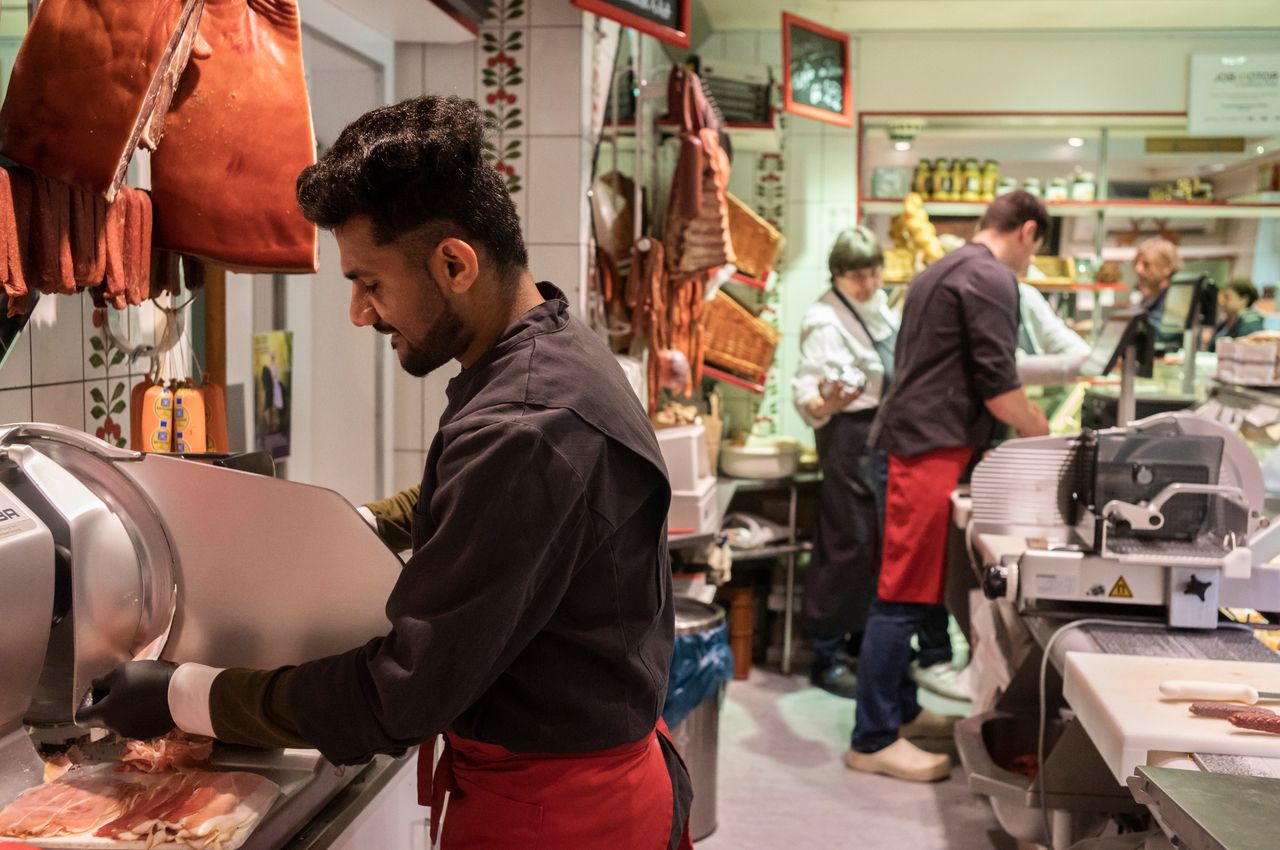
When the party ended, his fortune evaporated thanks to some wrong-way bets and his excessive spending. To support himself, he says he now works at a deli in Las Vegas that pays him roughly $14 an hour plus tips and sells area timeshares. He says he no longer has any money invested in the market.

“I’m starting from zero,” said Mr. Ghias, who is 25.

During the pandemic lockdowns in 2020 and 2021, scores of Americans got hooked on trading stocks, options and cryptocurrencies, driving up shares of companies that were once left for dead. Now some of these so-called retail investors are backing away from the markets after the worst year for stocks since 2008. Others are paring their positions or shifting their money to more conservative holdings, such as bonds or cash.

Last month, trading activity among retail investors as measured by dollar volumes hit its lowest level since January 2020, according to an analysis of some platforms by research firm Vanda Research. These investors are also trading less with brokerages that stoked their enthusiasm earlier in the pandemic, according to earnings reports. Households are expected to yank roughly $100 billion from the market in 2023, according to Goldman Sachs Group Inc., which would be the first net outflows since 2018.

What these amateur investors decide to do next will have big implications for the direction of the market. They are still collectively the biggest holders of U.S. equities, according to Goldman Sachs, and any retreat from stocks could remove a steady source of support at a turbulent moment. Fears about inflation and a possible future recession continue to loom, and many big companies are bracing for economic turmoil. Central-bank officials have repeatedly said their work to cool the economy isn’t done.

A run-up last month in certain stocks such as online car seller Carvana Co. and retailer Bed Bath & Beyond Inc. led some professional investors to speculate that individual investors were behind the moves. The overall market pushed higher this past week after the Federal Reserve raised interest rates by a widely expected quarter percentage point; the S&P 500 is up 7.7% thus far in 2023 and the Nasdaq 15%.

The early 2023 rally is still a far cry from what happened two years ago. Stuck at home during the Covid-19 pandemic and flush with stimulus checks, newbie traders encouraged each other to pile into stocks as they banded together on online forums such as Reddit, Discord and Twitter. At times they tried to intensify losses among professional traders who had bet against some of their favourite companies. The frenzy resulted in eye-popping surges in shares of troubled firms such as GameStop Corp. and AMC Entertainment Holdings Inc. Momentum trumped coolheaded analysis of company fundamentals.

Some of these rookie traders made small fortunes in 2021. But many lost money the following year as U.S. stocks fell along with bonds and cryptocurrencies, and their enthusiasm for trading waned.

The average individual investor’s portfolio has declined 27% since peaking in December 2021, according to estimates from Vanda Research, compared with the S&P 500’s roughly 13% decline over the same period. Monthly active users at online brokerage app Robinhood Markets Inc., which helped make trading cool among newbies, recently fell to their lowest level since the company went public. At the more traditional brokerages of Morgan Stanley and Charles Schwab Corp., the average daily number of retail trades recently fell to the lowest levels since at least 2020.

Some retail investors are still active but more conservative with their bets. Sumit Gupta, a 49-year-old ophthalmologist in Charlotte, N.C., was among those who bought the dip in stocks in early 2022, when shares of everything from big tech stocks to broader S&P 500 dropped. He says he has been regularly adding to stockholdings over the past decade, using the dollar-cost averaging method.

The market kept falling. The S&P 500 notched its worst year since the 2008 financial crisis, stymied by a Federal Reserve forced to aggressively raise interest rates to cool red-hot inflation.

Since then, Mr. Gupta said, he realized how serious Federal Reserve Chairman Jerome Powell was about raising interest rates and has shifted his strategy. He says he is putting extra cash into Treasurys. Yields on 10-year government bonds are hovering around 3.5%, up from less than 1% in 2020.

“Now there’s yield on cash again,” Mr. Gupta said. “At this stage in my career, I don’t need to be aggressive.”

Jonathan Javier, 28 years old, accelerated his trading during the pandemic, after mainly buying and holding investments for years.

Drawn in by the meteoric price increases in everything from cryptocurrencies to the S&P 500, he scooped up shares of technology stocks such as Meta Platforms Inc. and Apple Inc. He says he watched in awe as his portfolio roughly doubled through November 2021. Having worked at several big tech companies, he says he was confident they would keep growing, as they had for much of the past decade.

By mid-2022, the portfolio made a U-turn, falling about 8%. He says he slashed his regular investments by around half and backed away from the market. “I didn’t do much at all” last year, Mr. Javier said.

This year he says he bought some tech stocks once again, though he says he is much more wary of how much of his money he is comfortable risking. He says he is also not darting in and out of positions as much.

“Now I know the key to making a profit is buying when the stock is at a low price point instead of just buying and ‘hoping’ that I will make a gain from it.” Mr. Javier said.

Navroop Sandhu, a 32-year-old London web developer, was a newcomer who became enamored with trading during the early days of the pandemic as the value of a new account she created with online brokerage eToro skyrocketed. She would enter and exit positions within hours or hold for weeks, and actively participated in an online Discord trading group. She says she once asked her friends to bring their laptops with them to a restaurant in London, so she could dish out investing tips.

“It was like a snowball effect, where I just got addicted,” Ms. Sandhu said.

Now she says she is placing anywhere from two to five trades in a week, down from nearly 10 in some weeks in 2020. Ms. Sandhu says she is also trying to be patient in picking the right trading spots, which has helped her stay in the markets.

Some investors have exited the market. They include Mr. Ghias, the 25-year-old amateur trader who watched the value of his stock portfolio swing wildly during the early stages of the pandemic.

Mr. Ghias says his first exposure to investing happened as a teenager growing up in the suburbs of Chicago, where his guitar teacher would monitor stocks by phone. He and that guitar teacher say they would discuss everything from penny stocks to pot stocks to shares of larger companies. When he got to high school, he started trading with some of his own money in between jobs. He says he sometimes cut class in high school and college to trade.

Once the pandemic began, he gravitated to stocks and funds tracking the performance of metals as well as options, which allow investors to buy or sell shares at a certain price. He used these to generate income or profit from stock volatility. He also borrowed from his brokerage firms to amplify his positions, a tactic known as leverage.

In 2021, he started increasing that leverage, his brokerage statements show. He often turned to trades tied to the Invesco QQQ Trust, a popular fund tracking the tech-heavy Nasdaq-100 index, while continuing to bet heavily on metals. At times, he dabbled in options tied to hot stocks such as Tesla Inc. and Apple.

At one point, his leverage amounted to more than $1 million, brokerage statements reviewed by The Wall Street Journal show. By around June 2021, according to those brokerage statements, his portfolio was worth roughly $1.5 million.

“I really started treating the market like a casino,” Mr. Ghias said.

As his stock-market gains swelled, so did his spending and partying, he says. He says he started betting thousands on professional football games and enjoyed late nights at bars, racking up tabs drinking Don Julio 1942 tequila. Mr. Ghias and his former roommate Nick Palma say he spent thousands to see the Tampa Bay Buccaneers play, while betting roughly $35,000 that they would beat the Los Angeles Rams and go on to win the Super Bowl. They lost.

He and his former roommate say Mr. Ghias also footed the bill for friends to stay at a Las Vegas hotel and rented a black Lamborghini that he raced through the Strip. Some of his exploits, including the Lamborghini ride, he showed on a TikTok account that also featured footage of him trading in front of three computer screens. He says he stopped taking classes at DePaul University, in Chicago, so he could spend more time focused on the markets.

In late 2021, he placed one of his biggest bets. The Fed’s Mr. Powell had warned he was about to pull back the central bank’s easy-money policies, opening the door to tapering its monthly asset purchases. The plans threatened to inject a jolt of turbulence into a market that had been ascending to fresh records for much of the year.

Mr. Ghias says he thought the Fed was bluffing and made a speculative investment that he thought would benefit from an accommodative central bank, expecting prices of silver and gold to rally and help a portfolio that included a large position in Hecla Mining Co., statements show. He says he also added a bearish position tied to the Nasdaq.

The trade didn’t work, he says, and a broker demanded he post more money to fund his losses. By the end of the year, according to his statements, he had lost more than $300,000 in one account even as the S&P notched a gain of 27%.

“That was my breaking point,” Mr. Ghias said.

In 2022, he says he started taking even more risks trading options and betting on sports in hopes of making some of the money back. One big strategy was to gamble on the direction of the S&P 500 by buying and selling options contracts tied to that index that often expired the same day, brokerage statements show.

Mr. Ghias traded S&P 500 options at all hours, sometimes around midnight, placing some trades worth hundreds of thousands of dollars, brokerage statements show. For example, if he had a hunch that the S&P 500 would keep tumbling the next day, extending losses from its overnight session, he might sell options contracts that would profit from a steeper plunge. At times, he was left with losses from such trades, his statements show.

“That just put me in a really bad mental state,” Mr. Ghias said. “I began chasing losses.”

By the end of 2022, he had racked up bills of more than $300,000 on his American Express Platinum card, according to snapshots of his account viewed by the Journal, and he says the nest egg that had climbed to around $1.5 million was gone. “I lost it all,” Mr. Ghias said.

He decided to move to Las Vegas and began to work at an Italian deli and restaurant on the outskirts of town. He says he has also picked up short-term gigs and started selling timeshares. He is going on other job interviews, too, while documenting his new life on TikTok under the alias “OGTraderTV.” When one of his TikTok followers learned about his cash crunch, Mr. Ghias says he was offered a free stay at the Bellagio Hotel & Casino.

He says he has no money in the market right now and shared screenshots of his accounts showing that he has roughly $15,000 in credit card debt, around $36,000 in an auto loan and $6.99 in a checking account. He says he has some cash, too.

“I felt like I was indestructible,” Mr. Ghias said of his trading days. “It was irrational.”

THE SEASIDE APARTMENT THAT THINKS IT’S A HOUSE

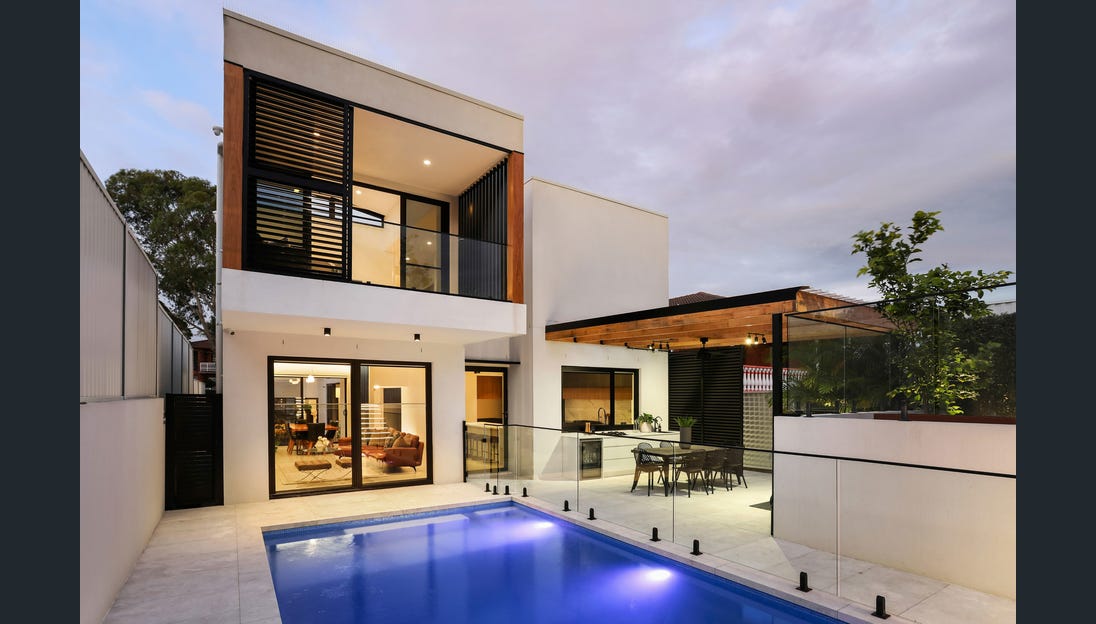
For Sydneysiders attracted to the dual amenities of a beach location and city services, it is hard to imagine a better address than this apartment at Grande Esplanade, Manly.

Positioned across the road from the harbourside beach and Manly Wharf, this three-bedroom, two-bathroom property enjoys the ideal mix of privacy and accessibility to shops, restaurants and public transport, as well as being a stone’s throw from the water. Now on the market since the passing of the original owners, Ian and Dorothy Hales, who bought the apartment off the plan, it’s a rare opportunity for families, downsizers or professional couples with ‘work from home’ arrangements to achieve work/life balance in a covetable setting. The former owners found the property well suited to ageing in place, with indoor and outdoor living spaces to enjoy, as well as easy access.

With a generous 322sqm floorplan on title, the light-filled third floor apartment has direct access to shared gardens, which are maintained by building management, making the property feel more like a house. The former owners used the gardens to host family events, including a wedding during COVID, and it’s a great vantage point for watching the New Year’s Eve fireworks on the harbour.

With a $6 million price guide, it is sure to attract strong interest as a low maintenance, high amenity option.


Address: 303/54 West Esplanade, Manly

Auction: 10am February 25, 2023

Next inspection:

Price guide:

Agents: Jake Rowe 0414 612 546; Nathan Tse 0411 386 455 The Agency

The Seawater Cure: How the French Slim Down

AS A food-and-travel writer who lives in France, I face occupational hazards other people might envy: Think white Burgundies, foie gras, butter, cream and the world’s best cheeses. It’s a constant battle to avoid ending up with the silhouette of a pear.

That’s why in the years since I moved to Paris in 1986, I’ve become a fan of thalassotherapy, taking dozens of “cures” at some of the 50-odd thalassotherapy centres along the Atlantic and Mediterranean littorals of France. The word derives from the Greek words “thalassa” (sea) and “therapeia” (to nurse or cure) and refers to a series of treatments—heated seawater baths, stimulating jet showers and seaweed wraps—and exercise such as aqua gym (in-water calisthenics).

While these cures alleviate the fatigue and sluggishness I feel after months of late-night dinners and deadline pressure, I’ve found that a weeklong thalassotherapy circuit that includes low-calorie meals also contributes to a healthier, slimmer, better-toned me. Apparently, Plato believed “the sea cures all human ailments,” but my goal is simply to retreat, relax and, at the end, be able to tighten my belt to its customary notch.

A thalassotherapy experience can be completed in as little time as a weekend, but a typical stay lasts 5-7 days. A 6-day signature cure with room and board and four treatments a day costs about $1,580 at Thalazur in Cabourg, a well-mannered Belle Époque seaside resort in Normandy. It was there I booked my most recent extended cure in February, 2020.

I’d heard of Cabourg as a favourite escape of Marcel Proust, who stayed at the Grand Hôtel and, by his account, would gaze at the flinty waves of the English Channel while enjoying his favourite sole Normande (sole poached in cider with a rich cream sauce garnished with button mushrooms, shrimp and mussels).

The centre is a brisk 10-minute walk from the heart of Cabourg with its fan-shaped street plan spreading out from the casino and the Grand Hôtel. Even if my low-calorie regimen barred me from indulging in sole Normande, I never felt gastronomically deprived as I enjoyed a healthy menu with tasty choices such as freshly shucked Norman oysters and steamed salmon with spinach.

My pleasantly monastic existence found me donning a terry cloth bathrobe and slippers every morning and reporting for my daily program of five treatments. Administered by cheerful spa attendants in individual white-tiled spa cabins, these averaged 25 minutes each. While the seaweed jet baths were blissfully relaxing, the high-velocity jet showers, an attempt to pummel the cellulite out of you and improve circulation, were more of a “grin and bear it” prospect.

I can’t pretend I loved the wraps either: Slathered in puréed seaweed, swathed in huge sheets of plastic film and then covered with a heated blanket, I felt like I was being mummified. This detoxification process promises to rid you of “water weight,” and your parched skin receives a good dose of seaweed’s moisturising oligo elements, but I inevitably developed an itch somewhere I couldn’t scratch. Still, when the slick plastic was stripped away and I could shower, I felt hugely invigorated.

More alarming, I also endured cryotherapy. The attendants locked me in a capsule of dry air cooled to -230 degrees Fahrenheit for three minutes, an experience meant to improve circulation and increase production of cortisol, collagen, endorphins and adrenaline. The adrenaline rush, at least, was real; it was a profound relief to exit my capsule after being subjected to a blast of Arctic chill while wearing nothing more than black paper spa panties.

These morning regimens induced a languorous exhaustion, so I inevitably followed up the light lunch with a nap in the afternoon. Then, refreshed, I took long walks on the beach or bicycled along the promenade in front of the hotel.

Memories of my stay—and the 7 pounds I dropped there—prompted me to test the waters again last winter. I booked a 1-night, 2-day weekend sampler at the Thalazur in Port Camargue on the Mediterranean, an hour from my house.

This centre was smaller but also had lovely sea-views, plus my stylish sea-shack style room came with a large private balcony. The three treatments a day were excellent, too; the cost, about $178, was worth it for the belt-tightening.

When, on the Monday after my return home, I went to the single-window post office in my village, the post mistress raised her eyebrows theatrically. “Bonjour!” she said with a grin. “What happened!? You look great!” I went for a weekend of thalassotherapy, I told her. “Ah, voilà! La Thalasso fait toujours du bien,” she purred.

She was right, of course. I look forward to a week-long saltwater wallow this winter, maybe in Bandol with its views of the Mediterranean, or at the elegant new Relais Thalasso in the seaside town of Pornichet on the sunny Atlantic coast in the Loire region. Unlike at other centers, where you traipse about between treatments, the Relais Thalasso crew stash you in a spacious private suite with a comfy lounge area, the better to nap before another go-round.

Water, Water, Everywhere

France pioneered thalassotherapy but you can find excellent centers in other countries, too

La Perla, Spain

For the uninitiated, La Perla, a stylish centre in San Sebastián in the Spanish Basque Country, is a great place to sample thalassotherapy before committing to a full-on cure. Originally established by Spain’s Queen Maria Cristina, when she was queen from 1829-1833, at the royal family’s summer house here, the spa was rebuilt in 1912 on a site overlooking La Concha, a crescent-shaped beach. A 5-hour day pass gives you access to a hydrotherapy pool, water beds, marine steam baths and an in-water exercise circuit. Another option includes a massage and lunch in the spa’s restaurant overlooking the sea. From $49 for a 5-hour day pass.

Vilalara Longevity Thalassa and Medical Spa, Portugal

Vilalara Longevity Thalassa and Medical Spa in Lagoa, a city in Algarve, Portugal’s southernmost region, is set in lush gardens overlooking the Atlantic. It has two seawater pools, 20 treatment cabins and a variety of cures, including a 5-night detoxification program with 2 thalassotherapy sessions per night, lymphatic drainage massages, access to thalasso pools and a consultation with a nutritionist to personalise a tasty low-calorie meal plan or a liquid diet of anti-inflammatory shakes, juices and soups. From about $3,899.

Divani Apollon Palace and Thalasso, Greece

Situated on the Athenian Riviera, this world-class spa in the Divani Apollon Palace and Thalasso outside of Athens boasts the largest thalassotherapy pool in Greece with 16 different water jet areas in its expanse. The X factor at this family-run beach-front property with 25 treatment rooms is its healthy low-calorie menu created by the hotel’s chef and in-house dietician. Appetising proof that shedding pounds needn’t mean privation: the zucchini-crust Greek pizza with anthotryo (fresh cheese), cherry tomatoes, oregano and EVOO. From about $1,747 for a 3-day stay.

The Wall Street Journal is not compensated by retailers listed in its articles as outlets for products. Listed retailers frequently are not the sole retail outlets.

‘De-Influencers’ Want You to Think Twice Before Buying That Mascara

After years of influencers pushing cosmetics, clothes, personal tech and supplements to the masses, a rising cohort is taking a different tack: telling people what not to buy. They’re calling it “de-influencing.”

The term is being popularised in videos by people whose experience runs the gamut: disappointed consumers, savvy beauty bloggers, doctors dispelling skin-care myths and former retail employees dishing on which products they saw returned most often. Their shared guidance is a rejoinder to a seemingly endless stream of recommendations and promotional content on the platform—and a sign of growing backlash to over consumption. TikTok videos under the hashtag #deinfluencing have surpassed 68 million views.

TikTok has become one of the most powerful forces in online retail, helping to boost butt-lifting leggings, luxe lip oils and green-juice powders, among other trendy products. Brands have poured money into influencer marketing on the platform, knowing a viral video can make almost anything sell out, and videos featuring the hashtag #TikTokMadeMeBuyIt have together earned more than 40 billion views.

“The best way to think about TikTok is that it’s a vehicle that takes a consumer to the checkout line,” said Krishna Subramanian, the co-founder of Captiv8, a marketing platform that connects influencers and brands.

But a deluge of sponsored videos and hyper-enthusiastic reviews has made it harder for consumers to figure out which items are actually worth their money.

“We’re constantly being fed, ‘You need to try this product,’ ‘You will love this product,’” said Karen Wu, 25, a makeup and skin-care influencer who lives outside Los Angeles. De-influencing is an attempt to change that.

What exactly is de-influencing?

The term refers to people speaking critically about products on a platform where endorsements run rampant.

De-influencing videos may steer consumers toward cheaper alternatives, also known as dupes, or discourage them from spending money in certain categories altogether.

Maddie Wells, a beauty influencer in Lexington, Ky., was early to the trend. She began making videos in 2020 about the products she frequently saw customers return to Sephora and Ulta, where she held sales associate jobs between 2018 and 2021.

In a September video with 2.5 million views, she name-drops the Ordinary’s Peeling Solution and Too Faced’s Better Than Sex mascara as cosmetics that—despite being frequently touted by beauty influencers—often found their way back to the shelves at those stores. “I’m calling this ‘de-influencing,’” she says in the video. The Ordinary and Too Faced didn’t respond to requests for comment.

“I can’t say without a shadow of a doubt I was the first person to ever say it,” Ms. Wells said of her coinage, but it has significantly caught on since.

How did the trend start?

Though de-influencing is a relatively new term, TikTok users have been speaking candidly about products for some time now. Last year, entrepreneur and former Real Housewife Bethenny Frankel earned headlines for her unapologetic and critical reviews of popular beauty products.

“I wanted the glow. I wanted to glow like they glowed,” Ms. Frankel said of influencers promoting cosmetics. In trying out popular products herself, she’s found that some of them don’t live up to the hype. She said she’s been approached by beauty companies that want to send her products and have her post paid reviews, but she has turned them down in favour of partnering with brands she already knows and likes.

“The hill that I’m not dying on is lying about a lip gloss,” Ms. Frankel said.

In December 2021, style influencer Elise Harmon went viral after posting a video about the low-cost contents of Chanel’s $825 holiday advent calendar, including stickers, temporary tattoos and a dust bag.

“I was more upset with the fact that I wasn’t being a conscientious buyer. I bought something blindly without really looking at the quality of what was inside,” Ms. Harmon said. “I think people were excited to hear someone say they didn’t think it was worth it.”

A representative for Chanel declined to comment. In an interview with Women’s Wear Daily after Ms. Harmon’s video went viral, Chanel’s president of fashion said the company would be “much more cautious” about introducing similar products.

Why is it taking off now?

The pervasiveness of influencer marketing has put the onus on consumers to decipher which reviews can be trusted and what products are worth their money.

Those concerns came to a head last week when Mikayla Nogueira, a makeup artist with 14.4 million TikTok followers, was accused of wearing fake eyelashes in a sponsored post for L’Oréal mascara. (Neither a representative for Ms. Nogueira nor L’Oréal responded to multiple requests for comment.)

A TikTok spokesperson said that the company “has strict policies to protect users from fake, fraudulent, or misleading content, including ads, and we remove any content that violates our Community Guidelines, Advertising Guidelines, and Terms of Service.”

As viewers become more skeptical of promotions on the platform, influencers who appear raw, honest and critical in their approaches may stand to benefit, experts say.

“Originally, influencers were very beholden to their audience, then brands came along and said ‘let’s see how we can leverage this.’ Then, influencers became super beholden to brands,” said Jenna Drenten, associate professor of marketing at Loyola University Chicago’s Quinlan School of Business. Now, she said, “influencers are swinging back to the accountability between themselves and their audiences.”

What are some other products de-influencers are calling out?

Many of the products being critiqued today are ones that owe their success in large part to TikTok influencers.

Alexandra Williams, a 25-year-old tech sales employee in San Diego, Calif., recently posted about a knockoff of the Stanley tumbler, after seeing the 40-ounce water bottle all over social media. Terence Reilly, Stanley’s global president, said that sales of Stanley’s marquee Quencher bottle increased by 275% in 2022 compared with the previous year.

“Whenever I use my water bottle it’s because I’m going on a hike, or I’m throwing it down below in my car because I’m going to a workout class,” Ms. Williams said. Like Stanley’s Quencher, the bottle has a non-collapsible straw, which she said made it prone to spills and impractical for her active lifestyle. Mr. Reilly suggested that customers looking for a leakproof Stanley alternative could buy the IceFlow Tumbler.

Lola Olson, a 23-year-old fashion and lifestyle influencer in Germany, recently posted a video naming several brands and products she didn’t like, including shampoo from hair-care line Olaplex.

“There’s always going to be those people that are like, ‘It worked great for me.’ It just didn’t for me,” she said. “So I was just being honest, and I feel like that’s what people want from influencers.” She recommended her followers try K18 Hair, an Olaplex competitor her mom advised her to try, instead.

In response to a request for comment, an Olaplex spokesperson shared reports about the brand’s popularity and data on its social-media reach. A representative for K18 said that while the company uses influencers to promote its products, Ms. Olson has not worked with the brand.

Wait, but isn’t that still influencing?

Yes and no.

While emerging influencers may not be paid to name-drop alternatives, it’s easy to see how the space can quickly get murky as those with brand deals may seek to discredit the product of a competitor.

“There’s a big difference between saying, ‘I use a product and I enjoy it and I’m not getting paid to say this,’ versus ‘I have a previous relationship with a brand, and I’m telling you this alternative doesn’t work,’” said Prem Tripathi, a facial plastic surgeon in the San Francisco Bay Area who posts videos countering popular skin-care myths.

In a recent TikTok video, Dr. Tripathi poked fun at the de-influencing trend, offering up alternatives that had no connection to the hyped-up serums and creams in question: a “Golden Girls” mug, a luxury towel warmer and a lint remover.

APARTMENT BUILDING APPROVALS ON THE RISE AS SECTOR POWERS INTO 2023

Approvals for apartment construction are responsible for an 18.5 percent increase in the total number of dwellings getting the green light during December, the Australian Bureau of Statistics reports.

In data released today, the figures are in contrast to the previous month where building approvals declined by 8.8 percent over November 2022.

“The increase in the total number of dwellings approved in December was led by a sharp rise in approvals for private sector dwellings excluding houses (+56.6 per cent),” said Daniel Rossi, ABS head of construction statistics. “The result was driven by a number of large apartment developments approved in New South Wales and Victoria.

“Approvals for private sector houses continued to track downwards, falling by 2.3 per cent.”

Private sector dwellings excluding houses includes semi detached, row or terrace houses, townhouses and apartments.

New South Wales saw the strongest increase, up 48.4 percent, followed by Victoria (up 20.7 percent), Queensland (up 8.3 percent) and Western Australia (up 6.4 percent). Tasmania and South Australia both recorded significant decreases, with overall approvals falling -49.7 percent and -24.6 percent respectively.

The strong performance in the apartment sector compared with private sector housing points to growing pressure on individual mortgage holders following a 3 percent rise in interest rates over 2022. The results for private sector housing were mixed, with some states recording rises, such as Western Australia (up 8.2 percent), Victoria (up 0.3 percent) and Queensland (up 0.2 percent) while others such as South Australia and New South Wales experiencing a drop, with approvals down -7.4 percent and -4.2 percent respectively. 

COST OF LIVING CONTINUES TO RISE AS AUSTRALIANS FEEL THE PINCH

Mortgage interest charges were responsible for the greatest increase in living costs over the December quarter for employee households, data released by the Australian Bureau of Statistics yesterday shows. This uptick in costs follows decisions by mortgage lenders to pass on consecutive cash rate rises by the Reserve Bank of Australia which saw it increase by 300 basis points or 3 percent in 2022.

The statistics, showing price increases across all five Living Cost Indexes (LCI) in Australia — the largest rise since the September 2000 quarter — paint a picture of households under increasing pressure to balance budgets while maintaining their current lifestyles.

While interest rates accounted for a 26.6 percent rise, Recreation and Culture, including travel rose by 5.5 percent over the holiday period, followed by Housing at 2.2 percent and Furnishings, household equipment and services at 1.8 percent.

National electricity prices also increased as the Western Australian Government’s $400 electricity credit offer came to an end. However, this was mitigated by the Queensland Government’s $175 Cost of Living rebate which came into effect in September last year. The Tasmanian Government has also introduced a $119 Winter Bill Buster electricity discount for concession households.

The RBA board is due to meet next week for the first time this year with most experts predicting a further rate rise of 0.25 percent. 

When to Paint Over Your Home’s Woodwork—and When to Leave It Alone

TWO YEARS AGO when Kate Arends and her family moved into their 1956 rambler-style house in St. Paul, Minn., they encountered a thoroughly outdated kitchen that included uninterrupted oak paneling on the ceilings and walls. Not loving the wood’s golden hue, Ms. Arends, founder of lifestyle brand Wit & Delight, considered painting over it or sanding it down to a more neutral complexion, but the costs seemed prohibitive and the payoff uncertain.After the family had lived with the wood for a year, they decided to honour its hue but surround it with more modern décor. They painted Shaker-style cabinets a daring, un-woodsy powdery rose tone—Sulking Room Pink by Farrow & Ball—and further punched them up by installing slabs of Calacatta Viola marble with its trademark whorls of black and deep purple. An ink-blue gas range adds another shot of the unexpected.

“If the wood is in great shape, the constraints of working within the shade or hue of the stain might seem limiting, but some really interesting solutions can come from those constraints,” said Ms. Arends.

Given the expense and difficulty in removing paint from architectural woodwork, the consensus among interior designers and even real-estate agents is that, if it is historically accurate and in good shape, put down the paint brush and leave it be. Said Jeff Walker, a broker and founder at Agents of Architecture in San Diego, a firm specialising in unique and historic properties, “Our buyers seek untouched homes or homes that have been tastefully restored.”

Lauren Caron, of Seattle’s Studio Laloc, bucked a local trend for drenching wood-filled, early 20th-century Craftsman bungalows in alabaster paint. The interior designer disliked how that approach thoroughly squelched the spirit of the rooms. “It felt like the walls became vacant or less lively,” she said. In the dining space of her own 1916 Craftsman,  she decorated to complement the espresso-hued old-growth fir that had been used to construct a built-in breakfront cabinet and frame the doorways. She introduced an onyx and gold modern chandelier to offset the vintage millwork, added Gucci’s Herbarium wallpaper and completely upholstered a posse of Parsons-style chairs, to avoid adding any more wood.

Some instances, however, call for the can and brush. In a bedroom of her 19th-century Greek Revival home, Susan Brinson, a design consultant in Orange County, N.Y., was stuck with a mishmash of wood species and odd door placements. She and her husband painted the walls, doors, window frames and picture-frame moulding a deep teal, then cloaked the ceiling in a lighter teal. This move turned chaos into coherence and delivered a bonus benefit: Some of the couple’s favourite wood furniture, including a Bunny Williams Bamboo bed and antique Italian burled-wood side tables, pop against the rich colour.

Painted wood has other advantages. In the entry of a London townhouse, shown above, local studio Retrouvius Reclamation and Design repainted the joinery a fern green. “Scratches and scuffs from bicycles are more easily repaired in the eggshell-finish paint than they would be in bare wood,” noted a studio spokesman. One of the homeowners co-founded Dashing Tweeds, a designer and purveyor of bright, modern textiles. “Painting is perfect for him because it brings colour and character and is changeable,” said the spokesman. “Paint lets homeowners express themselves.”

Laura Castergine of Melrose, Mass., an amateur decorator, posts photos of her family’s 1904 New England Colonial on social media. Four rooms in the home feature fireplaces with surrounding millwork, three of which were painted before she bought the home. She recast one of those rooms last fall in a subdued sapphire, Wild Blue Yonder from Benjamin Moore, a heritage hue that suits the old house’s personality. “Enveloping a room in a single color achieves a dramatic effect,” said Ms. Castergine. “It’s similar to a wood-panelled wall in that they both bring a cozy feel to a room.”

For her quaint A-frame cabin tucked in the woods of Spooner, Wisc., Ashley Mary of Minneapolis polled Instagram followers about painting the pine-planked triangular back wall to match the room’s other, white walls. As a multi-disciplinary artist, Ms. Mary typically likes walls to function as a blank canvas against which she can arrange funky furniture and mobiles. But because the cabin doubles as an Airbnb rental, she wanted the public’s input. The majority of respondents voted to keep the wall natural (with copious exclamation marks) with many pointing to the house’s forest location and cabin aesthetic as rationales. Ms. Mary complied. “With any coat of paint,” she said, “you’re going to lose that texture and natural warmth that no colour will ever recreate.”

Fed Approves Quarter-Point Rate Hike, Signals More Increases Likely

WASHINGTON—The Federal Reserve approved an interest-rate increase of a quarter-percentage-point and signalled plans to raise rates again next month to continue lowering inflation.

The decision Wednesday followed six consecutive rate rises that were larger, including an increase of a half-point in December and a 0.75-point increase in November.

Officials nodded to recent improvement in inflation readings but didn’t significantly alter their guidance in a policy statement released after the meeting regarding coming rate moves.

“The committee anticipates that ongoing increases” in interest rates “will be appropriate in order to attain a stance of monetary policy that is sufficiently restrictive,” said the statement, using the same language included in policy statements since last March.

The latest increase caps a year in which the Fed lifted its benchmark federal-funds rate from near zero to a range between 4.5% and 4.75%, a level last reached in 2007. That extends the central bank’s most rapid pace of rate increases since the early 1980s to fight inflation, which hit a 40-year high last year.

One big question heading into Wednesday’s meeting was the extent to which recent economic data had given Fed officials more confidence that inflation and wage pressures had peaked.

In December, most of them penciled in raising the fed-funds rate to a range between 5% and 5.25% this year. After the hike they approved Wednesday, that projection would imply additional quarter-point increases at the Fed’s meetings in March and May, followed by a pause in rate rises.

Many officials had repeated in recent weeks that they still saw such a rate path as appropriate given strong wage pressures, a tight labour market and high service-sector inflation. But officials also said they would base their decisions on how the economy performs in the coming months.

“We can now say for the first time, the disinflationary process has started,” said Fed Chair Jerome Powell at a news conference after Wednesday’s meeting. But he added, “The job is not fully done.”

Mr. Powell said the central bank was trying to manage the risk of raising rates too much and causing unnecessary economic harm with that of not doing enough to bring down inflation. In repeating his longstanding view that the latter mistake would be harder to fix, Mr. Powell said he didn’t want to be in a position where six or 12 months from now, after a halt to raising rates, the Fed would belatedly conclude that it hadn’t done enough to bring down inflation this year and would have to raise rates higher.

“We’re going to be cautious about declaring victory and sending signals that we think the game is won,” he said. “Certainty is just not appropriate here.”

The fed-funds rate influences other borrowing costs throughout the economy, including rates on mortgages, credit cards and auto loans. The Fed is raising rates to cool inflation by slowing economic growth. It believes those policy moves work through financial markets by tightening financial conditions, such as by raising borrowing costs or lowering prices of stocks and other assets.

Officials have been guarded in recent weeks about providing any guidance that might ignite market rallies that could undermine their efforts to fight inflation.

In recent weeks, markets have rallied partly because investors anticipated that the Fed would slow its rate increases this week and remove uncertainty over the rate outlook, which reduces interest-rate volatility. Lower volatility can ease financial conditions.

Markets have also been cheered by news that inflation and wage growth might have peaked last year, which could make the Fed more comfortable in pausing rate increases. Since Fed officials met in December, economic activity has been mixed. Consumer spending has moderated, and manufacturing activity has weakened. But hiring has held steady, pushing the unemployment down to 3.5% in December, a half-century low.

Investors in bond markets increasingly expect that the Fed will cut interest rates later this year because of a sharp slowdown in economic activity that lowers inflation faster than policy makers expect.

Fed officials and some economists, meanwhile, are concerned that the recent decline in inflation could reflect the long-anticipated easing of supply-chain bottlenecks—and that might not be enough to bring inflation down to the Fed’s 2% goal.

“I’m somewhat worried that the market view is based more on hope,” said Karen Dynan, an economist at Harvard University who served in the Obama administration. “Labor markets still look really tight.”

Officials’ deliberations over how much more to raise rates this year and how long to hold rates at some higher level could hinge over how much they think their past increases will slow the economy this year. Debates could also turn on the degree to which wage and price pressures might slow without significant weakness in the job market.

Officials agreed to slow rate rises to gain more time to study the effects of their moves.

Inflation fell to 4.4% in December from 5.2% in September, as measured by the 12-month change in the personal consumption expenditures price index excluding food and energy. Though still above the Fed’s 2% goal, it moderated in the October-to-December period to an annualised 2.9% rate.

“Inflation has eased somewhat but remains elevated,” said the Fed’s policy statement.

Overall inflation is slowing largely because prices of energy and other goods are falling. Large increases in housing costs have slowed, but haven’t filtered through to official price gauges yet. As a result, Mr. Powell and several colleagues shifted attention recently toward a narrower subset of labor-intensive services by excluding prices for food, energy, shelter and goods.

Mr. Powell has said prices in this category, which rose 4% in December from a year earlier, offer the best gauge of higher wage costs passing through to consumer prices.

Finance podcasts for making money on the move

The start of a new working year brings with it the promise of plans for personal improvement. But beyond booking into bootcamps and PT schedules, there’s also financial fitness. For time poor planners looking to better manage their budgets and attain their finance goals in 2023, here’s our list of the best finance podcasts, both in Australia and overseas.

1. The Australian Finance Podcast

Owen Rask (founder of the Rask group) and Kate Campbell (founder of How To Money) record every week, offering tools and knowledge required to smash your personal finance goals. The podcast focuses on giving the listener the fundamentals of financial literacy including how to simplify and save your money alongside more practical advice like what to look for in a super management fund. 

2. She’s on the money

A female focused finance podcast, financial adviser Victoria Devine offers her tips and tricks for navigating the modern financial landscape. Here, Devine’s guests look to divulge investment, property and personal finance tips and hacks alongside a recurring monthly ‘Money Diary’ where listeners share their own financial journeys. Relatable and refreshing. 

3. My Millennial Money

Glen James and John Pidgeon take a look at the money issues worrying millennials and Gen Z. Here, the mates and financial gurus talk on investment portfolios EFTs and what the latest policy decisions mean for you. It’s a comprehensive guide that’s spiced up with the conversational tone and banter of two close friends. 

4. Equity Mates

Another podcast hosted by two friends is Equity Mates. Bryce Leske and Alec Renehan talk investing across the ASX, taxation while breaking down the barriers to investing. The pair talk to experts in their fields to create a podcast as free from jargon as possible to make the markets more accessible to everyone. 

5. You Need A Budget 

Short and sweet, the U.S based podcast You Need A Budget (YNAB) touts itself as “the weekly dose of just the right medicine to help you”. Most of the episodes hit under the 10-minute mark including the odd interview with an expert diving into topics such as ‘Budgeting for the nomadic life,’ and ‘Real Estate 101’. The goal of YNAB is to give people the tools to save more money and beat the paycheck-to-paycheck cycle. 

6. Shares For Beginners

Does what it says on the tin. Shares for beginners helps those who’ve always wanted to invest in the stock market but have no idea where to start. Leaning on expert guests, host Phil Muscatello simplifies complex investment topics for the lay person to bring the markets within reach for listeners looking to dip their toes for the first time. 

U.S. Pursues India as a Supply-Chain Alternative to China

WASHINGTON—The Biden administration is turning to India for help as the U.S. works to shift critical technology supply chains away from China and other countries that it says use that technology to destabilise global security.

Administration officials hosted meetings this week with a delegation of Indian officials and U.S. industry executives, seeking to facilitate technology development and investment in India as part of a broader U.S. push to cultivate alternatives to China.

Challenges arising from Beijing’s expanding global influence have had “a profound impact on the thinking in Delhi just as they have had on the profound impact on the thinking in other capitals,” White House national security adviser Jake Sullivan told reporters on Tuesday. “There is an element of that that forms a backdrop for the discussions here.”

The meetings come on the heels of an agreement with Japan and the Netherlands to start restricting exports of advanced chip-manufacturing equipment to China, joining efforts by the Biden administration to slow China’s military development by cutting access to advanced technologies.

U.S. officials hope those export restrictions create opportunities in India and elsewhere. While India isn’t among the world’s top producers of semiconductors, New Delhi has sought to assert itself as a greater semiconductor player. India is an appealing partner for industries looking to diversify their supply sources. With a population of 1.4 billion people, the country has a massive source of labor and costs are relatively low.

On Tuesday, the administration hosted a task force organised by the Semiconductor Industry Association, which is working in partnership with the Indian Electronics and Semiconductor Association, to develop a “readiness assessment,” aimed at trying to accelerate cooperation and investments. The meetings were attended by top American executives from a range of industries, including defense giant Lockheed Martin and semiconductor producer Micron, administration officials said.

India’s national security adviser, Ajit Doval, led New Delhi’s delegation this week in meetings with Mr. Sullivan and Commerce Secretary Gina Raimondo and other officials.

The meetings underscore a broader U.S. effort to meet challenges from China through alliances with other countries. The Biden administration has given priority to Washington’s relationship with what is known as the Quad—an alliance between India, Australia, Japan and the U.S. that has focused on countering Beijing.

“President Biden really believes that no successful and enduring effort to address any of the major challenges in the world today…is going to be effective without a close U.S.-India partnership at its heart,” a senior administration official said.

However, a number of challenges in recent months have strained relations between Washington and New Delhi. India has maintained a neutral stance on the war in Ukraine and has continued to purchase discounted oil from Russia, rebuffing the Biden administration’s offer to replace Russian oil with U.S. supplies. Instead, India has increased its imports of Russian crude.

Biden administration officials said they understand the enormous domestic demand facing India and said that India continues to buy oil well below the price cap agreed to by allies late last year.

The key, U.S. officials said, is to offer India alternatives. The administration remains hopeful that it can ween India off purchasing Russian military equipment by offering incentives for it to diversify. Mr. Sullivan said generally, the U.S. is doing that through joint production and development. Top priorities in that effort include joint development of jet engines, artillery systems, armoured infantry, vehicles and maritime security.

General Electric has just submitted a proposal to the U.S. government for a jointly produced jet engine in the defence technology space.

“This is the kind of thing where we’re looking to make fast and ambitious progress,” Mr. Sullivan said.

India has also expressed frustration that two years into the Biden administration, there remains no U.S. ambassador. Earlier this month, the White House submitted to the Senate dozens of presidential selections who failed to win confirmation last year.

India is among a number of countries to also call for an overhaul to the U.S. H-1B visa, a nonimmigrant visa that allows U.S. companies to employ foreign workers in specialty occupations that require theoretical or technical expertise. Advocates have called for reforms to the program, including an increase in the annual cap, as well as for a more simplified process.

The State Department has made some progress on the issue, but employers expect delays in obtaining visas to continue in some places, including India. Visitor visas will likely also remain problematic.

Eurozone’s Economy Outpaced China and U.S. in 2022

The eurozone economy grew faster than China and the U.S. last year, underlining how the fading Covid-19 pandemic continues to scramble traditional patterns of global growth.

Figures released by the European Union’s statistics agency Tuesday showed the currency- area’s economy grew at an annualised rate of 0.5% as higher energy costs weighed on household spending. This translated into 3.5% growth in gross domestic product for 2022 as a whole, a faster rate than seen in either China or the U.S.

This is unusual. For decades, the big three engines of the global economy have had a pretty stable ranking: China grew fastest, followed by the U.S. and then the eurozone. This all changed last year because of the staggered manner in which major economies reopened in the wake of the pandemic.

Figures released Thursday showed the U.S. economy grew by 2.1% in 2022, a sharp slowdown from the 5.9% rate of expansion recorded in 2021. Earlier this month, China’s statistics agency released figures that showed the world’s second-largest economy grew by 3%, down from 8% the previous year.

The last time that the combined national economies that make up the eurozone grew at a faster pace than that of either China or the U.S. was in 1974. The U.S. economy has typically outpaced Europe’s over recent decades largely because its population has grown more quickly. More recently, the U.S. has led Europe in the development of fast-growing technology sectors.

Last year’s unusual growth ranking largely reflects the impact of the Covid-19 pandemic on the world economy, with the timing of lockdowns and re openings leading to big swings in growth, as well as high rates of inflation.

It is an effect that is unlikely to last. As China abandons its zero-Covid policy, it is likely to reclaim its position as the fastest-growing of the big three economic areas. And the war in Ukraine is having a bigger impact on the economy of Europe than that of the U.S. or China, as the slowdown in the last quarter of 2022 testifies.

“2022 was just a weird, weird year,” said European Central Bank President Christine Lagarde during a panel at the World Economic Forum’s annual meeting in Davos earlier this month. “Those are not normal numbers, this is not the usual ranking that you have.”

In the eurozone, the influence of the pandemic on the economy was so strong last year that it offset that of Russia’s invasion of Ukraine and the surge in energy prices it prompted.

While China experienced a series of lockdowns in pursuit of its zero-Covid policy, the eurozone enjoyed its first full year without tight restrictions, and a boost to activity that the U.S. had experienced a year earlier.

The big three economies locked down hard in 2020. But the U.S. reopened more fully from early 2021, outpacing the eurozone and China in the first three months of that year in particular. The eurozone’s reopening boost started later, and carried over into the first half of 2022 as its key tourism industry rebounded.

This year is likely to see the pandemic continue to have a big impact on growth—this time in China. The country lifted many of its zero-tolerance pandemic controls in early December in an abrupt change of course. While that led to an increase in Covid-19 infections and deaths, it also opened the door to a sharp economic rebound in the world’s second-largest economy.

For this year, the United Nations expects China’s economy to grow by 4.8%. It expects both the U.S. and the eurozone to slow, to 0.4% and 0.2% respectively. If it is correct, the normal growth ranking will be restored, although at lower-than-normal rates of growth. And from 2024, the pandemic’s impact is set to wane, unless a more deadly, rapidly-spreading coronavirus variant emerges.

“By 2024 we should be out of the woods,” said Hamid Rashid, head of the U.N.’s global economic monitoring unit. “We are still having the lingering impact of the pandemic in 2022 and 2023.”

High inflation rates, partly a legacy of the pandemic, are also expected to fade by 2024. Inflation rates began to surge in early 2021 as the reopening of the U.S. and other economies led to a surge in demand for goods and services at a time when global supply chains were still impaired.

According to a measure of supply-chain pressures compiled by the Federal Reserve Bank of New York, the blockages caused by the pandemic reached a peak at the end of 2021, and then eased steadily through the first nine months of last year. But that improvement in supply chains stalled in the final three months of 2022 as China imposed lockdowns to counter fresh outbreaks of Covid-19. Supply chains seem set to continue their slow return to prepandemic conditions in 2023 after the zero-tolerance strategy was abandoned.

Rates of inflation around the world appear to be easing, but it has taken unusually aggressive action by global central banks to get to that point. The Federal Reserve has raised interest rates by more than 4 percentage points since March, the largest move in a single year since 1980. The European Central Bank has moved at a slower pace, pushing up its policy rate by 2.5 percentage points starting in July, but that is the fastest increase since it was founded in 1998.

Both central banks are expected to raise their key interest rates this week, with the ECB likely to tighten more than the Fed. Further increases in borrowing costs will affect businesses and households not just in the U.S. and Europe, but around the world.

“The global effects are real, but they are not taken into account by the systemically important central banks,” said Mr. Rashid at the U.N., “it is harder for developing countries to borrow and invest.”

400-Year-Old Van Dyck Sketch Discovered in a New York Farm Shed Sells for $3 Million

Sketch for Saint Jerome from 1615-18 by Anthony Van Dyck that was discovered in the late 20th century in a farm shed in Kinderhook, N.Y., fetched US$3.075 million at a Sotheby’s auction last week in New York.

Considered lost for centuries, the painting was purchased by the late collector Albert B. Roberts at an auction in 2002 for just US$600, according to Sotheby’s. Roberts then sought the help of art historian and Van Dyck scholar Susan J. Barnes, who confirmed the sketch was a “surprisingly well-preserved” work by Van Dyck.

Roberts died in August 2021 at the age of 89. A portion of proceeds from the sale will benefit his namesake foundation, which supports artists and other creatives.

“Not only is the story of its journey from a farm shed in Kinderhook to the rostrum at Sotheby’s irresistible, it is also a highly important early work by the teenage Van Dyck, completed while he was still under the tutelage of [Peter Paul] Rubens,” Christopher Apostle, Sotheby’s head of Old Master paintings in New York, said in a statement.

The auction house declined to disclose the identity of the buyer.

Last week’s Old Masters sale at Sotheby’s was headlined by a 1609 painting by Rubens, Salome, depicting the head of Saint John the Baptist. Offered from the collection of Mark Fisch, a real estate developer and a trustee of the Metropolitan Museum of Art in New York, and his ex-wife, Rachel Davidson, a former New Jersey judge, the masterpiece fetched US$26.9 million, the third-highest price for the artist at auction.

The 10 Baroque masterworks from Fisch Davidson collection brought in a total of US$49.6 million in a white-glove auction.

Sotheby’s Master Week sale—which is poised to break a record of US$100 million— continues throughout this week. One highlight will be a Kobe Bryant game-worn Lakers jersey, which will be offered on Wednesday with an estimate between US$5 million and US$7 million.

The U.S. Consumer Is Starting to Freak Out

The engine of the U.S. economy—consumer spending—is starting to sputter.

Retail purchases have fallen in three of the past four months. Spending on services, including rent, haircuts and the bulk of bills, was flat in December, after adjusting for inflation, the worst monthly reading in nearly a year. Sales of existing homes in the U.S. fell last year to their lowest level since 2014 as mortgage rates rose. The auto industry posted its worst sales year in more than a decade.

It’s a stark turnaround from the second half of 2020, when Americans lifted the economy out of a pandemic downturn, helping the U.S. avoid what many economists worried would be a prolonged slump. Consumers snapped up exercise bikes, televisions and laptop computers for schoolchildren during lockdowns. When restrictions were lifted, they rushed back to their favourite restaurants and travel destinations.

And they kept spending, helped by government stimulus, flush savings accounts and cheap credit, even as inflation picked up. Faced with four-decade-high inflation last year, Americans outspent it. Through most of 2022, consumer spending growth exceeded price increases by about 2 percentage points.

Now the forces that helped keep spending high are unwinding, while inflation remains elevated. The share of monthly income Americans set aside for savings was 3.4% in December, down from 7.5% a year earlier and from a record high in April 2020. Credit-card interest rates have been rising, and Federal Reserve officials have signalled that they plan an additional quarter-percentage point increase to the central bank’s benchmark rate this week. That would bring the rate to between 4.5% and 4.75%, from near zero at the start of last year.

Annual inflation, as measured by the consumer-price index, remained above 5% in December for the 19th straight month, the longest such streak since the early 1980s.

Consumer spending accounts for roughly 70% of the economy. A downshifting consumer is a key reason that business and academic economists polled by The Wall Street Journal, on average, put the probability of a recession in the next 12 months at 61%. However, many economists say, the U.S. might avoid a recession entirely if spending patterns stabilise.

One factor making forecasting more difficult: While unemployment is trending at a half-century low, big companies including Amazon.com Inc., Goldman Sachs Group Inc., and Microsoft Corp. have begun to cut jobs.

“The last bastion of strength is the labor market, but I don’t think it can withstand all these other forces,” said Nationwide Chief Economist Kathy Bostjancic.

Recent layoff trends worry Benjamin DeLong, a 32-year-old customer-account manager at an industrial manufacturer in southern Minnesota. His savings rose to $3,700 during the pandemic, thanks in part to government stimulus. He is now down to about 3 cents.

Mr. DeLong said he had to dip into his savings to cover the rising costs of his groceries, utilities and car insurance. He has found some relief in his grocery bills since he and his partner decided last year to purchase some pigs, jointly with other families, to be raised on a relative’s farm. Their portion of meat yielded nearly 150 pounds, saving them about $500 on groceries, Mr. DeLong estimated.

The possibility of layoffs, he said, is “part of the crunch that I’m having to consider now. What’s going to happen if I no longer have an income?”

So far, jobs have remained plentiful and wages continued to rise in the face of Federal Reserve tightening. Unemployment was a low 3.5% in December. Hourly wages were up a robust 4.6% year-over-year. There were about 10.5 million unfilled jobs available in November, according to the Labor Department, a sign that demand for labor remained strong.

“Households had a ton of comfort they don’t normally have about their job prospects,” said Marianne Wanamaker, an economist at the University of Tennessee. “They knew they could get a job tomorrow if they wanted to, and that remains mostly true.”

Still, there are signs of labor-market weakness. Employers are shedding temporary workers at a fast rate, and people who lose their jobs are taking longer to find new ones. Meanwhile, the number of hours worked a week has declined for two straight months, according to the Labor Department, resulting in a slowdown in workers’ take-home pay.

Mikhail Andersson, owner of First Class Tattoo in New York City, has seen signs of weakening demand. After it was cleared to reopen from lockdowns in the summer of 2020, his business was slammed by customers flush with unemployment insurance payments and stimulus checks.

In mid-November of last year, Mr. Andersson started getting calls from clients who had booked daylong tattoo sessions, saying they could only afford shorter ones or pulling out altogether. Mr. Andersson, who specializes in tattoo projects that often take five or six all-day sessions to complete, had 15 cancellations for full-day slots in December.

“In my 15 years doing this, I’ve never seen that—people calling up and saying they don’t have the money to spend right now or can only afford an hour because their current situation is pretty bad,” he said.

For now, First Class Tattoo isn’t likely to slash prices because the baseline level of demand remains strong. Some 250 clients are still on the wait list.

Also weighing on many consumers: The rapid increase in rates in the past year, tied to Fed tightening, has pushed the cost of all types of debt higher.

Mortgage rates reached a 20-year high last fall. Some 57% of consumers were concerned about making housing payments in the fourth quarter, according to a survey by Freddie Mac, up from 48% in the third quarter.

The increases are gradually starting to slow down consumer spending, though it might take a while before the effect is fully realised.

“We’re probably going to have higher interest rates around for quite a while. You would think eventually that would dampen consumption, although that we haven’t had the full effect yet,” said Harvard University economist Kenneth Rogoff.

Credit-card balances were up 15% on the year in the third quarter, according to the Federal Reserve Bank of New York, the largest increase in more than two decades.

Additionally, tens of millions of Americans are set to start or resume making payments on student loans later this year, after the Supreme Court rules on President Biden’s student-debt cancellation plan. Payments have been frozen since March 2020, and are scheduled to begin again 60 days after litigation is resolved or the program is implemented.

Many taxpayers will get smaller refunds when they file their returns in the coming months because Congress didn’t extend the breaks put in place at the height of the pandemic.

Most Americans who lose their jobs can expect unemployment payments for six months or less, at a fraction of their former paychecks, the same as before pandemic programs kicked in. Pandemic programs allowed Americans to receive unemployment payments for as long as 18 months, and in some cases paid workers more than their paychecks.

The previously generous jobless benefits and direct federal payments to households caused the share of income Americans save every month to hit new highs in 2020. Since then, the saving rate has fallen to roughly 3% of monthly income, from more than 30% at the start of lockdowns. In 2019, the year before the pandemic, the rate was 8.8%.

The large stock-market declines over the past year also alarmed consumers, including Scottsdale, Ariz.-based Sara Laor, who is 57 years old. Ms. Laor said the declines depleted the holdings in her 401(k) and IRA accounts by nearly 40%.

Over the past year, her family has had to dip into their savings to pay for essential car and plumbing repairs. They are putting off other expenses, like buying a new car, and have given up ordering in meals.

She’s trying to spend more cautiously, shunning recipes involving pricey eggs and buying more canned food.

“Everything I do just feels like I’m a lot poorer: Can I do this or can I do that?” she said.

U.S. factories, shippers and importers are pulling back, a sign they anticipate less demand from Americans in the months ahead.

Inbound volumes at the ports of Los Angeles and Long Beach in California were down 20.1% in December from a year earlier, and have been behind 2019 levels since August. A little over a year ago, backlogs at ports were drawing President Biden’s attention.

Nicholas Hobbs, chief operating officer of J.B. Hunt Transport Services Inc., which manages truck and rail shipments, said the company has seen demand fall off for big and bulky products, including appliances, furniture and exercise equipment—although off-price retailers with discounted inventory are shipping more.

Jazzlyn Millberry, 33, has been looking for big ways to make cuts. One day last fall, her banking app informed her that the cost of one month’s groceries and household goods for her family of four had risen to $900, from about $600 or $700.

“I find myself now going to three or four different grocery stores just to get the best deals on things to save on costs,” said Ms. Millberry, a health-insurance claims analyst in Pickerington, Ohio.

On one recent outing, she stopped at Kroger for eggs and meat, Aldi for produce, Sam’s Club for her children’s snacks, and Target for toilet paper.

Even as she has cut back on groceries, restaurants, hairstyling and facials, her credit-card balances have grown in the past several months. She said she started making only the minimum required payment on her credit cards.

—Gwynn Guilford and Paul Page contributed to this article.