HOW TO DEFINE YOUR HOME DESIGN STYLE WITH CONFIDENCE

Whether you’re building from scratch or renovating, locking in a cohesive design style can be one of the trickiest – and most rewarding – parts of the process. It’s not just about looks; it’s about making choices that suit your lifestyle, climate, and long-term comfort.

New resources from building experts, including a detailed style guide by CSR with inspiration from brands such as Bradford, Hebel, Monier, Cemintel, and PGH, are helping homeowners better understand the connection between materials, performance, and aesthetics.

Here are five key elements to consider when defining your home’s style and getting it right from the start.

1. Start with Style

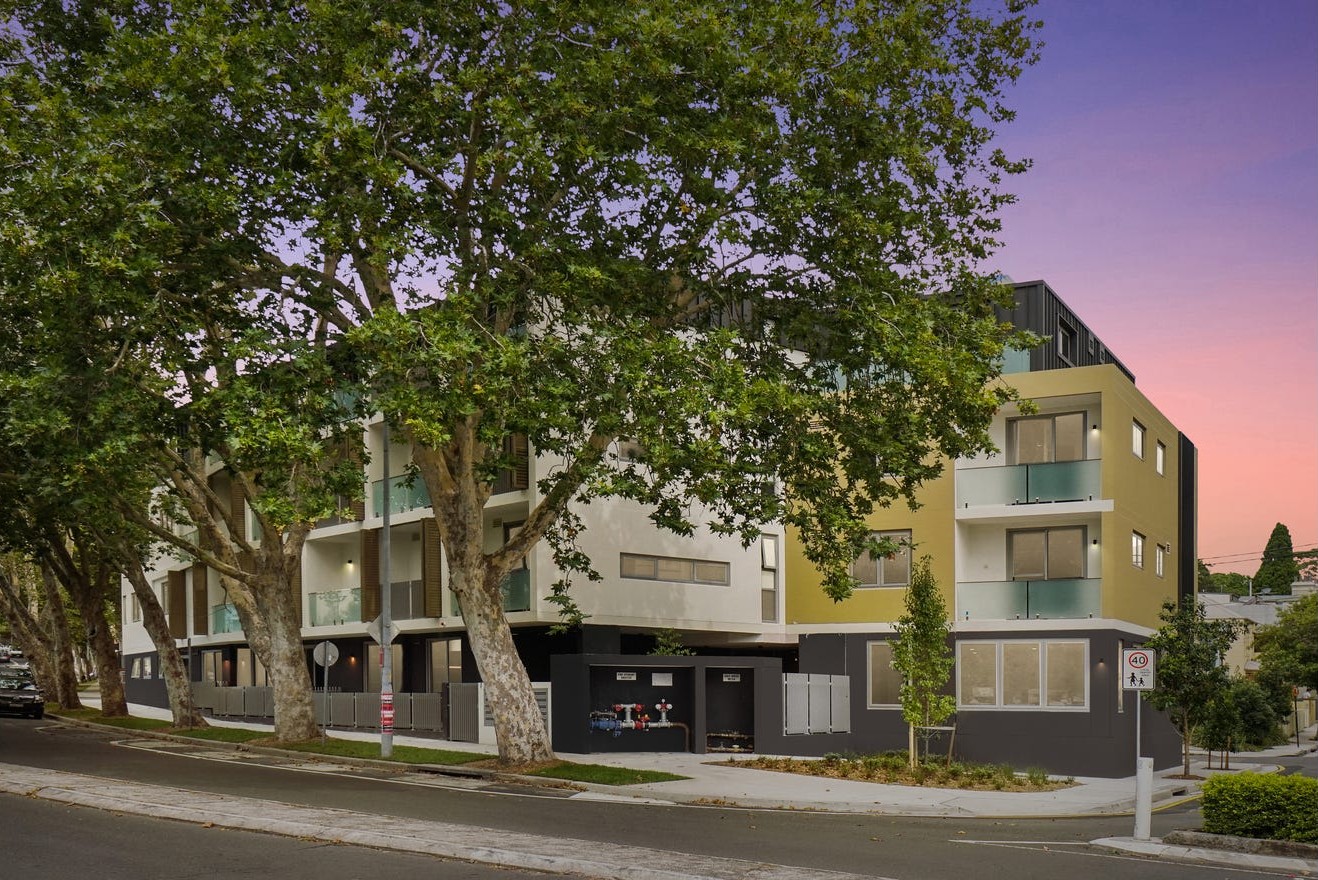
Understanding your overall aesthetic—whether it’s Classic, Coastal, barnhouse, Industrial, or something in between—makes every other decision easier. It affects everything from the roofline to your cladding choice. For example, a Contemporary home often features clean lines and subtle contrasts, while an Industrial style leans toward bold materials and darker colours.

2. Make Colour Count

The right colour palette doesn’t just change how a home looks – it transforms how it feels. Neutral tones like soft greys and crisp whites work well in breezy, coastal designs, while dark charcoals and blacks add drama to modern or industrial exteriors. Rich browns and terracotta tones are gaining traction too, particularly for homes that aim to blend into natural surroundings.

3. Layer in Texture

Texture is one of the most underrated tools in exterior design. Think rough brick next to smooth cladding, or timber detailing beside rendered walls. Using materials with different surfaces can highlight key architectural features and add interest to otherwise flat façades. It’s also an easy way to bring character to newer builds.

4. Don’t Overlook the Invisible

Good design doesn’t stop at what you can see. The hidden layers – insulation, wall wraps, roof sarking – are critical in how liveable and energy-efficient your home is. These are choices that are often hard to change later, so it pays to get them right from the outset.

5. Think Beyond the Walls

Landscaping is more than just a finishing touch. The right mix of plants, materials and pathways can enhance your home’s style and create a seamless indoor-outdoor connection. Match fencing and garden materials to your architectural choices for a polished, intentional feel – and make sure your outdoor areas are as functional as they are beautiful.

AMAN TO OPEN LUXURY ISLAND RETREAT IN THE BAHAMAS

Renowned luxury hospitality group Aman is bringing its signature brand of serenity and sophistication to The Bahamas with the announcement of Amancaya, an ultra-exclusive resort and residences development set across two private islands in the Exumas.

The project marks Aman’s first foray into The Bahamas and its third destination in the Caribbean, following the success of Amanera in the Dominican Republic and Amanyara in Turks and Caicos.

Meaning “peaceful island” in the Indigenous Taíno language, Amancaya will deliver a low-density, ultra-luxury retreat anchored in Aman’s hallmark pillars: privacy, transformative experiences, and exceptional service.

Set in one of the most pristine and secluded parts of the Caribbean, the new property will feature a 36-pavilion Aman hotel and a limited collection of fully serviced Aman Residences. Guests and residents will have exclusive access to a private marina, Beach Club, Aman Spa, and a suite of refined dining venues spanning the two cays.

The design and experience will be tailored to emphasise barefoot luxury and deep immersion in nature, with panoramic ocean views, white-sand beaches, and world-class diving at their doorstep.

“This is a significant milestone for Aman,” said Vlad Doronin, Chairman and CEO of Aman Group. “We’ve seen incredible success in the Caribbean, and our guests have long asked for a Bahamian retreat.

“In Dona Bertarelli, we’ve found a visionary partner who shares our values, and in Exuma, we’ve found a setting that perfectly embodies our brand — untouched beauty, cultural richness and unparalleled tranquillity.”

Bertarelli, a Swiss investor, philanthropist and champion sailor, said Amancaya will reflect her own deep connection to the Exumas. “Guests will experience the same wonder, peace and connection to local culture that I’ve been fortunate to feel here,” she said.

“Aman is globally renowned for its elegance and bespoke experiences, and I’m delighted to help bring that vision to life in this extraordinary part of the world.”

Amancaya is currently under construction, with development supported by Squircle Capital. Sustainability is a key pillar of the project, with the resort aiming to achieve LEED certification and align with the United Nations’ Sustainable Development Goals (SDGS).

From responsible design and building practices to a commitment to local engagement, the project is being positioned as a model for thoughtful, sustainable development in the Caribbean.

With a global portfolio spanning 35 locations across 20 countries — including 15 sites near UNESCO World Heritage landmarks — Aman continues to set the benchmark for high-end travel. Amancaya promises to extend that legacy with a destination that blends natural beauty, cultural authenticity, and understated luxury.

BHUTAN LAUNCHES WORLD-FIRST NATIONAL CRYPTO PAYMENT SYSTEM FOR TOURISM

Bhutan has become the first country in the world to implement a national-level cryptocurrency payment system for tourism, marking a major milestone in digital innovation and travel.

Launched in partnership with Binance Pay and Bhutan’s fully digital DK Bank, the system enables travellers with Binance accounts to enjoy a seamless, end-to-end crypto-powered journey. More than 100 local merchants, from hotels and tour operators to small roadside vendors in remote villages, are already live on the system.

“This is more than a payment solution — it’s a commitment to innovation, inclusion, and convenience,” said Damcho Rinzin, Director of the Department of Tourism, Bhutan.

“It enables a seamless experience for travellers and empowers even small vendors in remote villages to participate in the tourism economy.”

Using supported cryptocurrencies, tourists can now pay for nearly every part of their trip, including airline tickets, visas, the Sustainable Development Fee (SDF), hotel stays, monument entry fees, local guides, and shopping, all through secure static and dynamic QR code payments.

Binance CEO Richard Teng praised the move, saying: “We are excited to partner with Bhutan as we are not only advancing the use of cryptocurrencies in travel but also setting a precedent for how technology can bridge cultures and economies. This initiative exemplifies our commitment to innovation and our belief in a future where digital finance empowers global connectivity and enriches travel experiences.”

Known as the “Kingdom of Happiness,” Bhutan has long prioritised Gross National Happiness over GDP, with a strong focus on sustainability, cultural preservation, and societal well-being. The new system aligns with these values by reducing payment friction and bringing financial inclusion to local communities.

Among the key features of the system:

  • Seamless Experience: Tourists can pay with crypto for all travel-related expenses.

  • Inclusive Reach: Small vendors, even in remote areas, can accept QR code payments.

  • Lower Fees: Transactions cost significantly less than traditional payment methods.

  • Comprehensive Support: More than 100 cryptocurrencies supported, including BNB, BTC, and USDC.

  • Secure and Instant: Real-time confirmations, 2FA, and encrypted transactions via the Binance app.

Behind the local settlement mechanism is DK Bank, Bhutan’s first fully digital bank. Licensed by the Royal Monetary Authority of Bhutan, it aims to deliver accessible financial services to all, including marginalised and unbanked communities.

The launch is being hailed as a bold step forward in integrating digital finance with global tourism — one that could set the benchmark for other nations looking to modernise the travel experience while empowering their local economies.

Melbourne’s Most Expensive Suburbs to Rent

Melbourne is considered Australia’s most liveable city. In fact, Melbourne competes on the global stage, consistently ranking among Time Out’s top cities to live in the world and ranking fourth in 2025. Melbourne is a cultural mecca filled with arts, x, and the country’s best sporting events.

It’s the lifestyle factor that has seen Melbourne’s population grow by over 142,000 people over the 23/24 financial year, largely driven by overseas migration. With increased population comes increased demand for properties, particularly in the rental market. 

Akin to Sydney’s Eastern Suburbs, Melbourne’s South Eastern suburbs, towards Bayside and the water, dominate the most expensive suburbs listed to rent across the Victorian capital. 

In this article, we’ve examined the six most expensive suburbs to rent a house in Melbourne right now, according to property data analytics firm Cotality (formerly CoreLogic).

Brighton

Median purchase: $3.15m
Median rent: $1,353

Brighton is Melbourne’s most expensive suburb to rent a house, and it’s easy to see why. A blend of grand period homes and modern architectural builds line the wide, tree-filled streets. The suburb is synonymous with luxury, and rental properties—especially those close to the famed Brighton Beach and its iconic bathing boxes—are snapped up quickly. Vacancy rates sit at a tight 0.9 per cent.

The Neighbourhood

Brighton offers an enviable mix of a beachside lifestyle and convenient shopping and dining. With access to top schools like Brighton Grammar and Firbank, plus Church Street’s boutiques and the Royal Brighton Yacht Club, the Bayside suburb is the complete package for Melbourne’s high-end renters.

Malvern

Median purchase: $2.8m
Median rent: $1,313

Long known for its timeless Victorian and Edwardian homes, Malvern is a leafy inner suburb with prestige appeal. Many properties here are fully renovated period homes, featuring extensive gardens and original features that appeal to families and executives.

The Neighbourhood
Malvern boasts a refined atmosphere with a strong community feel. Glenferrie Road and High Street offer upscale cafes, boutiques, and grocers, while schools like De La Salle and St Joseph’s make the suburb particularly attractive to families.

Black Rock

Median purchase: $2.29m
Median rent: $1,253

Nestled along the Bayside coast, Black Rock has seen steady growth in both house prices and rents in recent years. Larger blocks and a quieter, more laid-back vibe than neighbouring suburbs make this a coveted spot for renters seeking both space and lifestyle. 

The Neighbourhood
Black Rock is home to the picturesque Half Moon Bay and scenic cliffside walks. The suburb blends beachside charm with village convenience, offering local cafés, golf courses, and direct access to some of Melbourne’s best coastal trails.

Sandringham

Median purchase: $2.21m
Median rent: $1,199

Sandringham, next door to Black Rock, offers more of the same as its neighbouring suburb, at similar prices. Sandringham too ticks the box for laid-back waterside recreation, with the majority of homes in walking distance to the sand and charming village shops.

The Neighbourhood
This is a family-friendly suburb with a strong community vibe. Sandringham Village, with its mix of cafes, wine bars, and boutiques, sits just a short walk from the train station and beach. The area also offers excellent sporting facilities and parks. Sandringham Harbour is the local landmark, a popular destination for boating, fishing, and waterfront views from Sandringham Yacht Club.

Canterbury

Median purchase: $3.15m
Median rent: $1,179

Canterbury is the innermost Melbourne suburb on this list. It is considered one of Melbourne’s most prestigious suburbs, defined by grand family homes, generally over-the-top opulent new builds with French Provincial façades behind gated entries.

The Neighbourhood
Canterbury is anchored by the exclusive “Golden Mile” precinct and is surrounded by elite private schools such as Camberwell Grammar and Strathcona. Maling Road provides a quaint village feel, while the area’s lush green spaces complete the picture of prestige.

Hampton

Median purchase: $2.3m
Median rent: $1,171

It’s back to Bayside for the sixth and final suburb on the priciest rental areas in Melbourne. Hampton is not too dissimilar to Brighton, with a main High Street providing convenience and the beach rounding out the relaxed lifestyle found on the bay. The suburb has undergone significant gentrification, with many original homes replaced by contemporary builds.

The Neighbourhood
With a stretch of clean, family-friendly beach and the bustling Hampton Street shopping strip, Hampton has everything renters could want—from stylish cafes to gourmet grocers and boutique fitness studios. Its proximity to Brighton and Sandringham only adds to its appeal.

Melbourne’s Cheapest Suburb: Melton South

Median purchase: $460,000
Median rent: $430

On the opposite end of the spectrum, Melton South—roughly 40km west of the CBD—offers the most affordable rental market. With a median rent of under $450 a week, it’s less than a third of the weekly rent in Brighton. The suburb attracts families and first-home renters seeking value and larger land lots.

Melbourne’s Best Suburb: Toorak

Toorak is considered the Point Piper of Melbourne. Boasting even more billionaires than Sydney’s harbourside hotspot, Toorak is home to Melbourne’s most expensive houses, and reportedly Australia’s most expensive house sale if the 1860s Italianate mansion Coonac settles at over $130 million.

The suburb has some of the best educational institutions in Melbourne, as well as luxury homes on the Yarra, two train stations, and a central shopping precinct undergoing a full transformation with several mixed-use retail and residential developments. It is definitely the place to be. 

Where is Melbourne’s most expensive suburb to rent a house?

As of May 2025, Brighton is Melbourne’s most expensive suburb to rent a house.

Where is Melbourne’s cheapest suburb to rent a unit?

As of May 2025, Melton South is Melbourne’s most expensive suburb to rent a house.

Where is Melbourne’s most expensive suburb to buy a house?

As of May 2025, Toorak is Melbourne’s most expensive suburb to buy a house.

Where is Melbourne’s most expensive suburb to buy a unit?

As of May 2025, Beaumaris is Melbourne’s most expensive suburb to buy a unit

Heritage mansion a rare piece of Melbourne’s architectural past

Just over a dozen of John Beswicke’s residential designs remain today. So, when one of his unique heritage mansions resurfaces after more than half a century off the market, it’s enough to turn some history-lovers’ heads.

A rare piece of Melbourne’s architectural past is 13 Harcourt St, Hawthorn East—previously known as Tudor House or Hilton House—which is listed for the first time in 52 years with Davide Lettieri and Nikki McCarthy of Marshall White Boroondara.

Beswicke certainly influenced Melbourne’s built environment, designing hundreds of public and private buildings between the 1870s and 1915.

A prolific designer, he is credited with creating approximately 300 buildings, including more than 200 houses, 44 commercial buildings, 14 churches, 11 hotels, nine banks, and six town halls including prominent spaces such as, Brighton Town Hall, Malvern Town Hall, Essendon Town Hall, Dandenong Town Hall, and Hawthorn Town Hall.

He called Hawthorn home, specifically Harcourt St in Hawthorn East, where he and many of his family resided. Of the houses he designed in the coveted street, 14 still stand, including Rotha, his own home at 29 Harcourt St.

In March last year, number 35 made headlines when the impressive manor named Charlton set a new street record. The restored circa-1882 Hawthorn East home on 3422 sq m with Paul Bangay gardens was set to become the suburb’s first sale above $20 million, but only just missed the mark at $19,986,888.

Before that exchange, the previous benchmark for the street was $19.5m, set in 2022 with the sale of Ellerslie, a 3340sq m estate at 16 Harcourt St.

Today, the smaller but no less impressive residence at 13 Harcourt St, which is 2114 sq m and has a price guide of $13.25 million, is on the market.

Completed around 1875, the solid brick Victorian residence features a unique chateau-inspired facade and retains many of its period finishes by Beswicke.

The home is framed by lush private parkland gardens with a fountain, rolling lawns and a backyard pool.

Beyond the elegant castle-like exterior, there are voluminous interiors, including an impressive double-arched entrance hall featuring oak parquetry floors and leadlight windows. At the front of the floor plan sits a vast sitting room with a marble fireplace and a stately library with a gas fireplace and walls of bookshelves.

The showstopper is the grand former ballroom, now a combined living and dining area. It has a double-height timber-lined vaulted ceiling, yet another marble fireplace, and arched French doors opening out to the lush north-facing grounds.

The contemporary kitchen, which also spills out onto the yard, has stone bench tops, an integrated fridge/freezer, a meals area, and a hidden laundry.

On the ground floor a self-contained wing features a bedroom with ensuite and sitting area, ideal for a primary suite or guest quarters with direct access to the gardens.

On the first floor, three more bedrooms have built-in wardrobes. They share a full family-friendly bathroom and a balcony overlooking the large front lawn.

Outdoors, there is ample room for entertaining beside with a stone terrace and solar-heated pool.

Despite its 150-year-old status, the property also features many modern conveniences such as an alarm, ducted heating, reverse-cycle air-conditioners, irrigation, storage and multiple car spaces.

The Hawthorn East home is close to Auburn amenities and station, Burke Rd trams, sought-after schools, and Rathmines Reserve.

13 Harcourt St, Hawthorn East, is on the market via private sale with Marshall White Boroondara and has a price guide of $13.25 million.

How Property Styling Can Elevate Your Sale Price

In today’s high-end property market, buyers aren’t just purchasing a home; they’re investing in a lifestyle.

First impressions are everything, especially in the luxury space, where details matter and emotion drives decision-making.

This is why property styling and staging have become essential tools for anyone looking to maximise the value and impact of their home during the selling process. 

As an interior designer who works with high-end homes, I’ve seen time and again how professionally styled properties don’t just sell faster, they sell for more. Here’s why. 

Buyers don’t buy empty spaces, they buy possibility 

When buyers walk into a beautifully staged home, they can instantly imagine themselves living there.

Styling helps people connect emotionally to the space, picturing entertaining in the dining room, relaxing in the master suite or hosting friends in the alfresco area.

Without furniture, scale is hard to read, flow is harder to feel and the property can feel cold or overwhelming. 

In contrast, a styled home feels warm, inviting and aspirational, like a private escape rather than just a transaction. 

Staging highlights the home’s best features 

Luxury homes often come with grand proportions, soaring ceilings, unique architectural elements or standout features like wine cellars, fireplaces or butler’s pantries. Styling draws attention to these assets and helps them shine. 

By placing furniture, lighting and art in the right proportions and positions, you create a sense of scale and spatial clarity.

A well styled room frames views, improves traffic flow and gives each space purpose, all of which increases buyer confidence and perceived value. 

It helps set your home apart from the competition 

In a crowded market, luxury homes need to stand out, and the right styling is a powerful point of difference. Professional staging creates a unique visual identity for your home that sets it apart from other listings, both in online campaigns and during inspections. 

Buyers are making decisions before they even step foot through the front door. If your home is styled to photograph beautifully, it will capture more attention, more clicks and ultimately, more interest. 

Luxury buyers expect a polished presentation 

Discerning buyers notice the little things. They expect quality, attention to detail, and a home that feels move-in ready.

Styling adds that layer of polish that elevates the entire experience. From hand-selected furniture to curated accessories and textures, staging creates the kind of sophisticated, turnkey environment that speaks directly to a luxury buyer’s expectations. 

Even if the buyer plans to renovate later, the emotional pull of a beautifully styled home still influences their sense of value, and often, what they’re willing to pay. 

It can drive up the final sale price. 

A styled home can lead to faster sales and stronger offers. Why? Because it removes objections.

Buyers walk through and feel like everything just works. There’s no guesswork, no wondering if a room is too small or where the furniture would go. The home feels complete, and that completeness creates confidence, urgency and often, competition. 

When a property is styled to its full potential, it’s not unusual for it to attract multiple offers or exceed price expectations. 

Final word 

Styling is not about decorating; it’s about positioning your property to achieve its highest value. For luxury homes, where buyers are emotional, discerning and looking for something special, professional styling transforms your space from a house into a home, and from a listing into a dream. 

Kellie Richardson is an Interior Designer and Founder of Kurved by Design 

9 Ways the Latest Rate Cuts Can Save You $10,000 a Year

After years of rising repayments, Australians are finally seeing interest rates ease. February’s 0.25 percentage point cut shaved $76 a month off a $500,000 mortgage repayment, but the total savings could be more than $1,000 a year. With that extra money now flowing through, smart moves can turn small monthly savings into thousands over time.

1. Refinance your loan 

Lower rates mean better borrowing power and increased competition by lenders for customers. As such, it’s a great time to consider refinancing. 

You could double (or more!) the size of this rate cut – especially if your pay recently increased or your costs decreased, such as no more school fees after a child graduates.  

Potential difference: $151.42 monthly savings by doubling the official rate cut to 5.55 per cent on a $500,000 mortgage.   

2. Keep repayments the same 

Just because rates have come down doesn’t mean you have to pay that new amount. 

If you can afford to, keep your repayments the same. The extra amount you’re paying will chip away at the principal loan balance faster, meaning the amount you owe decreases and less interest accrues in future.  

Potential difference: $26,588.07 saved over 25 years on a $500,000 mortgage. Over time, the savings would be 2.37 years of interest saved, which is over $60,000.

 3. Pay down debts 

Falling mortgage repayments mean more money to put towards paying down other debts.  

Start with high-interest debts first, such as credit cards or car loans – these balloon quickly if you fall behind and adversely affect your ability to refinance your mortgage or get a new loan. 

Potential difference: $151.43 monthly savings by clearing a $1,634 credit card debt with average 20.08 per cent interest rate. 

4. Reassess savings accounts 

The flip side of falling interest rates is that savings accounts and new term deposits become less attractive. 

It may be worthwhile to reinvest your savings somewhere with higher earning potential. This becomes increasingly important the more interest rates fall.  You should also consider tax though. 

Potential difference: $1.68/month is small, but this also excludes compound earnings investing $76.15 monthly at 7.5 per cent sharemarket returns vs 5.25 per cent in a high-interest savings account.   

5. Top up your super 

Your superannuation balance will grow faster with more money going in and compound earnings between now and retirement. Plus, there are generous tax breaks for making voluntary super contributions. 

Potential difference: $23.00 extra per year (excluding compound earnings and tax savings which is the bigger saving) contributing $76.15 per month at average 8.1 per cent returns. 

6. Upskill to boost your income 

Extra cash can be used towards study/qualifications to boost future earnings. Or you could start a side hustle that could deliver additional income or even allow you to earn more than your current job pays. 

Potential difference: Just a 5% increase on the average $1,396 weekly income delivers an extra $3,629.60 per year. Self-education and self-employment costs are tax deductible too! 

7. Invest in yourself 

Investing in your health (physical and mental) has longer-term benefits: lower medical bills, fewer sick days, reduced risk of forced early retirement or premature death. 

Potential difference: Thousands of dollars and a long, healthy life vs a shorter lifespan and/or poorer quality of life. 

8. Boost your emergency fund 

It is easier to build an emergency fund – cash set aside for a rainy day – in smaller, regular amounts than big lump sums. Rate cut savings are ideal for this, as you’re already used to living without this money. 

Potential difference: Immeasurable if it’s the difference between having money set aside or having nothing, should disaster strike! 

9. Donate to charity 

If you’re going to spend your rate cut money no matter what, why not donate it to charity. 

It will do some good for the world and give you the satisfaction that comes from helping others. Plus, you can claim a tax deduction on donations over $2.  

Potential difference: You can receive a refund of up to 45 cents on every dollar donated, depending on your tax bracket. 

As the above points show, there are plenty of ways to make rate cuts work even harder for you. The biggest difference will be whether you take action or let the savings flutter away 

Helen Baker is a licensed Australian financial adviser and author of the new book, Money For Life: How to build financial security from firm foundations (Major Street Publishing $32.99). Find out more at www.onyourowntwofeet.com.au 

Kurralta Village Sells for $75.2 Million in Major Adelaide Deal

Kurralta Village, a dominant sub-regional shopping centre in inner Adelaide, has changed hands in a $75.2 million off-market deal.

South Australian-based Taplin Group purchased the property, and Knight Frank negotiated the sale.

Located at 153 Anzac Highway in Kurralta Park—just over 4 kilometres from Adelaide’s CBD—the centre offers 10,669 square metres of gross lettable area across a 32,570 square metre site and includes 542 car parks.

Fully leased and anchored by Coles and Kmart alongside 12 speciality stores, the centre generates around $3.5 million in annual net income and has a weighted average lease expiry (WALE) of six years.

Knight Frank’s Ryan Mills noted that Coles Group had acquired the centre in 2023 for $74.25 million, with the property now selling at a premium due to the security of the major retailer’s lease.

“Following the sale, Taplin Group will expand the Kurralta Village Shopping Centre, with Coles to grow its footprint to have a full-line supermarket,” he said.

Mr Mills added that the site also holds potential for residential development, with zoning allowing projects of up to eight storeys.

“In addition to anticipated significant development upside, the asset is underpinned by a secure, highly-defensive income stream with more than 80% generated from strongly-performing national tenants Coles and Kmart,” he said.

Knight Frank’s Max Frohlich said the sale highlights strong investor confidence in South Australia’s retail sector.

“Shopping centres are undoubtedly the most sought-after asset class in the Adelaide market, often transacting at yields firmer than the eastern states and below debt costs,” he said.

RARE CBD CAR SPACES NEAR OPERA HOUSE COULD FETCH $2 MILLION

It’s the real estate unicorn of Sydney – an inner city car space. Having a private place to park in the CBD is almost as rare as gold dust, but a current listing is offering a sextuplet of scarce spaces with multimillion-dollar potential.

The unusual sale is for six secure car spaces on a single title at 2 Phillip St, Sydney, adjacent to bustling Circular Quay.

Positioned within metres of the Opera House, Botanic Gardens, Bennelong Apartments and Opera Residences, the parking is also beside a sea of elite harbour front eateries in the popular precinct, including Matt Moran’s Aria, and Peter Gilmore’s Quay as well as Bennelong.

Located under The Quay, a 29-storey residential building beside Circular Quay train station and ferries, the spaces have direct street access and measure a total of 85 sq m on title.

The parking spots will go under the hammer all in one line on May 16 at an on-site auction, which could generate interest of more than $2 million, says listing agent James Cowan, head of NSW investment services at Colliers.

“This is a tightly held and undersupplied asset class in the CBD,” he says.

“Reduced on-street parking, coupled with construction, rezoning, and conversions, has all contributed to a critical shortage of car spaces. This scarcity is expected to drive strong interest during the auction campaign.”

Despite the princely sum, if the spaces meet price expectations, each spot would still cost less than the current record for an individual space in Sydney.

That crown goes to a 30 sq m lock-up garage on Roslyndale Ave in Woollahra. It reportedly sold for a head-turning $500,000 in June of last year to a family that had spent $6 million on a nearby house without an enclosed parking garage.

Other pricey sales include a Notts Avenue, Bondi Beach car space, which was snapped up for $304,700 in January last year, and an undercover single-car park on Onslow Avenue in Elizabeth Bay that fetched $249,000 in February 2019.

Cowan and his co-agent Cameron Colquhoun believe the prime location is behind the already high level of inquiry and conversations with potential buyers, pointing to the $2 million figure.

“The prestige and amenity of the surrounding precinct enhances the appeal to both investors and owner-occupiers,” Colquhoun says.

In addition to the dress circle position beside some of Sydney’s most iconic landmarks and fine dining venues, the spaces are also next to the historic Royal Automobile Club of Australia on Macquarie St, making it a dream destination for car connoisseurs and collectors who want to secure their vehicles in the heart of the city.

Six inner city parking spaces at lot 51, 2 Phillip St, Sydney will go to auction on-site on Friday, May 16 at 10.30am with Colliers.

Revealed: Sydney’s Most Expensive Suburbs to Rent

Sydney is well and truly on the world map when it comes to luxury residential property, rivalling—and even beating—the likes of Tokyo and Dubai in terms of price per square metre.

The harbour capital has also proven itself to be a powerhouse for luxury residential rental growth. Knight Frank’s Prime Global Rental Index Q4 2024 showed prime rents across Sydney grew 4.7 per cent over 2024, the fifth-highest growth globally.

This has pushed several of Sydney’s top suburbs over the $2,000 per week median rent mark for a house, with surrounding areas fast approaching the milestone.

We’ve wrapped up the most expensive suburbs to live in across Sydney, with data sourced from property data analytics firm CoreLogic.

1. Vaucluse: Median purchase: $8.69m; Median rent: $2,198

Vaucluse has consistently ranked as Sydney’s most expensive suburb for rental properties over the past few years, even with annual rents contracting by over 14 per cent. What sets it apart is its unique geography—it’s the only suburb in the Eastern Suburbs that stretches from the harbour to the ocean. Homes in Vaucluse top the price charts because most either boast Sydney Harbour views or enjoy uninterrupted outlooks over the Pacific Ocean.

The Neighbourhood

While most Eastern Suburbs have one main beach, Vaucluse is dotted with several secluded spots, such as Parsley Bay, Milk Beach, and the recently reopened Shark Beach, which had been closed for several years due to retaining wall repairs.

2. Dover Heights: Median purchase: $6.38m; Median rent: $2,024

Vaucluse’s immediate southern neighbour, Dover Heights, is the only other suburb in Sydney with a median house rental over $2,000. Dover Heights hugs the cliffs and is well known as one of the most tightly held house markets in the Eastern Suburbs. The homes are perched on the cliffside, and the majority of houses in the area have at least four bedrooms, pushing up prices.

The Neighbourhood

While there are no beaches to speak of, its elevated position provides some of the highest views of Sydney Harbour. It is also home to the Federation Cliff Walk, a five-kilometre clifftop walk with postcard views of the Pacific Ocean from Dover Heights to Watsons Bay.

3. Bronte: Median purchase: $5.64m, Median rent: $1,963

Bronte takes out the title of the most expensive of the ‘typical’ Eastern Suburbs beachside suburbs. Just 30 per cent of homes in Bronte are separate houses, with nearly half being apartments. Houses in the rental pool are typically original homes dating back to the 1960s that have been renovated over the last decade or so.

The Neighbourhood
Bronte has long been a favourite due to its more relaxed beachside lifestyle compared to the busier Bondi, although Bronte is no longer a ‘hidden gem’ anymore. It offers numerous lifestyle perks, from a small high street lined with shops and cafés to several eateries located by the beach, which also features one of the best natural ocean pools in the Eastern Suburbs.

4. North Bondi: Median purchase: $4.81m; Median rent: $1,932

North Bondi has become a hotbed of new homes, with frequent sales of either original houses or older apartment complexes being bought to be demolished and replaced by brand-new contemporary builds. There’s a mix of original cottages and new homes in the rental pool, the latter fetching over $7,000 a week.

The Neighbourhood
North Bondi is situated in a small pocket, just south of Dover Heights and north of Bondi Beach. Starting at the Ben Buckler Peninsula, near where Campbell Parade transitions into Military Road, North Bondi is one of the most secluded areas on the coastline, with Hastings Parade, Brighton Boulevard, and Ramsgate Avenue all offering a southward view over the sand.

5. Balgowlah Heights: Median purchase: $4.13m; Median rent: $1,930

Balgowlah Heights is the most expensive suburb to rent a house in the Northern Beaches. Land sizes tend to be much larger, and you get more for your money in the area compared to the East.

The Neighbourhood
Balgowlah Heights is the harbourside southern neighbour of Balgowlah. The Sydney Harbour National Park occupies half of the leafy suburb, part of the Manly to Spit Bridge Walk, and is home to Tania Park, with a children’s playground and sporting facilities overlooking Manly Cove. Nestled on the northern shores of Sydney Harbour, it offers a serene and leafy environment.

6. Bellevue Hill: Median purchase: $10.63m; Median rent: $1,917

Bellevue Hill stands as one of Sydney’s most prestigious suburbs and has some of the largest houses by median land size.

Given the large gap between median purchase price and median rental price, it is no wonder renters want to live among $10m homes and pay under $2,000 a week, when a $10m purchase means $2m deposit, over $500k in stamp duty, and roughly $12,000 a week in repayments.

Most mansions will never make it to public rental sites and are often snapped up by Hollywood stars, musicians, or even royalty when they visit Australia.

The Neighbourhood
One of the biggest drawcards for those living in Bellevue Hill is the proximity to two of the country’s top schools. While there are no catchment areas for private schools, Cranbrook School and Scots College will always draw affluent families to the suburb. Scots fees start at around $30,000 per annum from Year One and reach nearly $50,000 by Year 12.

Sydney’s Cheapest Suburb: Tregear; Median purchase: $782,000; Median rent: $544

The cheapest suburb to rent in Sydney is Tregear, located on the outskirts of Mt Druitt, approximately 50 km west of the CBD. The median house rental is $544, which is four times cheaper than renting a house in Vaucluse. The median house price in Tregear is $782,000, around 12 times less than Vaucluse.

Sydney’s Best Suburb: Point Piper

If money were no object, it’s hard to look past Sydney’s most affluent suburb as the top pick for the best place to live in the city, in my opinion.

It doesn’t even have an actual median house price, simply because so few properties change hands. Last year, just five houses sold, ranging from $8 million to $51.5 million. Homes on the best streets offer gun-barrel views of the Harbour Bridge and the Opera House, while the cosmopolitan Double Bay next door provides all the lifestyle conveniences.

Sky High Real Estate Above Glass House Mountains

A futuristic fortress in the clouds, Asgard sits above the Glass House Mountains at Mount Mellum; the epitome of a sky-high real estate dream come to life.

At an altitude of nearly 400m, the remarkable residence is a modern retreat hidden from the world, but crafted so the homeowner can cast an eye over the Sunshine Coast hinterland out to the Coral Sea.

Named after its mythological namesake, Asgard was designed by Dan Sparks of Sparks Architects and completed in 2020.

A year later, the enviable estate earned the coveted Australian Institute of Architects Commendation Award for Residential Architecture and was featured in a long list of publications, including The Design Files and The Local Project.

Today, agents Melissa Schembri and Daniel Rees of Sotheby’s International Realty Maroochydore have been tasked with selling the contemporary home, which has price expectations of more than $15 million.

“It’s rare to find something this elevated in both design and geography,” Schembri said.

“Asgard is for someone who wants to feel like king—or queen—of the mountain.”

In Nordic mythology, Asgard is a location associated with the gods, befitting of this parcel of paradise.

Tech entrepreneur and vendor Matthew Myers is no stranger to innovation.

After exiting multiple startups, he built Asgard as his dream home. However, with a new partner and a baby on the way, Myers is preparing for his next chapter; a nearby property complete with equestrian facilities and a go-kart track.

“I built this to be my forever home,” he said.

“But forever just got a little more exciting.”

The main home and separate guest lodge span a combined six bedrooms and four bathrooms, complemented by three fireplaces and a solar-heated infinity pool. The compound has also been built to withstand a Category 5 cyclone.

Thanks to an L-shaped dual-pavilion design, the footprint makes the most of sweeping 360-degree views and allows for loads of natural light to stream through walls of engineered glass.

The exterior is a sophisticated palette of blackened Ironbark cladding—treated using the traditional Japanese Shou Sugi Ban technique—adds a layer of fire and pest resistance while complementing the rugged Queensland landscape.

European oak floors are contrasted against darker architectural elements, while a gourmet kitchen with Miele appliances, black granite bench tops, and a butler’s pantry anchors the home’s central living area.

For days when the Sunshine Coast turns off the heat, a fireplace warms the space and bifold doors blur the line between indoors and out, spilling onto a covered terrace with a built-in barbecue and bar fridge.

Beyond the living areas, the main bedroom is a luxury hotel-inspired zone including a walk-in wardrobe and a spa-like ensuite with a freestanding soaking tub.

The sleeping quarters also feature three additional en-suite bedrooms, a flexible sitting room, and a handy study nook.

A partially subterranean level hosts a gym, a laundry, an infrared sauna, and a fifth bedroom – ideal for dual living or longer-term guests.

The second residence, tucked behind the main home, was also finished alongside the main house five years ago. A fully self-contained guest lodge, it includes its own kitchen, designer bathroom, alfresco deck, and open-plan living zone.

Across the 4.7ha grounds, there are 7000 native trees, plenty of room for wallabies and deer, a 127,000 litre rainwater tank, a grand saltwater and chlorine pool, fire pits, and multiple storage sheds.

Backed by solar, Tesla battery power, a generator, and rainwater tanks, Asgard offers off-grid capabilities without compromising comfort.

The townships of Landsborough and Beerwah are nearby, while Noosa Heads is approximately an hour away, with the Sunshine Coast airport accessible within about 30 minutes.

Asgard, at 35a Agnew Rd, Mount Mellum is listed via private treaty through Sotheby’s International Realty Maroochydore with a price guide of more than $15 million.

Gold Is Beating Everything. How to Get a Piece of the Action

Give gold bugs their due. The yellow metal has been a light in the investing darkness. At a recent $3,406 per troy ounce, it’s up 30% this year, to the envy of stock, bond, and Bitcoin holders. Cash-flow purists will call this a flash in the pan, but they should look again. Over the past 20 years, SPDR Gold Shares , an exchange-traded fund, has surged 630%—85 points more than SPDR S&P 500 , which tracks shares of the biggest U.S. companies.

That isn’t supposed to happen. If businesses couldn’t be expected to outperform an unthinking metal over decades, shareholders would demand that they cease operations and hoard bullion instead. So, what’s going on? If this were gasoline or Nike shoes or Nvidia chips, we would look to supply versus demand. With immutable gold, nearly every ounce that has ever been found is still around somewhere, so price action is mostly about demand. That has been ravenous and broad since 2022.

That year, the U.S. and dozens of allies placed sweeping sanctions on Russia, including its largest banks, and China went on a bullion spree. Its buying has since cooled, but other central banks have stepped in. Perhaps this is unsurprising, in light of a decades-long diversification by finance ministers away from the U.S. dollar, which is down to 57% of foreign reserves from over 70% in 2000. But the recent uptick in gold stockpiling looks to JPMorgan Chase , the world’s largest bullion dealer, like a debasement trade. Investors are nervous about President Donald Trump’s tariffs, his browbeating of the Federal Reserve Chairman over interest rates, and blowout U.S. deficits.

Surging Demand

It isn’t just bankers. Demand among individuals for gold bars and coins has been surging, with some dealers experiencing sporadic shortages. Gold ETFs were bucking the trend, but flows there have turned solidly positive since last summer, including recently in China. All told, there is now an estimated $4 trillion worth of gold held by central banks, and $5 trillion by private investors. Calculated against $260 trillion for all financial assets, including stocks, bonds, cash, and alternatives, that works out to a global gold portfolio allocation of 3.5%, a record.

What’s next? BofA Securities says that central banks have room for much more gold buying, and that China’s insurance companies are likely to dabble, too. RBC Capital Markets analyst Chris Louney says ETFs could drive demand growth from here, especially if angst reigns. “Gold is that asset of last resort…the part of the investing universe that investors really look for when they have a lot of questions elsewhere,” he says.

Russ Koesterich, a portfolio manager for BlackRock , a major player in ETFs including the iShares Gold Trust , says that gold has proven itself as a store of value, and deserves a 2% to 4% weighting for most investors. “I think it’s a tough call to say, ‘Would you chase it here?’ ” he says. “There have been some pullbacks. Those might represent a good opportunity, particularly for people who don’t have any exposure.”

Daniel Major, who covers materials stocks for UBS , points out that gold miners mostly haven’t wrapped themselves in glory in recent years with their dealmaking and asset management. As a result, a major index for the group is trading 30% below pre-Covid levels relative to earnings. UBS increased its 2026 gold price target by 23%, to $3,500 per troy ounce, before gold’s latest lurch higher. Many miners are producing at a cost of $1,200 to $2,000. Major has bumped up earnings estimates across his coverage. “I think we’re gonna see further upward revisions to consensus earnings,” he says. “This is what’s attractive about the gold space right now.”

Major’s favorite gold stocks are Barrick Gold , Newmont , and Endeavour Mining . More on those in a moment. We also have thoughts on how not to buy gold—and what not to expect it to do: Don’t count on it to keep beating stocks long term, or to provide precise short-term protection from inflation spikes and stock swoons. But first, a little history, chemistry, and rules of the yellow brick road.

Flesh of the Gods

The first gold coins of reliable weight and purity featured a lion and bull stamped on the face, and were minted at the order of King Croesus of Lydia, in modern-day Turkey, around 550 B.C. But by then, gold had been used as a show of riches for thousands of years. Ancient Egyptians called gold the flesh of the gods, and laid the boy King Tutankhamen to rest in a gold coffin weighing 243 pounds. The Old Testament says that under King Solomon, gold in Jerusalem was as common as stone. Allow for literary license; silicon, an element in most stones, is 28.2% of the Earth’s crust, whereas gold is 0.0000004%.

Marco Polo described palace walls in China covered with gold. Mansa Musa I of Mali in West Africa, on a pilgrimage to Mecca in 1324, is said to have splashed so much gold around Cairo on the way that he crashed the local price by 20%, and it took 12 years to recover. To Montezuma, the Aztec king whose gold lured Cortés from Spain, the metal was called, as it still is by some in Central Mexico, teocuitlatl —literally, god excrement. Golden eras, gold medals, the Golden Rule, and golden calf—so deep is the historical association between gold and wealth, excellence, and vice that it seems to have a mystical hold on humanity. In fact, it’s more a matter of chemical inevitability.

Trade and savings are easier with money. Pick one for the job from the 118 known elements. Years ago on National Public Radio, Columbia University chemist Sanat Kumar used a process of elimination. Best to avoid elements that are cumbersome gases or liquids at room temperature. Stay away from the highly reactive columns I and II on the periodic table—we can’t have lithium ducats bursting into flame. Money should be rare, unlike zinc, which pennies are made from, but not too rare, unlike iridium, used for aircraft spark plugs. It shouldn’t be poisonous like arsenic or radioactive like radium—that rules out more elements than you might think. Of the handful that are left, eliminate any that weren’t discovered until recent centuries, or whose melting points were too high for early furnaces.

That leaves silver and gold. Silver tarnishes, but rarer, noble gold holds its luster. It is malleable enough to pound into sheets so thin that light will shine through. And, despite the best efforts of Isaac Newton and other would-be alchemists, it cannot be artificially created—profitably, anyhow. Technically, there is something called nuclear transmutation. If you can free a proton from mercury’s nucleus or insert one into platinum’s, you’ll end up with a nucleus with 79 protons, and that’s gold. Scientists did just that more than 80 years ago using mercury and a particle accelerator. But what little gold they produced was radioactive. If you think you can do better, you’ll likely need a nuclear reactor to prove it, but a large gold mine is one-fifth the cost, and we have to believe the permitting is easier.

We passed over copper due to commonness, but it has become too valuable to use for pennies. The 95% copper content of a pre-1982 penny is worth about three cents today. The equivalent amount of silver goes for $3.10, and gold, more than $320. But the three trade in different units. A pound of copper is up 17% this year, at $4.72. Silver and gold are typically quoted per troy ounce, a measure of hazy origin and clear tediousness, which is 9.7% heavier than a regular ounce. A troy ounce of silver is $32.70, up 13% this year.

Some Finer Points

Confused? This won’t help: The purity of investment gold, called its fineness, is measured in either parts per thousand or on a 24-point karat scale. A karat is different from a carat, the gemstone weight, but our friends in the U.K.—who adopted troy ounces in the 15th century—often spell both words with a “c.” Gold bricks like the ones central banks swap are called Good Delivery bars, and weigh 400 troy ounces, give or take, worth more than $1.3 million. If you buy a few, lift with your legs; each weighs a little over 27 regular pounds (as opposed to troy pounds, which, it pains us to note, are 12 troy ounces, not 16).

There are many options for smaller players, like Canadian Maple Leaf coins, which are 24-karat gold; South African Krugerrands, at 22 karats, and alloyed with copper for durability; and Gold American Eagles, 22 karats, with some silver and copper. Proof coins cost extra for their high polish, artistry, and limited runs, and may or may not become collectibles. Humbler-looking bullion coins are bought for their metal value. Prefer the latter if you aren’t a coin hobbyist. Avoid infomercials and stick with high-volume dealers. Even so, markups of 2% to 4% are common. Costco Wholesale , which sells gold in single troy ounce Swiss bars, charges 2%, but often runs out, and limits purchases to two bars per member a day. Factor in the cost of storage and insurance, too.

ETFs are more economical. For example, iShares Gold Trust costs 0.25%, not counting commissions. For long-term holders, as opposed to traders, there is a smaller fund called iShares Gold Trust Micro , which costs 0.09%.

Resist fleeing stocks for gold. The surprisingly long outperformance of gold is mostly a function of its recent run-up. From 1975 through last year, gold turned $1 invested into about $16, versus $348 for U.S. stocks. That starting point has a legal basis. President Franklin Roosevelt largely outlawed private gold ownership in 1933; President Richard Nixon delinked the dollar from gold in 1971; and President Gerald Ford made private ownership legal again at the end of 1974.

Gold has been a so-so inflation hedge over the past half-century, and at times a disappointing one. In 2022, when U.S. inflation peaked at a 40-year high of over 9%, the gold price went nowhere. The problem is that high inflation can prompt a sharp increase in interest rates. “If people can clip a 5% coupon on a T-bill, often they’d prefer to do that than have either a lump of metal or an ETF that doesn’t produce cash flow,” says BlackRock’s Koesterich.

Likewise, while gold has generally offset stock declines this year, it hasn’t always done so in the heat of the moment. Recall tariff “liberation day” early this month, which sent U.S. stocks down close to 11% in three days and pulled gold down nearly 5%. “This isn’t an uncommon scenario,” says RBC’s Louney. “When investors were losing elsewhere in their portfolio, gold was sold as well to cover those losses.”

Our top tip on how gold behaves is this: It doesn’t. People do the behaving, and they are appallingly unreliable. Use bonds as a stock market hedge. If they don’t work, fall back to patience. For inflation protection, think of assets that are a better match than gold for the goods and services that you buy every week. A diversified commodities fund has precious metals but also industrial ones, along with energy and grains. Treasury inflation-protected securities are explicitly linked to the consumer price index, which measures inflation for a theoretical individual whose buying patterns differ from your own, but are close enough.

Own a house. Stick with a workaday, reliable car. Yes, cars deteriorate. But so does nearly everything on a long enough timeline. Rely mostly on stocks, which represent businesses, which wouldn’t endure if they couldn’t turn raw inputs like commodities into something more profitable. There’s even a miner, Newmont, in the S&P 500.

The Case for Mining Stocks

Speaking of which, UBS’ Major recently upgraded both Canada’s Barrick and Denver-based Newmont from Neutral to Buy. “Both very much fall into that category of having a challenging recent track record,” he says. Newmont has lost 20% over the past three years while gold has gained 76%, which Major blames on difficult acquisitions and earnings shortfalls. Barrick, down 8%, has been in a dispute with Mali since 2023, when its government instituted a new mining code that gives it a greater share of profits. In recent days, authorities have shut the company’s offices in the capital city of Bamako over alleged nonpayment of taxes.

These are the sort of headaches that Krugerrands in a safe don’t produce. But Major calls expectations “adequately reset,” free cash flow attractive, and guidance achievable. Newmont, at 13 times next year’s earnings consensus, is selling assets, and Barrick, at 10 times, has healthy production growth.

Major also likes London-based, Toronto-listed Endeavour Mining , up 40% over the past three years and trading at nine times earnings, although he says it has “higher jurisdictional risk.” It is focused on West Africa, especially Burkina Faso, which had a coup d’état in 2022. You’d think the stock would be doing worse amid such political upheaval. Then again, Burkina Faso since 1966 has had eight coups, five coup attempts, and one street ousting of a president who tried to change the constitution to remain in power. That works out to an uprising every four years, on average.

Montezuma’s scatological name for gold might have been prescient, considering the sometimes-odious consequences for small countries that find it.

The Super Rich Have Turned the Tiny Florida Town of Manalapan Into the Next Palm Beach

MANALAPAN, FLA.— The Deal-Closer. That’s what real-estate agent Jack Elkins jokingly calls the Hinckley picnic boat he docks on the Intracoastal Waterway in the Florida community of Manalapan.

From the road, many of Manalapan’s mansions are shrouded by plantings and foliage, but they are clearly visible from the water, Elkins explained. A boat ride is often the best way to show properties to the wealthy buyers now flocking to the tiny town.

On a recent afternoon, Elkins cruised down the Intracoastal in the The Deal-Closer, passing mansion after mansion, most with their own docks. “When I was a little kid, almost all of this was jungle,” said Elkins, 46, who spent much of his childhood in the area. “There were foxes and parrots and all these wild animals.”

Manalapan, a roughly 2.4-square-mile town with a population of about 400, is just south of glitzier Palm Beach.

While Manalapan has long drawn moneyed residents such as the singer Billy Joel, it has historically lacked the prestige—and price tags—of Palm Beach. That has changed dramatically over the past five years, however, thanks to a series of major home sales.

In 2022, for example, Oracle billionaire Larry Ellison paid $173 million for a historic Manalapan estate. And David MacNeil, the founder of the automotive-accessories manufacturer WeatherTech, has spent a combined $94 million over the past year on a pair of neighboring sites, with plans to build a megamansion there.

“People like Larry Ellison and David MacNeil, these individuals can afford to buy real estate anywhere in the world,” said local real-estate agent Nick Malinosky of Douglas Elliman . “Manalapan is not a second choice for them. It’s their first choice.”

On South Ocean Boulevard, Manalapan’s most affluent corridor, about 21 homes have traded for more than $20 million each since 2020. At least six have sold for $40 million or more, up from only one in that price range during the previous five years.

In 2021, eBay billionaire Jeffrey Skoll bought an ocean-to-Intracoastal estate for $89.93 million, while Joel’s longtime home sold last year for $42.6 million.

Now, however, it is unclear whether Manalapan’s hot streak can continue. Like luxury markets across the country, the town is contending with stock-market turmoil and the fallout from President Trump’s tariffs.

Like many Manalapan residents, local developer Stewart Satter, who is listing a yet-to-be-built spec home for $285 million, is a Trump supporter. During the 2024 election, Satter flew a giant Trump flag above the site.

But tariffs have “created a tremendous amount of uncertainty at the minimum, and that is not good for business,” Satter said. “It’s not good for real estate. People say, ‘Let’s wait. We’re not going to buy a house, we’re not going to build a house.’”

Hitting the big time

Elkins’ cuddly Native American Indian Dog, Bear, lounged on The Deal-Closer’s blue-and-white-striped seats as the boat zipped along the Intracoastal, passing glassy modern mansions and traditional Mediterranean estates.

To catch a glimpse of Ellison’s roughly 16-acre oceanfront estate, Elkins guided the Hinckley through the Boynton Inlet into the choppy Atlantic, where the sandy beach in front of Ellison’s property was visible.

Known as Gemini, the gargantuan mansion was once owned by the late publishing magnate William B. Ziff Jr., who brought in large plantings and trees from South America for the landscaping.

“When I was a little kid, barges were going by our house with these huge trees,” Elkins recalled.

Ellison has approved plans to add more homes to the estate. He also paid about $277 million last year for Manalapan’s Eau Palm Beach Resort & Spa, home to the members-only La Coquille Club, and talk is rife about how Ellison might upgrade the property. Ellison didn’t respond to requests for comment.

It’s a strange feeling, Elkins said, to see Manalapan hit the big time.

Before Covid, the town was often confused with its namesake: Manalapan, N.J. Tiny compared with Palm Beach, Manalapan developed much more slowly than its famous neighbour. It lacks the commercial infrastructure of Palm Beach, and its low-density zoning has kept it largely free of major condos or resorts.

When Satter, the developer, bought four empty lots in Manalapan in 2005, parts of the town looked like “just a mess of woods,” said his wife, Susan Satter. “I said, ‘Is this really how we want to invest our money?’”

Over the next decade, her husband built spec homes on three of the lots and sold them for a significant profit. He kept one, building a mansion there for himself and his wife.

“I thought I’d discovered a really special place,” said Stewart, who tested products for Walmart before turning to spec-home development. “If I had known what was going to happen, obviously, in the rear view mirror, I would have bought the whole town.”

The buyers of Satter’s projects include Ron and Cindy McMackin, who paid roughly $39 million in 2020 for a roughly 15,500-square-foot waterfront house with six bedrooms, then expanded it.

The couple, founders of the mechanical subcontracting company Pan-Pacific Mechanical, had relocated from Hawaii to South Florida during COVID.

“We knew nothing about Manalapan when we moved here,” said Ron, 78. He and Cindy were in the process of moving into a Palm Beach property they owned when their real-estate agent, Lawrence Moens , called. The actor Sylvester Stallone was searching for a home amid the Covid-induced real-estate frenzy, and wanted to see their house.

Before they knew it, they had agreed to sell to the “Rocky” star for $35.375 million, 33% more than the $26.65 million they had paid two years earlier.

This left them without a house. It was slim pickings in Palm Beach, and with five children, they needed plenty of space. Moens suggested Manalapan. At the time, the less-flashy choice was surprising to some of their Palm Beach friends. “I did hear a couple of times from people after that, ‘Why would Lawrence take the McMackins to Manalapan?’” said Ron.

But the McMackins love that it is quieter than Palm Beach, with less traffic. The couple have Sunday dinners with their neighbours, and Cindy has a small group of girlfriends who call themselves the “Manalapan mafia.” The McMackins like it so much that they are building a new, larger home along the same stretch.

Food-service entrepreneur Bob Carlucci and his wife, Aileen Carlucci, paid $11.63 million in 2020 for a roughly 13,000-square-foot Manalapan mansion on the Intracoastal, with a small beach house on the ocean. They are happy to have “discovered Manalapan early, ” Bob said.

Many buyers are tearing down older homes to build new mansions, Malinosky said. Before COVID, Manalapan was seen as more of a vacation destination, so buyers weren’t as choosy. Now that many are seeking full-time homes, however, “they want to make sure that it has the spa, it’s got the 12-car garage, it’s got the fitness centre, it’s got the wellness centre.”

Another prized amenity is a tunnel that runs underneath Highway A1A. Portions of the town are on a barrier island, and some homes sit on the ocean, requiring residents to cross the busy road to reach their docks on the Intracoastal.

Other estates are on the Intracoastal but have small beachhouses on the ocean. A tunnel allows residents to easily go from one side to the other.

Construction of these tunnels has become a rare point of contention between residents. In January, one couple asked the town commission to stop their neighbors from digging under the highway during the tourist season, claiming it was causing traffic to back up.

Building on the coast comes with challenges. Florida building code now requires roofs, windows and doors in high-risk areas to withstand winds of up to 170 miles an hour, according to builder Robert Burrage, who is building MacNeil’s home and four others in Manalapan.

Satter said the property insurance on his personal residence in Manalapan doesn’t include coverage for hurricane damage because it was too expensive. In addition to the annual premium, which was about $150,000 a year, he would have faced a deductible on hurricane damage of about 10% of the assessed value of the house.

He isn’t concerned with rising sea-levels, however. “When I bought my first oceanfront lot, my late father-in-law said, ‘What the hell are you doing? Don’t you know about global warming?’” Satter said. “I sold it at a huge number [in 2016] and made a lot of money. It’s been sold again and again and again—and the water hasn’t done anything.”

Stock market slide

Manalapan’s proximity to Mar-a-Lago has added to its popularity since Trump’s election to a second term, Malinosky said. Many residents support Trump. In the McMackins’ home, a bedazzled MAGA purse hangs in Cindy’s closet and a photo book in the living room shows her attending a Trump event at Mar-a-Lago, where they are members.

But the trade war and stock-market volatility have injected uncertainty into the real-estate market.

Until recently, Hamptons home builder Joe Farrell was considering paying more than $30 million for a building site in Manalapan, he said. He has decided to hold off on any acquisitions for now, however, because of the tariffs and resulting stock-market fallout.

“The market seems to still be pretty good, but people are maybe a little more cautious about parting ways with liquidity,” Farrell said. “I want to see things stabilize before I commit to that kind of capital outlay.”

Elkins said one of his clients considered backing out of a $10 million deal over the last few weeks on Point Manalapan, but decided to move ahead to avoid forfeiting the deposit.

Malinosky said he still sees significant demand for big-ticket properties in Manalapan, especially since many wealthy people are taking money out of the stock market. He said he has closed more than $150 million in deals in the greater Palm Beach area over the past two weeks.

Even with the uncertainty, “there is no shortage of buyers that will spend $100 million right now in Manalapan,” he said.

Shelly Newman, an agent with the Corcoran Group, said she recently sold a piece of land to a spec-home developer for $25 million. And the McMackins are moving ahead with plans to complete their new house, though tariffs have been “the talk of the town,” Ron said.

“I do have a stock portfolio and it is down,” he said. “But I don’t let that affect what I’m doing. We’re very fortunate with resources.”

While Satter agrees with efforts to bring manufacturing back to the U.S., he said he has been blindsided by the extent of the trade war. “I’m not sure about how they’re rolling it out,” he said.

A handful of potential buyers have expressed interest in his $285 million listing, he said, but he realizes the prospective buyer pool is tiny. “There are going to be three or four people who ultimately show real interest and have the capacity to pull the trigger,” he said.

Ultimately, he said he isn’t too worried about the prospects for sale, since he can afford to sit on the property long-term.

Still, real-estate agents said Satter’s property and others may be priced too aggressively, even without tariffs.

British hedge-fund billionaire Chris Rokos is listing his 3-acre Manalapan estate for $150 million, more than triple what he paid for it in 2017. And real-estate investor Vivian Dimond recently cut the price of a Manalapan home by $14.5 million, to $64.5 million. It’s been on the market since September 2024.

For some Manalapan residents, home values are beside the point. Bob and Aileen Carlucci, for example, have no intention of moving.

“We look at each other and we say. ‘This is it,’” Bob said. “You can’t get anything better, we don’t believe—in this country, at least.”

$30 Million Nashville-Area Estate Quietly Looks for a Buyer

A 120-acre property 35 miles outside of Nashville, Tennessee, is selling off market for $30 million, making it the second-most-expensive home for sale in the state.

Located in Franklin, about 20 minutes from downtown, Cortina Farms is both a private residence and an event venue, which charges up to $56,000 to rent for the day, according to Compass, which is marketing the pocket listing. Erin Krueger holds the listing.

The only residence on the open market with a higher price in Tennessee is another Franklin property, which spans 749 acres and is asking $37.5 million.

Cortina Farms takes design inspiration from the Italian countryside, with stonework heavily featured around the verdant grounds.

The main house, with a stone exterior and a shingled roof, has approximately 2,500 square feet of living space, with three bedrooms and two bathrooms. Outside, there’s a covered back porch, an outdoor grill, a pool and a hot tub. There are also two guest apartments off the main house, each with a bedroom and a full bathroom.

In addition to its event business opportunities, the property is also designed for an equestrian, with two barns featuring a total of 12 stalls. Near the stables are four large fenced pastures that equal about 10 acres.

Other amenities include a wellness center, a party barn with a catering kitchen, an amphitheater, two lakes stocked with bass and catfish, and a helipad. Scenic trails for walking, running or ATV riding meander throughout the property past creeks, mature trees and waterfalls, according to information provided by Compass.

The property last traded hands in 2021 for $9 million, records on PropertyShark show. The owners weren’t available for comment.

The Nashville metro area has become a luxury real estate hot spot over the past few years, largely attracting people from Los Angeles as well as other out-of-state buyers looking for properties with a large amount of acreage.

THE ART OF CREATING A BEAUTIFUL GALLERY WALL

A well-curated gallery wall is more than a collection of framed pieces; it’s a personal design statement, an artistic focal point and a conversation starter all in one.

When done right, it can bring sophistication, personality and energy to any space.

Whether you’re showcasing collected art, photography or prints, here’s how to create a gallery wall that looks expertly designed and effortlessly impressive. 

Start with a story, not just a style 

The most compelling gallery walls are intentional. Before you start selecting pieces, think about the story you want the wall to tell. Is it about travel? Family? Colour? Abstract expression? A curated wall with a common theme, even a loose one, will always feel more cohesive and elevated. 

Mix mediums, not just frames 

A gallery wall becomes truly dynamic when you blend different mediums, think photography, fine art prints, line drawings, vintage pieces or even textiles and sculptural elements. This mix creates visual depth and prevents the wall from feeling flat or formulaic. That said, keep the framing consistent. Choose one or two finishes such as black, natural wood or brass and repeat them to maintain visual unity across diverse works. 

Map out your layout before hanging 

This step is essential. Lay your frames on the floor first, or create cutouts of each frame size using paper and tape them to the wall. This helps you visualise the arrangement and perfect the spacing. Remember, gallery walls don’t have to be symmetrical; asymmetrical layouts with balanced spacing and varied heights can be even more striking. Aim for a five to 10 centimetre gap between frames for a polished look. 

Anchor with a hero piece 

Every gallery wall needs a focal point, a larger or bolder piece that anchors the eye. This could be a vivid abstract, a stunning black and white photograph or a meaningful artwork. Place it slightly off centre and build your layout around it, using smaller supporting pieces to create flow. 

Think about the room’s architecture 

Consider the wall’s scale and position in the home. A gallery wall above a sofa or console table should extend slightly beyond the width of the furniture for balance. In hallways or staircases, follow the line of the stairs or elongate vertically for dramatic effect. Ensure there’s breathing room around the gallery so it doesn’t feel cramped. 

Layer in personal touches 

To elevate your gallery wall from simply stylish to truly stunning, add personal elements, a candid travel photo, an old family snapshot or a postcard from your favourite gallery. When paired with more formal or high-end pieces, these touches humanise the space and draw people in. 

Let lighting do the final work 

If you really want to impress your visitors, consider gallery-style lighting. Picture lights, ceiling-mounted spotlights or subtle LED strips can highlight individual works and give the entire wall a refined, gallery-like finish. Lighting enhances texture, adds warmth and brings your curated collection to life. 

Final styling tip 

A gallery wall should never feel too perfect; the beauty is in its layered, collected feel. Don’t be afraid to evolve it over time. Add new pieces, swap out prints or reframe works for a refresh. The most striking gallery walls are living stories, designed with care, character and just a little bit of flair. 

Kellie Richardson is an Interior Designer and Founder of Kurved by Design