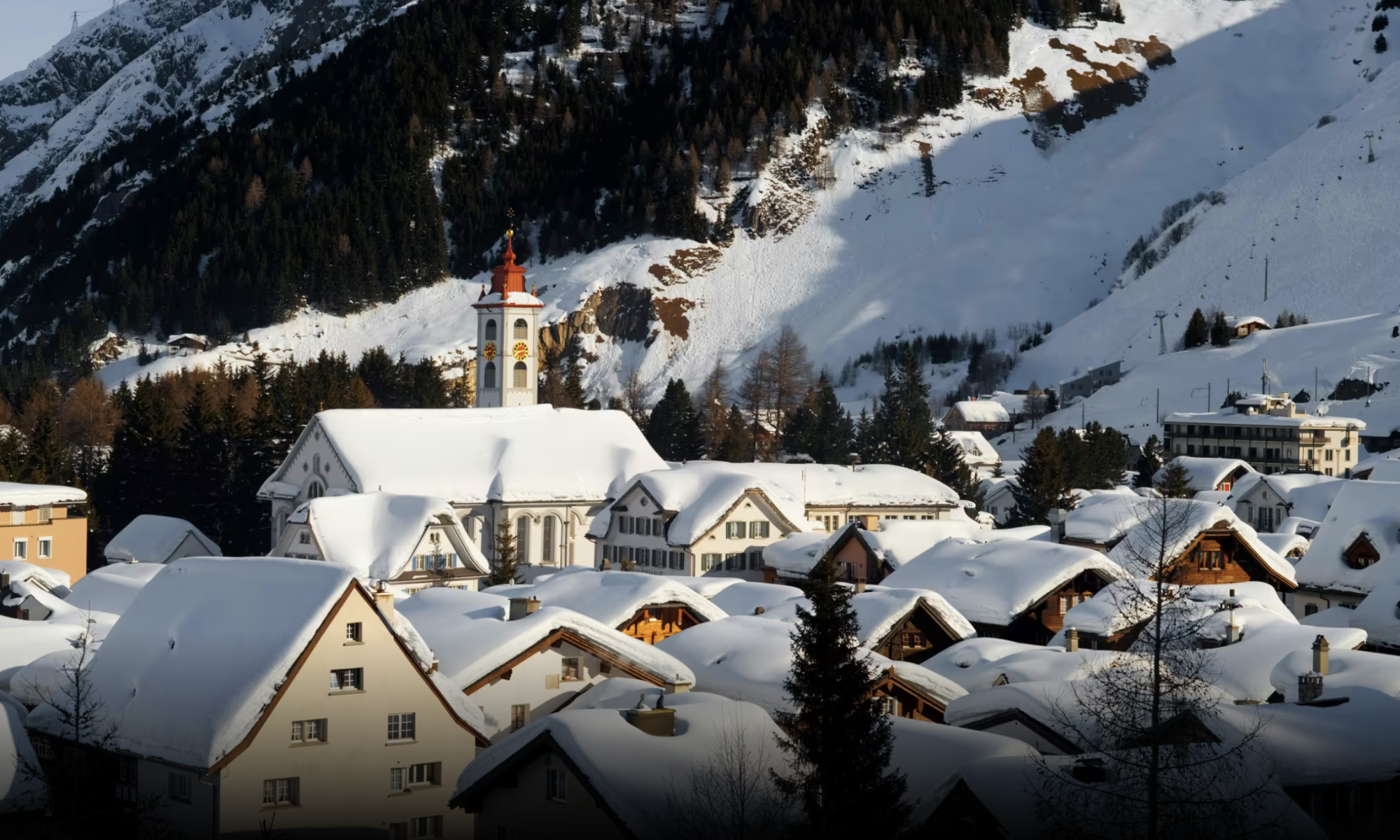
Skip Busy Mykonos. Greece’s Holiday House Hunters in the Know Turn to This Alternative.

Three peninsulas make up Halkidiki, an 1,130-square-mile area in Greece’s northern Macedonia region. Like a trident, Athos, Sithonia and Kassandra stretch into the Aegean sea.

Of the three, Kassandra “is the most developed part of Halkidiki,” according to Theodor Nikolaou, an agent with Engel & Völkers Greece in Thérmi. “Activity started in the 1970s and ’80s, and just continued, especially in coastal villages.”

While lower-profile and less touristed than Greek islands like Santorini or Mykonos, Kassandra still boasts sought-after restaurants, nightclubs and shops, said Ioanna Paloka, an agent with Savills Greece in Thessaloniki. “People prefer to buy here because of the amenities, the beautiful beaches, and the mixture of commercial and residential development,” she said. Beaches including Polychrono Beach, Hanioti Beach and Pefkochori Beach boast clear waters, soft sand and postcard-perfect coastal scenery.

Boundaries

Kassandra is the westernmost of Halkidiki’s peninsulas, and the most populated. At about 128 square miles, Kassandra descends from Cassandreia, its northernmost city, to the Aegean Sea. Kassandra is also the nearest peninsula to Thessaloniki, Greece’s second-largest city, and its international airport. “It’s the most accessible part of Halkidiki,” Paloka said.

Seaside locations are most coveted for luxury property, according to Nikolaou. They include the village of Sani, on the west side of Kassandra; Pefkochori, on the peninsula’s east side; and the area around Glarokavos Harbour, just south of Pefkochori. “The combination of sun, the blue of the sea, and the green of pine draws people from around the world,” he said.

Kassandra’s most exclusive locations are Sani, the east-peninsula village of Paliouri, Possidi in the southwest, and Pefkohori, Pakola said.

Thessaloniki is about 60 miles northwest of central Kassandra. Thessaloniki Airport Makedonia, the regional international airport, is a few miles further west. Athens is about 350 miles south.

Price Range

Beachfront properties in Kassandra command premium prices, Paloka said. “Most people at the high end prefer to buy beachfront.” Prices range from €3,000 (US$3,243) to €6,000 per square meter, she said. “For €6,000 per square meter, you’re buying about 20,000 square meters of land with a 1,000-square-meter house, a swimming pool, very modern, in a new development by the sea and surrounded by forests.”

For €5 million in Sani, Savills has listed a 350-square-meter home with six bedrooms and three bathrooms on about 17,000 square meters of land with sea views. In a new development in the village of Siviri, Savills is offering 350-square-meter beach-adjacent homes with seven bedroom suites, private pools, and garages for €2.05 million. Siviri, on Kassandra’s west side, is popular with tourists for its clusters of bars and cafes.

This Sani home is asking €2.7 million.
Listglobally

Prices across Kassandra “depend on the distance from the sea,” said Nikolaou of Engel & Volkers Greece. “The closer you are, and the more private the property, the higher the price.” While prices average €2,500 to €4,000 per square meter across Kassandra, they can soar to €8,000 to €10,000 “for the best beachfront luxury property,” he said.

In Pallini, on Kassandra’s east coast, Engel & Volkers is offering an oceanfront hilltop estate on more than 4,000 square meters of land, with nine bedroom suites and amenities including a wine cellar and full bar. Built in 1991, the property is listed for €4,500,000.

The most expensive Kassandra listing in October was a 10-bedroom, 1000-square-meter Sani villa with sea views and a pool for €17,000,000, offered by the Hellenic Property agency.

Housing Stock

In the coastal parts of Kassandra undergoing rapid development, architecture is almost uniformly modern. “There are three types of homes here. Apartments and villas, which aren’t as hot. Multi-home complexes with sea views, which are better. And private luxury beachfront properties, which are at the top.”

Older and even “ancient” properties are common in Kassandra’s mountainous inland regions, according to Nikolaou. “These traditional stone houses in some of the old villages can qualify as luxury homes once they’re renovated, but many require extensive work,” he said. The village of Agia Paraskevi, in south-central Kassandra, has also become a popular tourist destination for its thermal spas and ancient churches.

Seaside locations are most coveted.
Getty Images/imageBROKER RF

The higher end of the market consists almost exclusively of detached, modern homes, said Paloka. “Condominiums make up the lower end of the market here,” she said. “And there are almost no historical buildings in the most sought-after coastal areas.”

Luxury Amenities

Greek and international buyers are discovering Kassandra as an alternative to tourist hubs like Mykonos and Santorini. “The fact that Kassandra is not the islands is an amenity in itself,” Paloka said. “It’s very private, relaxed and peaceful, without that madness. Most of the infrastructure here only appeared over the last 10 years.” For golf and tennis, most locals frequent the seaside Sani Resort, which operates private athletic clubs along with its five high-end hotels. Most complexes also have private pools, according to Nikolaou of Engel & Volkers.

MORE : Republican Fundraiser and Rockstar Energy Drink Founder Russell Weiner Lists $47 Million Park City, Utah, House

As Kassandra’s profile has risen, its restaurant scene has flourished, with high-end eateries including Metoxi, in a temple-like stone building with sunset views; “creative Greek” spot Giria Elia in Pefkohori’s Hotel Anna Maria; and Kriopigi’s Fiki Fiki, the first Asian-Peruvian fusion restaurant in Halkidiki. Several private medical clinics operate on the peninsula, including the 24-hour Kassandria’s Health Center and Primary Medical Care of Pefkochori.

What Makes It Unique

“Kassandra is a picturesque environment, surrounded by forest, with clean, beautiful, crystal-clear seas,” said Paloka. “The proximity to Thessaloniki also makes it unique. You’re just an hour from the city centre, but you can enjoy all Kassandra has to offer.”

Kassandra’s annual Sani Festival brings A-list musical talent to the peninsula every year; the 2024 edition saw stars including Placido Domingo, Madeleine Peyroux, Tom Jones, and Emeli Sande on the roster.

Who Lives There

Nearly 40% of buyers in Kassandra are “from central Europe, especially German-speaking countries,” Nikolaou said. “They see the Mediterranean, and this part of Greece, as the Florida of Europe. They want a home in the region to use in retirement.” Another 25% of buyers come from the Balkans, including Bulgaria and Romania, “and other countries without direct access to the Mediterranean Sea. This is the first possible access for them,” he said. An additional 15% of buyers hail from Israel and the Middle East. “Thessaloniki once had a significant Jewish population, and Israelis love it. They want to invest here,” Nikolaou said. Just a handful of buyers come from North America, he added.

Kassandra is picturesque.
Getty Images

Kassandra’s largest, most extravagant villas belong to Greeks, according to Paloka of Savills. But those owners are starting to take their profits. “Those properties had been second homes, and the Greek owners are now selling to mostly European buyers,” she said.

Greece’s golden visa program, which grants a five-year residency permit in exchange for a minimum real-estate purchase, has attracted “a huge number of foreigners, but to less expensive properties,” Paloka said. In October, however, the Greek government raised the minimum investment for a golden visa to €800,000 from €250,000 in sought-after destinations including Halkidiki, the region where Kassandra is located.

Notable Residents

Swiss-based Greek billionaire Aristotеlis Mistakidis “has bought a lot of property in Halkidiki, including a villa in Glarokavos,” Nikolaou said. Brad Pitt and Angelina Jolie vacationed in Kassandra when they were an item, and John Travolta and Robert De Niro “spend summers in Kassandra with their families,” Nikolaou said.

Outlook

“Consistency” is the hallmark of the market in Kassandra, said Paloka of Savills.

“Prices may have gone up on lower-end properties, but prime estates have stayed the same or maybe dropped just a bit. What’s key is that it’s more affordable than the islands, and a better value for your money.” Kassandra’s rental market is also “extremely strong, year-round,” meaning owners can generate revenue from their properties, she said. “Even at Christmas, people love coming here. The islands are great, but you can’t get flights there all year―you have to take a ferry off-season.”

Nikolaou, however, said that “the demand for second homes means prices will continue to increase.” He also noted that property prices per square meter “are much more of a value for the money, especially for beachfront properties.”

Investors “are now looking to Kassandra and Halkidiki to develop new tourist areas,” Nikolaou said. “They don’t want to go to the islands. If you count the kilometres of seashore here, it’s like you have 100 islands. And it’s sunny the whole year.”

Europe’s Economy Faces Sink-or-Swim Moment as Trump Returns

Wall Street’s verdict is clear: A second Trump presidency is likely to deliver a blow to an export-dependent European Union that is struggling with sclerotic economic growth and ever-multiplying political crises. Whether it will finally spark some change is the question for patient investors.

Since Wednesday, the day after the election, the S&P 500 has gained 3.7%. Meanwhile, the Euro Stoxx 50 and the FTSE 100 are down. Among those to shed the most market value have been clean-energy firms such as Vestas, carmakers such as BMW , consumer-goods companies such as Nestlé and Unilever and sellers of pharmaceuticals such as Roche. They all sell a lot to the U.S.

The U.S. is the top goods export market for the European Union, and for Germany, with pharmaceuticals, machinery and vehicles topping the export list.

During the campaign, President-elect Donald Trump floated a 60% tariff on Chinese imports and a 10%-to-20% levy across the board. The think tank German Economic Institute estimates that such a measure could make the German economy between 1.2% and 1.4% smaller than it would have been by 2028.

The core of the European Union’s export machine has been plunged into difficulties because of the end of cheap Russian energy, delays in joining the electric-vehicle revolution and an over reliance on selling to China.

Volkswagen last week announced the closing of at least three plants in Germany. According to FactSet, American customers make up 18% of its sales, about the same as the German market.

“I want German car companies to become American car companies,” Trump said last month while holding a rally in Savannah, Ga. “If you don’t make your product here, then you will have to pay a tariff, a very substantial tariff,” he added.

On Wednesday, Oliver Zipse , chairman of German carmaker BMW, underscored that the company has a plant in Greer, S.C.

“The most demanded vehicles in the United States, we produce there,” he told analysts Wednesday in a conference call. “So there is some natural cover against possible tariffs.”

Volkswagen and Mercedes-Benz have factories in Chattanooga, Tenn., and Vance, Ala., respectively. Manufacturers Airbus , Siemens and BASF also service the U.S. market from within, as do Nestlé and Unilever.

Much depends on details. In early 2021, Airbus’s assembly line in Mobile, Ala., was forced to pay tariffs for its shipments of fuselage, wing and tail components from France and Germany, as part of a World Trade Organization dispute. An agreement was quickly reached to suspend them.

Regardless, building up capacity to service all types of American-based demand would be hard. The Mobile plant makes A220 and A320 jets, but A330 and A350 wide-bodies are assembled in France. Volkswagen uses Chattanooga for the Atlas SUV, the Passat sedan and the electric ID.4, but the bestselling Tiguan and Jetta are built in Mexico. Roughly a quarter of U.S. imported cars originate there, and Trump has suggested that a 200% tariff could be slapped on them.

And when it comes to high-performance models, most EU firms still make them domestically and ship them over. Exports to the U.S. amounted to about 800,000 cars in 2023.

To be sure, EU leaders have struck a conciliatory tone with Trump this week, suggesting that a more amicable endgame such as the 2018 trade deal between the U.S., Canada and Mexico is possible.

Another risk is that China would send even more cheap goods to Europe if the U.S. ratchets up its trade war with Beijing. Yes, recent experience shows that China often just reroutes exports through third countries—and, as of recently, faces higher tariffs for electric vehicles in the EU anyway—but even small shifts could have big effects.

For a decade and a half, the 27-nation bloc has limped along, fostering just enough political change to avoid a painful breakup during the debt crisis of the 2010s and the 2020 pandemic, but never enough to truly invigorate its economy. Attempts by France’s Emmanuel Macron and Germany’s Olaf Scholz to change course have ended in paralysis. Scholz’s three-party government collapsed this week, after years that saw the coalition’s pro-austerity member blocking efforts to spur domestic industry with public spending.

Yet the first Trump presidency did galvanise some early support for a cohesive industrial strategy in Europe. The long-term bull case for European equities is that Trump 2.0 will be a catalyst for further transformation. European Central Bank President Mario Draghi published a report in September urging less red tape, state aid to key sectors and, where appropriate, harsher tariffs, all of which has buy-in from officials in Brussels.

On a small scale, the impulse toward a European industrial policy is already playing out. European defence contractors such as BAE Systems, Rheinmetall and Thales have seen their shares jump on the expectation that less American military involvement in Europe will force governments there to rely on their own capabilities. By 2030, the EU wants members to direct 50% or more of their procurement budgets toward European contractors.

Elsewhere, substituting foreign markets for domestic consumers will prove much harder, though providing advantages to buyers of electric vehicles has proved extremely effective in Norway. They now outnumber cars that run on gasoline.

Caught between the U.S. and China, Europe’s economic strategy is soon to face its biggest challenge since the eurozone crisis. Investors are right to be wary.

How to Pick the Perfect Souvenir When Travelling

Trying to buy just the right souvenir on a trip is a risky business. You can wind up with a lifetime treasure—or an albatross you feel stuck with forever.

Consider the giant painting of a chicken flying out of Cuba that has been hanging over our couch in Palos Verdes, Calif., for the past 15 years. Buying it cheaply seemed to make sense when we were in Havana, since my husband’s family had fled the country after the revolution.

But the flying chicken just didn’t seem as, well, poignant by the time we returned home and hung the 4-by-7-foot painting. No guest has ever said a word about it. “I can’t help you with the chicken,” an art dealer told me long ago when I asked for help in selling it.

So, how do you find the right souvenir? Or is there even any such thing?

An everyday reminder

For many people, the answer to the second question is an unqualified “No,” and they have stopped trying. “Souvenirs never look as enticing or beautiful as they did at the time of purchase once you get them home,” warns Patricia Schultz, the author of “1,000 Places to See Before You Die.”

After collecting rugs on her trips, then Christmas ornaments, before running out of room at home for both, Schultz says, “I have gone cold turkey. I collect memories.”

But for others, surrendering just won’t do. “It’s intrinsic when people travel that they wind up bringing a keepsake of the journey,” says Rolf Potts, the author of “Souvenir,” a book that traces the history of travel souvenirs back to the earliest recorded journeys.

“It can be a way to show off,” he says. “Much like the envy-inducing travel posts on Instagram.” But for many people, he says, “It’s proof you were there, not only to show other people but also for yourself.”

For those who lean in this direction, there are ways to help avoid regrets. Tara Button , founder of the Buy Me Once website, and the author of “A Life Less Throwaway: The Lost Art of Buying for Life,” suggests focusing on practical items that fit your lifestyle and double as mementos.

As an example, she once bought a “very affordable” baby blanket made from alpaca fiber on a trip to Peru and now uses it every day. The blanket not only reminds her of “the time pre-children when I was traveling,” she says. “It goes over my 2-year-old son every night. It’s always soft and always gorgeous.”

She has a friend who collects one cup from each destination. “Those are perfect memory keepers,” she says. “A small item that is used every day.”

Finding the right scale

One obstacle to finding the right souvenir is that it can be hard to think practically when you are swept up in the excitement of a new culture. Consider the Burmese puppet, 15 inches tall, that has spent about two decades in the closet of Liz Einbinder , head of public relations for Backroads, an adventure-tour company.

“We saw a lot of puppets everywhere and just got caught up in all of the Burmese art and culture,” she says. Now she wonders, “Why did I bring this back? It sits in the back of my closet and I can’t seem to get rid of it. It creeps me out when I see it.”

When that buying urge sweeps over you, Button and other travel experts suggest pausing to consider your lifestyle, taste, needs, and the scale of your home—you’re going back to the reality of your everyday life, after all.

But that doesn’t necessarily mean being entirely practical. Einbinder collects miniatures, mostly miniature houses, from every country, and has more than a hundred. Most are in storage, but she keeps a little London bus and a little Egyptian pyramid on her desk. For her, souvenirs aren’t just about memories, they’re also about the hunt. “It gives me something to search for” on each trip, she says. “That’s half the fun.”

Ignore the hard sell

Another way travelers often go wrong is by giving in to pressure, or at least persistence, from salespeople.

When Kimba Hills, an interior designer, went to Morocco, she hired a guide who took her to a rug store in Fez, where the dealers delivered a whirlwind sales pitch while serving tea. She wound up buying a $4,000 flat-weave Turkish rug, measuring about 13 feet by 9 feet.

“No one in my group could believe I got seduced,” she says.

When the rug finally arrived at her home in Santa Monica, “It smelled like cow dung,” she says. Washing the rug was going to change the color.

When she called the dealer in Fez and demanded her money back, he refused, offering to send her a different rug instead. “We got into a yelling match,” says Hills. “All my skills went out the window.”

Looking back, she says, “You are in a buying mode because you are there and feel like you should buy something.” On a recent trip to Mexico, she bought nothing, explaining, “I’m wiser.”

Sometimes, magic

Spontaneity can cut both ways. There’s the chicken painting. But waiting for inspiration to strike, rather than planning to go home with a souvenir, can still help.

Henry Zankov, a sweater designer, says that when he travels, he explores his destinations with the idea that he won’t buy anything unless he comes across something he loves. He still buys plenty, but says “I don’t have regrets.” At his home in Brooklyn, he has ceramics, vases and glassware from shops he found randomly in Spain, Greece, and Italy. “I buy what I have to have,” he says.

There are times he doesn’t find anything. “So I just give up,” he says. “It’s OK.”

Some souvenirs do become the treasure of a lifetime.

Annie Lucas , the co-owner of MIR, which offers tours to less-traveled destinations, became captivated by a mirror on a trip to Morocco. It was made with hand-pounded silver and pieces of camel bones.

She went back to the store three or four times, debating the cost and whether she would regret it once she got home. It was heavy and measured 24 inches by 40 inches.

“That was 15 years ago, and I still treasure it,” she says. “If I had to get out of my house and had only five minutes to pack, I would grab that off the wall.”

Property of the week: 32 Isaac St, Spring Hill

Spring Hill Enviro-Cottage is the ultimate fairytale of old meets new, an architectural marriage of two distinctly different eras that seamlessly come together in 21st-century Brisbane.

The Isaac Street home is one of Spring Hills original workers’ cottages that in 2010 was expertly transformed into a uniquely sustainable home with all the modern-day must-haves and plenty of boxes ticked on the wish list too.

While preserving the classic Queenslander, the 286sqm property has been reimagined to deliver an innovative and eco-friendly address. 

Kitchen joinery has been crafted from reclaimed timber, there is environmentally friendly paint, a suite of energy efficient appliances, solar power, underground water storage, and an Eco Plunge Pool.

Although the charming period facade remains, the rear of the house has an ultra contemporary backdrop of patterned Corten steel privacy screens that minimise heat and create dappled light across the interior spaces. At night, the unique partitions geometric laser-cut design provides a star-like feature in the main bedroom suite.

The considered passive design principles extend to the strategically located louvres, doors and windows that draw in cooling breezes, while a vast skylight over the dining area and kitchen allows for plenty of natural light in winter. Burnished concrete floors keep the ground cool and grand walls of glass peel back to reveal a seamless flow to the outdoors with a grassed and landscaped private courtyard. 

Although the ground floor has been designed for everyday living and entertaining, the multi-purpose front room with ensuite is an ideal guest retreat or even a perfect ‘work from home’ space complete with a separate entry via the front patio. 

Upstairs, a mezzanine lounge provides another breakout area for families, and the two first floor bedrooms open out to the traditional full-width balcony overlooking the street. These bedrooms have built-in wardrobes and desks with a shared family-friendly bathroom.

At the rear of the footprint, a freestanding two-storey pavilion features yet another living space next to the pool with an integrated bar. Above the space the top floor main bedroom has an ensuite and walk-through wardrobe.

A long list of bonus features include ceiling fans in all bedrooms and living areas, a thermostat-controlled whirlybird to extract excess heat, a 5kW solar system with a SMA Sunny Boy inverter, a 20,000L rainwater tank, a filtering and UV disinfection system and a solar hot water system with 450L storage tank.

Although there is a lock up garage, this city-fringe home is within walking distance of Roma Street Parkland, Roma Street Station and Victoria Park. Brisbane Central State School is also only two streets away.

In keeping with Queensland consumer law, properties going under the hammer cannot carry advertised price guides.

This Brisbane home at 32 Isaac St, Spring Hill is on the market with Ray White New Farm with an auction date set for November 30. For details contact agent Samuel Angus on 0411 044 949.

Fed Cuts Rates Again, This Time by a Quarter Point

US: The Federal Reserve approved a quarter-point interest-rate cut Thursday, the latest step to prevent large rate increases of the prior 2½ years from weakening the labour market as inflation eases.

The decision, coming the same week as the election of Donald Trump to a second presidential term, followed an initial cut of a half-point in September and will bring the benchmark federal-funds rate to a range between 4.5% and 4.75%. All 12 Fed voters backed the cut.

Officials have said those moves are warranted because they are more confident that inflation will return to the central bank’s target and because they believe rates are still high enough, even with the latest cuts, to dampen economic activity.

The move was expected. Stocks and Treasury yields were steady after the announcement.

“We are committed to maintaining our economy’s strength,” Fed Chair Jerome Powell said at a news conference. He said officials are confident that with an “appropriate recalibration of our policy stance,” inflation can continue heading lower with a solid economy.

Trump’s election victory this week has the potential to reshape the economic outlook, with presumed GOP majorities on both sides of Capitol Hill enabling a broad shift on taxes, spending, immigration and trade. Economists are divided over whether the mix of policies will boost or weaken growth and drive up prices.

The shift in the outlook, in turn, has fuelled questions on Wall Street over whether the Fed will alter its earlier expectation that rates could be steadily dialled lower over the coming year or two.

Powell said it was too soon to say how the next administration’s policies would reshape the economic outlook.

“We don’t guess, we don’t speculate, we don’t assume” what policies will get put into place, Powell said. “In the near term, the election will have no effects on our policy decisions.”

Powell also said he had no intention of leaving the Fed before his four-year term as chair expires in May 2026. “Not permitted under the law,” Powell said when asked if he believed the president could remove him or other Fed personnel from their positions before their term expires.

Since the Fed cut rates in September, longer-dated bond yields have climbed notably, meaning the cost to borrow for a mortgage or car loan has gone up. Yields have increased in large part because better economic data has led investors to reduce their worries about a recession, which could have triggered larger rate cuts.

But some analysts think the bond-market selloff may also reflect concerns by some investors about higher deficits or inflation in a second Trump administration.

Either way, the market has generated an unusual result: Borrowing costs rose after the Fed cut rates. The average 30-year mortgage rate has jumped since mid-September, to 6.8% this week from 6.1%, according to Freddie Mac.

Over a similar time frame, investors in interest-rate futures markets have steadily reduced their expectations over how much the Fed will cut rates over the next year or so. They now see the Fed cutting rates to around 3.6% by 2026, up from an estimated trough of 2.8% in September, according to Citi.

Officials are trying to bring rates back to a more “normal” or “neutral” setting that neither spurs nor slows growth. But they don’t know what constitutes a normal rate. Policies that boost economic activity or prices could also lead officials to conclude that they should maintain a moderately restrictive rate stance. That means they would hold rates somewhat higher than a normal or neutral level.

Before the 2008-09 financial crisis, many thought a neutral rate might be around 4%, but after the crisis and an extremely sluggish recovery, economists and Fed officials concluded the neutral rate might be closer to 2%.

Interest-rate projections that officials submitted in September show most of them expected that if the economy expanded solidly with inflation continuing to cool , they could cut rates to around 3.5% next year.

Inflation based on the Fed’s preferred index was 2.1% in September, from a year earlier. A separate measure of so-called core inflation that strips out volatile food and energy prices was 2.7%. The Fed targets 2% inflation over time.

Because officials don’t have much conviction over where the neutral rate sits, they are likely to be guided by how the economy performs in the months ahead. If inflation keeps slowing and the demand for workers looks soft, officials could conclude it makes sense to continue cutting rates along the path they envisioned in September.

“We’re going to move carefully as this goes on so we can increase the chances that we get it right,” Powell said. “We’re trying to steer between the risk of moving too quicky…or moving too slowly. We’re trying to be on a middle path.”

If inflation progress stalls or ebullient financial markets raise concerns that inflation might get stuck above their target, officials might face more reservations around continuing to cut rates at a steady, meeting-after-meeting clip.

The most immediate focus is whether the Fed will cut again at its upcoming meeting in December. In September, 19 participants were about evenly divided over whether to cut rates one or two more times this year. Nine of them penciled in no more than one cut in either November or December, while 10 penciled in two cuts.

“There’s a lot to learn between now and the December meeting,” said Diane Swonk, chief U.S. economist at KPMG. “They can’t leave the door wide open, but they can’t close the door either.”

Powell said Thursday it was too soon to rule anything “out or in” at that meeting. Slowing down the pace of rate cuts is “something we’re just beginning to think about,” he said. “We’re on a path to a more neutral stance. That has not changed at all since September. We’re just going to have to see where the data lead us.”

Even before the election result, recent data suggested that cutting again would be a finely balanced decision because inflation looks like it might end the year slightly above officials’ projection, while the unemployment rate has edged lower recently, said Matthew Luzzetti, chief U.S. economist at Deutsche Bank.

The election result— which sent stock markets to new highs while raising the prospect of stronger growth, higher inflation and better labour-market outcomes—boosted the odds that the Fed forgoes a cut next month, he said.

“Those could present a strong case from a risk-management perspective to potentially skip that meeting,” said Luzzetti.

Charles Forte on Carving His Own Path in the Family Hotel Business

There’s a tradition in the Forte family of starting on the lowest rungs of the hospitality ladder and working their way up.

In 1911, Rocco Forte emigrated from Italy to Scotland to open a cafe that would mark the first hospitality establishment in the namesake family business. He would go on to open several more restaurants in the U.K., which his son would continue to grow.

Although the hotel group has ebbed and flowed through the decades, it finds itself in a new era with all three adult members of the current generation working for the company.

Charles Forte, 32, is one of those three and followed in the steps of his grandfather by starting in hospitality service. At age 15, he was a waiter at London’s Brown’s Hotel—owned by Rocco Forte Hotels since 2003—and has worked in almost every area of the hotel and restaurant industry since.

Today, he is the group’s director of development, responsible for steering external partnerships and capital investments.

“My role is to find new opportunities and develop ourselves on a much smaller scale,” he says.

In January, Saudi Arabia’s PIF sovereign wealth fund took a 49% investment stake in Rocco Forte Hotels—a deal Charles helped complete. He says that the investment will help guide the group’s next growth phase, which includes a target of three hotels per year and expansion in the Middle East, among other regions. Through 2027, the group is opening four new properties in Italy and working on a project in Marrakesh, Morocco.

The family’s roots are Italian and that’s where many of the group’s most notable properties reside, although according to Charles, more than 40% of the company’s business is within the U.S.

Alongside his two sisters Lydia and Irene, Charles is connecting the Forte name to a new generation of luxury travellers through partnership deals with brands like the Macallan and smaller, longer-term property builds in Italy and elsewhere.

Penta caught up with Forte by phone from his office in London.

PENTA: Do you think working in a family business brings more challenges or opportunities?

Charles Forte: Being in a family business like this affords opportunities you wouldn’t have otherwise. My sisters and I worked in all the different departments of the hotels, and I realistically always wanted to join the business. At other times, I did want to be a filmmaker, but I wanted to be a part of the family legacy. My dad is a good mentor and I’ve never really looked back.

How do you differentiate yourself in an extremely competitive luxury hotel market?

It’s very challenging to differentiate ourselves. Sometimes I struggle to differentiate between us and other luxury brands because a lot of the products are very similar. There’s an international luxury aesthetic that’s very copy and paste, and a lot of the bigger guys are trying to create new brands within their own stable of brands. Our hotels are very design-oriented and not so traditional, for example.

What differentiates us is the family aspect. There’s a real family behind this, and it creates value in our brand. We have this “quiet luxury” aesthetic.

MORE: U.S. Renews Program to Root out Money Laundering in Real Estate Ahead of Larger Crackdown

What is your philosophy on hotel partnerships? Do you find yourself chasing partnerships with big-name brands to stay on par with your competitors?

Partnerships have value if they have relevance and the partner is relevant to the destination. We don’t chase partnerships because if we did, it would mean that something is missing from the hotel. These partnerships should be organic. I’m excited because we recently brought in a new director of marketing who worked at Six Senses, and that will help us do more meaningful and special collaborations and partnerships.

Do you think that’s creating more appeal for Rocco Forte Hotels among the younger generation of luxury travellers?

There’s a broad range of pace in this space, considering how competitive the operator landscape has become. We’re finding that younger travellers aren’t geared towards any specific trend. I think we’re slightly more classic in appeal. We’re not ostentatious. There’s no substitute for beautiful design and great service—we’re not looking to reinvent the world. Depending on which hotel they visit, some people know us as a brand, others as a specific independent hotel, and we’d like consumers to know which brand is behind the property.

In August, we opened Rocco Forte House Milan, which features more longer-stay keys, where stays can be two weeks, a month or a year. We’re finding that’s something more travellers want and we can build a nice client base for those who want longer stays.

This article has been edited for length and clarity.

Why we’re working anywhere but the office

From the latest issue of Kanebridge Quarterly magazine. Order your copy here.

For many, working from home is the new normal. The transition from being based in the office to working off-site has been a fundamental one, and almost four in 10 Australians worked from home at least once a week throughout 2023.

While figures show a slight decrease on 2021, working from home (WFH, it even has its own acronym) has continued to escalate in white-collar occupations, with 60 percent of managers and professionals eschewing the traditional office set-up. And those who aren’t already doing it wish they were. According to the annual Taking the Pulse of the Nation report, almost all workers (94pc) would like to do at least part of their work hours at home.

“I would say that the days of only full-time in the office for all employees are likely gone for good,” says the author of the report, the Melbourne Institute’s Professor Ragan Petrie.

“The trends in Australia mimic those in other countries where hybrid schedules are quite common.”

But is it all good news? Among the many compelling reasons to ditch the commute — saving time, improved mental health, higher productivity and being able to put the washing on — there are the well-documented shortcomings regarding the isolation, and missing out on the opportunities that those casual catch ups in the stairwell can offer.

Opportunities for casual connections for in-office workers are not enough to entice many. Image: Shutterstock

“Constant drop-bys for chit-chat are not productive, but purposeful conversations are,” counters Petrie. “There might not be shortcomings of working from home per se, but rather not having the right infrastructure and support in place for workers to be productive. It’s important for employers and workers to figure this out.”

For those who are new to the workforce, flexible working arrangements are just the way things are. According to one survey, two out of every three Generation Z workers believe that the option to work from home is a non-negotiable.

Underpinning the normality of remote work are the advancements in automation and technology that make the transition smoother than ever — and perhaps support the use of email and text over the meetings and phone calls that younger generations shy away from.

“People of different ages have differential experience with technology, and there are some ways of communication people may feel more comfortable with than others,” says Petrie. “Certainly, technology plays a large role. Those whose jobs allow them to tap into technology to perform their tasks are well poised to be successful with a hybrid schedule.

“In the end, if worker output is satisfactory, why is it important where it is done?”

At the start of the pandemic as office-goers scrambled for a space to call work, the kitchen table was the go-to location. Now working remotely has become a more permanent arrangement, a purpose-designed study area or hybrid space is as desirable in real estate brochures as a media room or butler’s pantry.

Roger Wardy is a director at Ray White Touma Group in inner city Sydney, where more than 100,000 office employees have left the CBD for the greener pastures of remote work arrangements.

“Most house hunters want to see a home office or office space these days, and in larger homes it’s an expectation,” he says.

“As such, we’d be more likely to market a six-bed home as a five-bed plus office. If a buyer works from home, that will definitely add value.”

But the home office is just the beginning. Having paved the way for more flexible work arrangements, there’s now a growing trend towards co-working environments for companionship, productivity and a delineation of work and home.

High-tech co-working spaces offer several advantages over working from home, making them the preferred choice for many. A professional environment means distractions are minimised, and you’ll have access to state-of-the-art amenities that you probably won’t have at home. And then there are those networking opportunities — co-working spaces attract a diverse group of professionals and who knows what you might find out at the communal coffee bar? It’s something that’s making its way up the agenda for apartment developers, too, with those on the front foot offering co-working spaces along with the pool, gym and rooftop entertaining.

At the luxury new development Paradiso Place in Surfers Paradise (pictured above), the entire 2900sqm 26th floor is dedicated to a state-of-the-art co-working space, maximising 360-degree views of the Gold Coast from the ocean to the hinterland.

“To have the option of working in a space like this with all the facilities of a high-tech office within your own apartment building is an exciting prospect for buyers,” says Total Property Group Managing Director Adrian Parsons. “We have been receiving a great deal of interest in this development from business owners, entrepreneurs and professionals who can see themselves waking up in their luxury apartment with ocean views to go for a walk or run along the beach, use the onsite gym, then conveniently head to work in a state-of-the-art co-working space within their own building.”

The space incorporates a boardroom, private meeting rooms, work pods and multiple hot desks. And it’s not all about focused work; there’s also a spacious balcony event space and a Coffee Emporium complete with baristas.

“With working from home becoming the new normal, we are seeing many Australians choosing to move to quality lifestyle locations like the Gold Coast, and a full-floor co-working space of this standard is attracting a high level of inquiry,” says Parsons.

Stocks Soar, Dollar Jumps as Trump’s Win Reverberates Through Markets

Donald Trump ’s election victory powered the Dow Jones Industrial Average to its biggest gain in two years, with a broad market rally lifting shares of banks, industrial companies and small-cap firms that are expected to benefit from continued economic expansion.

The gains were widely distributed as Wall Street bet that Trump’s promises of deregulation and tax cuts will further ignite an economy that already has posted strong gains in recent years. But sectors that were expected to benefit from Democratic policies, such as electric-vehicle companies and clean-energy related industries, declined sharply.

The promise of four years of Republican rule drove the latest rise in Treasury yields, reflecting expectations of stronger growth and inflation, while gold prices fell as fears that the election results would be contested and spark social unrest weren’t realised.

“The markets are now trading full-on Trump trade,” said Stephen Dainton , a senior executive at Barclays who oversees the lender’s investment bank including its large trading division.

Big winners included banks, which investors bet were poised to benefit from reduced regulation and a fresh acceleration in growth. Shares of JPMorgan Chase , the nation’s largest lender, climbed 11% to a new record. Wells Fargo and Goldman Sachs both rose more than 12%.

The prospect of lighter regulation and protective tariffs helped drive gains in industrials, with equipment maker Caterpillar rising more than 8% to a new all-time high and 3M adding 5%. Domestic steelmakers Nucor and Steel Dynamics gained 16% and 13%, respectively. Railroads, including Norfolk Southern and CSX , surged.

Bitcoin rose as much as 9% and flirted with $75,000, topping a previous record from March. Trump has said that he wants to make the U.S. the “crypto capital of the planet” and has pledged to create a “strategic bitcoin reserve.”

At the same time, traders also sought out companies and assets they expect to suffer during a second Trump administration.

Fears of trade wars drove down shares of ocean freight firms, including Denmark’s A.P. Moller-Maersk and Germany’s Hapag-Lloyd . Copper prices had their worst day in more than two years, dropping 5.1% as metals traders in New York reconsidered demand forecasts that hinge on the Chinese economy and the clean-energy boom.

Investors’ belief that Trump may break with the Biden administration’s push into renewable energy and electric vehicles hit companies as far away as South Korea. LG Energy Solution fell roughly 7%, as did other local EV battery makers, and Hanwha Solutions, which makes solar panels, dropped by more than 8%. In the U.S., First Solar fell 11% while Enphase Energy lost 17%.

Shares of Tesla , the electric-vehicle maker helmed by Trump ally and donor Elon Musk , bucked the trend, climbing 15%.

Investors sold bonds, driving yields higher and widening the gap between yields on ordinary Treasurys and those on inflation-protected Treasurys. That is a sign they think that the policies of a second Trump term could put upward pressure on inflation.

Many investors also believe that Trump’s tax-cut-heavy policies will add to the deficit, with the threat of a larger supply of Treasurys helping push down bond prices. The yield on the 10-year Treasury topped 4.4% for the first time since July.

That hit firms and investments that are sensitive to higher bond yields. The S&P 500’s consumer-staples sector declined 1.7% and the utilities segment lost 0.6% The real-estate sector sank 3.4%. The country’s largest home builder, D.R. Horton , dropped nearly 5% and Zillow Group fell about 7%.

Surging yields intensified a climb in the U.S. dollar, which was also boosted by the prospect of rising tariffs. Economists say tariffs can lift the U.S. currency by hurting the economies of foreign countries and discouraging Americans from spending on imported goods.

The WSJ Dollar Index, which measures the U.S. dollar against a basket of 16 currencies, rose around 1.3%. The Mexican peso lost as much as 3.4% against the dollar to its lowest level since August 2022, according to Dow Jones Market Data, before recovering. Trump recently said he could impose 200% tariffs on vehicles made in the country. The potential for tariffs also drove down the Chinese yuan.

Early wins by Trump in key states assuaged fears that it could take days or weeks for the election to be called. The Cboe Volatility Index—known as the VIX, or the market’s fear gauge—plunged to its lowest level since late September.

The relative calm had investors hoping more gains lie ahead. The S&P 500 had already risen 21% through Election Day, its best performance in a presidential election year since 1936, when Franklin Roosevelt was in office. The Dow Jones Industrial Average was up 12%, its best election-year performance since 1996, when Bill Clinton was in the White House.

“There’s a lot of relief that there’s a clear-cut outcome and that markets can move on to things that are quite frankly more important than who sits in the White House,” said Ross Mayfield, investment strategist at Baird.

America’s Empty Apartments Are Finally Starting to Fill Up

The biggest apartment construction boom in four decades flooded the market with new supply over the past two years. Apartment owners had to contend with a surge in empty units.

That is starting to change.

The vacancy rate, or the share of apartment units that are empty, stopped rising for the first time in three years last quarter, as demand for apartments rose to its highest levels since 2021, according to CoStar .

The more than 1.2 million new apartment units that were built during the past two years are filling up. If that demand is sustained, if the economy remains strong and if housing prices remain near record highs, landlords likely will have more pricing power starting sometime next year. That could allow building owners to raise rents more than they have recently.

Some 672,000 new apartment units will have been completed by the end of this year, but only about half that number is expected in 2025, and even fewer in 2026, CoStar said.

“The worst of the pressures on pricing from new supply are likely behind us,” said Eric Bolton , chief executive of publicly traded landlord Mid-America Apartment Communities , on an October earnings call.

Housing affordability has become a hot-button election issue at the federal and local levels. Any sign that rents are poised to rise in 2025 could intensify pressure on the new administration to address housing costs. President Biden announced a plan over the summer to cap rent increases, though it would need to pass Congress.

Nationally, sales of apartment buildings have also started to pick up again, as investors become more confident that the market is bottoming and sellers are more willing to acquiesce on price.

Renters were hit hard by the historically high rent increases during the pandemic years, especially in Sunbelt cities, such as Phoenix and Tampa, Fla., where rents rose 20% or more during 12-month periods.

Rents for new leases nationwide have held close to flat for more than a year. That is due in part to a big split between supply-heavy Sunbelt cities, some of which have seen rent cuts, and the rest of the country, which hasn’t.

Renters who choose to renew their leases were still paying a 3.5% rent increase on average as of this past August, the most recent month data was available from Yardi Matrix.

Throughout this year, the places with the highest renewal rent growth have been on the coasts and in the Midwest. New York City, Los Angeles, Indianapolis and Columbus, Ohio, saw renewal rent increases of 5% or more in July, according to Yardi.

Increased return to office orders in major employment hubs may also start translating into even more urban rental demand soon, especially in coastal cities.

In Seattle, Equity Residential said in an October earnings call that it is seeing a pickup in leasing from Amazon employees, who are locking in apartments ahead of a five-day office attendance policy, scheduled to begin in January.

On the flip side is Austin, Texas, which has experienced a building boom after companies such as Tesla and Oracle moved offices there. Austin’s vacancy rate, if new buildings are included, is the highest in the country at over 15%, according to CoStar.

Rent growth for new leases in the Texas capital ranks last among major metros during the past year. Landlords of new luxury buildings are still offering big concessions, such as months of free rent, to fill up units. undefined undefined “Basically, the worst apartment market in the country right now is Austin,” said Matt Rosenthal , managing partner of multifamily investor Eastham Capital.

On an annual basis, apartment building sales have grown for two consecutive quarters, according to MSCI Real Assets. Places seeing some of the biggest increases in sales include Denver, San Francisco and the Washington, D.C. suburbs.

Apartment companies also continue to feel tailwinds from renters locked out of homeownership. Major owners have remarked on how few of their renters move out to purchase homes now, amid some of the worst conditions for home-purchase affordability in four decades. That is unlikely to change much in 2025.

“Probably the biggest story this year that we’ve seen [is] from people coming in the front door and then not leaving [out] the back door,” said Joe Fisher , president of publicly traded apartment owner UDR .

Why the smart fashionistas have stopped buying new clothes

From the latest issue of Kanebridge Quarterly. Order your copy here.

Are you in the market for a classic Chanel 2.55 bag? Or perhaps you’re dreaming about that Zimmermann dress you should have snapped up in store a couple of months ago? Chances are you’re spending as much time scouring the resale market as you are a brand-new version as the lines between new and shop fresh stock blur. The rise in designer and luxury resale globally shows no sign of slowing down. Rather, it is one of the biggest growth areas in the fashion industry today.

According to US-based secondhand fashion platform ThredUp’s 2024 Resale Report, the global secondhand apparel market is set to reach US$350 billion by 2028 — which sees it growing three times faster than the overall apparel market. Further to this, it anticipates that next year, 10 percent of the global apparel market will be made up of secondhand goods.

“There are three key triggers,” says Lauren Kennedy of Australian designer and luxury resale platform, High End. “One of them is sustainability. People are more conscious now of how they’re consuming.”

Lauren Kennedy and Brooke Marks from Australian designer resale retailer, High End

Of the other factors, cost of living is one —especially with the increasing prices of luxury goods in particular — and the other is the push from younger generations, particularly Gen Z and also Millennials, who feel no stigma around buying secondhand and prefer an individual approach to style.

“Everyone now wants their unique style, and resale offers unique pieces,” says Kennedy. “I would love to go into someone’s wardrobe from 50 years ago and look at all their stuff, because it was made with quality. They really like discovering and finding those unique pieces that you can only get resale, not retail.”

High End was founded as a peer-to-peer Facebook group 10 years ago by Brooke Marks, and six months ago it transitioned to an app and website. Of the Australian brands most in demand, she says it’s Camilla and Marc, Scanlan Theodore, Alemais and Zimmermann.

“And in terms of international designers, the most popular brands on our platform, which do hold their value, are Louis Vuitton, Gucci, Celine, Chanel, Prada,” she says.

Miranda Gillespie founded the luxury resale platform Luxe-It-Fwd in Brisbane in 2016, focusing purely on handbags and accessories. For her site, Louis Vuitton handbags are “the absolute standout” for customers.

“There’s a Louis Vuitton bag that can appeal to everyone,” says Gillespie. “Also, from a pricing point of view, you can have entry-level Louis Vuittons, which might be $1,500, which is quite cheap for a (luxury) handbag. Whereas you can’t enter Chanel at that price point.

“Certainly there is a sustainability element to it, and wanting to make more sustainable fashion shopping choices,” she adds. “But underlying it all, I think it really does come back to economics and being financially more savvy. If someone, for example, can purchase a handbag which might have little to no signs of use and pay $1,000 or $2,000 less than in the store, then that becomes a very attractive economic proposition for them.”

Individual brands have been slower to embrace the resale economy, but as the segment continues to gain traction, some have finally started to enter the fray. While premium and luxury brands are often concerned about devaluing and cannibalising their new products, some have started to dip their toes in the resale waters. It can be a way to show their support for the circular economy, build customer loyalty, and also reap a small, additional, portion of their products’ value.

French It-girl favourite label Isabel Marant has taken matters into its own hands, offering resale items alongside current season in some stores, while also operating a dedicated resale website. Gucci and Alexander McQueen recently partnered with Vestiaire Collective (their parent company, Kering, has a 5 percent stake in the resale platform), while their stablemate, Balenciaga has partnered with Reflaunt.

In Australia, Airrobe is one platform that has fostered direct relationships with brands including Oroton, Ginger & Smart and P.E Nation. Very few brands have launched their own resale platform, but Kit Willow is one that has taken the lead. Willow founded the sustainably focused brand KitX in 2015, and although she is winding up its new collections, the brand’s resale platform, KitXchange, will continue to operate.

Kit Willow founded KitX in 2015 with KitXchange providing an online resale platform.

“When the concept of KitX started to be born, I always had that vision (to include resale) because people could then circulate what already exists,” says Willow. “The premise is the value of material and design, to reinvigorate it and recirculate it. And that was actually before (we knew) the statistics on how much we were throwing away, which has now been pushed to the forefront, but is also a massive problem on a daily basis.”

Those statistics are truly alarming. In Australia alone, 200,000 tonnes of clothing go into landfill each year. These are among the statistics that Seamless — the name for the National Clothing Stewardship Scheme, a consortium of stakeholders led by the Australian Fashion Council and endorsed by the federal government which commenced in July — is aiming to address, with an aim of circularity in fashion by 2030.

Resale will play its part in this vision for a circular economy. (It is worth noting that Seamless will also ask for a levy of 4 cents for each new item of clothing sold in Australia, which will go towards funding for circularity initiatives; Seamless is currently an opt-in for brands. France, on the other hand, has put in place legislation to try and stem the influx of fast fashion, imposing a €5 surcharge on each item from next year.)

While the resale segment is on a growth trajectory, many are keen to see what its future looks like for business and customers alike.

“It is a new industry and there’s a lot of innovation and a lot of movement,” says Kennedy. “So it will be interesting to see what type of businesses come out on top and profitable, because one of the biggest challenges as a business in the industry is profitability at scale. It costs a lot to run these type of marketplace businesses and marketplaces only really work at scale.”

She believes that even platforms like High End will start to be populated by high-volume sellers who operate as businesses themselves.

Willow believes that one of the reasons the segment will continue to grow is that with the acceleration of climate change and its impact on the environment, natural fibres such as wool, cotton and silk will themselves become more expensive, pushing up prices of virgin garments and thus pushing more consumers into the resale market.

“It makes it even more important for designers to design more timeless pieces and create better quality,” she says, “so that their pieces can be reworn and resold for years to come.”

For These Collectors, It’s Still All About the Cash

Even as the world increasingly moves toward digitised commerce, where transactions are conducted with the tap of a credit card and billions of dollars are moved electronically between banks, there is one group of people for whom hard cash is still king: collectors.

As an alternative asset class, collectible banknotes offer significant potential value to investors, and the market for these paper artefacts is thriving. Aris Maragoudakis , director of world currency auctions at Stack’s Bowers Galleries in Costa Mesa, Calif., estimates the hobby sees annual trade of well over $500 million globally.

In fiscal year 2016, the World Paper Money department at Stack’s recorded about $4 million in sales. By fiscal year 2024, this figure had risen to $14.5 million. The company reported an 18% increase in sales for world paper money (which doesn’t include U.S. paper-money numbers) in fiscal year 2023, followed by 25% growth in fiscal year 2024.

Elsewhere, the Noonans Mayfair London realised £5 million, or about $6.5 million, in world banknote sales in 2023, up from £2.5 million the previous year, a representative said.

The rise of digital technology has helped broaden the base of collectors. Online auctions, forums and databases have made it easier for collectors to connect, trade and research. Greater access to information about collectible money, as well as to collectible banknotes themselves, have transformed the hobby from a game of chance to a strategic pursuit where enthusiasts can actively search for and acquire valuable pieces.

“The advent of social media such as Instagram and WhatsApp have brought in a spate of new collectors, especially youngsters,” says Rezwan Razack , a specialist in vintage banknotes and chairman of the Indian chapter of the International Bank Notes Society, or IBNS.

While social media has made more people aware of older paper currencies and their histories, the declining use of physical banknotes has made them even more alluring and fascinating to collectors.

Where is the value?

Banknotes routinely become obsolete due to political shifts, security upgrades, monetary policies and technological advancements. The question is: Which ones are worthy possessions?

A plethora of factors underpin the desirability of collectible paper money. The major ones are:

• Condition:  The condition of a piece can have a significant impact on its value. “There are bills that sell for $1,000 with a fold or two, but finding one free of any folds, stains, or tears could be worth several times that,” says Maragoudakis.

The condition of a bill is evaluated based on a 30-point scale ranging from poor to uncirculated crisp. Within each condition, a bill is given a number grade; a higher number—on a scale typically from 1 to 70—means the banknote is in better shape.

For example, a 10,000-yuan note issued in 1951 by the People’s Bank of China, graded Very Fine 20, sold for $150,000 at a Stack’s Bowers auction. Three years later at another Stack’s Bowers auction, a similar note in better condition, graded Almost Uncirculated 50,  fetched $358,500.

• Serial number : Banknotes with striking serial numbers are often worth more to collectors than those without. On eBay, a rare polymer £20 bill  with the serial number AA44 444444  received 16 bids and sold for more than £317.

A set of four exceptionally rare  Chinese 1953 10 yuan notes from the People’s Bank of China  recently sold for $432,000 because in addition to their quality, they were consecutive in serial number.

• Scarcity : The appeal and worth of banknotes, as with other collectibles, are often tied to their rarity.

For instance, high-value banknotes were often printed in limited quantities due to their significant purchasing power, says Hakim Hamdani , director at large and a collector at the Netherlands branch of the IBNS. When these high-denomination notes are discontinued, many people cash them in rather than keeping them as collectibles.

Take the 1921 10,000-shilling note from British East Africa (now Kenya and Tanzania), of which few were printed and issued. At that time, it was equivalent to about $2,000, a substantial sum in 1920s colonial Africa. When they were demonetized, most were redeemed, making the few remaining in private hands highly desirable.

Dennis Hengeveld , president of World Banknote Auctions in Sacramento, Calif., says that depending on the condition, some of these notes have fetched between $35,000 and just over $100,000 at auctions.

A rare  $500 Canadian bill  from 1911  brought C$528,750  (about $386,400) at a recent auction, the largest sum ever paid for a Canadian banknote. The specimen features the image of Queen Mary and is one of only four of the bills known to exist.

• Error notes : Governments often withdraw banknotes from circulation to deter counterfeiting, but also due to printing anomalies such as incorrect signatures, numerical discrepancies, misprints and typographical errors. Such deviations can elevate their value among enthusiasts.

In the U.S., double denominations—such as a front displaying a $10 bill and the reverse displaying a $20 bill—are the most prized error notes. The value of some of these pieces could top $85,000, according to Heritage Auctions.

How can I get started?

Despite the potential for a lucrative return, experts say the primary motivation for building a collection should be enjoyment and an appreciation of the history that banknotes provide. It would be best to build a collection with the idea of having fun, says Hengeveld of World Banknote Auctions, which was recently acquired by Stack’s Bowers.

Of course, it’s essential to do your due diligence to avoid fraud. Always buy notes from established dealers and confirm their authenticity with reputable grading services. Independent grading companies such as Paper Money Guaranty and Professional Coin Grading Service provide authentication and grading to ensure notes are genuine and their condition accurately assessed.

Auction houses and local dealers offer currency notes in different price ranges. Online retailers (eBay, Amazon.com, Collectibles & Currency), dealers and galleries (Certified Coin Exchange, George H. LaBarre), and numismatic shows (the MIF Paper Money Fair and World’s Fair of Money) are other useful sources.

As well, there is no shortage of stories where people discovered highly valuable collectible banknotes in attics, books, dressers and photo frames of deceased family members. In Ontario, a rare Canadian $500 bill from 1911  was discovered among the personal belongings of a deceased individual. The nearly discarded banknote, one of only three in existence, brought $322,000 at auction.

Those looking to dip their toes into collectible money may find valuable insights in trade magazines including Bank Note Reporter and the Greensheet, or books such as the U.S. Error Note Encyclopedia and Standard Guide to Small-Size U.S. Paper Money.

Additionally, Paper Money Guaranty, the Smithsonian Learning Lab and other websites can offer a wealth of information on various aspects of grading, collecting and how to properly care for banknotes.

Climate Change Can Take Big Toll on Asian Economies, Inaction Could Cost More, ADB Report Says

Countries in Asia-Pacific will need to spend big to adapt to climate change. But the cost of inaction could be higher, according to a new report by the Asian Development Bank.

Left unchecked, climate change could punch a 17%-sized hole in the region’s economic growth over the next decades, the Manila-based bank said Thursday.

“The window to stay within the 1.5°C target of the Paris Agreement is rapidly closing,” the ADB said.

The international treaty aims to limit the average rise in global temperatures to that threshold, beyond which experts expect climate change to have increasingly disastrous consequences. In the nine years since the agreement was adopted, inaction has put that goal nearly out of reach, the multilateral bank said.

With greenhouse-gas emissions reaching record highs, nations need to dramatically increase—and immediately start delivering—efforts to get on track for 1.5°C, a United Nations Environment Programme report said last week. Failure to do so will lead to debilitating impacts to economies, the report said.

Asia-Pacific’s position in the climate crisis is a tricky one: it’s both home to some of the most vulnerable economies and a major polluter, contributing over 50% of global GHG emissions.

If emissions breach critical levels, ADB estimates climate change could reduce Asia-Pacific’s gross domestic product by 17% in 2070. Rising sea levels threaten coastal assets and populations, while heat waves would sap labor supply and productivity, and climate-dependent sectors like agriculture, forestry, and fisheries face shocks that will stifle output.

Estimates from the Deloitte Economics Institute calculate that about 75% of Asia-Pacific’s GDP is at high risk of climate disruption. This stands to affect at least half of the world’s labor force, which is in the region and in vulnerable industries. Climate inaction could lead to regional economic losses of about $96 trillion by 2070, the institute said in a report.

Asian countries have made strides toward decarbonising, but just maintaining policies implemented so far will lead to dangerous levels of global warming, the ADB said.

Taking the right type of action won’t come cheap. Estimates for Asia vary widely, in part due to different geographical definitions, but consensus is that funding is well below where it needs to be.

The ADB report estimates Asia-Pacific needs to invest anywhere from $102 billion to $431 billion annually to adapt to climate change. That far exceeds the $34 billion committed over 2021-2022.

Globally, the U.N. calculates the net-zero transition needs $0.9 trillion to $2.1 trillion a year between 2021 and 2050. That “is substantial but manageable in the broader context of the close-to-US$110 trillion global economy and financial markets.”

It remains technically possible to get on a 1.5°C pathway, as solutions like solar and wind power hold promise for fast, sweeping emissions cuts, the U.N. report said.

Getting back on track could be a big boost for Asia-Pacific economies.

The region is well-placed to benefit from the energy transition, the ADB said. It has massive potential for renewable-energy generation and can produce some of the world’s cheapest renewable electricity, it said. Advantages like fast-growing economies, a large workforce and strong manufacturing base equip Asia to develop the technologies needed for global decarbonisation.

That presents a wealth of opportunities for investors.

If governments formulate consistent policies and build climate-oriented financial systems, that can draw the private capital that’s key to plugging the funding gap, ADB said.

Policy uncertainty over could deter investment, particularly in the case of a change of political administrations. Investors hold more sustainable assets when countries adopt climate laws, and misaligned policies reduce incentives for private investors, ADB said.

That is particularly relevant in a year that has seen elections across Asia, including in India, Indonesia and Japan. The upcoming presidential election in the U.S. is in especially sharp focus as the outcome has implications for climate-change efforts.

That’s because of the U.S.’s role as a key player in green innovation and international cooperation on climate commitments and financing, as well as a major trading partner, said ADB principal economist Shu Tian.

Policy uncertainty from a key player can significantly affect the international climate agenda, she said.

“The U.S.’s stance on climate action influences the low-carbon transition through market mechanisms, affecting consumers, suppliers, and investors,” she said. “This, in turn, could impact climate investments across the [APAC] region.”

The Wealthy Are Overpricing Their Homes. Auctions Show Just How Much.

Randy and Robin Landsman had been trying to sell their Manhattan penthouse for over a year when they turned to the auction market this summer. First listed for $12.2 million, their triplex in the sought-after Tribeca neighborhood came with more than 2,000 square feet of terraces, a floating staircase and a private elevator.

At auction, the roughly 3,300-square-foot property sold for $5 million, less than half of what they had originally asked and little more than they paid for it two decades ago. “It was obviously a stupid mistake,” Randy said of deciding to auction the home.

More closely associated with pricey art or collectibles, auctions are on the rise for luxury real estate, with auction houses reporting a dramatic spike in the number of high-net-worth sellers seeking their services since 2020. Amid a slowdown in luxury home sales, auction companies are pitching homeowners on their ability to market unique properties to a range of deep-pocketed buyers beyond local markets and to sell them within a precise time frame.

Emboldened by the trophy home prices they see on television, or stuck on a major sale that happened previously in their neighbourhood or city, sellers who aggressively priced their luxury homes often have been forced to repeatedly cut their asking prices, agents said. Then, when all else fails, they turn to auction.

The increasing disconnect between what luxury homeowners think their properties are worth and what buyers are willing to pay is helping to drive up interest in auctions. But aspirational sellers are finding that auctions don’t always yield their desired outcome—and that they aren’t without risks.

La Dune, an oceanfront Hamptons estate that was listed for $150 million in 2022, sold at auction for $89 million this year. The One, a Bel-Air mega mansion once slated to list for $500 million, sold for $126 million at auction in 2022. Villa Firenze, a Los Angeles estate in the storied Beverly Park neighbourhood, sold for $51 million at auction in 2021, having been initially listed for $165 million. It has since traded hands again for $52 million.

Earlier this year, former “Real Housewives of New York City” star Sonja Morgan auctioned her Upper East Side townhouse, which had been on and off the market for more than a decade. Once listed for as high as $10.75 million, its price had been slashed more recently to $7.5 million. It fetched $4.595 million in the auction.

Misha Haghani, founder of real-estate auction house Paramount Realty USA, said he frequently counsels prospective auction clients that they have been too aggressive in their original pricing.

“I will tell the seller, ‘You’ve been on the market for X period of time at three different price points. Why hasn’t it sold? It’s obvious why. Because it’s mispriced,” he said. Almost every owner “thinks their home is better than it actually is.”

The number of luxury home sales in the U.S. declined 10.6% in the third quarter from a year earlier, according to brokerage Redfin . Despite the market slowdown, sellers have been reluctant to lower prices. Luxury home prices rose 9% in that same time to the highest third-quarter level on record, growing nearly three times faster than non luxury prices.

Since the pandemic boom, high-end properties are also taking longer to sell. On average, luxury listings spent 46 days on the market during the third quarter, up from 36 days during the same period in 2021, Redfin data show.

White Elephants

Haghani, who founded Paramount in 2009, said his company has seen a flood of interest from high-end sellers since the pandemic, 99% of it now inbound from homeowners approaching Paramount. Scott Kirk , chief executive of home-auction competitor Interluxe Auctions, founded in 2013, said business has more than doubled every year for the last three years.

Auctions tend to attract the real-estate world’s white elephants—properties that may be quirky, highly personalised or ultra luxury, resort-style homes in neighbourhoods where that type of housing is atypical.

A White House replica in the San Francisco Bay Area had been designed for the oldest son of William Randolph Hearst and included a duplicate of the Oval Office, East Room and White House Rose Garden. In Whitefish, Mont., former pro football player Drew Brees built a home that resembled a treehouse. It was perched 15 feet above the ground inside a forest. And a castle-style home owned by former baseball star Derek Jeter in New York’s Greenwood Lake area had a medieval-looking tower, rooftop battlements and a copy of the Statue of Liberty.

“The properties that we represent that do really well at auction, they’re not fungible,” said Kirk. “These properties have extremely unique attributes about them that make them very difficult to comp.”

By the time a property comes to auction, it has likely already undergone at least one price reduction, said Haghani.

“When they come to us, hopefully they’ve had some sense knocked into them,” he said of sellers. “They’re tired, they’ve had enough. They say, ‘As long as the offer is decent, as long as it’s fair, I’m going to take it even if it’s not exactly what I wanted before.’”

For many sellers, the draw of an auction is the set timeline. Where their home could linger on the market for months or years listed the traditional way, the auction template offers a sale date, as long as bids reach the minimum, if one was set. Auction companies also promise to market a property more widely than a local broker, to both a national and international audience.

In 2018, Randy Singer, a retired entrepreneur, listed the family’s historic home in the West Chop neighbourhood of Martha’s Vineyard without a real-estate agent for $16.9 million, inspired by a $17 million listing nearby. He eventually worked with at least three agents and cut the price to as low as $7.9 million in May. It has been in Singer’s family since 1949, when it was purchased by his grandfather, and needs significant updates, he said.

Now, Paramount is auctioning the property in November with a $6 million reserve price, which acts as a minimum.

“Nothing has worked,” Singer said. “We’ve been trying so long, and I need to move on with my life.”

Corporate consultant Ed Vilandrie and his wife, Martha Cavanaugh, are glad they decided to auction their 144-acre Vermont estate with Interluxe, just 45 days after listing it for $6.275 million. They had a hunch the Peacham, Vt., property would secure a better price with the broader marketing of an auction because of its unique scale for the local area. They were told that the previous owner spent upward of $18 million to construct a family compound there. The couple paid $2.2 million for it in 2011.

Located beyond the typical high-end pockets of Vermont, it might not have captured the attention of out-of-state buyers without an auction setting, they said.

After three days of bidding in October, the auction closed with a high offer of $5.88 million, including the 12% buyer’s premium that covers a commission to the auction house and fees for the agents who worked on the deal. Excluding that premium, the roughly $5.25 million deal was still well above their $3.9 million reserve price.

How it works

A number of auction companies focused on luxury homes emerged in the wake of the financial crisis and have since tried to shake the stigma that auctions are just for bankruptcy or financial distress.

Concierge Auctions, Paramount and Interluxe are now among the largest players, and some top brokerages have issued formal recommendations of auction houses to their agents as prescreened vendors. In 2021, Realogy , the parent company of Sotheby’s International Realty now known as Anywhere Real Estate, partnered with Sotheby’s art auction house to buy a majority stake in Concierge. Paramount has partnerships with Compass and Serhant. They have marketed heavily to rebrand auctions as a legitimate alternative to the traditional sales method, rather than a last-ditch option.

“There’s a lot of education that we do,” said Interluxe’s Kirk. Sellers are “appreciating and really understanding that auctions are not an admission of failure.”

The auction companies all have slightly different strategies. Paramount offers a format that calls for a transparent online auction where the bidding is visible in real time, but also offers a sealed bid process whereby prospective buyers submit their offers privately in best-and-final style. The sealed-bid process is a kind of hybrid between an auction and a traditional sale. In both instances, if an offer doesn’t meet the reserve price, the seller isn’t obligated to sell.

In the vast majority of cases, Paramount says it places a reserve price on the property. Interluxe puts reserve prices on 96% of homes, Kirk said.

Paramount takes a fixed 6% commission on any sale, and agent fees are charged on top of that. In Interluxe auctions, buyers pay the sellers a 12% buyer’s premium, which is then shared to varying degrees with the auction house and the agents. Neither company makes any money if a property doesn’t hit its reserve price.

Many sellers who have worked with Concierge say executives encouraged them to proceed without a reserve price in order to maximise interest and momentum. Whether there’s a reserve price or not, Concierge takes a 12% to 15% buyer’s premium as a commission, plus there are agent fees. It markets the property heavily before the auction, and tries to generate early offers by offering prospective buyers a “starting bid incentive,” or 50% discount on the buyer’s premium if they submit a winning bid before the start of the auction.

Not every auction ends in a sale.

A few years ago, former Yankees player Derek Jeter’s home in Greenwood Lake, N.Y., failed to sell at auction after bids fell short of the $6.5 million reserve price. The property—with a roughly 12,500-square-foot residence—initially hit the market asking $14.75 million in 2018. Haghani, whose firm handled the auction, said he felt the reserve price was a “very tall order” for the area, even with extensive marketing and press coverage.

The home eventually sold in July for $5.1 million.

Some sellers see the writing on the wall and never go through with the auction at all.

Concierge, for example, holds a “green-light call” before the auction with sellers who forgo a reserve price. The call typically takes place after a two-week marketing blitz when prospective buyers are enticed to make early bids. During the call, sellers give a final OK for the auction to proceed or exercise their right to cancel.

Real-estate agent Kylie McCollough of Mott & Chace Sotheby’s International Realty said one of her clients, the owner of an 8,000-square-foot penthouse listed for $5.9 million, considered an auction last year because the unit was unusually large for the Portsmouth, R.I., area. The homeowner pulled the plug on the auction with Concierge after early bids came in between $2 million and $3 million. “The risk is, that could be as high as it goes,” she said. “Our client did not want to take the risk.”

After canceling the auction, the property sold for $4.5 million about six months later.

The owner of the White House replica in the Bay Area canceled its auction with Concierge in June when early bids fell short of his expectations, said listing agent Alex Buljan of Compass. The roughly 24,400-square-foot mansion in Hillsborough, Calif., originally listed for $38.9 million, was priced at $36.9 million at the time, with expected starting bids in the $10 million to $17 million range. The property just sold for $23 million.

Brees’s treehouse auction was also canceled, according to listing agent Sean Averill of PureWest Christie’s International Real Estate.

‘Vomited and Blacked Out’

Pricing a multimillion-dollar home can be more of an art than a science. In August, 49% of luxury homes sold below their initial asking price with an average discount of 9%, according to Zillow.

In an auction, it’s even more common. A Wall Street Journal analysis of properties handled by Concierge, which calls itself the world’s largest auction house for luxury real estate, found that a majority of home auctions sell below list price.

The average discount was 46% for 51 home auctions last year, according to the Journal’s analysis of Concierge’s publicized sales. The analysis only included U.S. sales that closed and where recorded prices were publicly available. This year, 39 closings through Sept. 18 had an average discount of 41%, the Journal found.

An analysis of Interluxe auctions, based on a list of sales the company provided, shows seven publicly recorded closings in 2023 with an average discount of about 26%. Through Sept. 18 of this year, it had four closings with an average discount of about 21%. The analysis only included sales that closed and where recorded prices were publicly available.

Paramount declined to provide its statistics, saying they weren’t readily available.

Concierge declined to comment for this article beyond a statement saying it stands by its results. “We specialise in high-value properties that are challenging to price and often require multiple years to sell. Our transparent platform determines market value through competitive bidding, with final sale prices representing the market price in a 60-day process resulting in a compelling value proposition for our sellers,” a company spokeswoman said.

Rather than listing their East Hampton estate, financial-services executive Erik Stern and his wife, Michelle Stern, went straight to auction. They said they were referred to Concierge by Charles Stewart , the CEO of Concierge’s part-owner Sotheby’s, who had been renting their property.

“It’s almost like a stock market, where you’ve got buyers and sellers and they come to the market price,” Erik said. “So I thought this actually sounds much more reasonable to me than just putting it on [the market] and seeing what happens.”

He said they expected that the house, a modernist property designed by architect Norman Jaffe, was worth around $20 million or more, based on the 3-acre parcel of land alone. The Sterns said Concierge representatives didn’t want to put a reserve price on the property because they believed it would stifle momentum, but the couple were assured there was a high level of interest.

“There was all this talk about, ‘You know, we’ve got people flying in from Switzerland to see your home, people from all over the U.S., a lot of Texans,’” said Michelle.

The auction ended in minutes and closed at $15 million, far less than the Sterns had expected.

“I think I vomited and blacked out,” Michelle said. The Sterns were offered $100,000 by Concierge to settle their claims that Concierge had misled them; the settlement agreement contained a confidentiality provision that would have prevented the Sterns from speaking negatively about Concierge. They declined.

The Landsmans, owners of the Tribeca penthouse, also hadn’t set a reserve price. They said they agreed to go ahead with their auction after representatives from Concierge predicted a “very active” auction and told them seven bidders had registered to participate.

Much of the couple’s retirement nest egg was tied up in the property, located in an 1800-era building, said Randy Landsman, who is the CEO of a financial-advisory firm.

“They told us it’s going to be a lot of activity. They told us they were speaking to their bidders frequently,” Randy said.

Once the auction began, none of the registered bidders submitted new bids. The property sold by default for the highest pre-bid of $5 million. Having agreed not to place a reserve price on the apartment, they were forced to accept the bid.

“They called a meeting right after the auction was over, and they said, ‘Sorry it didn’t work out,’” said Randy.

The deal fell apart soon after; the buyer pulled the plug after the Landsmans failed to close by the agreed-upon date, the Landsmans said. The couple said they have since been served with a letter for arbitration by Concierge, which says it’s still due its commission.

Fitch Affirms Australia’s Rating, But Flags Mounting Budget Risks

SYDNEY—Fitch Ratings affirmed Australia’s AAA sovereign credit rating with a stable outlook, even as it highlighted that the country’s high debt relative to countries with similar ratings.

Fitch said the country retains a commitment to the same rules for fiscal sustainability that helped to underpin close to 30 years of economic expansion before the pandemic.

“Australia’s rating is underpinned by the country’s high income per capita and sound medium-term growth outlook, as well as strong institutions and an effective policy framework,” Fitch said in a statement on Monday

It warned that Australia’s fiscal metrics are set to weaken modestly in the next two years. But it anticipated deficits and overall debt would be contained over the medium term, supporting the stable outlook.

The affirmation of the top rating comes despite ongoing concerns about the pace of spending over the past year as the federal government deals with an explosion in costs linked to the national disability insurance scheme while at the same time cutting income taxes.

Government spending measures aimed at cushioning the rising cost of living on households, and falling commodity prices, will put pressure on the budget, Fitch said.

Australia’s general government deficit, which consolidates federal, state and local governments, will reach 2.6% of GDP in the 12 months through June, 2025, from 1.6% in fiscal 2024 and 0.8% in fiscal 2023, Fitch said.

“Aggregate state deficits have been high over the past couple of years, offsetting surpluses at the federal level,” Fitch said. “We also forecast deficit reduction at the state level to be gradual, given a still-large infrastructure development pipeline.”

Rising aged care and the NDIS will continue to pressure the budget, though efforts are under way to contain these costs, it added.

Fitch forecasts economic growth to slow to 1.1% in 2024, from 2.0%, but expects a gradual acceleration in activity from late this year, driving growth to 1.7% in 2025 and 2.1% 2026.

“A recovery should be supported by income tax cuts, probable monetary easing in 2025 and a healthy labor market, which should buoy household balance sheets,” the ratings agency said.

Fitch expects the Reserve Bank of Australia will start to cut interest rate cuts in February, with the policy rate reaching 3.50% by the end of next year, after being on hold at 4.35% since November 2023.

Underlying inflation appears set to trend down to the RBA’s 2%-3% target band by end-2025, from 3.5% in the third quarter, the ratings agency said.

“Still, risks tilt toward delayed cuts given persistent services inflation and a still-tight labor market, with brisk employment growth, low 4.1% unemployment rate and a record participation rate in September 2024,” it added.

A Luxury Giant, a Reclusive Heir and the Case of the Missing $13 Billion

FERRET, Switzerland —Nicolas Puech, an heir to the Hermès fortune and long considered one of Europe’s richest men, lives much of the year in one of the dozen houses that make up this tiny village in the Swiss Alps.

In the winter, it’s not accessible by road, so locals use snowshoes to trek into the nearest town for provisions. Few residents know anything about their reclusive neighbour, who has been reported to be worth roughly $13 billion.

“I know he’s very rich,” said Jean-Jacques Éleaume, who is in his 70s and moved to the village because his wife’s ashes were scattered there. “How or why, no idea.”

Mila Fedele, who owns a small mountain inn in the village where hikers stop for the night on their way around nearby Mont Blanc, said Puech usually came in about once a year for a coffee.

“I didn’t even know his name,” she said. “Now, of course, I’ve read like everyone else, I’ve seen the name in the newspapers….”

Puech, who is 81 years old and doesn’t have any children, is in the newspapers due to a stunning claim he made last year: He said he was out of money. As for his stake in Hermès, the luxury giant controlled by his family, he said he didn’t own the shares anymore, and he didn’t know who did.

It’s a mystery tale that could only unfold among the ultra wealthy, in the opulent settings of Italian palazzos and sprawling chalets in the Alps. At stake are 6 million shares in an iconic luxury brand famed for its colourful silk scarves and Birkin and Kelly handbags cherished by socialites. A massive inheritance that was once earmarked for philanthropy now could be lost forever.

Puech’s revelation has spawned questions being whispered about from Paris to Geneva. Did his one-time financial adviser, as Puech has contended, sell the shares and take the proceeds? Is Puech claiming they are lost as part of a plan to leave his wealth to a one-time employee without paying inheritance taxes, as the former adviser has claimed? Could Hermès archrival Bernard Arnault shed light on the situation, as Puech has requested?

Eric Freymond, who worked for decades as Puech’s financial adviser, filed a report with Switzerland’s child and adult protection authority in November 2023, alleging that the employee and his partner, who both live with Puech, had come to control the heir’s life to their own financial benefit. To circumvent his estate plan—laid out in a binding contract that is different from a will—Puech was also trying to legally adopt the man, Freymond alleged.

Puech, for his part, says Freymond himself pilfered the shares as part of a “gigantic fraud,” which could have started as far back as 25 years ago, when he assisted Bernard Arnault, the owner of Hermès rival, LVMH , in his efforts to covertly build a large stake in Hermès.

Even Hermès is in the dark. The company’s chief executive told analysts earlier this year that it can’t say for sure whether Puech still owns his shares.

Complicating the matter is the fact that Puech was issued so-called bearer shares in Hermès, a type of stock that does not need to be registered under a specific person or business and where the ultimate owner is unknown to the company. Dividends for bearer shares are typically paid through the financial intermediaries that hold them on behalf of the owner, which can sometimes lead to challenges in tracing ownership. The rest of the Hermès family hold “registered shares” which are issued in their names.

“Of course at least someone must know where they are,” says Nicolas Borsinger, who runs Puech’s private foundation, to which Puech had planned to leave his fortune until abruptly trying last year to cancel that commitment.

On a late summer day, horned cows grazed through roadside meadows when a Wall Street Journal reporter visited Puech’s big yellow house, by far the largest in the village. A small sign in the window had the word “Privé”—private—scrawled in red marker.

Before the reporter could knock, Puech emerged from the side of the house, appearing in good health and good spirits. He was friendly, and responded affirmatively when asked if he had a nice summer.

Asked if he could talk about the mystery surrounding his fortune, Puech said it wasn’t the right moment and climbed into a small white SUV. A trim middle-aged woman who was driving the car interjected that the reporter should contact their lawyer. The two drove off.

When contacted by the Journal, the lawyer representing Puech, Jörn-Albert Bostelmann, said he wouldn’t comment in depth on what he called a “murky affair” and a criminal matter.

“My client has no intention of going into the details,” he said. “He’s an 81-year-old man who prefers for things to unfold peacefully.”

A lawyer for Freymond said his client denied wrongdoing and disputes Puech’s version of events. “My client is tired of having to defend himself against unreal defamatory allegations that have no substance and are not supported by any proof,” he said.

This account is based on court records as well as interviews with people familiar with the matter.

The financial adviser is fired

Puech, pronounced “pwesh,” was born on Jan. 29, 1943, in Neuilly-sur-Seine, France. He is a great-grandson of Thierry Hermès, who founded the company in 1837 when he opened a workshop in Paris.

Over the years, the Hermès family split into three branches, one of which was the Puechs. Most of the Puech cousins weren’t involved in the business, enjoying quiet lives funded by increasingly sizeable dividends.

From the late 1980s, Nicolas Puech spent much of his time at his farm located about an hour from Seville, in the south of Spain. The property, whose name means Four Winds in English, is secluded, and Puech enjoyed spending time among the eucalyptus and cork oaks, surrounded by his horses, pigs, goats, and his Labrador, called Nectar. He didn’t work.

“Horses are his passion,” said a person who has known him for decades. “Architecture, interior design, history, travel. I would say he leans more toward the artistic…. He has always been a bit frustrated, I think, growing up in a family where numbers were valued more than art.”

In 1993, Hermès went public, but the family kept a 74% ownership stake. Three years later, Puech inherited around 5% of Hermès when his mother died, making him one of the company’s largest individual shareholders. He inherited another 1% stake in the company when his sister died several years later.

In the absence of a partner or children, Puech set up a foundation and in 2017 named Nicolas Borsinger as chief executive to run it. Puech himself came up with the name, the Isocrates Foundation, in honour of the ancient Athenian orator who promoted the use of rhetoric as a solution to societal problems.

Borsinger, a quiet Swiss national who had a distinguished career working for the International Committee of the Red Cross, was told he would eventually have billions of dollars to distribute to causes including investigative journalism and other ways to combat misinformation and conspiracy theories.

Puech attended board meetings, as well as annual staff retreats. In September 2022, they convened at the Tuscan mansion of Puech’s wealth manager, Freymond, who was also a foundation board member.

Two people who were there said Puech seemed pleasant, engaged and happy.

Upon returning to his house in Geneva, Freymond found a letter in his mailbox. Puech was firing him, effective immediately.

Freymond had known Puech since the 1980s and considered him a friend as well as a client. Now Puech was dismissing him without even confronting him in person.

Then last fall, Borsinger, the head of the foundation, received his own letter.

In slanted handwriting across the top of the letter, Puech wrote: “Annulation pacte successoral.”

Translation: “Cancellation inheritance agreement.”

“I irrevocably declare the cancellation of this agreement in its entirety,” Puech wrote. “Not only because I was mistaken in believing that this agreement, in favor of my…foundation, could protect me and my assets, but also because I intend to make other testamentary arrangements.”

“We were shocked,” Borsinger recalls. “To start with, we didn’t even believe it was possible, and quite often I still can’t believe it.”

Beneath Puech’s signature, he stated that it had been written in the office of his new lawyer, Bostelmann, and in the presence of Jadil Butrak, a Moroccan national, and Butrak’s partner, Maria Paz.

Weeks later, Freymond filed a report to the Swiss welfare agency in which he claimed that Puech, or those around him, were taking steps to try to transfer Puech’s fortune to Butrak and Paz. Butrak had been hired by Puech many years earlier as a “laborer / gardener,” the report said, and Paz had also worked for him. It alleged that Butrak and Paz exerted more and more influence over Puech during the Covid-19 pandemic, when the heir lived in fear of catching the disease.

“They have—to everyone’s surprise—managed to make themselves ‘emotionally’ indispensable to him,” the report stated.

A section of the report titled “gradual isolation and extravagant spending,” detailed how Butrak and Paz received more than 54 properties from Puech over the years, including homes in Spain, Portugal and Montreux, Switzerland.

Finally, Freymond claimed that Puech, Butrak, and Paz had submitted an adoption request, so that Puech could legally become Butrak’s father.

Adopting Butrak would allow Puech to forgo most of the inheritance taxes on his wealth. It also would allow him to cancel giving his Hermès shares to his foundation as he had agreed. A bequest to children, even recently adopted ones, was one of the few ways Puech could unilaterally cancel the contract that laid out the original plan to give his holdings to the foundation.

“The obvious goal of this approach is to capture the ownership of the Hermès shares,” the report stated.

The lawyer for Puech, Bostelmann, said that Freymond’s allegations were “absurd” and that gifting dozens of properties would represent only 1% of Puech’s wealth. He said Puech, Butrak, Paz and her two children “have been living in a shared community, domestically, and happily together for around two decades.”

Does Arnault hold the clue?

Many in the Hermès family—including Nicolas Puech himself—suspected that clues to his fortune’s whereabouts could lie decades in the past.

And they suspect one person might have helpful information: Bernard Arnault, the chairman of Hermès’s archrival, LVMH.

In 2001, Arnault was on the hunt for acquisitions, having recently lost out in a battle for Gucci. And in June of that year, an LVMH employee in Geneva reached out to Freymond to ask whether the he would be “willing to assist and partner with LVMH in the goal of acquiring Hermès,” according to a lawsuit later filed by Freymond against LVMH and Arnault seeking to get a commission for his efforts. The lawsuit was later withdrawn.

Freymond respected Arnault, seeing him as a genius who was Europe’s answer to entrepreneurs like Bill Gates . He agreed to help by leveraging his relationships with the various Hermès heirs to acquire shares in secret, which he was able to do in part because he had so-called “discretionary management mandates” on Puech’s accounts and later a number of LVMH-affiliated accounts as well, according to the lawsuit.

The lawsuit alleged that Puech agreed to the plan, but “was unaware of the finer details of the trades and did not wish to know them, as long as his portfolio was managed in his best interest.”

Starting in June 2001, Freymond steadily built the Arnault stake up to just under the disclosure threshold of 5%.

In September 2006, Freymond met with Arnault at Château d’Yquem, LVMH’s wine property in Bordeaux, to talk about how to build the stake even bigger without being detected. Puech joined them for the first time, according to Freymond’s lawsuit.

Over a series of meetings, they came up with a complex plan to use equity swaps and collateral-backed trades to effectively disguise the transfer of Hermès shares into LVMH hands. According to Freymond’s lawsuit, some 13 million Hermès shares were transferred to banks and then on to LVMH in this way. Almost all of these transited through Puech’s bank accounts, the lawsuit states.

The multiyear operation didn’t become public until Oct. 23, 2010, when LVMH declared that it held 14.2% of Hermès and would increase this percentage to 17% in the following days. It later increased its stake to 23%.

Arnault and LVMH insisted that they had no intention of taking control of Hermès or seeking board representatives. But the Hermès family considered it an assault on family unity.

Hermès Chairman Bertrand Puech , Nicolas Puech’s late brother, told the French daily Le Figaro, “With friends like these, who needs enemies?”

Swiftly, the Hermès family set up a holding company to pool its shares. Those who participated relinquished their rights to sell the shares for several decades, making it impossible for anyone to take over the fashion house.

Nicolas Puech was one of the few family members who refused to participate.

He registered to vote for the May 2011 Hermès annual meeting as the personal holder of more than 5 million shares. His foundation was listed in the shareholder documents as owning an additional 900,000 shares.

The takeover thwarted, Arnault’s LVMH was fined 8 million euros for not properly disclosing its purchases of Hermès shares. The luxury giant agreed to distribute its Hermès shares to LVMH shareholders and promised in writing not to purchase further shares of the company for the next five years.

Still, some family members and Hermès executives suspected that Puech had betrayed them and sold his stake to Arnault. How else could they explain that Arnault had amassed such a large amount of shares, given that only about a quarter of the company’s shares were publicly available?

Despite taking credit for the subterfuge, Freymond has consistently claimed—and reiterated to the Journal—that the LVMH stake did not include Puech’s inherited family holdings, and that he never managed those shares.

In 2012, Hermès chairman Henri-Louis Bauer flew to Biarritz to confront Puech directly. He denied selling shares to LVMH, saying they were in a bank account in Geneva. Bauer said he followed up a few months later, and Puech promised to double check.

In 2014, Hermès asked Puech for a bank statement confirming how many shares he owned. He refused. Hermès stopped stating how many shares Puech owned in its annual report.

In October 2015, Hermès lodged a criminal complaint in Paris against an unnamed individual for “forgery and use of forged documents” stating the number of shares he held. The unnamed individual, according to people familiar with the matter, was Puech.

Investigators later broadened the case to include Freymond.

Puech at the time denied the allegations, writing to a judge in 2018 that he had “personally, on several occasions” verified his Hermès holdings.

Tip of the iceberg

Some people close to Puech say that he believes he was being truthful in all of his previous attestations to owning the shares, and only came to believe otherwise after his split with Freymond.

In 2023, a year after revoking Freymond’s mandates as financial adviser, Puech filed three lawsuits against him in Geneva, accusing his former adviser of “massive fraud.” The lawsuits also target another board member of the foundation, along with “all other individuals involved in the offenses described.”

One of the lawsuits says that in 2021, but mostly in 2022, Puech began to ask Freymond more questions about his wealth as he was trying to organize his estate.

“I blindly signed all the documents that Eric Freymond asked me to sign, without any further explanation, given the complexity of managing such a large fortune,” Puech wrote in the lawsuit. “Eric Freymond’s strategy was aimed at stripping me of my fortune. Me, his supposed friend.”

In his lawsuit, Puech called on the court to solicit testimony from Arnault and raid his house in Paris’s seventh arrondissement, as well as LVMH headquarters, to determine what he knows about the fate of the shares.

He asked the same for Freymond and his wealth-management firm in Geneva.

Arnault and LVMH didn’t respond to requests for comment.

For now, both sides continue to fight on the legal front. In throwing out Puech’s lawsuits, the court cited Puech’s inattention to his own financial affairs.

Switzerland’s child and adult protection authority has dismissed Freymond’s report without taking any action.

The foundation is in a holding pattern and hasn’t received any money.

Puech wrote in one of the lawsuits that he believed Freymond had created a trust or some other entity abroad that was now holding either the Hermès shares or the proceeds from their sale. He attached bank statements, including one from Panama, for accounts that he said he only learned about recently.

The documents he provided, he said, “likely represent only the visible tip of the iceberg.”