Is ‘Rizz’ the Secret to Getting Ahead at Work?

Great leaders have it. Gen Z has a new word for it. Can the rest of us learn it?

Charisma—or rizz , as current teenage slang has anointed it—can feel like an ephemeral gift some are just born with. The chosen among us network and chitchat, exuding warmth as they effortlessly hold court. Then there’s everyone else, agonising over exclamation points in email drafts and internally replaying that joke they made in the meeting, wondering if it hit.

“Well, this is awkward,” Mike Rizzo, the head of a community for marketing operations professionals, says of rizz being crowned 2023 word of the year by the publisher of the Oxford English Dictionary. It’s so close to his last name, but so far from how he sees himself. He sometimes gets sweaty palms before hosting webinars.

Who could blame us for obsessing over charisma, or lack thereof? It can lubricate social interactions, win us friends, and score promotions . It’s also possible to cultivate, assures Charles Duhigg, the author of a book about people he dubs super communicators.

At its heart, charisma isn’t about some grand performance. It’s a state we elicit in other people, Duhigg says. It’s about fostering connection and making our conversation partners feel they’re the charming—or interesting or funny—ones.

The key is to ask deeper, though not prying, questions that invite meaningful and revealing responses, Duhigg says. And match the other person’s vibes. Maybe they want to talk about emotions, the joy they felt watching their kid graduate from high school last weekend. Or maybe they’re just after straight-up logistics and want you to quickly tell them exactly how the team is going to turn around that presentation by tomorrow.

You might be hired into a company for your skill set, Duhigg says, but your ability to communicate and earn people’s trust propels you up the ladder: “That is leadership.”

Approachable and relatable

In reporting this column, I was surprised to hear many executives and professionals I find breezily confident and pleasantly chatty confess it wasn’t something that came naturally. They had to work on it.

Dave MacLennan , who served as chief executive of agricultural giant Cargill for nearly a decade, started by leaning into a nickname: DMac, first bestowed upon him in a C-suite meeting where half the executives were named Dave.

He liked the informality of it. The further he ascended up the corporate hierarchy, the more he strove to be approachable and relatable.

Employees “need a reason to follow you,” he says. “One of the reasons they’re going to follow you is that they feel they know you.”

He makes a point to remember the details and dates of people’s lives, such as colleagues’ birthdays. After making his acquaintance, in a meeting years ago at The Wall Street Journal’s offices, I was shocked to receive an email from his address months later. Subject line: You , a heading so compelling I still recall it. He went on to say he remembered I was due with my first child any day now and just wanted to say good luck.

“So many people say, ‘Oh, I don’t have a good memory for that,’” he says. Prioritise remembering, making notes on your phone if you need, he says.

Now a board member and an executive coach, MacLennan sent hundreds of handwritten notes during his tenure. He’d reach out to midlevel managers who’d just gotten a promotion, or engineers who showed him around meat-processing plants. He’d pen words of thanks or congratulations. And he’d address the envelopes himself.

“Your handwriting is a very personal thing about you,” he says. “Think about it. Twenty seconds. It makes such an impact.”

Everyone’s important

Doling out your charm selectively will backfire, says Carla Harris , a Morgan Stanley executive. She chats up the woman cleaning the office, the receptionist at her doctor’s, the guy waiting alongside her for the elevator.

“Don’t be confused,” she tells young bankers. Executive assistants are often the most powerful people in the building, and you never know how someone can help—or hurt—you down the line.

Harris once spent a year mentoring a junior worker in another department, not expecting anything in return. One day, Harris randomly mentioned she faced an uphill battle in meeting with a new client. Oh!, the 24-year-old said. Turns out, the client was her friend. She made the call right there, setting up Harris for a work win.

In the office, stop staring at your phone, Harris advises, and notice the people around you. Ask for their names. Push yourself to start a conversation with three random people every day.

Charisma for introverts

You can’t will yourself to be a bubbly extrovert, but you can find your own brand of charisma, says Vanessa Van Edwards, a communications trainer and author of a book about charismatic communication.

For introverted clients, she recommends using nonverbal cues. A slow triple nod shows people you’re listening. Placing your hands in the steeple position, together and facing up, denotes that you’re calm and present.

Try coming up with one question you’re known for. Not a canned, hokey ice-breaker, but something casual and simple that reflects your actual interests. One of her clients, a bookish executive struggling with uncomfortable, halting starts to his meetings, began kicking things off by asking “Reading anything good?”

Embracing your stumbles

Charisma starts with confidence. It’s not that captivating people don’t occasionally mispronounce a word or spill their coffee, says Henna Pryor, who wrote a book about embracing awkwardness at work. They just have a faster comeback rate than the rest of us. They call out the stumble instead of trying to hide it, make a small joke, and move on.

Being perfectly polished all the time is not only exhausting, it’s impossible. We know this, which is why appearing flawless can come off as fake. We like people who seem human, Pryor says.

Our most admired colleagues are often the ones who are good at their jobs and can laugh at themselves too, who occasionally trip or flub just like us.

“It creates this little moment of warmth,” she says, “that we actually find almost like a relief.”

Chips and Taiwan Are a New Cloud for Tech Earnings

Chip politics are no longer just the chip industry’s problem.

Investors got a sharp reminder last week of just how politicized the semiconductor industry has become—especially ahead of a U.S. presidential election. First came a report that the Biden administration is considering more severe trade restrictions to keep advanced chip manufacturing tools out of the hands of Chinese companies.

Then Bloomberg Businessweek ran an interview with Donald Trump in which the former president and current Republican nominee raised doubts about whether the U.S. under his administration would defend Taiwan from China unless the island democracy starts paying for U.S. protection.

The news poured more than a splash of cold water on what has been a red-hot sector. Chip stocks crashed Wednesday following the initial reports and kept falling. The PHLX Semiconductor Index closed Friday with a weekly loss of nearly 9%. The index had been up 40% for the year to date ahead of the damaging reports after having surged 65% this past year—its best annual performance since 2009.

Semiconductor investors have long been factoring in the growing risk of lost sales to China due to export restrictions. But Trump’s comments about Taiwan add a whole new element of risk: The island is a major hub for manufacturing the world’s most advanced semiconductors and less-advanced but vital ones that go into products such as thermostats, cars and medical devices.

This isn’t just about Taiwan Semiconductor Manufacturing , the chip-making giant better known as TSMC that produces key processors for companies such as Nvidia , AMD and Apple . The island is also home to many other suppliers of key components used in final chip products. During a speech at a conference in Taipei in June, Nvidia Chief Executive Officer Jensen Huang praised Taiwan as “the unsung hero” of the computer industry, showing a slide of more than 100 companies he described as “treasured partners” to the artificial-intelligence chip star .

Hence, Trump’s comments “threw gasoline on an already raging China restriction issue that had the chip stocks in turmoil already,” independent semiconductor analyst Robert Maire wrote in an email. Whatever the intent behind them, they may have raised the odds of an attempt at forced “reunification” by China by creating doubt about America’s response.

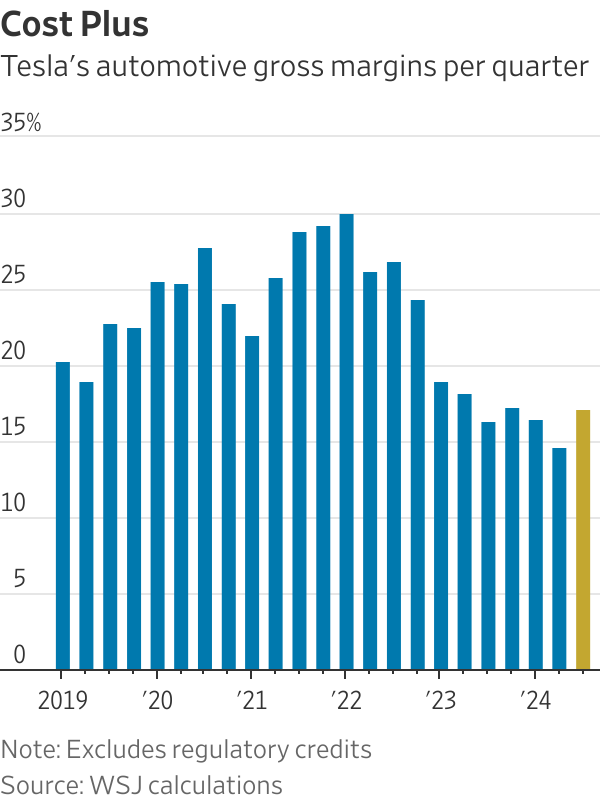
Military action against Taiwan wouldn’t just hit chip companies but also the many, many businesses that use those chips. It isn’t a small list: Chips sit at the heart of the cloud computing services offered by Microsoft , Google and Amazon as well as the iPhones sold by Apple and the EVs sold by Tesla , whose CEO is now one of Trump’s largest backers.

Armed conflict between mainland China and Taiwan is hardly a foregone conclusion, even if Trump wins in November. But investors who mostly have been trading on AI hype need to factor a new element of risk into their models—especially since political rhetoric will only grow louder ahead of the election. U.S. policy toward China is a major issue for both parties, and the question of defending Taiwan will very likely arise again.

This comes as investors are also grappling with how to value the AI opportunity, especially as coming tech-earnings reports will likely continue to feature more AI investments than actual revenue.

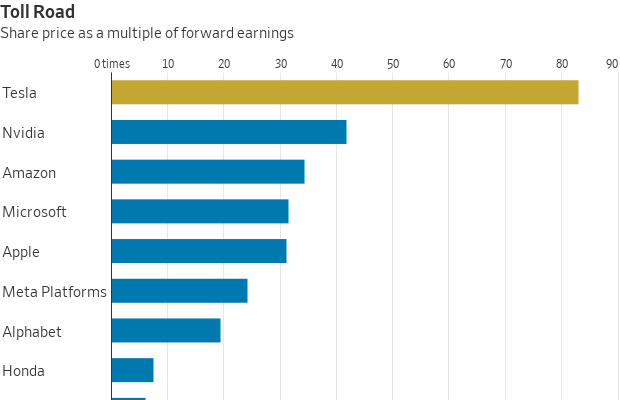
Risks there still aren’t fully baked in. The Nasdaq Composite Index has come down a bit from the record high it hit earlier this month, but is still up 18% for the year, which is more than double the Dow’s return. And the six megacap tech giants—Apple, Microsoft, Nvidia, Amazon, Google-parent Alphabet and Meta Platforms —have added a collective $3.7 trillion in market value in that time. That is an awfully big bet on a sector that no longer has the luxury of staying out of the political fray.

Superannuation funds deliver 9.1 percent return for FY24

Strong share markets in Australia and overseas drove better-than-expected returns for superannuation growth funds in FY24, according to Chant West. The median growth fund, which comprises 61 percent to 80 percent growth assets likes shares, returned 9.1 percent in FY24. This was virtually a mirror performance of FY23 when the median superannuation growth fund returned 9.2 percent.


Chant West Senior Investment Research Manager, Mano Mohankumar, said FY24 was the 13th positive year for superannuation returns over the past 15 years. “The return experience over the past two years in the face of much uncertainty is another reminder of the importance of remaining patient and maintaining a long-term focus,” he said. “… FY23 kicked off amid surging inflation and uncertainty around when interest rate hikes might come to an end. At that time, I don’t think anyone could have forecast a 19 percent return over the subsequent two years and the small FY22 loss of 3.3 percent now seems like a distant memory.”


Mr Mohankumar said international shares were the biggest contributor to superannuation returns in FY24. As a group, international shares soared by 21.5 percent. The growth of overseas stock values was led by the American technology sector, with Magnificent Seven member Nvidia once again delivering astounding share price gains of 192 percent in FY24. Australian shares delivered total returns of 11.9 percent (including dividends) over FY24.


All major asset classes except unlisted property delivered positive returns in FY24, according to Chant West’s data. Australian listed property outshone international real estate with an impressive 23.8 percent return in FY24. International listed property returned 4.6 percent. High interest rates saw cash investments return a median 4.4 percent. Australian bonds returned 3.7 percent and international bonds returned 2.7 percent.


Unlisted property was dragged down by the office sector, with revaluations of buildings trending lower now that more people are working from home permanently following the pandemic. This has affected the demand for office space worldwide. In Australia, the average office occupancy rate is 76 percent of pre-pandemic levels, while US occupancy rates are about 50 percent, according to CBRE research.


Superannuation funds that had a higher allocation to shares and other growth assets outperformed the funds with balanced and conservative strategies, which are popular with pre-retirees. ‘All growth’ superannuation funds, which have a 96 percent to 100 percent allocation to growth investments, delivered a median 12.7 percent return in FY24. Balanced funds, which have a 41 percent to 60 percent allocation to growth assets, returned 7.4 percent. Conservative funds, which have just 21 percent to 40 percent in growth assets and higher allocations to defensive investments such as bonds, fixed income and cash, delivered 5.5 percent.

PROPERTY OF THE WEEK: 5 Hume Avenue, Wentworth Falls

Wentworth Falls and its environs are some of the most sought-after regions in the Blue Mountains. Known for its resplendent beauty and historic charm, the suburb offers an idyllic lifestyle that many dream of. With its serene environment, easy access to amenities, and rich history, it’s a location that offers both convenience and tranquillity.

This property at 5 Hume Avenue, known as “Ryeworth”, offers a rare opportunity to own a piece of history. This stunning north-facing, high-set, single-level, circa 1879 character cottage is steeped in local history and embodies everything you love about mountain retreats.

The first thing to be noted about this historic four-bedroom, three-bathroom cottage is its meticulous preservation and modern updates, which create a harmonious blend of old-world charm and contemporary comfort. Privately set on an enormous 2,666sqm block, the property is approved for sub-division, offering future owners the potential to create additional living spaces or even new homes on the land.

Elegantly appointed living spaces include two king-sized bedrooms with fireplaces, the primary with an ensuite. The formal lounge and dining rooms each feature their own fireplaces, adding to the home’s antiquated appeal. The third bedroom includes a built-in robe, and the home also boasts a generous kitchen and family bathroom. At the rear, the fourth bedroom, third bathroom, and laundry provide versatile living options.

The home’s features are a testament to its period allure: a timber-panelled country-style kitchen with a feature original wood-fired cooker, quality stainless steel appliances with natural gas cooktop, and a walk-in pantry. Central heating, a wood-burning combustion fireplace, and three open fireplaces ensure comfort throughout. Gorgeous period features include soaring 10.5-foot ceilings with ceiling roses and ornate cornices, timber floors with tall skirtings, chair rails, timber windows, leadlight and French timber doors, pull cord lights, and federation brass switches.

The front bullnose veranda is the perfect place to relax and watch the world go by, while the large rear undercover area is ideal for family BBQs and entertaining friends. The established gardens are easy to maintain, and the grassy 2,666sqm fenced yard with two street frontages (rear vehicle access via Fitzstubbs Ave), double carport, and two garden sheds, approved for sub-division (1300sqm & 1366sqm lots), offers a myriad of possibilities.

For those who have been searching for the right home opportunity, “Ryeworth” could signal the end of your search. Located in one of Wentworth Falls’ most picturesque and sought-after streets, it’s a historic gem with modern conveniences.

Address: 5 Hume Avenue, Wentworth Falls, NSW

Price guide: On Request

Agent: Glen Power (0413 330 949)

Blackstone’s Private-Equity Returns Trail the S&P 500

The S&P 500 index has been crushing private-equity returns in the past year, and Blackstone ’s second-quarter results illustrate that trend.

As part of its earnings release early Thursday Blackstone said its corporate private-equity returns in the year ending in June were 11.3%. That compares with a 24.5% total return for the S&P 500.

In the prior year ending in June 2023, the S&P 500 topped Blackstone with a 19.4% return against 9.7% for the firm’s corporate private-equity business, which has $145 billion of assets and remains one of its most important areas along with real estate.

Blackstone is the leading alternatives firm with over $1 trillion in assets under management and has the largest market value of any public investment firm at more than $160 billion.

Driven by Nvidia , Microsoft , Apple , Amazon and other big technology stocks, the S&P 500 has handily topped most asset classes in the past several years.

Another sign of more difficult times for private equity came earlier this week from Calpers, the $503 billion California pension fund, when it reported it s preliminary returns for its fiscal year ending in June . Calpers is one of the first major endowments or pension funds to report results for the June fiscal year. undefined The pension fund, a major player in private equity, said its private-equity investments gained 10.9% net of fees—although that figure is lagged one quarter. Calpers’ public-equity investments were up 17.5% in the year ended June—its strongest asset class. Private equity remains a favorite of many pension funds and leading university endowments like those of Harvard and Yale. Their view is that private equity can beat public-market returns over the long term.

But the private-equity business has gotten tougher in recent years due to keen competition for deals, higher interest rates and a less receptive IPO market, which has made exits tougher.

And private-equity portfolios of firms like Blackstone look nothing like the S&P 500, given their investments in small to midsize companies.

Blackstone, for instance, bought a majority stake in Emerson’s climate technologies business last year and more recently purchased Tropical Smoothie, a franchiser of fast-casual cafes. It also holds a stake in Bumble, the publicly traded online dating site, and it’s an investor in actress Reese Witherspoon’s media company, Hello Sunshine. Blackstone’s corporate private-equity business runs $145 billion and has 82 investments, according to the firm’s website.

Blackstone’s private-equity business has strong long-term returns including a gain of over 50% in the year ended in June 2021 when it handily topped the S&P 500 index.

But the S&P 500 index has become difficult to beat more recently and it’s dominated by some of the best companies in the world. It carries less risk than private equity, given the cash-rich balance sheets of its leading companies like Apple , Microsoft and Alphabet .

Private-equity firms, by contrast, often use considerable leverage to boost returns. Investors can get exposure to the S&P 500 through index funds that charge 0.1% or less in annual fees and with immediate liquidity.

A key risk with the S&P 500 is its vulnerability to a selloff in the leading tech firms that now make up over 40% of the index. The recent rotation into smaller companies illustrates that.

Blackstone shares gained 1.1% to $136.31 Thursday in the wake of its earnings news as investors focused on rising investment deployments and positive management comments on the firm’s outlook.

The firm’s nearly $40 billion of inflows and $34 billion of capital deployment during the second quarter marked “the highest level of investment activity in two years,” Chief Executive Officer Stephen Schwarzman said in a statement.

Citi analyst Christopher Allen wrote in a note to clients on Thursday that while Blackstone’s overall performance was mixed, the outlook appears to be improving given fund-raising and deployment trends.

Investors also were heartened by Blackstone President Jon Gray’s comments about a bottoming in commercial real estate and strong capital deployment in that area.

But ultimately, the game for Blackstone and its alternatives peers is about performance—particularly beating low-fee public investments like the S&P 500. That seems to be getting more difficult.

Where CEOs Find Time for Triathlon Training and Motorcycle Racing

Many of us can barely keep up with our jobs, never mind hobbies. Yet some top executives run marathons, wineries or music-recording studios on the side. How can they have bigger responsibilities and more fun than we do?

It can seem like ultrahigh achievers find extra hours in the day. They say they’ve just figured out how to manage their 24 better than the rest of us.

They also admit they take full advantage of the privileges of being a boss—the power to delegate and the means to do things like jetting to Denmark for a long weekend of windsurfing.

Dan Streetman trains as many as 20 hours a week for Ironman triathlons in addition to his job as CEO of cybersecurity firm Tanium. It’s a big commitment for anyone, never mind a corporate leader who travels to meet with customers every week. He pulls it off by sleeping fewer than seven hours a night and waking around 5 a.m., planning his exercise sessions months in advance, and switching his brain from work mode to sport mode almost as fast as he transitions from swimming to cycling during a competition.

“I tend to work right up until the day of the race,” says Streetman, 56 years old. “I remember being on a board call on a Friday night, and Saturday morning was an Ironman. That’s just part of it.”

Ahead of business trips, he maps running routes in unfamiliar cities and scouts nearby pools, often at YMCAs. He rides stationary bikes in hotel gyms and, if they’re subpar, makes a note to book somewhere else next time he’s in town.

Leaders who eat, breathe and sleep business can appear out of touch at a time when employees crave work-life balance and expect their bosses to model it. Today’s prototypical CEO has a full life outside of work, or at least the appearance of one.

Their tactics include waking up early, multitasking and scheduling fun as if it were any other appointment. When you’re a top executive, hobbies tend to disappear unless they’re on the calendar. One CEO told me he disguises “me time” as important meetings. Only his assistant knows which calendar blocks are fake.

Ben Betts calls himself a “spreadsheet guy,” which is a bit like saying Michelangelo was a paint guy. With Excel as his canvas, Betts creates cell-by-cell checklists for just about everything he does, from cooking Christmas dinner to building a coop for newly hatched ducklings.

Betts, 41, is CEO of Learning Pool, a professional-development software maker. The duck home is part of his ambitious effort to restore an 18th-century farmhouse in England. He’s been renovating for about five years and aims to finish this fall.

On a recent Saturday, Betts’s spreadsheet called for stripping overhead beams by 5 p.m. so he could refinish them. Otherwise, the task would have to wait until the following weekend, throwing off his whole timeline. His vision of the home as a cozy enclave—completed in time for the holidays—can only come true if he sticks to a precise plan.

“Sometimes I stand in the doorway, and my wife probably wonders what I’m staring at,” he says. “I’m picturing us on a corner sofa with our two kids and the dog, watching a film in front of the fireplace I installed.”

Back in the swing

John Sicard , president and CEO of supply-chain manager Kinaxis , got back into drumming many years after he let go of his dream to become a professional musician. He practices almost every day, but his sessions sometimes last only 20 minutes. He rehearses with bandmates two or three times a month. That’s enough to prepare Sicard, 61, to play Foo Fighters and Led Zeppelin covers at occasional charity gigs.

He also built a studio in his house, where he records up-and-coming artists. He finds time by sticking to this management philosophy: “The most successful CEOs do the least amount of work.”

For Sicard, that means letting his lieutenants take charge of—and responsibility for—their divisions. Many corporate leaders work harder than they need to because they micromanage or hire poorly and pick up the slack, he says.

Thomas Hansen , president of software maker Amplitude, is back to windsurfing, a sport he competed in as a teenager. He lives near the ocean in California but gets out on the water only about once a month, when the waves are just right. Hobbies don’t need to be daily activities to be fulfilling, he says, especially if they require training regimens.

To stay in shape for windsurfing, he rises at 4:30 a.m., seven days a week, for an hour of exercise. Hansen, 54, also guards his Saturdays and Sundays like the crown jewels of Denmark, his native country, limiting himself to two working weekends a year. Things that feel urgent can almost always wait till Monday, he contends.

‘Like a badass’

When Christine Yen isn’t calling the shots at work, she’s circling a racetrack at 80 mph on her Honda CB300F motorcycle. The co-founder and CEO of Honeycomb, which helps engineers diagnose problems in their software, took up racing a few years ago.

Prepandemic, her motorcycle was strictly for commuting in San Francisco—and making an impression. She loved pulling up to investor meetings in her hornet-yellow helmet and leather riding suit.

“It fits me like a glove, and it makes me feel like a badass,” says Yen, 36.

The keys to spending full days at the track are planning and being willing to work at odd hours, Yen discovered. Her favorite track publishes racing schedules in 10-week batches. As soon as a slate is released, she circles the dates when she expects her workload will be lightest, aiming to participate in roughly half of the events.

“I have also been known to bring my laptop to the motel and get some work done in the evenings,” she says. “It sounds boring to say hobbies can be scheduled, but that’s how I protect my time.”

Winning neighbourhoods where home values rose most in FY24

Home values across Australia rose by a median 8 percent in FY24, delivering the equivalent of $59,000 in new capital growth to the two-thirds of the population that owns a home, according to CoreLogic data. Investors received total returns of 12.2 percent over the year, including capital gains and gross rental income.

Very tight supply and demand in most capital cities except Melbourne and Hobart was a significant driver of the capital growth, with the smaller and more affordable capital cities of Perth, Brisbane and Adelaide experiencing the most price appreciation over the year. A lack of properties for sale trumped the usual dampening effect of higher interest rates.

As usual, some areas outperformed their city’s median growth benchmark. Here are the top SA3 areas for capital growth in each capital city of Australia in FY24. SA3 areas are large suburbs, or districts incorporating clusters of suburbs, with more than 20,000 residents.


Sydney

Home values across Sydney rose by a median 6.3 percent in FY24. The No. 1 area for growth was Mount Druitt. Its median value rose by 13.96 percent to $859,939. Mount Druitt is located 33km west of the CBD. It incorporates the suburbs of Mount Druitt, Ropes Crossing, Whalan and Minchinbury. The Mount Druitt community is very multicultural with almost one in two residents born overseas. It is home to many young families, with the median age of residents being 33 compared to the NSW median of 39.


Melbourne

Home values across Melbourne rose by a median 1.3 percent in FY24. The top area for capital growth was Moreland-North with 4.71 percent growth. This took the district’s median home value to $746,488. Moreland-North includes the suburbs of Hadfield, Pascoe Vale and Glenroy. It’s a multicultural community with a particularly large contingent of residents with Italian ancestry. One or both parents of 66 percent of residents were born overseas, according to the 2021 Census.


Brisbane

Home values across Brisbane rose by a median 15.8 percent in FY24. The No. 1 area for growth was Springwood-Kingston in Logan City. Its median value swelled by 25.55 percent to $710,569. Springwood-Kingston is approximately 22km south of Brisbane CBD. It incorporates the suburbs of Springwood, Kingston, Rochedale South and Slacks Creek. It is a multicultural community with one or both parents of 55 percent of the residents born overseas, according to the 2021 Census. More than 15 percent of residents have Irish or Scottish ancestry.


Adelaide

Home values across Adelaide rose by a median 15.4 percent in FY24. The best area for capital growth was Playford in Playford City. Its median value soared by 19.94 percent to $530,991. Playford is approximately 40km north of Adelaide. It incorporates the suburbs of Elizabeth Downs, Elizabeth Grove, Angle Vale and Virginia. It is home to many young people under the age of 40. The median age of residents is 33 compared to the state median of 41.


Perth 

Home values across Perth rose by a median 23.6 percent in FY24. The No. 1 area for growth was Kwinana in Kwinana City. Its median value skyrocketed by 33.19 percent to $618,925. Kwinana is approximately 37km south of Perth CBD. It includes the suburbs of Leda, Medina, Casuarina and Mandogalup. Henderson Naval Base is located here and there is a significant community of servicemen and ex-servicemen living in the area. It is home to many young families, with the median age of residents being 33 compared to the state median of 38.


Canberra

Home values across the nation’s capital rose by a median 2.2 percent in FY24. The best area for capital growth was Weston Creek. Its median value rose by 5.24 percent to $937,740. Weston Creek is approximately 13km south-west of the CBD. It includes the suburbs of Weston Creek, Holder, Duffy, Fisher and Chapman. Approximately 43 percent of residents have a bachelor’s degree, which is on par with the ACT median but much higher than the national median of 26 percent. Household incomes are about 35 percent higher than the national median. Almost one in five residents work in government administration jobs.


Hobart

Home values across Hobart fell 0.1 percent in FY24. The top performing area for capital gains was Sorell-Dodges Ferry with 2.78 percent growth. This took the area’s median home value to $615,973. Sorell-Dodges Ferry is approximately 25km north-west of Hobart. It incorporates the suburbs of Richmond, Sorell, Dodges Ferry, Carlton and Primrose Sands. The area has a large community of baby boomers and retirees, with the median age of residents being 43 compared to the Australian median of 38.


Darwin

Home values across Darwin rose by a median 2.4 percent in FY24. The No. 1 area for growth was Litchfield. Its median value moved 3.21 higher to $672,003. Litchfield is about 37km south-east of Darwin and includes the suburbs of Humpty Doo, Acacia Hills and Southport.  It has a high proportion of middle-aged residents, with the median age being 39 compared to the territory median of 33. About 12 percent of residents are Indigenous Australians. The biggest industries are government administration and defence. Median household incomes are about 35 percent higher than the national median.


A Travel Plan for Couples Who Don’t Agree on How to Travel

Forget about household chores and budgets. The biggest source of tension for some couples starts with a plane ticket.

You like to get to the airport early , they like to come in hot. You insist on checking a bag, they preach carry-on only. And then there’s the vacation to-do list: You need down time, they have FOMO if they don’t see everything.

What’s a conflicted couple to do? Instead of complaining about, or showing contempt for, your partner’s travel habits, learn to love each other’s quirks, tastes and temperaments. After all, you could both be right. Getting that advance ticket for a hot museum may be the only way to see it, and you may be surprised how nicely that afternoon nap hits you.

Short of separate vacations , the best way to address travel differences, a therapist and travelers who have (mostly) figured it out told me, is communication and compromise. You don’t have to be in a relationship to benefit from their lessons. The advice also applies to traveling with friends and family.

Learning to do less

When planning his honeymoon a dozen years ago, Chris McEwen drew up a long list of must-sees in Italy. His wife-to-be, who prefers leisurely mornings and wandering, wasn’t having it.

She told him, “Yo, pump the brakes dude. We are not doing all that,” McEwen, a 49-year-old IT professional in North Carolina, says.

In the end, he relented. And today, one of his favorite memories from the trip is spending hours walking around Rome’s Trastevere neighborhood at the end of their trip. He finally understood the joys of not doing much.

In the years since, they have continued to compromise. He still darts out of bed on vacation, but heads out for a walk and brings back coffee.

On a spring break trip to Arizona with their children, ages 5 and 9, this year, she agreed to his bucket-list slot canyon tour in Page, Ariz., despite also planning to see Scottsdale, the Grand Canyon and Zion National Park.

For an upcoming trip to New York City, he’ll go to a Broadway show with her (but not two).

Some travelers find middle ground. Others discover that the opposite approach that their significant other takes can work for them.

Valerie Paxton, a 61-year-old business adviser who lives near Phoenix, rarely takes a trip without creating a spreadsheet or Word document with every little detail. For an upcoming trip to Italy to celebrate her brother’s 60th birthday, the entries include the types of wine that will be served during a nearly $400 wine-pairing luncheon at Antinori winery in Tuscany.

She has travel-planning documents dating back to 2008 and says she will defend her meticulous planning “to my dying day.”

Her engineer husband isn’t convinced all the stressful planning work is necessary. “He’s like, ‘Why don’t you just not do it and we’ll just wing it?’ ” Paxton says. “And that’s where the tension is.”

He likes nothing more than seeing where the day takes them by talking to locals. She used to consider it a waste of time. On a trip to Napa for his 55th birthday last month, they had not a single plan. She didn’t even know the location of the vacation rental. They went on a 24-mile bike ride and then stopped into a local bar the shop owner recommended. At the bar, they got their recommendation for dinner.

“I may be a convert,” she says.

Travel as therapy

Psychologist Joshua Coleman counsels couples in his San Francisco-area practice and says travel issues are no different than many other conflicts in a relationship. Resolving them comes down to mutual, thoughtful conversation, he says.

“If people really feel understood and they emerge feeling like, OK, that person really gets me, they’re just in a much better position to want to compromise,” he says.

No good comes from simply giving in about, say, that weeklong vacation you’re dreading and then stewing about it. The other person will pay a price later, he says.

Coleman and his wife have been married for 35 years and found a workaround to their different vacation tastes. He loves activity and she loves relaxing at the pool or beach with a book. On a recent family trip to Hawaii they made time for lounging and a snorkeling excursion.

“If every vacation was a beach-read vacation, she would be completely happy and I would be completely insane,” he says.

Veteran Wall Street airline analyst Jamie Baker and his wife are travel pros who eloped nearly 30 years ago to take immediate advantage of his flight benefits at Northwest Airlines.

They decided early on to stay in their own lanes, he says. He handles all flight arrangements and his wife, a former chef, handles accommodations and dining reservations.

Baker is the stereotypical airport dad—on steroids. He insists his wife and adult sons are packed 24 hours before the flight in case their flight is significantly delayed or canceled and there’s an opportunity to jump on an earlier flight.

He’s gone so far to book a “chase car” in addition to his regular car service. This second car trails his travel party by about 5 miles, just in case.

The backup ride saved a trip to Japan several years ago after a tractor trailer accident brought traffic to a standstill. That car picked them up on the other side of the freeway and they dashed across the median with their rollaboards.

Baker says his preflight neurosis has gotten worse over the years because he can check air-traffic control, flight status, road conditions and more from his phone. His family has come to accept his flight prep as gospel, he says, and knows not to talk to him until they are at the airport.

“Once we’re at the curb, it’s all smiles and relief,” he says.

Why personal wealth in Australia is rising faster than other nations

The average wealth of Australian adults grew by nearly 10 percent last year, more than double the pace of 56 other countries, and we are now the second-wealthiest per capita in the world, according to the 2024 UBS Global Wealth Report. The median wealth of Australians is now USD$261,805 per person (AUD$387,612). The wealthiest people live in Luxembourg where the average resident is worth USD$372,258 (AUD$551,142).

UBS says the bulk of our rising wealth over the past year has come from gains in property values and superannuation. More than half of our wealth is in ‘non-financial’ or relatively illiquid assets such as bricks and mortar. This is unusual relative to our neighbours in the Asia-Pacific region, where 60 percent of personal wealth is held in shares, bonds, mutual funds and savings accounts.

Australia also has the world’s third-largest population of millionaires. According to UBS, 1,936,114 Australians are millionaires in US dollar terms, which equates to 10 percent of the population. By 2028, UBS forecasts that Australia will have almost 400,000 more millionaires at 2,334,015 people. Of the 56 countries covered in the report, the United States has the most millionaires at 21,951,319 people. This cohort is forecast to expand by almost 3.5 million people to 25,425,792 by 2028.

Property has delivered exceptional capital gains to Australian homeowners since the onset of the pandemic. Sydney home values are 28 percent higher today than they were in early 2020, according to CoreLogic data. Home values in Brisbane, Adelaide and Perth are more than 60 percent higher. In Hobart, property values are 28 percent higher, and in Canberra they are 32 percent higher. Melbourne home values are 11 percent higher.

UBS explains that rising wealth tends to go hand-in-hand with economic development. Since the Global Financial Crisis, wealth has risen fastest in the Asia-Pacific region at nearly 177 percent over 15 years. This has occurred alongside 192 percent growth in debt, however, UBS notes that “it is not uncommon for emerging economies to experience fast growth in credit as the financial system develops and matures”.

While global wealth is steadily rising, it is doing so at a slower pace. There are many reasons for this, including smaller rates of growth as countries become wealthier and their economies mature. Also, countries with aging populations tend to see falling rates of economic activity, which affects both personal and national wealth. Between 2000 and 2010, Australia’s annual compound growth rate in wealth was 15 percent. Between 2010 and 2023, it shrank to four percent. China’s annual growth rate has fallen from 19 percent between 2000 and 2010 to eight percent between 2010 and 2013.

The report also looked at wealth inequality and assigned a score of between zero and 100 to each of the 56 nations. A low score indicated more equality and a high score indicated greater inequality. Australia has an inequality score of 51 now. This is forecast to grow to 54 by 2028. Countries with a similar score include Japan (50), Italy (50), Belgium (51) and Finland (53). Saudi Arabia had the highest wealth inequality score at 89, followed by the United Arab Emirates (88), United States (76) and Sweden (74).

Yacht Buyers Are Getting Younger, Says Azimut/Benetti Exec

In the rarefied world of luxury yacht construction and design, the Viareggio, Italy-based Azimut/Benetti Group ranks high on the list of storied and sought-after names. The company’s clients include multi-millionaires and billionaires globally, and boldfacers such as Bill Gates have chartered its watercrated.

The company comprises two brands: Azimut, which produces smaller yachts that range in length from 10 to 35 meters, and Benetti, a mega- and superyacht producer behind ships from 37 to more than 100 meters long. It’s known for its technological innovations, including the extensive use of carbon fiber as well as hybrid diesel-electric vessels. Prices for the yachts between both brands range from US$1 million to more than US$300 million. Azimut/Benetti has four shipyards, three in Italy and one in Brazil, with the largest in Livorno, in Italy’s Tuscany region.

Paolo Vitelli founded Azimut in 1969 and acquired Benetti in 1985 to form Azimut/Benetti Group. His daughter, Giovanna Vitelli, 48, leads the family-run enterprise today. She spoke with Penta recently about how demand for yachts has increased as of late, its changing customer base, and the amenities on ships that owners most want today.

Penta: Has the demand for your yachts changed over the last few years?

Giovanna Vitelli: Despite initial predictions, the pandemic significantly boosted the yacht industry due to unforeseen mobility restrictions. The desire for freedom led to a surge in demand, and immediately after the COVID-19 lockdowns, every available boat, regardless of size, was sold out. Today, the demand has normalized, but the perception of what a yacht can offer has changed. As a result, our orders stretch to 2028.

Who are your primary customers, and how have they evolved over time?

Owners are now trending 10 years younger than before; they are typically men in their 50s. They are still very wealthy and successful, but unlike the past, where yacht ownership may have primarily symbolized opulence, today’s owner seeks something deeper: a private space to share with family and friends, a floating home with all the personal comforts, to enjoy a closer connection with the sea.

Can you share the amenities your customers want most on their yachts and how they differ from the past?

We are seeing a growing shift toward a more relaxed lifestyle on board. Owners seek areas ideal for sharing with loved ones. They have a preference for longer stays at anchor and want amenities that provide a comfortable, at-home experience. Popular requests include large social bars, extensive wine cellars, full office spaces for remote work, spa facilities, larger storage for water toys, and gym areas. These features blend luxury with functionality.

What are some of the unusual amenities or other requests your customers have requested?

We’ve added unique features such as a wood-burning pizza oven and a flower refrigerator. We even recreated a copy of the Sistine Chapel fresco over the dining table on a Benetti yacht. Another had spectacular interiors made with Lalique glass.

Tell us about the design features of your yachts. What aesthetic do you favor?

Twenty years ago, we began seeking designers from the luxury residential, hospitality, and fashion sectors rather than just the yachting industry. This brought a contemporary twist to a traditionally conservative sector. Each designer infuses the yacht with its own soul, but all have a simple elegance. Our most recent collaboration was with Matteo Thun and Antonio Rodriguez, inventors of eco-resorts, with whom we explored new frontiers for eco-friendly materials on Azimut’s Seadeck   motoryachts .

One design concept that has influenced the lifestyle on board is the Benetti Oasis Deck. Previously, the stern was high and closed, but now, a lowered stern opens to the sea, enhancing the onboard experience.

How does sustainability figure into your designs? 

Sustainability has been a core principle for us for over 20 years, and we started investing early on in technology to reduce fuel consumption. This philosophy continues to drive our innovations. Today, almost our entire fleet offers hybrid technology.

The newly launched Azimut  Seadeck  6 became the most efficient and sustainable yacht ever produced by our group. In fact, the Azimut  Seadeck  Series can reduce carbon-dioxide emissions by as much as 40% in one year of average use compared to traditional yachts of similar size.

Our next goal is to further optimize consumption and emissions from onboard systems, especially for larger boats that spend around 90% of their time at anchor.

Also, our company has an agreement with the energy company Eni to use HVOlution, a biofuel made entirely from renewable raw materials.

Can you explain the concept of shadow yachts and tell us if they’re becoming more prevalent?

Shadow yachts, also known as support yachts or shadow vessels, are auxiliary vessels that accompany a main superyacht, providing additional storage for water toys, helicopters, and vehicles, as well as housing extra crew and guests. Currently, they represent less than 1% of the market.

Where do you see the future of yachts going?

I expect demand to continue at a steady pace in the coming years, especially as more people view yachts as residences rather than just for short trips. We have customers who’ve bought large yachts who anchor them and live in them for several months a year. They might dock in Monaco for six months, for example, and go to the Caribbean for the rest of the year.

This interview has been edited for length and clarity. 

Burberry Stock Sinks. Is the Problem Its CEO or the Luxury Consumer?

Burberry had a nightmarish start to the week on Monday after the luxury clothing brand warned of a slump in its profits and replaced its CEO.

The UK-based company’s American depositary receipts were down 16.9% to $9.79 shortly after the opening bell, while its London-listed shares slid 16.8% to 737 pence to their lowest level since 2010.

It’s hard to tell what part of a dire trading update that Burberry published on Monday sparked the selloff, with the company flagging weaknesses in the luxury sector and announced a leadership shake-up.

The fashion giant said in a statement that called its performance for the fiscal year “disappointing” and warned that the luxury market “is proving more challenging than expected”. It’s set to post its earnings for the quarter that ended on June 30 on Friday.

Burberry also announced a change at the top, with former Michael Kors boss Joshua Schulman set to replace outgoing CEO Jonathan Akeroyd, and suspended dividend payments.

“We are taking decisive action to rebalance our offer to be more familiar to Burberry’s core customers whilst delivering relevant newness,” Chair Gerry Murphy said in a statement. “We expect the actions we are taking, including cost savings, to start to deliver an improvement in our second half and to strengthen our competitive position and underpin long-term growth.”

Signs of weak consumer demand have weighed on luxury brands this year, with the slowdown particularly evident in China, which has struggled to reboot its economy ever since calling time on three years of harsh zero-Covid lockdowns at the end of 2022.

Akeroyd had also tried to take Burberry upmarket in a strategy that alienated some would-be shoppers. Fashion blog Miss Tweed reported earlier this year that Murphy had started interviewing potential replacements.

The luxury giant’s rivals French-listed peers also fell after the disappointing trading update. LVMH slipped 2.7%, while Hermès dropped 2.4% and Dior fell 1.7%.

Is the Stock Market Near Its Top?

The third season of the terrific show “The Bear” blends family dysfunction with the ups and downs of high-end restaurants. With markets chasing new highs—get out those Dow 40000 hats—this column is about a different kind of dysfunctional beast. Is the market bear dead, or is it about to sneak up on us?

A U.S. equity strategist told me the story of a Japanese portfolio manager who sat in his office in July 1987 asking for stock ideas. The strategist’s model was based on a proprietary survey of investor sentiment, though it never really worked. Nonetheless, he read off a list of dozens of stocks. The portfolio manager then asked if he would kindly put in an order for 20,000 shares of each. The Dow Jones Industrial Average peaked at 2722 in late August and crashed 22.6% on Oct. 19.

A friend was a portfolio manager of a massive growth-stock fund in 1999. He told me he bought shares of Yahoo, Cisco, F5 Networks, Infosys and others every day because money flowed into his fund every day. The tech-heavy Nasdaq index peaked on March 10, 2000. As money began to flow out, he had to sell every day. By year’s end, Nasdaq had fallen by more than half.

I met Cathie Wood as she was filing papers for her “disruptive innovation” funds—to “change the way the world works.” Her ARK Innovation exchange-traded fund, ARKK, launched in October 2014 and charges 0.75% management fees. In 2020 it was up 153% as stimulus money flew in, driving more buying. ARKK peaked in February 2021 with $28 billion in assets. Since then, its net asset value is down 70%, even amid a roaring bull market, especially in tech. Morningstar recently calculated that Ms. Wood’s Ark Invest funds have destroyed more than $14 billion in wealth. One of my favorite Wall Street sayings is, “Don’t mistake a bull market for brains.”

In almost every bull run, stock momentum lures in investors at the worst moment, I call them momos, ensuring they get burned when the buying stops. Since 2009, excepting a few brief sell-offs, cash has been trash. That made some sense during the era of zero interest rates. But now with higher inflation and short rates above 5%? Confusing. Maybe investors are already anticipating another Donald Trump antiregulation pro-growth presidency, forgetting that he is married to a growth-killing pro-tariff agenda. Is the bear dead, or does it have a long fuse?

Predicting stock markets is a fool’s errand. My Series 7 test for General Securities Representative Qualification lapsed long ago, so you won’t get investment advice from me. But there are warning signs.

Have we run out of buyers? Sometimes there are triggers that scare them away: oil shocks, viruses, bank failures. But sometimes they simply collapse from exhaustion. More than 40% of households reportedly own stocks—a higher percentage than in 2000. It was 20% in 2010. Some market indicators also point to asset managers being fully invested. Who’s left to buy?

Market breadth is concerning. The 1973 market peak was driven by stretched valuations of the Nifty Fifty, which included IBM , Coca-Cola and GE but also Polaroid and Xerox . Fifty? Now it’s the Magnificent Seven: Alphabet , Amazon , Apple , Meta , Microsoft , Nvidia and Tesla . Seven? Artificial-intelligence hype, way ahead of even the rosiest of realities, drove Nvidia to make up almost a third of the S&P 500’s first half gains. Another quarter came from Amazon, Meta, Microsoft and Eli Lilly . Maybe fat bulls need Mounjaro.

Stock values feel divorced from reality. The so-called Warren Buffett indicator—the ratio between total stock-market value and gross domestic product—was 138% in March 2000. It’s now 196%. Certainly not a buy signal. And Bitcoin, my go-to bubblicious bat signal, is down about 20% since March. A dead canary?

“Don’t worry, be happy,” the bulls sing. Inflation is slain, and the Fed will cut rates. But investors won’t like the reason for those cuts. We’re already seeing earnings disasters—Nike, Walgreens , Lululemon , Delta and Wells Fargo . If the economy slows, earnings glitches and stock implosions become contagious. Plus, banks’ exposure to commercial real estate is scary, with buildings being dumped at huge haircuts almost weekly. This is now infecting rental buildings, and there are signs of a private housing glut. Inventory in Denver is up nearly 37%. Sure, markets climb a “wall of worry,” and bull markets tend to last longer than people expect, but sometimes the nightmares are real. Recessions are like honey to bears.

Even writing about the bear is bullish. Bull runs end when everyone is a believer. Still, another favorite saying of mine is, “No one’s ever lost money taking a profit.” Someday, cash will be king again. I prefer to buy stocks when everyone hates them.

Stock Futures Trade Slightly Higher as Investors Weigh Trump Shooting

Stocks are poised for a slightly higher open on Monday, the first look at how U.S. markets will react following the failed assassination attempt on former President Donald Trump.

Trump was recovering Sunday, a day after a shooting at a campaign rally in Pennsylvania that injured Trump and left one attendee dead and two others critically injured.

Investors aren’t showing heightened concern, as far as moves in stock futures are reflecting on Sunday. At 6:46 p.m. ET, Dow Jones Industrial Average futures gained 60 points, or 0.2%, the S&P 500 futures rose 0.1%; and Nasdaq Composite futures were up 0.1%.

Republicans are converging in Milwaukee this week to formally nominate Trump as their party’s presidential candidate. The Republican National Convention is moving forward as an investigation into the shooting continues.

Futures also were extending a rally that has lifted stocks to fresh highs this year, fueled by earnings and a surge in tech shares.

Forty-five S&P 500 companies report earnings this week, including BlackRock and Goldman Sachs on Monday.

Bank of America , Charles Schwab , J.B. Hunt Transport Services , Morgan Stanley , Omnicom Group , PNC Financial Services Group , State Street, and UnitedHealth Group report earnings on Tuesday.

ASML Holding , Citizens Financial Group , Crown Castle , Discover Financial Services , Elevance Health , Equifax , Johnson & Johnson , Kinder Morgan , Northern Trust , Prologis , Steel Dynamics , Synchrony Financial , United Airlines Holdings , and U.S. Bancorp all report earnings on Wednesday.

Abbott Laboratories , Alaska Air Group , Blackstone, Cintas, D.R. Horton, Domino’s Pizza , Intuitive Surgical , KeyCorp , M&T Bank , Marsh & McLennan , Netflix , Novartis , Taiwan Semiconductor Manufacturing , and Textron report earnings on Thursday.

American Express , Fifth Third Bancorp , Halliburton , Huntington Bancshares , Regions Financial , SLB, and Travelers report on Friday.

This week’s notable economic events include Monday’s release of the Empire State Manufacturing Survey by the New York Fed. Later today, Federal Reserve Chair Jerome Powell will speak at the Economic Club of Washington, D.C.; and San Francisco Fed President Mary Daly will speak at Fortune Brainstorm Tech 2024.

On Tuesday, the Census Bureau reports June retail sales data, and the National Association of Home Builders will release its Housing Market Index for July. Also Tuesday, Fed Gov. Adriana Kuglar will speak at the National Association for Business Economics’ Economic Measurement Seminar in Washington, D.C.

On Wednesday, the Federal Reserve will release the fifth of eight Beige Books with anecdotal information on current economic conditions from the 12 regional banks. Also Wednesday, the Census Bureau will report new residential construction statistics, including housing starts and building permits, for June.

On Thursday, the Philadelphia Fed will release the Manufacturing Business Outlook Survey for July; the Conference Board will report its Leading Economic Index for June; and the Labor Department will report initial unemployment claims for the week ended July 13. Also Thursday, the European Central Bank will publish a monetary policy decision. The ECB is widely expected to keep its target interest rate at 3.75%, after cutting it by a quarter of a percentage point in June.

On Friday, Atlanta Fed President Raphael Bostic will speak at a conference co-sponsored by the Federal Reserve Banks of Dallas and Atlanta, and New York Fed President Williams will speak at a panel on monetary policy at the Central Bank of Peru’s annual conference in Cusco, Peru, on the Rewiring of the Global Economy.

After Pandemic Slowdown, Global Wealth Is Growing Once Again, Led by the U.S.

The latest edition of an annual UBS wealth report notes that while “the global economy is in the midst of a dramatic structural upheaval,” wealth is growing once again after a downturn through the pandemic.

UBS analyzed income and wealth data from 56 markets, representing “92% of the world’s wealth,” in its Global Wealth Report 2024, released Wednesday. The report’s overarching theme found that global wealth grew by 4.2% in 2023, offsetting a loss of 3% in 2022. Even in the face of continued inflation, adjusted global wealth grew by 8.4%.

However, overall global wealth growth is down, from an annual average of 7% between 2000 and 2010 to just over 4.5% between 2010 and 2023, the report said. This equates to a reduction in global wealth of almost one-third.

The remaining growth seems to be continuing on pace in the world’s most developed and already prosperous nations. In the U.S., average wealth per adult grew by nearly 2.5% and the country accounts for 38%, roughly 22 million, of all millionaires worldwide.

Mainland China came in second with just over 6 million millionaires, followed by 3 million  in the U.K.

The report also took a look at the growing issue of wealth transfer. Over the next 25 years, US$83.5 trillion of global wealth will be transferred to spouses and the next generation. UBS estimates 10% of that will be transferred by women and US$9 trillion will shift between spouses.

Wealth in the Asia-Pacific region grew the most—nearly 177%—since the report began tracking data 15 years ago. The Americas come in second, at nearly 146% growth. Surprisingly, Turkey has enjoyed the most wealth growth per adult of any individual nation in the last 15 years—more than 1,700% in local currency.

The world’s wealthiest class continues to be a small, tightly concentrated group. According to the report, only 12 people hold between US$50 billion and US$100 billion and just 14 people hold US$2 trillion of the world’s wealth. The U.S. and Canada are home to individuals holding 44% of this wealth, while another 25% is held by people in Western Europe.

UBS data suggests that global wealth will continue to grow most in emerging markets, with some countries experiencing millionaire growth of up to 50% over the next five years.

The One-Child Policy Supercharged China’s Economic Miracle. Now It’s Paying the Price.

When China launched its one-child policy more than four decades ago, it sped up an evolution toward smaller family sizes that would have happened more gradually.

The policy supercharged the country’s workforce: By caring for fewer children, young people could be more productive and put aside more money. For years, just as China was opening its economy, the share of working-age Chinese grew faster than the parts of the population that didn’t work. That was a big factor in China’s economic miracle.

There was a price and China is now paying it. Limiting births then means fewer workers now, and fewer women to give birth. A United Nations forecast published Thursday shows how quickly China is aging, a demographic crunch that the U.N. predicts will cut China’s population by more than half by the end of the century.

In the late 1970s, China’s leaders feared a population explosion that would drain the country’s resources. When Deng Xiaoping rolled out the one-child policy nationwide in 1980, he said, “We must do this. Otherwise, our economy cannot be developed well.”

A young population has helped drive economic growth in developing countries across the world, including in China’s neighbor Japan starting in the 1950s. Economists call it a demographic dividend—the window, generally of a few decades, when a country has far more working-age people than young and elderly dependents. As such countries grow wealthier, people naturally choose to have fewer children and the population starts to age.

That was also the trajectory in China—just faster.

Knowingly or not, China essentially borrowed from its own future by accelerating its so-called demographic window. How the effects of the policy have sped up China’s demographic bind is scrambling the long-term models demographers usually work with.

“The challenge with China is that from one year to another the situation can change quite fast,” said Patrick Gerland , head of the U.N.’s population estimates and projection section. “Within the last decade, the changes have been very big, both in policy and in the numbers.”

For example, in its just-published global estimates, the U.N. expects China’s population to drop from 1.4 billion today to 639 million by 2100, a much steeper drop than the 766.7 million it predicted just two years ago.

Even so, the U.N.’s prediction looks optimistic compared with other estimates. Researchers from Victoria University in Australia and the Shanghai Academy of Social Sciences have predicted that China will have just 525 million people by the end of the century.

It is impossible to say what China’s population trajectory would have been without the one-child policy. But a comparison with a broad group of other countries gives a clue.

Research by U.N. demographers illustrates how China’s demographic window opened faster and more sharply than in other “less developed” countries, and then closed equally quickly. The population of Chinese aged 20-64—the age when people are most likely to work—grew faster than children and the elderly in the years after the one-child policy was implemented. Before the policy ended, the trajectories had already reversed.

The broader group of other countries shows a smoother ride with the demographic window lasting well into the 2040s.

With China’s opening to the West, it became the world’s factory floor with millions of young people determined to work their way out of poverty. For most of the next decades, Chinese growth topped double-digit percentages.

The optimism was on full display during the 2008 Beijing Summer Olympic Games. When the global financial crisis hit soon after, China kept growth humming and was credited with helping to save the global economy. A few years later, China overtook Japan as the world’s No. 2 economy .

But by 2013, China’s demographic dividend was largely over, according to research by Andrew Mason , an emeritus professor of economics at the University of Hawaii, and Wang Feng , a sociology professor at the University of California, Irvine.

Now, slowing economic growth and demographic changes feed off each other for a gloomy outlook.

“People always count on the [Chinese] government to do more to prop up the economy but the reality is that there’s not a lot the government can do,” Wang said.

Over the next decades, China’s population is likely to show a contrast from, say, India, where the age distribution is following a more natural progression, or the U.S., where immigrant inflows help counteract the aging of the population.

By the end of the century, the U.S. population will be about two-thirds of China’s, compared with less than a quarter now, according to the U.N.’s latest projections. And by then, India, which has overtaken China as the world’s most populous country , will have more than twice as many people as China.

The real demographic impact in China won’t fully hit until the middle of the century, when many of those born during the one-child policy will reach retirement—while still caring for aging parents, said Wang.

By 2050, the U.N. now projects 31% of Chinese will be 65 or older. By 2100, the share will be 46%, approaching half of the population. In the U.S., the share is expected to be 23% and 28%, respectively.

The U.N.’s revised forecasts see Chinese births dropping below nine million this year. In 2022, it had predicted that 10.6 million would be born in China in 2024. The U.N. now expects China will have only 3.1 million newborns a year by 2100.

Not only are there fewer women to give birth these days, but many young women, mindful of their mothers’ suffering during the one-child policy, are less interested in marriage and children , driving down the fertility rate.

As births slip, China’s elderly population is ballooning.

China expects a glut of more than 40 million new retirees—more than the population of Canada—over the five-year period ending in 2025.

The old-age support ratio, a rough indicator of the number of workers for each retiree used by the Organization for Economic Cooperation and Development, is projected to decline from more than four now to fewer than two in 2050, according to The Wall Street Journal’s calculations of the U.N.’s latest data. It will likely reach one worker per retiree by the end of the century.

In reality, due to China’s low retirement age , with women clocking out as early as 50 and men at 60, the support ratio could be even lower.

Beijing as well as demographers and sociologists have said a highly educated population and the advancement of technology such as artificial intelligence, could help China weather such shocks, as more jobs will be automated.

The U.N.’s Gerland said that while the one-child policy was the main demographic event in recent decades, the waxing and waning in different Chinese age groups also reflect tumultuous periods in China’s past, such as the Cultural Revolution and Great Leap Forward, which had substantial demographic impact on the size of the various cohorts born during these years.

“Because of China’s history, the population is going to carry over some of these memories of the past and it will take many generations for all of these past stories to be forgotten,” he said.